
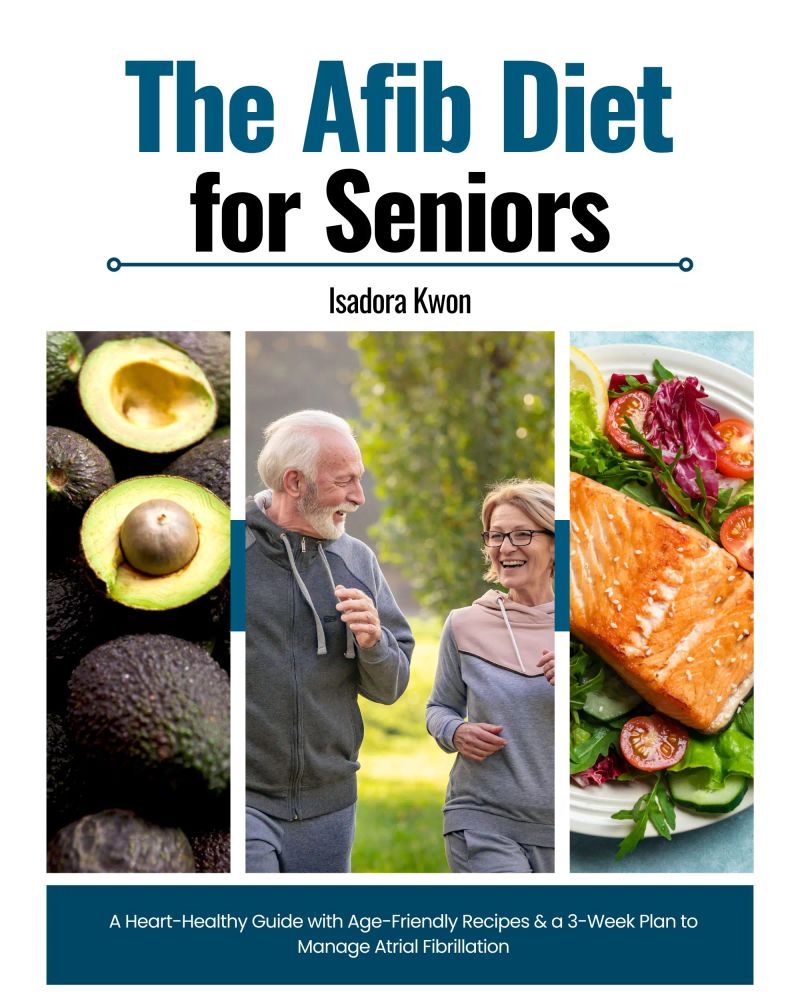


Duração1h 33m
Sobre este audiolivro
Atrial fibrillation (AFib) is a type of irregular heartbeat that can seriously impact your quality of life, especially as you age. AFib becomes more common in seniors because the heart naturally undergoes changes over time.
For example, the heart muscles might become less elastic, affecting their ability to pump blood efficiently. This decline often happens alongside age-related conditions like high blood pressure, diabetes, or arthritis, making AFib management more challenging for older adults.
Unlike younger adults, seniors may experience AFib symptoms more subtly. While some feel heart palpitations or a racing pulse, others might mostly notice fatigue or shortness of breath. Understanding these differences is the first step to effectively managing the condition.
While medication is often a core part of managing AFib, diet can be just as important. The food you eat can help regulate your body’s electrolyte balance, reduce inflammation, and even lower your risk of stroke. For seniors, eating well isn’t just about addressing AFib. It’s about meeting the unique nutritional needs that come with aging.
A thoughtful diet tailored to manage AFib focuses on eating nutrient-rich whole foods, staying hydrated, and avoiding processed ingredients or known triggers like excess salt or caffeine. Adjustments to portion sizes and the incorporation of key nutrients like potassium and magnesium can provide extra benefits.
In this guide, we will talk about the following:
Atrial Fibrillation and Aging – What Seniors Need to Know
The AFib-Friendly Diet for Seniors
Meal Planning Made Simple for Seniors
Gentle Cooking Methods for Heart Health
Age-Friendly Recipes for AFib Management
The 3-Week AFib Action Plan for Seniors
Beyond Diet – Lifestyle Tips for Senior AFib Management
Keep reading to learn more about how you can take control of your AFib and enjoy a healthy, fulfilling life. By the end of this guide, you’ll have the tools and knowledge to create a personalized dietary plan that works for you.
Detalhes do audiolivro
GêneroHealth and Wellness, Self-Help
Duração1 h 33 min
Narrado porOuça com mais de 1.000 vozes
FormatoeBook com áudio
Data de publicação29 de mar. de 2025
IdiomaInglês
Sumário
1Disclaimer
2Atrial Fibrillation and Aging–What Seniors Need to Know
3How Aging Affects the Heart and Circulation
4Common AFib Symptoms in Seniors vs. Younger Adults
5Medication, Lifestyle, and Diet: Finding the Right Balance
Mostrar todos os capítulosVer menos
6Key Nutrients for Heart Health as You Age
7The AFib-Friendly Diet for Seniors
8Heart-Healthy Foods to Embrace
9Foods That May Trigger AFib Episodes
10The Importance of Hydration and Electrolyte Balance in Older Adults
11Adapting Portion Sizes and Nutrient Needs for Seniors
12Meal Planning Made Simple for Seniors
13Creating Balanced, Easy-to-Digest Meals
14Meal Timing and How It Affects AFib Symptoms
15Grocery Shopping Tips for Seniors (Budget-Friendly and Low-Prep Options)
16How to Adjust Meals for Common Senior Health Concerns (Diabetes, Arthritis, High Blood Pressure)
17Gentle Cooking Methods for Heart Health
18Easy-to-Chew & Digestible Cooking Tips for Older Adults
19Reducing Sodium Without Sacrificing Flavor
20Safe Cooking Strategies for Those with Limited Mobility or Dexterity Issues
21Age-Friendly Recipes for AFib Management
22Breakfasts: Simple, Nutritious Morning Meals
23Lunches & Dinners: Low-Sodium, High-Nutrient Comfort Foods
24Heart-Healthy Snacks: Quick Bites for Energy & Stability
25Desserts: Sweet Treats Without the Sugar Overload
26The 3-Week AFib Action Plan for Seniors
27Week 1: Small Tweaks for Big Impact
28Week 2: Building a Sustainable Routine
29Week 3: Lifestyle Habits for Long-Term Heart Health
30Beyond Diet – Lifestyle Tips for Senior AFib Management
31Managing Stress and Anxiety for a Calmer Heart
32The Role of Light Exercise and Safe Physical Activity
33Sleep and AFib: How to Improve Rest as You Age
34How to Talk to Your Doctor About Diet and Medication Interactions
35Conclusion
36FAQs
37References and Helpful Links

What I Talk about When I Talk about RunningHaruki Murakami4h 24min4.0 (245.4K)$12

Autoimmunity and the Good GirlsSara Hirsh Bordo7h 51min$26 · $0.00
Eat It!Jordan Syatt, Michael Vacanti4h 40min4.6 (1.5K)$20 · $0.00

Consent Laid BareChanel Contos7h 11min4.5 (1.7K)$24 · $0.00
How to Make Disease DisappearRangan Chatterjee5h 26min4.5 (3.5K)$24 · $0.00

The Complete Herbal (Annotated)Nicholas Culpeper29h 8min4.5 (1.4K)$2 · $0.00

A Plague Upon Our HouseScott W. Atlas MD10h 37min4.5 (3.4K)$20 · $0.00

The Gift of TherapyIrvin Yalom7h 39min4.5 (38.8K)$26 · $0.00

EarlySarah DiGregorio9h 47min4.5 (1.3K)$29 · $0.00

Bottle of LiesKatherine Eban14h 25min4.4 (12K)$33 · $0.00
The 36-Hour DayNancy L. Mace, Peter V. Rabins17h 13min4.4 (9.2K)$28 · $0.00

FlooredSara Reardon10h 36min4.5 (1K)$29 · $0.00
Radical RemissionKelly A. Turner9h 26min4.4 (8.1K)$29 · $0.00
The Sinatra SolutionStephen T. Sinatra MD9h4.5 (899)$20 · $0.00

The Songaminute ManSimon McDermott6h 12min4.5 (280)$24 · $0.00
Sometimes BrilliantLarry Brilliant12h 27min4.5 (954)$29 · $0.00

Live Your LifeAmanda Kloots, Anna Kloots10h 54min4.4 (13.7K)$29 · $0.00

All in Her HeadElizabeth Comen13h 25min4.4 (18.2K)$33 · $0.00

The Wisdom of Your BodyHillary McBride9h 14min4.4 (6.7K)$29 · $0.00
The Alzheimer's SolutionDean Sherzai, Ayesha Sherzai9h 47min4.4 (1.9K)$29 · $0.00

A Different WayChristopher A. Hall10h 45min4.5 (165)$29 · $0.00

The Hard Thing About Hard ThingsBen Horowitz7h 57min4.2 (134.3K)$26 · $0.00

10% Happier 10th AnniversaryDan Harris9h 28min4.1 (137.1K)$29 · $0.00
The Power of the OtherHenry Cloud5h 52min4.2 (3.5K)$24 · $0.00

What You Are Looking For Is in the LibraryMichiko Aoyama7h 19min4.1 (156.7K)$24 · $0.00
The Way of ExcellenceBrad Stulberg6h 46min4.2 (1.1K)$24 · $0.00

The AlchemistPaulo Coelho4h 1min4.1 (3.9M) · 1215$23 · $0.00

Change the RecipeJosé Andrés, Richard Wolffe4h 57min4.1 (2K)$20 · $0.00

The Lucky RideYasushi Kitagawa4h 26min4.1 (1.8K)$20 · $0.00
Be ExceptionalJoe Navarro, Toni Sciarra Poynter9h 11min4.0 (1.3K)$29 · $0.00

The Subtle Art of Not Giving a F*ckMark Manson5h 18min3.9 (1.7M)$24 · $0.00

HomeschooledStefan Merrill Block7h 10min3.6 (18.5K)$28 · $0.00
Autoimmunity and the Good GirlsSara Hirsh Bordo7h 51min$26 · $0.00

The Purpose Driven® Liferick warren9h 23min4.0 (896.8K) Só no Ultra

Your Desired FutureHenry Cloud6h 43min$24 · $0.00
Learning to PrayJames Martin13h 24min4.5 (3.4K)$33 · $0.00

The Happiest Man on EarthEddie Jaku3h 48min4.6 (178K)$7 · $0.00

Finding MeViola Davis9h 15min4.6 (256.4K)$29 · $0.00

Spiritual AnatomyDaaji Kamlesh D. Patel9h 47min4.7 (319)$29 · $0.00

The Dangerous Truth about Today’s MarijuanaLaura Stack CSP, MBA9h 57min4.7 (385)$20 · $0.00
Você também pode gostar

The Ultimate Diabetes BookDr. Ahmet Ergin11h 33min4.4 (515)$20

Clean GutAlejandro Junger5h 20min3.9 (4.5K)$24 · $0.00

The E-Myth AccountantMichael E. Gerber, M. Darren Root CPA, CITP5h 49min4.0 (348)$14

Goodbye to InflammationSandra Monino5h 46min4.1 (3.3K)$24 · $0.00

Women, Food, And HormonesSara Gottfried7h 12min3.6 (3.9K)$7 · $0.00
Cracking the Code to a Successful InterviewEvan Pellett2h 16min3.7 (1.1K)$15 · $0.00

Be CalmJill Weber PhD4h 39min4.1 (2.2K)$20

The EnchiridionEpictetus0min4.4 (41.3K)$1 · $0.00
The LeanKathy Freston8h 27min3.8 (1.3K)$25 · $0.00

The Toxin SolutionJoseph Pizzorno ND6h 46min4.3 (831)$17

Walk with WeightMichael Easter4h 21min4.1 (411)$20 · $0.00
Diabetes For Dummies 3rd EditionAlan Rubin3h 33min3.9 (781)$18 · $0.00

Mastering Your Emergency FundAdira D. York6h 52min$6.40 · $0.00
SharkproofHarvey Mackay1h 35min4.0 (134)$16 · $0.00

The Low-Fee Index Fund RevolutionGarrick L. Fenway3h 15min$4.10 · $0.00
The Atkins EssentialsAtkins Health & Medical Information Services2h 49min3.9 (289)$18 · $0.00

Help Heal Yourself from CancerWilliam Sears MD, Martha Sears RN5h 56min4.3 (66)$17 · $0.00

Secrets of a Creativity CoachEric Maisel6h 41min3.9 (46)$17

8 Keys to Stress ManagementElizabeth Anne Scott6h 52min4.0 (129)$20
The Busy Brain CureRomie Mushtaq8h 16min3.4 (283)$7 · $0.00