


Length3h 6m
About this audiobook
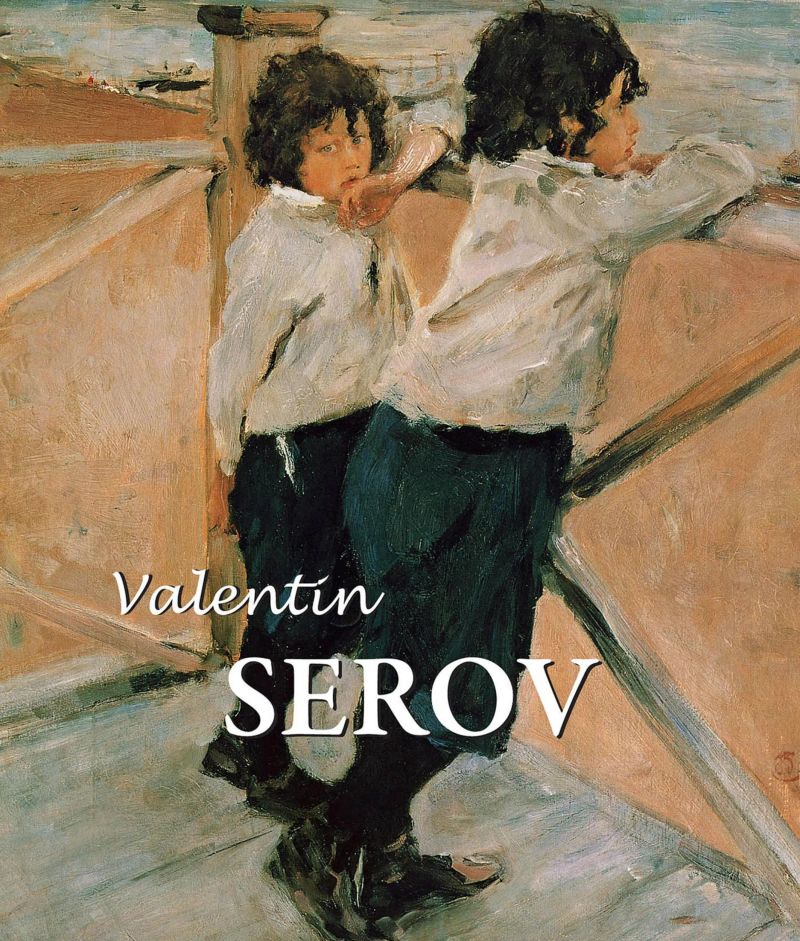
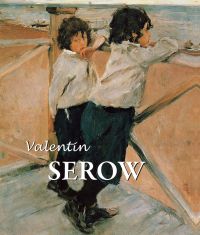
Among the "young peredvizhniki" who joined the World of Art group, the most brilliant portraitist was Valentin Serov. Like many of his contemporaries, he delighted in painting out of doors, and some of his most appealing portraits – such as Girl with Peaches, Girl in Sunlight and In Summer - owe their naturalness to their setting or to the interplay of sunlight and shadows. Indeed, Serov regarded them as "studies" rather than portraits, giving them descriptive titles that omitted the sitter's name. The subject of Girl with Peaches – painted when Serov was only twenty-two – was in fact Mamontov's daughter Vera. The model for In Summer was Serov's wife. When only six years old, Serov began to display signs of artistic talent. At nine years old, Repin acted as his teacher and mentor, giving him lessons in his studio in Paris, then let Serov work with him in Moscow, almost like an apprentice. Eventually Repin sent him to study with Pavel Chistiakov – the teacher of many of the World of Art painters, including Nesterov and Vrubel. Chistiakov was to become a close friend. Because Serov's career spanned such a long period, his style and subject matter vary considerably, ranging from voluptuous society portraits (the later ones notable for their grand style and sumptuous dresses) to sensitive studies of children. Utterly different from any of these is the famous nude study of the dancer Ida Rubinstein, in tempera and charcoal on canvas, which he painted towards the end of his life. Although Serov's early style has much in common with the French Impressionists, he did not become acquainted with their work until after he had painted pictures such as Girl with Peaches.
Audiobook details
Rating★★★★★ 4.5 (43)
Includes Goodreads, Amazon
GenreOther
Length3 hrs 6 mins
Narrated byListen with 1,000+ voices
FormateBook with Audio
Publish dateJan 17, 2012
LanguageEnglish
Table of contents
1Valentin Valentin
2Author: Dmitri V. Sarabianov
3INTRODUCTION TO RUSSIAN PAINTING
4Academy of Sciences.
5Ilya Repin, Valentin Serov, 1901. (p. 6)
Show all chaptersShow less
6Itinerant Art Exhibitions.
7THE FIRST MASTER OF RUSSIAN PAINTING
8with Peaches.
9his extraordinary talent on the whetstone of prodigious industry.
10with the creative endeavour of Serov.
11for instance, lent expressiveness to his images through composition, precise draftsmanship, and
12example, and his characteristic awareness of an artist’s lofty mission.
13models and paint in colour from nature.
14typical local scenes with Repin.
15originality of his artistic concept manifest themselves.
16different messages.
17temperamental, painterly sweep, and the deliberate outspokenness of its characterisation. A
18to the most adequate reflection of the main, salient idea.
19abhorrence for the insipid “verisimilitude” that, in Serov’s opinion, destroys art.
20likewise rank among the artist’s significant achievements.
21his perception.
22conversation with the artist.
23conveys all the lucid harmony, the utter naturalness of Pushkin’s inspiration.
24these phenomena to the very marrow.
25everything in grey hues and grey silence.
26Placeapart from other works by the “peasant” Serov.
27dreary, and insipid copies.
28(The Bugaboo) a tempera drawing entitled Soldiers, Soldiers, Heroes Every One...(pp. 86-87).
29hard labour.
30an interest in stage design.
31of the woman’s hands.
32reveal in manifest and unambiguous terms.
33an impression of weakness and vulnerability.
34Portrait of Anna Staal, 1910. Tempera. Private collection.
35production of fully-modelled, three-dimensional forms.
36recreation of the Petrine and Catherine epochs.
37heroic and bloody revolution.
38creative energy.
39beach, with Odysseus a little further behind.
40GRAPHIC WORKS
41BIOGRAPHY
42Valentin Serov as a child.
43Valentin Serov as a young man.
44Valentin Serov, late 1880s.
45Valentin Serov’s studio in Paris.
46Index
47later Prince Yusupov, 1903
48Count Sumarokov-Elston (father), 1903
49The Rape of Europa, 1910 The Rape of Europe, 1910
More from Dmitri V. Sarabianov
Valentin SerovDmitri V. Sarabianov3h 12m$16 · $0.00
Valentin SerovDmitri V. Sarabianov3h 11m4.4 (53)$16 · $0.00
Valentin SerovDmitri V. Sarabianov3h 6m4.4 (28)$15 · $0.00
Valentin SerovDmitri V. Sarabianov3h 9m4.5 (44)$15 · $0.00
Valentin SerovDmitri V. Sarabianov3h 11m4.4 (51)$16 · $0.00
Mere ChristianityC. S. Lewis7h 7m4.4 (519.7K)$24 · $0.00

Her Daily BreadKate Wood12h 57m4.6 (153)$33 · $0.00
The Holy Bible - 1 SamuelKing James2h 13m4.8 (1.6K)$3 · $0.00

The American Standard Bible — The Gospel of MatthewMatthew3h 56m4.7 (3K)$2 · $0.00

Bad Fat Black GirlSesali Bowen6h 32m4.7 (2.8K)$24 · $0.00

The King James Audio Bible New Testament CompleteChristopher Glyn20h 2m4.7 (2.6K)$12 · $0.00

Faiths CheckbookCharles Spurgeon12h 44m4.7 (3.2K)$11 · $0.00

Ten Things I Wish You Knew About Your Child's Mental HealthDr. Billy Garvey4h 53m4.7 (2.4K)$20 · $0.00

Designing Terry Pratchett’s DiscworldPaul Kidby3h 52m4.7 (343)$20 · $0.00
The Chosen Book OneAmanda Jenkins, Kristen Hendricks, Dallas Jenkins3h 8m4.6 (4.9K)$10 · $0.00
The Lives of BrianBrian Johnson9h 45m4.6 (3.5K)$29 · $0.00
Expository Thoughts on the Gospel of LukeJ.C. Ryle27h 13m4.7 (536)$18 · $0.00

CrossroadsKaleb Dahlgren7h 56m4.6 (4.9K)$26 · $0.00

Across the RiverKent Babb11h 40m4.6 (927)$29 · $0.00

Brain Training for RidersAndrea Monsarrat Waldo5h 56m4.7 (550)$19 · $0.00

My Effin' LifeGeddy Lee17h 11m4.6 (13.1K)$40 · $0.00

Kings and PawnsHoward Bryant10h 9m4.6 (678)$29 · $0.00

The Elementia Chronicles #2: The New OrderSean Fay Wolfe11h 17m4.6 (841)$29 · $0.00
The ActsLuke2h 55m4.6 (19.7K)$12 · $0.00

New Testament - Easy NavigationWorld English Bible19h 35m4.6 (1.3K)$1.30 · $0.00
You may also like
The Mystique of EnlightenmentU. G. Krishnamurti7h 50m4.3 (435)$1.99 · $0.00

The World as Will and IdeaArthur Schopenhauer56h 15m4.4 (14.5K)$2 · $0.00

The Essential Henry David Thoreau (Illustrated Collection of the Thoreau's Greatest Works) (Annotated)Henry David Thoreau89h 20m4.2 (1.1K)$2 · $0.00
Auguste RodinRainer María Rilke3h 14m4.2 (973)$13 · $0.00

A Week on the Concord and Merrimack RiversHenry David Thoreau13h 10m3.9 (3.6K)$23

Studies in Classic American LiteratureD. H. Lawrence8h 9m4.1 (1.3K)$1 · $0.00

Civil Disobedience & Other Essays - Premium Collection (Annotated)Henry David Thoreau18h 53m4.2 (379)$2 · $0.00

THE TWILIGHT OF THE IDOLS & THE ANTICHRISTFriedrich Nietzsche19h 40m4.3 (27.9K)$1.99 · $0.00

Walden and On the Duty of Civil DisobedienceHenry David Thoreau13h 51m4.1 (58.2K)$25
CoastingJonathan Raban11h 37m4.1 (726)$20 · $0.00
Auguste RodinRainer Maria Rilke3h 21m4.3 (740)$16 · $0.00
Leonardo da Vinci: Thoughts on Art & LifeLeonardo da Vinci6h 48m4.1 (1.5K)$1.99 · $0.00

The erotic museum in BerlinHans-Jürgen Döpp3h 44m$18 · $0.00

HENRY DAVID THOREAU - Ultimate Collection: 6 Books, 26 Essays & 60+ Poems, Including Translations. Biographies & Letters (Illustrated) (Annotated)Henry David Thoreau89h 24m4.5 (198)$2 · $0.00
Paul GauguinAnna Barskaya5h 31m$13 · $0.00
NudesJp. A. Calosse1h 22m$15 · $0.00
The Craft of Painting: 6 Classic Books on Techniques and StylesErnest Govett, A. de Beruete y Moret, C. Geoffrey Holme, Lewis Spence, Willard Huntington Wright, Arthur Seymour Jennings, Charles H. Caffin, Henry P. Bowie41h 11m$0.99 · $0.00

Rodin: The Man and His Art, with Leaves from His Note-bookJudith Cladel6h 53m$2 · $0.00

TurnerStéphanie Angoh46m4.3 (19)$8 · $0.00
GauguinNathalia Brodskaya1h 6m4.3 (40)$7 · $0.00