



Length56h 14m
About this audiobook
Arthur Schopenhauer's seminal work, "The World as Will and Idea," presents a profound philosophical exploration of reality through the lenses of perception and metaphysics. Blending rich metaphysical inquiry with a rigorous critique of reason, Schopenhauer posits that the underlying essence of the world is the 'Will'—an irrational force driving all existence. His prose, marked by eloquence and depth, challenges the Enlightenment's reliance on rationality, positioning intuition and desire at the heart of human experience. This philosophical tapestry is woven through his earlier influences, including Kant and Eastern philosophies, specifically Buddhism, highlighting a unique synthesis in the Western philosophical canon. Schopenhauer, a lonely figure in 19th-century philosophy, experienced the turbulence of personal struggles and intellectual isolation, which profoundly shaped his worldview and writing. His pessimistic outlook, rooted in the belief that suffering is inherent to existence, drives the themes of this work. His rejection of prevailing ideals of optimism in society positioned Schopenhauer as a precursor to existential thought, capturing the complexities of human experience with compassion and insight. "The World as Will and Idea" is essential reading for anyone seeking to grapple with the darker aspects of human existence and the motivations that govern our lives. Schopenhauer's eloquence invites readers to reflect deeply on their own experiences of desire, suffering, and the quest for understanding, challenging them to uncover the deeper will that resides within.
Audiobook details
Rating★★★★ 4.4 (14.5K)
Includes Goodreads, LibraryThing, Amazon, StoryGraph
GenrePhilosophy
Length56 hrs 14 mins
Narrated byListen with 1,000+ voices
FormateBook with Audio
Publish dateNov 12, 2023
LanguageEnglish
Table of contents
1Introduction
2Volume 1
3Translators' Preface.
4Preface To The First Edition.
5Preface To The Second Edition.
Show all chaptersShow less
6First Aspect. The Idea Subordinated To The Principle Of Sufficient Reason: The Object Of Experience And Science. (pt. 1)
7First Aspect. The Idea Subordinated To The Principle Of Sufficient Reason: The Object Of Experience And Science. (pt. 2)
8First Aspect. The Objectification Of The Will. (pt. 1)
9First Aspect. The Objectification Of The Will. (pt. 2)
10Second Aspect. The Idea Independent Of The Principle Of Sufficient Reason: The Platonic Idea: The Object Of Art. (pt. 1)
11Second Aspect. The Idea Independent Of The Principle Of Sufficient Reason: The Platonic Idea: The Object Of Art. (pt. 2)
12Second Aspect. The Assertion And Denial Of The Will To Live, When Self-Consciousness Has Been Attained. (pt. 1)
13Second Aspect. The Assertion And Denial Of The Will To Live, When Self-Consciousness Has Been Attained. (pt. 2)
14Second Aspect. The Assertion And Denial Of The Will To Live, When Self-Consciousness Has Been Attained. (pt. 3)
15Volume 2
16Appendix: Criticism of the Kantian Philosophy. (pt. 1)
17Appendix: Criticism of the Kantian Philosophy. (pt. 2)
18Appendix: Criticism of the Kantian Philosophy. (pt. 3)
19Chapter I. The Standpoint of Idealism.
20Chapter II. The Doctrine of Perception or Knowledge Of The Understanding.
21Chapter III. On The Senses.
22Chapter IV. On Knowledge A Priori.
23Chapter V.16 On The Irrational Intellect.
24Chapter VI. On The Doctrine of Abstract or Rational Knowledge.
25Chapter VII.19 On The Relation of the Concrete Knowledge of Perception to Abstract Knowledge.
26Chapter VIII.20 On The Theory Of The Ludicrous.
27Chapter IX.21 On Logic In General.
28Chapter X. On The Syllogism.
29Chapter XI.22 On Rhetoric.
30Chapter XII.23 On The Doctrine Of Science.
31Chapter XIII.25 On The Methods Of Mathematics.
32Chapter XIV. On The Association Of Ideas.
33Chapter XV. On The Essential Imperfections Of The Intellect.
34Chapter XVI.26 On The Practical Use Of Reason And On Stoicism.
35Chapter XVII.27 On Man's Need Of Metaphysics.
36Chapter XVIII.29 On The Possibility Of Knowing The Thing In Itself.
37Chapter XIX.30 On The Primacy Of The Will In Self-Consciousness.
38Chapter XX.34 Objectification Of The Will In The Animal Organism.
39Note On What Has Been Said About Bichat.
40Chapter XXI. Retrospect and More General View.
41Chapter XXII.1 Objective View of the Intellect.
42Chapter XXIII.3On The Objectification Of The Will In Unconscious Nature.
43Chapter XXIV. On Matter.
44Chapter XXV. Transcendent Considerations Concerning The Will As Thing In Itself.
45Chapter XXVI.4 On Teleology.
46Chapter XXVII. On Instinct And Mechanical Tendency.
47Chapter XXVIII.6 Characterisation Of The Will To Live.
48Chapter XXIX.9 On The Knowledge Of The Ideas.
49Chapter XXX.10 On The Pure Subject Of Knowledge.
50Chapter XXXI.11 On Genius.

Aphorismen zur LebensweisheitArthur Schopenhauer8h 28m4.3 (22K)$12 · $0.00

Die Welt als Wille und Vorstellung — Erster BandArthur Schopenhauer28h 37m4.4 (14.1K)$24 · $0.00

Die Welt als Wille und VorstellungArthur Schopenhauer57h 54m4.3 (14.1K)$1 · $0.00

Aphorismen zur LebensweisheitArthur Schopenhauer8h 35m4.2 (20.8K)$1 · $0.00

Versuch über Geistersehn und was damit zusammenhängtArthur Schopenhauer5h 27m4.0 (115)$1 · $0.00

Arthur Schopenhauer: L'Art d'avoir toujours raisonArthur Schopenhauer2h 55m3.8 (23K)$1.99 · $0.00

Vorlesungen und Abhandlungen Schopenhauer'sArthur Schopenhauer7h 16m4.3 (405)$1 · $0.00

Parerga und Paralipomena (Band 1&2) (Kommentiert)Arthur Schopenhauer51h 45m4.4 (1.1K)$1 · $0.00

Über die vierfache Wurzel des Satzes vom zureichenden Grunde (Kommentiert)Arthur Schopenhauer8h 24m4.6 (12)$1 · $0.00

Über die Weiber (Kommentiert)Arthur Schopenhauer2h 18m3.8 (166)$1 · $0.00

Gesammelte Schriften zur Geschichte der Philosophie (Kommentiert)Arthur Schopenhauer6h 19m4.4 (12)$1 · $0.00

Aphorismen zur Lebensweisheit (Kommentiert)Arthur Schopenhauer10h 15m4.5 (1.4K)$1 · $0.00
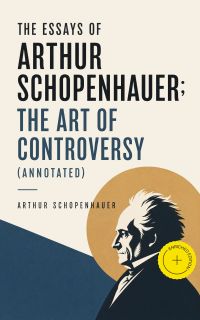
The Essays of Arthur Schopenhauer; the Art of Controversy (Annotated)Arthur Schopenhauer4h 28m3.8 (19.7K)$2 · $0.00

Métaphysique de l'amour (L'édition intégrale) (Annoté)Arthur Schopenhauer62h 4m4.0 (1K)$1.99 · $0.00

Essai sur les femmes (L'édition intégrale) (Annoté)Arthur Schopenhauer2h 1m3.7 (1.5K)$1.99 · $0.00

Parerga und Paralipomena (Kommentiert)Arthur Schopenhauer51h 51m4.3 (777)$2 · $0.00

Die wichtigen Werke von Arthur Schopenhauer (Kommentiert)Arthur Schopenhauer123h 14m4.4 (10)$2 · $0.00

The Essays of Arthur Schopenhauer; Counsels and MaximsArthur Schopenhauer5h 57m4.4 (977)$1 · $0.00

Über die WeiberArthur Schopenhauer36m3.5 (2.3K)$1 · $0.00

Über das Mitleid als Grundlage der MoralArthur Schopenhauer3h 12m4.2 (829)$14 · $0.00

That Bird Has My WingsJarvis Jay Masters9h 49m4.4 (13.7K)$29 · $0.00

Tâo Teh KingLaozi2h 34m4.4 (230.9K)$2 · $0.00

SymposiumPlato3h 26m4.4 (97.9K)$1.20 · $0.00

Buddhist Boot CampTimber Hawkeye2h 39m4.4 (8.4K)$18 · $0.00
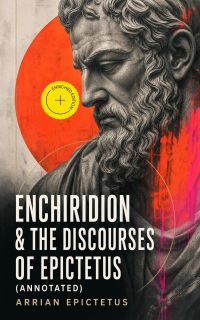
Enchiridion & The Discourses of Epictetus (Annotated)Arrian Epictetus18h 9m4.4 (3.5K)$2 · $0.00

The Meditations of the Emperor Marcus Aurelius AntoninusEmperor of Rome Marcus Aurelius5h 41m4.4 (1.8M)$1 · $0.00

Crime and PunishmentFyodor Dostoevsky23h 11m4.4 (1.3M)$12 · $0.00

MeditationsMarcus Aurelius5h 52m4.4 (433.7K)$1 · $0.00

Everyday DharmaSuneel Gupta5h 2m4.5 (761)$20 · $0.00

The Joyful Wisdom ("La Gaya Scienza")Friedrich Wilhelm Nietzsche11h 37m4.4 (26.6K)$1 · $0.00
The Art of LivingEpictetus, Sharon Lebell3h 16m4.4 (50.1K)$18 · $0.00

MeditationsEmperor Of Rome Marcus Aurelius7h 23m4.3 (477.5K)$1.20 · $0.00

The Imitation of ChristThomas à Kempis6h 27m4.3 (84.6K)$21 · $0.00

Sadhana: the realisation of lifeRabindranath Tagore3h 49m4.4 (8.6K)$6 · $0.00
SapiensYuval Noah Harari15h 18m4.3 (1.4M) · 1215$33 · $0.00

You BelongSebene Selassie8h 35m4.4 (2.7K)$26 · $0.00

The Song Celestial; Or, Bhagavad-Gîtâ (from the Mahâbhârata)Anonymous2h 18m4.4 (3.2K)$2 · $0.00

The KybalionThe Three Initiates3h 47m4.3 (58.7K)$20 · $0.00

Chuang Tzu: Mystic, Moralist, and Social ReformerZhuangzi14h 42m4.4 (1.2K)$1 · $0.00

High-RisersBen Austen13h 33m4.4 (2.8K)$33 · $0.00
You may also like

Beyond Good and EvilFriedrich Nietzsche7h 5m4.2 (137.8K)$2 · $0.00

Beyond Good and EvilFriedrich Nietzsche8h 10m4.2 (136.2K)$17

The Halo EffectPhil Rosenzweig6h 58m4.0 (6.5K)$20 · $0.00

The World as Will and Idea (Vol. 1-3)Arthur Schopenhauer56h 21m4.3 (2K)$2 · $0.00
After BuddhismStephen Batchelor17h 39m4.3 (1.5K)$23

Several Short Sentences about WritingVerlyn Klinkenborg4h 26m4.0 (6.6K)$15

The Genealogy of MoralsFriedrich Nietzsche5h 43m4.3 (84.3K)$12

The New OrganonFrancis Bacon9h 3m3.9 (2.3K)$3.50 · $0.00
Ditch the PitchSteve Yastrow3h 41m4.1 (265)$30

The Essays of Arthur Schopenhauer; The Art of LiteratureArthur Schopenhauer4h 1m4.1 (1.6K)$2.30

The Basis of MoralityArthur Schopenhauer8h 28m4.2 (2.6K)$2.30

SiddharthaHermann Hesse4h 12m4.2 (1M)$1.20 · $0.00

Pragmatism: A New Name for Some Old Ways of ThinkingWilliam James6h 56m4.0 (5.6K)$1 · $0.00

Styles of Radical WillSusan Sontag10h4.1 (4.8K)$20 · $0.00

Kant's Three CritiquesImmanuel Kant47h 6m4.3 (1.3K)$2 · $0.00
The Mystique of EnlightenmentU. G. Krishnamurti7h 50m4.3 (435)$1.99 · $0.00

EXPERIENCE AND EDUCATION – Premium Edition (Including Democracy & Education) (Annotated)John Dewey19h 17m4.6 (1K)$2 · $0.00

Rules for the Direction of the MindRené Descartes1h 34m3.9 (1K)$2 · $0.00
NudesJp. A. Calosse1h 22m$15 · $0.00

1000 Erotic Works of GeniusHans-Jürgen Döpp, Joe A. Thomas, Victoria Charles9h 54m4.0 (151)$18 · $0.00