

The World as Will and Idea (Vol. 1-3) (Annotated)
Enriched Edition. Philosophical Classic (Complete Edition)By Arthur Schopenhauer

Length57h 58m
About this audiobook
Arthur Schopenhauer's The World as Will and Idea presents one of the nineteenth century's most audacious metaphysical systems: the visible world is "idea," or representation, structured by the knowing subject, while its inner reality is blind, striving Will. Across its volumes, Schopenhauer moves from epistemology and ontology to aesthetics, ethics, and the denial of desire, writing in a lucid, aphoristic, often polemical style that stands apart from German Idealism even as it develops from Kant's critical philosophy and engages Plato, Buddhism, and the Upanishads. Schopenhauer, born in Danzig in 1788, was shaped by cosmopolitan travel, classical learning, and a profound opposition to Hegelian academic philosophy. His private means allowed intellectual independence, while personal pessimism and wide reading in Eastern and Western traditions encouraged his bleak but disciplined account of existence. The work reflects both his philosophical ambition and his conviction that art, compassion, and ascetic insight offer rare release from suffering. This book is recommended to readers seeking a rigorous, unsettling, and beautifully written alternative to optimistic philosophies of progress. It rewards patience with a vision that influenced Nietzsche, Wagner, Freud, Tolstoy, and modern existential thought.
This enriched edition has been carefully crafted to add value to your reading experience.
- A succinct Introduction situates the work's timeless appeal and themes.
- The Synopsis outlines the central plot, highlighting key developments without spoiling critical twists.
- A detailed Historical Context immerses you in the era's events and influences that shaped the writing.
- An Author Biography reveals milestones in the author's life, illuminating the personal insights behind the text.
- A thorough Analysis dissects symbols, motifs, and character arcs to unearth underlying meanings.
- Reflection questions prompt you to engage personally with the work's messages, connecting them to modern life.
- Hand‐picked Memorable Quotes shine a spotlight on moments of literary brilliance.
- Interactive footnotes clarify unusual references, historical allusions, and archaic phrases for an effortless, more informed read.
Audiobook details
Rating★★★★ 4.4 (1.9K)
Includes Amazon, LibraryThing, Goodreads, StoryGraph
GenrePhilosophy
Length57 hrs 58 mins
Narrated byListen with 1,000+ voices
FormateBook with Audio
Publish dateJul 17, 2020
LanguageEnglish
Table of contents
1Introduction
2Introduction
3Synopsis
4Historical Context
5Author Biography
Show all chaptersShow less
6Volume 1
7Translators' Preface.
8Preface To The First Edition.
9Preface To The Second Edition.
10First Book. The World As Idea.
11First Aspect. The Idea Subordinated To The Principle Of Sufficient Reason: The Object Of Experience And Science. (pt. 1)
12First Aspect. The Idea Subordinated To The Principle Of Sufficient Reason: The Object Of Experience And Science. (pt. 2)
13Second Book. The World As Will.
14First Aspect. The Objectification Of The Will. (pt. 1)
15First Aspect. The Objectification Of The Will. (pt. 2)
16Third Book. The World As Idea.
17Second Aspect. The Idea Independent Of The Principle Of Sufficient Reason: The Plato[44]nic Idea: The Object Of Art. (pt. 1)
18Second Aspect. The Idea Independent Of The Principle Of Sufficient Reason: The Plato[44]nic Idea: The Object Of Art. (pt. 2)
19Fourth Book. The World As Will.
20Second Aspect. The Assertion And Denial Of The Will To Live, When Self-Consciousness Has Been Attained. (pt. 1)
21Second Aspect. The Assertion And Denial Of The Will To Live, When Self-Consciousness Has Been Attained. (pt. 2)
22Second Aspect. The Assertion And Denial Of The Will To Live, When Self-Consciousness Has Been Attained. (pt. 3)
23Footnotes
24Appendix: Criticism of the Kantian Philosophy. (pt. 1)
25Appendix: Criticism of the Kantian Philosophy. (pt. 2)
26Appendix: Criticism of the Kantian Philosophy. (pt. 3)
27Supplements to the First Book.
28First Half. The Doctrine Of The Idea Of Perception. (To § 1–7 of the First Volume.) (pt. 1)
29First Half. The Doctrine Of The Idea Of Perception. (To § 1–7 of the First Volume.) (pt. 2)
30Second Half. The Doctrine of the Abstract Idea, or Thinking. (pt. 1)
31Second Half. The Doctrine of the Abstract Idea, or Thinking. (pt. 2)
32Second Half. The Doctrine of the Abstract Idea, or Thinking. (pt. 3)
33Supplements to the Second Book.
34Chapter XVIII.29 On The Possibility Of Knowing The Thing In Itself.
35Chapter XIX.30 On The Primacy Of The Will In Self-Consciousness.
36Chapter XX.34 Objectification Of The Will In The Animal Organism.
37Note On What Has Been Said About Bichat.
38Footnotes
39Translators' Preface.
40Preface To The First Edition.
41Preface To The Second Edition.
42First Book. The World As Idea.
43First Aspect. The Idea Subordinated To The Principle Of Sufficient Reason: The Object Of Experience And Science.
44Second Book. The World As Will.
45First Aspect. The Objectification Of The Will.
46Third Book. The World As Idea.
47Second Aspect. The Idea Independent Of The Principle Of Sufficient Reason: The Platonic Idea: The Object Of Art.
48Fourth Book. The World As Will.
49Second Aspect. The Assertion And Denial Of The Will To Live, When Self-Consciousness Has Been Attained.
50Chapter VII. 19 On The Relation of the Concrete Knowledge of Perception to Abstract Knowledge.

50 citations de SchopenhauerArthur Schopenhauer10m$3 · $0.00
The World as Will and IdeaArthur Schopenhauer57h 54m4.3 (8.4K)$1.99 · $0.00

Die Welt als Wille und VorstellungArthur Schopenhauer57h 54m4.3 (14.1K)$1 · $0.00

Aphorismen zur LebensweisheitArthur Schopenhauer8h 35m4.2 (20.8K)$1 · $0.00

Versuch über Geistersehn und was damit zusammenhängtArthur Schopenhauer5h 27m4.0 (115)$1 · $0.00

Arthur Schopenhauer: L'Art d'avoir toujours raisonArthur Schopenhauer2h 55m3.8 (23K)$1.99 · $0.00

Vorlesungen und Abhandlungen Schopenhauer'sArthur Schopenhauer7h 16m4.3 (405)$1 · $0.00

Versuch über Geistersehn und was damit zusammenhängt (Kommentiert)Arthur Schopenhauer5h 41m3.9 (83)$1 · $0.00

Parerga und Paralipomena (Band 1&2) (Kommentiert)Arthur Schopenhauer51h 45m4.4 (1.1K)$1 · $0.00

Über die vierfache Wurzel des Satzes vom zureichenden Grunde (Kommentiert)Arthur Schopenhauer8h 24m4.6 (12)$1 · $0.00

Über die Weiber (Kommentiert)Arthur Schopenhauer2h 18m3.8 (166)$1 · $0.00
Gesammelte Schriften zur Geschichte der Philosophie (Kommentiert)Arthur Schopenhauer6h 19m4.4 (12)$1 · $0.00

Aphorismen zur Lebensweisheit (Kommentiert)Arthur Schopenhauer10h 15m4.5 (1.4K)$1 · $0.00
The Essays of Arthur Schopenhauer; the Art of Controversy (Annotated)Arthur Schopenhauer4h 28m3.8 (19.7K)$2 · $0.00

Métaphysique de l'amour (L'édition intégrale) (Annoté)Arthur Schopenhauer62h 4m4.0 (1K)$0.99 · $0.00

Essai sur les femmes (L'édition intégrale) (Annoté)Arthur Schopenhauer2h 1m3.7 (1.5K)$0.99 · $0.00

Parerga und Paralipomena (Kommentiert)Arthur Schopenhauer51h 51m4.3 (777)$2 · $0.00

Die wichtigen Werke von Arthur Schopenhauer (Kommentiert)Arthur Schopenhauer123h 14m4.4 (10)$2 · $0.00

The Essays of Arthur Schopenhauer; Counsels and MaximsArthur Schopenhauer5h 57m4.4 (977)$1 · $0.00

Über die WeiberArthur Schopenhauer36m3.5 (2.3K)$1 · $0.00

IlluminationsWalter Benjamin10h 12m4.4 (16.2K)$20 · $0.00
That Bird Has My WingsJarvis Jay Masters9h 49m4.4 (13.7K)$29 · $0.00

Tâo Teh KingLaozi2h 34m4.4 (230.9K)$2 · $0.00
SymposiumPlato3h 26m4.4 (97.9K)$1.20 · $0.00

Buddhist Boot CampTimber Hawkeye2h 39m4.4 (8.4K)$18 · $0.00
Enchiridion & The Discourses of Epictetus (Annotated)Arrian Epictetus18h 9m4.4 (3.5K)$2 · $0.00

The Meditations of the Emperor Marcus Aurelius AntoninusEmperor of Rome Marcus Aurelius5h 41m4.4 (1.8M)$1 · $0.00

Crime and PunishmentFyodor Dostoevsky23h 11m4.4 (1.3M)$12 · $0.00

MeditationsMarcus Aurelius5h 52m4.4 (433.7K)$1 · $0.00

Everyday DharmaSuneel Gupta5h 2m4.5 (761)$20 · $0.00

The Joyful Wisdom ("La Gaya Scienza")Friedrich Wilhelm Nietzsche11h 37m4.4 (26.6K)$1 · $0.00
The Art of LivingEpictetus, Sharon Lebell3h 16m4.4 (50.1K)$18 · $0.00
MeditationsEmperor Of Rome Marcus Aurelius7h 23m4.3 (477.5K)$1.20 · $0.00

The Imitation of ChristThomas à Kempis6h 27m4.3 (84.6K)$21 · $0.00

Sadhana: the realisation of lifeRabindranath Tagore3h 49m4.4 (8.6K)$6 · $0.00
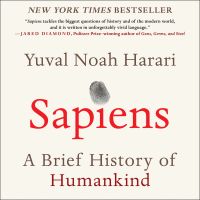
SapiensYuval Noah Harari15h 18m4.3 (1.4M) · 1295$33 · $0.00

You BelongSebene Selassie8h 35m4.4 (2.7K)$26 · $0.00
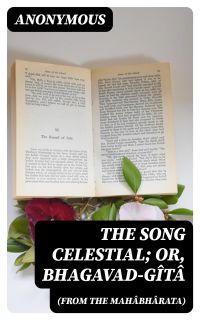
The Song Celestial; Or, Bhagavad-Gîtâ (from the Mahâbhârata)Anonymous2h 18m4.4 (3.2K)$2 · $0.00

The KybalionThe Three Initiates3h 47m4.3 (58.7K)$20 · $0.00

Chuang Tzu: Mystic, Moralist, and Social ReformerZhuangzi14h 42m4.4 (1.2K)$1 · $0.00
You may also like
The World as Will and IdeaArthur Schopenhauer57h 54m4.3 (8.4K)$1.99 · $0.00
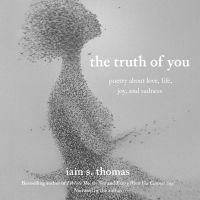
The Truth of YouIain S. Thomas1h 27m4.3 (2K)$15

The Private Papers of Henry RyecroftGeorge Gissing6h 20m4.0 (2.3K)$2.30 · $0.00

Emily DickinsonEmily Dickinson5h 23m4.5 (142.8K)$16

A Year with RumiColeman Barks5h 56m4.5 (2.6K)$24 · $0.00
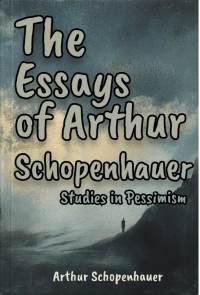
The Essays of Arthur SchopenhauerArthur Schopenhauer3h 3m4.3 (2.4K)Free

Poems of Emily Dickinson – Series 2Emily Dickinson1h 58m4.3 (3.6K)$15

Stray BirdsRabindranath Tagore40m4.3 (3.4K)$3.50 · $0.00

Organ SpeakGiulia Enders8h 53m4.2 (1.5K)$29 · $0.00
The Art of LivingThich Nhat Hanh5h 1m4.5 (14.2K)$24 · $0.00

BluetsMaggie Nelson2h 7m4.2 (61.2K)$15

The Complete Poetical Works of D. H. Lawrence (Annotated)D. H. Lawrence24h 12m4.3 (290)$2 · $0.00

BookendsMichael Chabon4h 42m3.6 (783)$20 · $0.00

IN THE OLD SUNHermann Hesse3h 25m3.2 (407)$1.99 · $0.00

Poems of peaceJames Allen1h 11m4.2 (117)$1 · $0.00

The Power of MusicAnonymous2h 21m$2 · $0.00

Sounds of Mother Earth - Relaxing DreamUnknown Author46m$7 · $0.00

Poems, 1908-1919John Drinkwater2h 49m$2 · $0.00
Accept Criticism - Hypnosis and Guided MeditationJohn Flatcher14m$4 · $0.00

Deep Sleep MeditationDeep Sleep Meditation1h4.3 (121)$8 · $0.00