
Audio only


Length41h 55m
About this audiobook
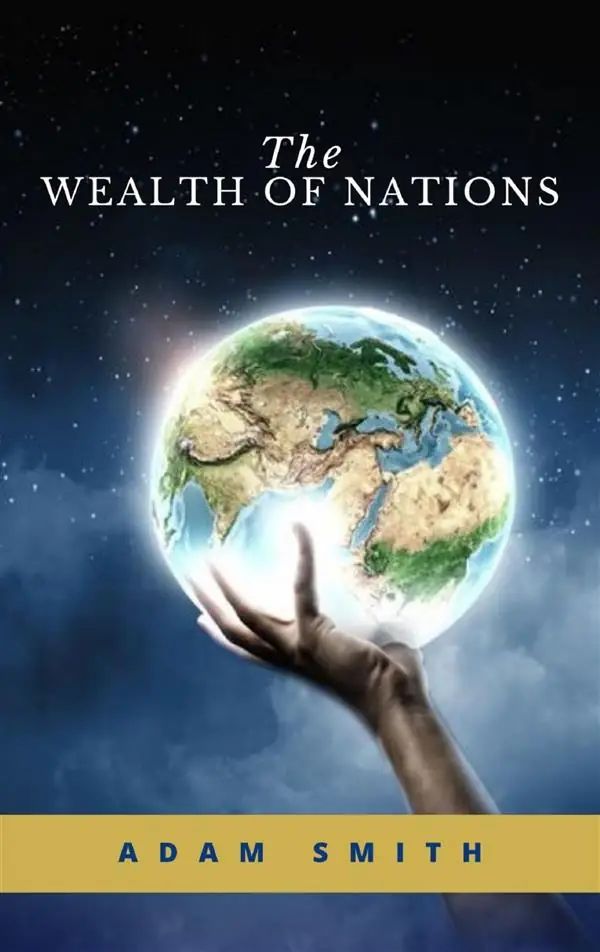
An Inquiry into the Nature and Causes of the Wealth of Nations generally referred to by its shortened title "The Wealth of Nations", is the magnum opus of the Scottish economist and moral philosopher Adam Smith.Adam Smith (1723 – 1790) was a Scottish economist, philosopher and author as well as a moral philosopher, a pioneer of political economy and a key figure during the Scottish Enlightenment era.
Audiobook details
Rating★★★★ 4.1 (40.9K)
Includes Goodreads, LibraryThing, Amazon, StoryGraph
GenreLiterary Classics, Biography and Memoir
Length41 hrs 55 mins
Narrated byListen with 1,000+ voices
FormateBook with Audio
Publish dateApr 1, 2020
LanguageEnglish
Table of contents
1Introduction
2Book I. Of The Causes Of Improvement In The Productive Powers Of Labour, And Of The Order According To Which Its Produce Is Naturally Distributed Among The Different Ranks Of The People
3Chapter I. Of The Division Of Labour
4Chapter II. Of The Principle Which Gives Occasion To The Division Of Labour
5Chapter III. That The Division Of Labour Is Limited By The Extent Of The Market
Show all chaptersShow less
6Chapter IV. Of The Origin And Use Of Money
7Chapter V. Of The Real And Nominal Price Of Commodities, Or Of Their Price In Labour, And Their Price In Money
8Chapter VI. Of The Component Part Of The Price Of Commodities
9Chapter VII. Of The Natural And Market Price Of Commodities
10Chapter VIII. Of The Wages Of Labour
11Chapter IX. Of The Profits Of Stock
12Chapter X. Of Wages And Profit In The Different Employments Of Labour And Stock
13Chapter XI. Of The Rent Of Land (pt. 1)
14Chapter XI. Of The Rent Of Land (pt. 2)
15Chapter XI. Of The Rent Of Land (pt. 3)
16Book II. Of The Nature, Accumulation, And Employment Of Stock
17INTRODUCTION
18Chapter I. Of The Division Of Stock
19Chapter II. Of Money, Considered As A Particular Branch Of The General Stock Of The Society, Or Of The Expense Of Maintaining The National Capital
20Chapter III. Of The Accumulation Of Capital, Or Of Productive And Unproductive Labour
21Chapter IV. Of Stock Lent At Interest
22Chapter V. Of The Different Employments Of Capitals
23Book III. Of The Different Progress Of Opulence In Different Nations
24Chapter I. Of The Natural Progress Of Opulence
25Chapter II. Of The Discouragement Of Agriculture In The Ancient State Of Europe, After The Fall Of The Roman Empire
26Chapter III. Of The Rise And Progress Of Cities And Towns, After The Fall Of The Roman Empire
27Chapter IV. How The Commerce Of Towns Contributed To The Improvement Of The Country
28Book IV. Of Systems Of Political Economy
29Introduction
30Chapter I. Of The Principle Of The Commercial Or Mercantile System
31Chapter II. Of Restraints Upon Importation From Foreign Countries Of Such Goods As Can Be Produced At Home
32Chapter III. Of The Extraordinary Restraints Upon The Importation Of Goods Of Almost All Kinds, From Those Countries With Which The Balance Is Supposed To Be Disadvantageous
33Chapter IV. Of Drawbacks
34Chapter V. Of Bounties
35Chapter VI. Of Treaties Of Commerce
36Chapter VII. Of Colonies (pt. 1)
37Chapter VII. Of Colonies (pt. 2)
38Chapter VIII. Conclusion Of The Mercantile System
39Chapter IX. Of The Agricultural Systems, Or Of Those Systems Of Political Economy Which Represent The Produce Of Land, As Either The Sole Or The Principal Source Of The Revenue And Wealth Of Every Country
40Appendix To Book IV
41Book V. Of The Revenue Of The Sovereign Or Commonwealth
42Chapter I. Of The Expenses Of The Sovereign Or Commonwealth (pt. 1)
43Chapter I. Of The Expenses Of The Sovereign Or Commonwealth (pt. 2)
44Chapter I. Of The Expenses Of The Sovereign Or Commonwealth (pt. 3)
45Chapter II. Of The Sources Of The General Or Public Revenue Of The Society (pt. 1)
46Chapter II. Of The Sources Of The General Or Public Revenue Of The Society (pt. 2)
47Chapter III. Of Public Debts

To Kill a MockingbirdHarper Lee12h 18m4.5 (7.4M)$29 · $0.00

These Precious DaysAnn Patchett11h 14m4.5 (45.2K)$29 · $0.00

The Complete Histories / History Plays of William Shakespeare (Annotated)William Shakespeare29h 42m4.6 (2.3K)$1.99 · $0.00

Braving the TruthRachel Held Evans11h 31m4.7 (359)$29 · $0.00

The Old Man and the Sea (Annotated)Ernest Hemingway4h 27m4.6 (1.4K)$2 · $0.00

Twelfth Night (The Unabridged Play) + The Classic Biography (Annotated)William Shakespeare, Sidney Lee16h 38m4.6 (1.4K)$2 · $0.00

Henry V (The Play, Historical Background and Analysis of the Character in the Play)William Shakespeare, William Hazlitt8h 50m4.6 (1.3K)$1.99 · $0.00

H. P. LOVECRAFT Ultimate Collection: Novellas, Short Stories, Poetry & Essays (Annotated)H. P. Lovecraft12h 28m4.6 (2.3K)$2 · $0.00

Time RegainedMarcel Proust16h 8m4.5 (10.6K)$1.99 · $0.00

Lessons in TruthH. Emilie3h 50m4.6 (1.4K)$4.70 · $0.00

TORAH - Bilingual Edition: English/Hebrew (Annotated)Max Margolis, JPS28h 26m4.6 (1K)$2 · $0.00

Betty Crocker picture cooky bookBetty Crocker, Inc. General Mills2h 13m4.5 (6.5K)$1 · $0.00

The Complete Tales of Beatrix PotterBeatrix Potter3h 36m4.5 (75K)$3 · $0.00

Anne of Green GablesL. M. Montgomery11h 1m4.5 (1.2M)$2.30 · $0.00

Crime and Punishment (The Unabridged Garnett Translation) (Annotated)Fyodor Dostoevsky24h 25m4.5 (15.4K)$1.99 · $0.00

The North American IndianEdward S. Curtis, Frederick Webb Hodge6h4.5 (1.2K)$2 · $0.00

The Picture of Dorian Gray: The Uncensored 13 Chapter Version + The Revised 20 Chapter Version (Annotated)Oscar Wilde16h 12m4.5 (2.8K)$1.99 · $0.00

Grimoire Of The Everyday WitchIsadora Lys / Virginia Santos5h 35m4.5 (3.9K)$9 · $0.00

Winnie-the-PoohAlan Alexander Milne2h 52m4.5 (401.1K)$3 · $0.00

Sitting PrettyRebekah Taussig7h 33m4.5 (18.9K)$26 · $0.00

John Muir: The Story of My Boyhood and Youth & Letters to a Friend (Annotated)John Muir10h 13m4.7 (1.1K)$1.99 · $0.00

Invisible StormJason Kander6h 48m4.7 (3.2K)$24 · $0.00

Forever BoyKate Swenson9h 27m4.7 (5K)$29 · $0.00

You Are Worth ItKyle Carpenter, Don Yaeger8h 53m4.7 (4.8K)$29 · $0.00

The Happiest Man on EarthEddie Jaku3h 48m4.6 (178K)$7 · $0.00

MotherlandJulia Ioffe17h 52m4.7 (2.5K)$40 · $0.00

Evidence Not SeenDarlene Deibler Rose11h 11m4.6 (11.9K)$29 · $0.00

Where Cowards Go to DieBenjamin Sledge8h 42m4.7 (351)$20 · $0.00

Will You Love Me?Cathy Glass9h 5m4.6 (9.3K)$29 · $0.00

Designing Terry Pratchett’s DiscworldPaul Kidby3h 52m4.7 (343)$20 · $0.00

HostageEli Sharabi5h 25m4.6 (10.8K)$24 · $0.00

Finding MeViola Davis9h 15m4.6 (256.4K)$29 · $0.00

The Dangerous Truth about Today’s MarijuanaLaura Stack CSP, MBA9h 57m4.7 (385)$20 · $0.00

Birdie & HarlowTaylor Wolfe7h 50m4.6 (6.5K)$26 · $0.00

The Lives of BrianBrian Johnson9h 45m4.6 (3.5K)$29 · $0.00

I Am The StormJanice Dean9h4.6 (1.5K)$8 · $0.00

Black History CollectionFrederick Douglass, Harriet Ann Jacobs, Booker T. Washington, W.E.B. Du Bois27h 9m4.6 (2.6K)$18 · $0.00

Just as I AmCicely Tyson16h 8m4.6 (99K)$33 · $0.00

Unbroken Bonds of BattleJohnny Joey Jones8h 31m4.6 (2.6K)$8 · $0.00

The Daughter of AuschwitzTova Friedman, Malcolm Brabant7h 54m4.6 (16.7K)$26 · $0.00
You may also like

The Constitution of the United States of AmericaVarious70h 42m4.5 (46.3K)$1 · $0.00

The Age of ReasonThomas Paine6h 53m4.1 (38.4K)$1.20 · $0.00
The Suppression Of The African Slave Trade To The United States Of AmericaW. E. B. Du Bois12h 54m4.2 (1.6K)$2.30
Manifesto of the Communist PartyKarl Marx, Friedrich Engels3h 10m3.9 (248.9K)$1 · $0.00

Socialism: Utopian and Scientific (Annotated)Frederick Engels3h 35m4.3 (29.7K)$1.99 · $0.00

The French Revolution and NapoleonJean-Jacques Rousseau, Alexis de Tocqueville, Montesquieu, Charles Downer Hazen62h 54m4.1 (574)$2 · $0.00
The Three Sources and Three Component Parts of MarxismVladimir Lenin17m4.2 (1.2K)$2 · $0.00
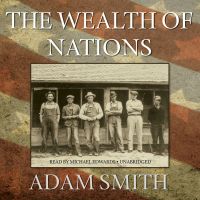
The Wealth of NationsAdam Smith35h 14m4.1 (124.1K)$40
The Communist ManifestoKarl Marx, Friedrich Engels2h 13m3.9 (252.7K)$2 · $0.00
The Complete WorksThomas Jefferson210h 44m4.4 (197)$1.99 · $0.00

Two Tracts on Civil Liberty, the War with America, and the Debts and Finances of the KingdomRichard Price9h 22m$1 · $0.00

The Constitution of Our CountryFrank A. Rexford, Clara L. Carson3h 17m$15

Report on Manufactures (Summarized Edition)Alexander Hamilton2h 13m$2
The Philosophy of Human Affairs (Annotated)Aristotle21h 40m$2 · $0.00

Teaching Them All ThingsJohn Warwick Montgomery37m$3 · $0.00

The Ancien RégimeCharles Kingsley2h 1m$2 · $0.00

Second State of the Union AddressJohn Tyler1h 40m$2 · $0.00

England's Alarm! On the prevailing doctrine of libels as laid by the Earl of MansfieldWilliam Jones, Manasseh Dawes1h 2m$2 · $0.00

The proposed union of the telegraph and postal systemsWestern Union Telegraph Company5h 32m$2 · $0.00
Lincoln's Plan of ReconstructionCharles H. McCarthy22h 5m$2 · $0.00