
The Universal Compass for Educators
Enriched edition.By John Dewey


Length19h 11m
About this audiobook
In 'The Universal Compass for Educators', John Dewey explores the fundamental principles of education, blending philosophy and practicality to provide a comprehensive guide for educators. Written in a clear and accessible manner, Dewey incorporates his pragmatic approach to education, emphasizing the importance of experiential learning and social interaction in the classroom. Drawing on his background in psychology and philosophy, Dewey delves into the concept of education as a means of personal and societal growth. John Dewey, a renowned American philosopher and educational reformer, was deeply invested in the development of progressive education. His belief in the importance of hands-on learning and critical thinking influenced his writing and teaching, making him a leading figure in the field of educational philosophy. Dewey's extensive experience as an educator and his unwavering commitment to educational reform are evident throughout 'The Universal Compass for Educators'. I highly recommend 'The Universal Compass for Educators' to educators, students, and anyone interested in the philosophy of education. Dewey's insightful analysis and practical advice make this book an essential read for understanding the role of education in shaping individuals and society.
In this enriched edition, we have carefully created added value for your reading experience:
- A comprehensive Introduction outlines these selected works' unifying features, themes, or stylistic evolutions.
- The Author Biography highlights personal milestones and literary influences that shape the entire body of writing.
- A Historical Context section situates the works in their broader era—social currents, cultural trends, and key events that underpin their creation.
- A concise Synopsis (Selection) offers an accessible overview of the included texts, helping readers navigate plotlines and main ideas without revealing critical twists.
- A unified Analysis examines recurring motifs and stylistic hallmarks across the collection, tying the stories together while spotlighting the different work's strengths.
- Reflection questions inspire deeper contemplation of the author's overarching message, inviting readers to draw connections among different texts and relate them to modern contexts.
- Lastly, our hand‐picked Memorable Quotes distill pivotal lines and turning points, serving as touchstones for the collection's central themes.
Audiobook details
GenreEducation and Learning
Length19 hrs 11 mins
Narrated byListen with 1,000+ voices
FormateBook with Audio
Publish dateDec 18, 2019
LanguageEnglish
Table of contents
1The Principles of Education We Lack In
2Introduction
3Author Biography
4Historical Context
5Synopsis (Selection)
Show all chaptersShow less
6Experience and Education
7Chapter One: Education as a Necessity of Life
8Chapter Two: Education as a Social Function
9Chapter Three: Education as Direction
10Chapter Four: Education as Growth
11Chapter Five: Preparation, Unfolding, and Formal Discipline
12Chapter Six: Education as Conservative and Progressive
13Chapter Seven: The Democratic Conception in Education
14Chapter Eight: Aims in Education
15Chapter Nine: Natural Development and Social Efficiency as Aims
16Chapter Ten: Interest and Discipline
17Chapter Eleven: Experience and Thinking
18Chapter Twelve: Thinking in Education
19Chapter Thirteen: The Nature of Method
20Chapter Fourteen: The Nature of Subject Matter
21Chapter Fifteen: Play and Work in the Curriculum
22Chapter Sixteen: The Significance of Geography and History
23Chapter Seventeen: Science in the Course of Study
24Chapter Eighteen: Educational Values
25Chapter Nineteen: Labor and Leisure
26Chapter Twenty: Intellectual and Practical Studies
27Chapter Twenty-one: Physical and Social Studies: Naturalism and Humanism
28Chapter Twenty-two: The Individual and the World
29Chapter Twenty-Three: Vocational Aspects of Education
30Chapter Twenty-four: Philosophy of Education
31Chapter Twenty-five: Theories of Knowledge
32Chapter Twenty-six: Theories of Morals
33Analysis
34Reflection
35Memorable Quotes
The Logic of Human Mind & Other WorksJohn Dewey40h 53m$1.99 · $0.00
The Schools of Utopia & Schools of To-morrow (Illustrated)John Dewey8h 56m3.9 (167)$1.99 · $0.00
Democracy and Education & Other Writings (A Collected Edition)John Dewey25h 20m4.1 (12.5K)$1.99 · $0.00
The Principles of Education We Lack InJohn Dewey33h 45m$1.99 · $0.00
The Logic of ThoughtJohn Dewey52h 28m$1.99 · $0.00

China, Japan and the USA (Annotated)John Dewey8h 57m$1.99 · $0.00
The Collected Works of John Dewey (Annotated)John Dewey168h 46m4.5 (36)$2 · $0.00
Collected Writings on Education (Annotated)John Dewey24h 16m$2 · $0.00
PSYCHOLOGY & SOCIAL PRACTICE – Premium Collection (Annotated)John Dewey40h 49m$2 · $0.00

China, Japan and the U.S.A (Annotated)John Dewey8h 54m3.8 (12)$2 · $0.00
EXPERIENCE AND EDUCATION – Premium Edition (Including Democracy & Education) (Annotated)John Dewey19h 17m4.6 (1K)$2 · $0.00
Reconstruction in PhilosophyJohn Dewey6h 43m4.0 (690)$1 · $0.00
The Collected Works of John DeweyJohn Dewey168h 59m4.1 (45)$1 · $0.00
The Essential John Dewey: 20+ Books in One EditionJohn Dewey88h 54m$1 · $0.00

Leibniz's New Essays Concerning the Human Understanding: A Critical ExpositionJohn Dewey8h 57m3.9 (24)$1 · $0.00
How We Think & Other Works On LogicJohn Dewey51h 12m$2 · $0.00

John Dewey: Philosophical WorksJohn Dewey86h 57m$1 · $0.00
Schools Of To-morrow + The Schools of UtopiaJohn Dewey7h 42m3.9 (146)$1 · $0.00
John Dewey: The Philosophy of EducationJohn Dewey33h 59m4.0 (64)$1 · $0.00

A Brief History of IntelligenceMax S. Bennett12h 18m4.6 (6.6K)$29 · $0.00

HomeschooledStefan Merrill Block7h 10m3.6 (18.5K)$28 · $0.00

EducationEllen G. White9h 41m4.6 (1.5K)$2 · $0.00

Parents and Children (Annotated)Charlotte Mason9h 23m4.6 (988)$2 · $0.00

Children Under FireJohn Woodrow Cox10h 17m4.5 (1.6K)$29 · $0.00

The State Must ProvideAdam Harris7h 15m4.5 (775)$24 · $0.00

The Call of the Wild and FreeAinsley Arment9h 7m4.4 (21.2K)$29 · $0.00
The Freelance WayRobert Vlach19h 48m4.5 (528)$40 · $0.00

Race to the BottomLuke Rosiak9h 20m4.5 (600)$29 · $0.00

They Came for the SchoolsMike Hixenbaugh9h 5m4.5 (2.6K)$8 · $0.00

Find Me UnafraidKennedy Odede, Jessica Posner11h 11m4.5 (2.7K)$29 · $0.00

Asking for ItKate Harding8h 55m4.4 (5.3K)$20 · $0.00
Defining Moments in Black HistoryDick Gregory7h 37m4.4 (6K)$26 · $0.00

The Emerald Tablets of Thoth the AtlanteanMaurice Doreal3h 4m4.4 (8.8K)$6 · $0.00

Learning AmericaLuma Mufleh6h 37m4.4 (564)$24 · $0.00
Math-ishJo Boaler7h 21m4.4 (588)$24 · $0.00
It Worked For MeColin Powell7h 42m4.3 (9.8K)$26 · $0.00

Little SoldiersLenora Chu11h 30m4.3 (3.1K)$29 · $0.00

Financial FeministTori Dunlap8h 3m4.2 (22.2K)$8 · $0.00

Grammar-land; Or, Grammar in Fun for the Children of Schoolroom-shireM. L. Nesbitt2h 36m4.4 (487)$1 · $0.00
You may also like

PurpliciousVictoria Kann, Elizabeth Kann8m4.1 (8.8K)$4 · $0.00
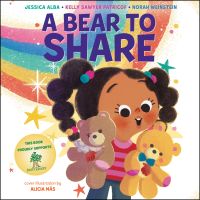
A Bear to ShareJessica Alba, Kelly Sawyer Patricof, Norah Weinstein9m4.4 (281)$4 · $0.00

Fancy Nancy: Hair Dos and Hair Don'tsJane O'Connor7m4.1 (1.8K)$4 · $0.00
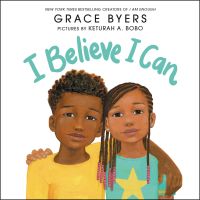
I Believe I CanGrace Byers4m4.4 (2.1K)$4 · $0.00

Mia and the Girl with a TwirlRobin Farley5m4.1 (262)$4 · $0.00
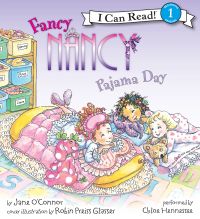
Fancy Nancy: Pajama DayJane O'Connor6m4.1 (3K)$4 · $0.00
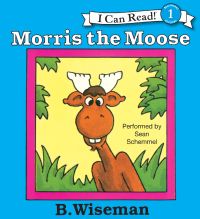
Morris the MooseB. Wiseman4m4.2 (2.8K)$4 · $0.00

Pete the Cat and the New GuyJames Dean, Kimberly Dean5m4.3 (5.9K)$4 · $0.00
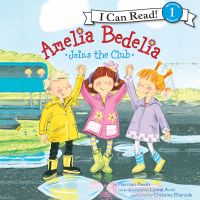
Amelia Bedelia Joins the ClubHerman Parish6m4.3 (723)$4 · $0.00
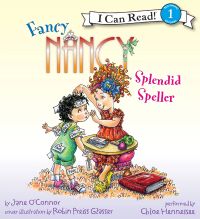
Fancy Nancy: Splendid SpellerJane O'Connor7m4.3 (646)$4 · $0.00
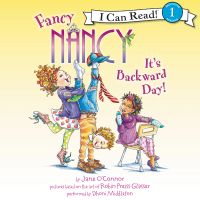
Fancy Nancy: It's Backward Day!Jane O'Connor6m4.2 (2.7K)$4 · $0.00
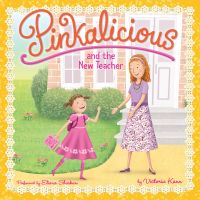
Pinkalicious and the New TeacherVictoria Kann6m4.2 (722)$4 · $0.00
The Ladies' Book of Etiquette, and Manual of PolitenessFlorence Hartley9h 30m3.8 (2.2K)$2.30
Being FrankDonna Earnhardt9m4.2 (827)$5 · $0.00
Big Words for Little PeopleJamie Lee Curtis6m4.2 (2.1K)$4 · $0.00

The Couch PotatoJory John9m4.3 (16.3K)$4 · $0.00

No Place for TruthDavid F. Wells14h 4m4.3 (4.5K)$23

EtiquetteEmily Post22h 14m4.2 (3.7K)$2.30

Little BoysKlaus H. Carl5m$8 · $0.00
Amelia Bedelia Gets the PictureHerman Parish7m3.8 (107)$4 · $0.00