
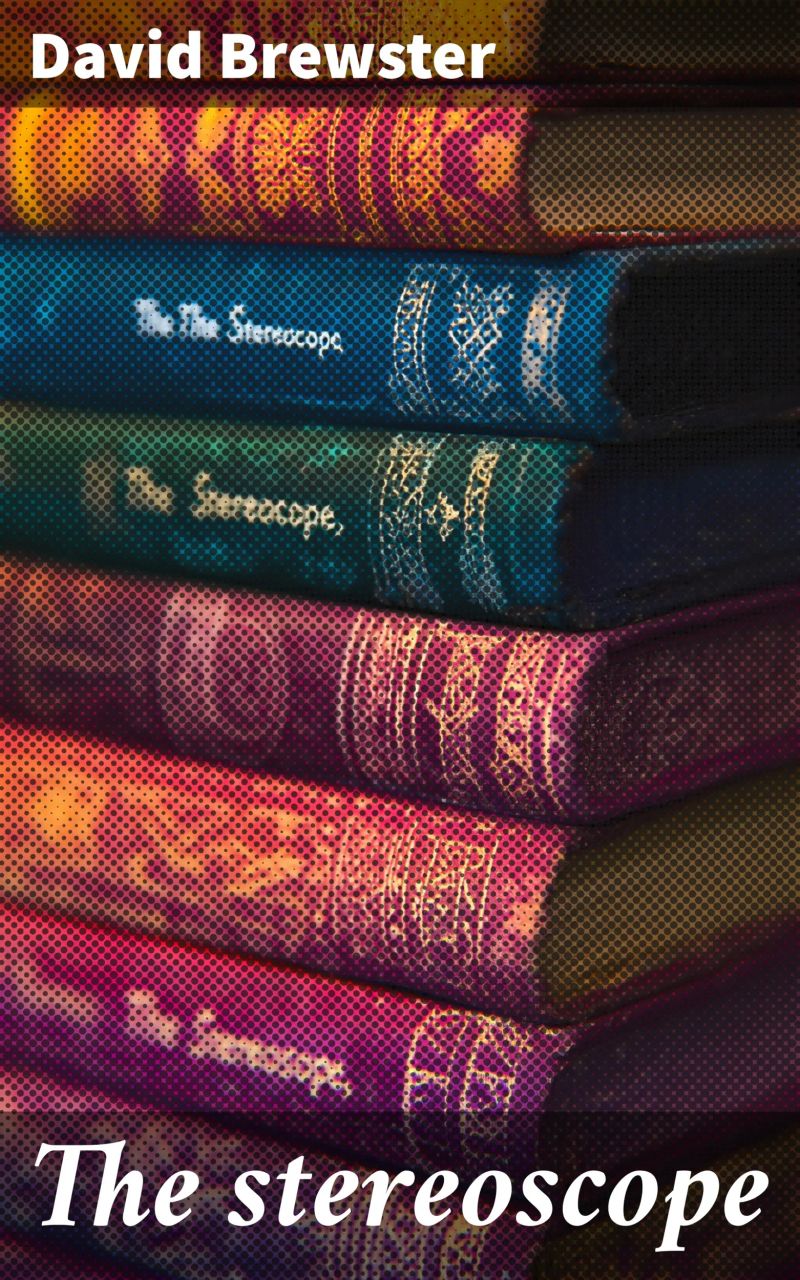
The stereoscope
Its history, theory, and construction, with its application to the fine and useful arts and to educationBy David Brewster


Length6h 32m
About this audiobook
In "The Stereoscope," David Brewster invites readers into a world where optics and imagination converge. This groundbreaking work not only explores the mechanics of the stereoscope—a device that creates the illusion of depth when viewing two slightly different images—but also delves into the philosophical implications of visual perception. Brewster's prose is both accessible and rich with scientific inquiry, employing a blend of narrative and technical detail that reflects the Victorian fascination with innovation and discovery. Through meticulously illustrated examples, the book situates the stereoscope within the broader context of the era's advancements in photography and visual technology. As a prominent physicist, inventor, and advocate for science education, Brewster was deeply influenced by his surroundings in 19th-century Scotland, a period marked by rapid scientific progress. His contributions to the fields of optics and photography are well-documented, and his personal experiences with visual phenomena undoubtedly shaped his perspective in crafting this work. Brewster's commitment to enhancing public understanding of science reflects a desire to bridge the gap between complex theories and everyday experiences. I highly recommend "The Stereoscope" to anyone interested in the intersections of art, science, and perception. Brewster's ability to illuminate the complexities of visual experience makes this book not only an essential read for students of optics but also fascinating for lovers of technology and history alike.
Audiobook details
GenreOther
Length6 hrs 32 mins
Narrated byListen with 1,000+ voices
FormateBook with Audio
Publish dateMar 2, 2025
LanguageEnglish
Table of contents
1INTRODUCTION.
2CHAPTER I. HISTORY OF THE STEREOSCOPE.
3CHAPTER II. ON MONOCULAR VISION, OR VISION WITH ONE EYE.
4CHAPTER III. ON BINOCULAR VISION, OR VISION WITH TWO EYES.
5The Ocular Stereoscope.
Show all chaptersShow less
6Description of the Ocular Stereoscope.
7Description of the Reflecting Stereoscope.
8Description of the Lenticular Stereoscope.
9CHAPTER V. ON THE THEORY OF STEREOSCOPIC VISION.
10CHAPTER VI. ON THE UNION OF SIMILAR PICTURES IN BINOCULAR VISION.
111. The Tubular Reflecting Stereoscope.
122. The Single Reflecting Stereoscope.
133. The Double Reflecting Stereoscope.
144. The Total-Reflexion Stereoscope.
155. The Single-Prism Stereoscope.
166. The Opera-Glass Stereoscope.
177. The Eye-Glass Stereoscope.
188. The Reading-Glass Stereoscope.
199. The Camera Stereoscope.
2010. The Chromatic Stereoscope.
2111. The Microscope Stereoscope.
22Geometrical Solids.
23Portraits of Living Persons or Animals.
24On the Proper Position of the Sitter.
25The Binocular Camera.
26The Single Lens Binocular Camera.
27The Binocular Camera made the Stereoscope.
28CHAPTER IX. ON THE ADAPTATION OF THE PICTURES TO THE STEREOSCOPE. —THEIR SIZE, POSITION, AND ILLUMINATION.
29CHAPTER X. APPLICATION OF THE STEREOSCOPE TO PAINTING.
30CHAPTER XI. APPLICATION OF THE STEREOSCOPE TO SCULPTURE,ARCHITECTURE, AND ENGINEERING.
31CHAPTER XII. APPLICATION OF THE STEREOSCOPE TO NATURAL HISTORY.
32CHAPTER XIII. APPLICATION OF THE STEREOSCOPE TO EDUCATIONAL PURPOSES.
33CHAPTER XIV. APPLICATION OF THE STEREOSCOPE TO PURPOSES OF AMUSEMENT.
34CHAPTER XV. ON THE PRODUCTION OF STEREOSCOPIC PICTURES FROM A SINGLE PICTURE.
35CHAPTER XVI. ON CERTAIN FALLACIES OF SIGHT IN THE VISION OF SOLID BODIES.
36CHAPTER XVII. ON CERTAIN DIFFICULTIES EXPERIENCED IN THE USE OF THE STEREOSCOPE.
Mere ChristianityC. S. Lewis7h 7m4.4 (519.7K)$24 · $0.00

Her Daily BreadKate Wood12h 57m4.6 (153)$33 · $0.00
The Holy Bible - 1 SamuelKing James2h 13m4.8 (1.6K)$3 · $0.00

The American Standard Bible — The Gospel of MatthewMatthew3h 56m4.7 (3K)$2 · $0.00

Bad Fat Black GirlSesali Bowen6h 32m4.7 (2.8K)$24 · $0.00
The King James Audio Bible New Testament CompleteChristopher Glyn20h 2m4.7 (2.6K)$12 · $0.00
Faiths CheckbookCharles Spurgeon12h 44m4.7 (3.2K)$11 · $0.00
Ten Things I Wish You Knew About Your Child's Mental HealthDr. Billy Garvey4h 53m4.7 (2.4K)$20 · $0.00
Designing Terry Pratchett’s DiscworldPaul Kidby3h 52m4.7 (343)$20 · $0.00
The Chosen Book OneAmanda Jenkins, Kristen Hendricks, Dallas Jenkins3h 8m4.6 (4.9K)$10 · $0.00
The Lives of BrianBrian Johnson9h 45m4.6 (3.5K)$29 · $0.00
Expository Thoughts on the Gospel of LukeJ.C. Ryle27h 13m4.7 (536)$18 · $0.00

CrossroadsKaleb Dahlgren7h 56m4.6 (4.9K)$26 · $0.00

Across the RiverKent Babb11h 40m4.6 (927)$29 · $0.00
Brain Training for RidersAndrea Monsarrat Waldo5h 56m4.7 (550)$19 · $0.00

My Effin' LifeGeddy Lee17h 11m4.6 (13.1K)$40 · $0.00
Kings and PawnsHoward Bryant10h 9m4.6 (678)$29 · $0.00

The Elementia Chronicles #2: The New OrderSean Fay Wolfe11h 17m4.6 (841)$29 · $0.00
The ActsLuke2h 55m4.6 (19.7K)$12 · $0.00

New Testament - Easy NavigationWorld English Bible19h 35m4.6 (1.3K)$1.30 · $0.00
You may also like

How to Sing [Meine Gesangskunst]Lilli Lehmann4h 19m4.1 (351)$2 · $0.00

The Logic of HegelGeorg Wilhelm Friedrich Hegel13h 29m4.2 (1.8K)$1 · $0.00
The Myth of the Rational Market Revised EditionJustin Fox13h 26m4.0 (5.4K)$29 · $0.00
Pictorial Composition and the Critical Judgment of PicturesHenry Rankin Poore7h 12m4.1 (267)$2 · $0.00
Appearance and Reality from the Problems of PhilosophyBertrand Russell19m4.1 (25.9K)$1 · $0.00
Three Dialogues between Hylas and PhilonousGeorge Berkeley4h 7m3.9 (3K)$1.20 · $0.00
Pragmatism: A New Name for Some Old Ways of ThinkingWilliam James6h 56m4.0 (5.6K)$1 · $0.00

The CategoriesAristotle2h 41m4.0 (2.2K)$1 · $0.00
Take More VacationsScott Keyes8h 12m4.0 (1.9K)$26 · $0.00
WaitFrank Partnoy8h 47m3.7 (2.2K)$25 · $0.00

The Physiology of Taste; Or, Transcendental GastronomyBrillat-Savarin7h 42m4.2 (2.8K)$1 · $0.00
Fundamental Principles of the Metaphysic of MoralsImmanuel Kant3h 21m4.0 (24.5K)$0.60 · $0.00

Ohio RBT Certification Exam Prep 2026/2027Mireille Oyelaran16h 5m$22

The Greatest Works of Immanuel KantImmanuel Kant84h 15m4.4 (120)$1 · $0.00
WILLIAM WALKER ATKINSON Ultimate Collection – 58 Books in One VolumeWilliam Walker Atkinson319h 5m4.6 (15)$3 · $0.00
Selected Mathematical Works: Symbolic Logic + The Game of Logic + Feeding the Mind: by Charles Lutwidge Dodgson, alias Lewis Carroll (Annotated)Lewis Carroll8h 35m$2 · $0.00

In the MomentJen Munson5h 33m4.4 (29)$20
LSAT LOGIC GAMES MASTERY GUIDE 2026/2027Adrian Hartwell12h 18m$10
Advertising OnlineNola D. Fenwright2h 39m$2.30 · $0.00
Tennessee DMV Permit Test Study Guide 2026/2027Lydia Pembrook10h 56m$19