


Length18h 28m
About this audiobook
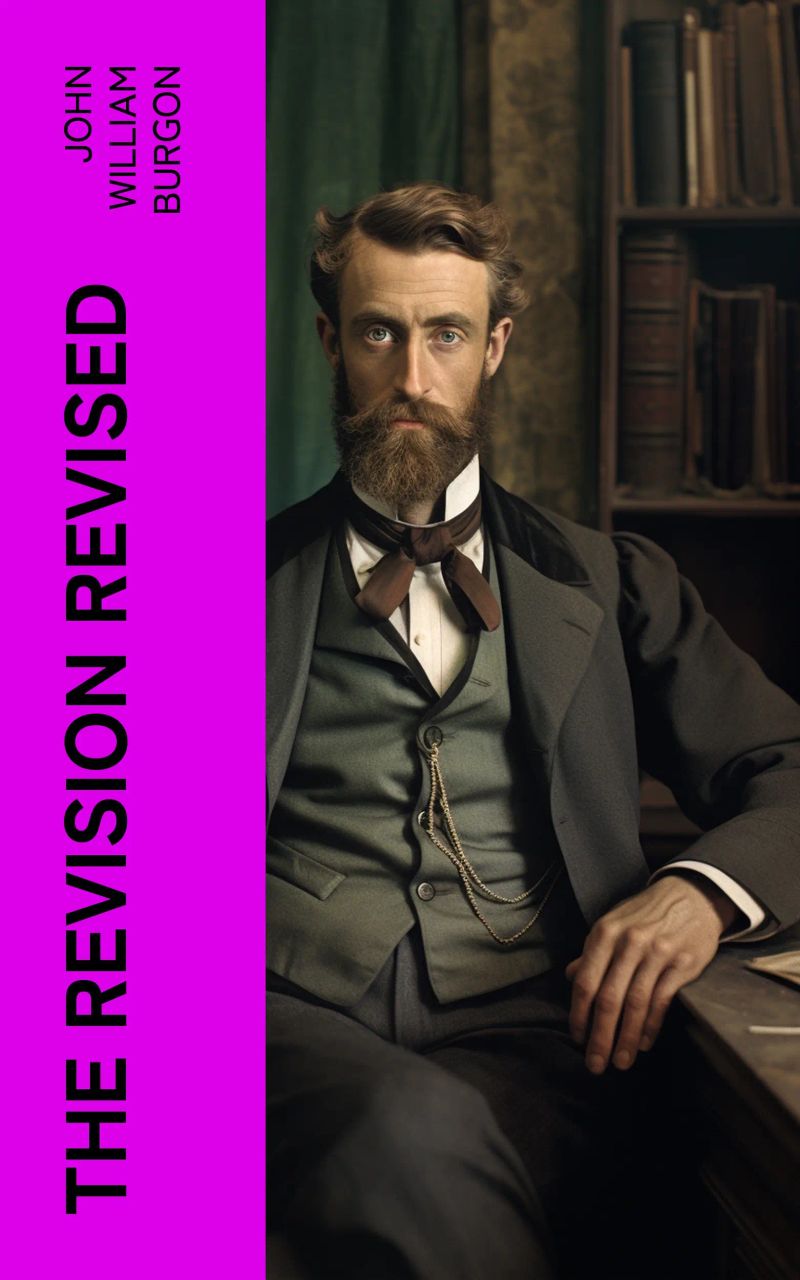
e-artnow Publishing presents to you this special edition of "The Revision Revised" by John William Burgon. e-artnow Publishing considers every written word to be a legacy of humankind. Every e-artnow book has been carefully reproduced for republishing in a new modern format. The books are available in print, as well as ebooks. e-artnow hopes you will treat this work with the acknowledgment and passion it deserves as a classic of world literature.
Audiobook details
GenreSpirituality and Religion
Length18 hrs 28 mins
Narrated byListen with 1,000+ voices
FormateBook with Audio
Publish dateDec 12, 2023
LanguageEnglish
Table of contents
1Dedication.
17[9] The Reviewer vindicates himself against Bp. Ellicott's misconceptions.
2Preface.
18[10] Analysis of contents of Bp. Ellicott's pamphlet.
3Article I. The New Greek Text. (pt. 1)
19[11] Bp. Ellicott's account of the “Textus Receptus.”
4Article I. The New Greek Text. (pt. 2)
20[12] Bp. Ellicott derives his estimate of the “Textus Receptus” from Westcott and Hart's fable of a “Syrian Text.”
5Article II. The New English Version. (pt. 1)
21[13] Bp. Ellicott has completely adopted Westcott and Hort's Theory.
Show all chaptersShow less
6Article II. The New English Version. (pt. 2)
22[14] The Question modestly proposed,—Whether Bp. Ellicott's adoption of Westcott and Hort's “new Textual Theory” does not amount to (what lawyers call) “Conspiracy”?
7Article III. Westcott And Hort's New Textual Theory. (pt. 1)
23[15] Proofs that the Revisers have outrageously exceeded the Instructions they received from the Convocation of the Southern Province.
8Article III. Westcott And Hort's New Textual Theory. (pt. 2)
24[16] The calamity of the “New Greek Text” traced to its source.
9[1] Preliminary Statement.
25[17] Bp. Ellicott's defence of the “New Greek Text,” in sixteen particulars, examined.
10[2] The Bishop's pamphlet was anticipated and effectually disposed of, three weeks before it appeared, by the Reviewer's Third Article.
26[18] Bp. Ellicott's claim that the Revisers were guided by “the consentient testimony of the most ancient Authorities,”—disproved by an appeal to their handling of S. Luke ii. 14 and of S. Mark xvi. 9-20. The self-same claim,—(namely, of abiding by the verdict of Catholic Antiquity,)—vindicated, on the contrary, for the “Quarterly Reviewer.”
11[3] Bp. Ellicott remonstrated with for his unfair method of procedure.
27[19] “GOD was manifested in the flesh” Shown To Be The True Reading Of 1 Timothy III. 16. (pt. 1)
12[4] (Which be “the recognized principles of Textual Criticism”?—a question asked in passing.)
28[19] “GOD was manifested in the flesh” Shown To Be The True Reading Of 1 Timothy III. 16. (pt. 2)
13[5] Bp. Ellicott's and the Reviewer's respective methods, contrasted.
29Appendix Of Sacred Codices.
14[6] Bp. Ellicott in May 1870, and in May 1882.
30Index I, of Texts of Scripture,—quoted, discussed, or only referred to in this volume.
15[7] “The fabric of modern Textual Criticism” (1831-81) rests on an insecure basis.
31Index II, of Fathers.
16[8] Bp. Ellicott's strange notions about the “Textus Receptus.”
32Index III, Persons, Places, and Subjects.
More from John William Burgon




Proud Police WifeRebecca Lynn4h 52m$10 · $0.00
I Hear His Whisper 365 Daily Devotions (Gift Edition)Brian Simmons, Gretchen Rodriguez9h 23m5 (1)$10 · $0.00
A Little God Time for Women Morning & Evening DevotionalBroadStreet Publishing Group LLC15h 15m$10 · $0.00
The Chosen Presents: A Blended Harmony of the GospelsSteve Laube, Amanda Jenkins, Dallas Jenkins7h 8m$10 · $0.00
The Gospel of Luke: NASB 2020New American Standard Bible2h 41m$15
Morning & EveningC.H. Spurgeon35h 32m$30
Prayers from the Throne RoomBrian Simmons8h 55m$10 · $0.00
31 Decrees of Blessing for Your LifePatricia King2h 38m$10 · $0.00

Walk With Me JesusMarie Chapian6h 4m$10 · $0.00
Prayers on Fire for WomenBrian Simmons, Candice Simmons8h 24m$10 · $0.00
Strong's Bible ConcordanceJames Strong136h 23m$2 · $0.00

365 Days of Hope and Healing for Your Body, Mind, and SoulJoan Hunter8h 48m$10 · $0.00
Rewrite the Mother CodeDr. Gertrude Lyons10h 55m$25

Loved BabySarah Philpott4h 51m$10 · $0.00

The QuranAllah23h 12m$1 · $0.00
The Holy Qur-an: Text, Translation and CommentaryAbdullah Yusuf Ali21h 14m$3 · $0.00

The Secret of the RosaryLouis de Montfort6h 7m$2 · $0.00
Jesus the ChristJames E. Talmage30h 50m$2 · $0.00

Defying JihadEsther Ahmad8h 50m$20
PsalmsKing James Bible4h 2m$10
You may also like

Fifth State of the Union AddressGrover Cleveland1h 29m$2 · $0.00

The Marylebone Penny Readings and Their CriticsHenry Taylor18m$2 · $0.00
A Compilation of the Messages and Papers of the Presidents: Andrew JohnsonVarious20h 48m$1 · $0.00

Ten Days That Shook the WorldKarl Marx16h 16m$2 · $0.00

Reflections on the Decline of Science in England, and on Some of Its CausesCharles Babbage5h 27m$2 · $0.00
The Great DeformationDavid A. Stockman36h 40m$30
The Politically Incorrect Guide to the ConstitutionKevin R. C. Gutzman6h 35m$17
The Mendacity of HopeRoger D. Hodge7h 25m$24 · $0.00

REBEL YELL: History of the Confederacy, Memoirs and Biographies of the Confederate Leaders & Official DocumentsJefferson Davis, Heros von Borcke, Robert E. Lee, Frank H. Alfriend, John Esten Cooke145h 23m$2 · $0.00
What is to be done?Vladimir Lenin7h 23m$4 · $0.00
God and Man at YaleWilliam F. Buckley Jr.6h 41m$17 · $0.00

Crimes against LibertyDavid Limbaugh14h 22m$25 · $0.00

Indispensable NationRobert J. Lieber7h 46m$17
The Profits of ReligionUpton Sinclair10h 52m$1 · $0.00

The Big Fat SurpriseNina Teicholz13h 25m$23
The Christian LeftLucas Miles7h 25m$10 · $0.00

Men in BlackLevin, Mark R.9h 22mFree

Monopolies and the PeopleD. C. Cloud17h 31m$2 · $0.00
Nine Black RobesJoan Biskupic13h 11m$33 · $0.00

Difficulties Between Mexico and Guatemala: Official DocumentsVarious Authors1h 49m$1 · $0.00