
The Traditional Text of the Holy Gospels
Unveiling the Sacred Secrets of Gospel TextsBy John William Burgon


Length10h 28m
About this audiobook
In "The Traditional Text of the Holy Gospels," John William Burgon meticulously investigates the history and textual integrity of the New Testament, specifically focusing on the Gospels. Employing a philological approach, Burgon argues for the primacy of the Majority Text, contending that it reflects the original autographs more faithfully than other variants. His narrative interweaves detailed textual criticism with theological insights, all within the larger context of 19th-century debates around textual reliability, making the work both a scholarly resource and a profound reflection on the nature of scriptural authority. Burgon'Äôs eloquent prose invites readers into a complex examination that balances academic rigor with accessible argumentation. John William Burgon, an esteemed Anglican clergyman and biblical scholar, was deeply influenced by the rigorous study of texts during a period marked by significant theological upheaval. His commitment to preserving the purity of the biblical text led him to embark on extensive research, fueled by a desire to counteract the growing influence of textual skepticism. Burgon'Äôs enduring legacy as a defender of traditional biblical texts is underscored by his steadfast belief in their divine inspiration. This essential read comes highly recommended for theologians, historians, and anyone passionate about biblical studies. Burgon'Äôs compelling arguments and rigorous methodology not only enhance our understanding of the Gospels but also challenge readers to reconsider the foundations of their faith. Through this work, Burgon ensures that the voices of the traditional texts resonate profoundly in contemporary discourse.
Audiobook details
Rating★★★★ 4.5 (72)
Includes Amazon, Goodreads, LibraryThing
GenreSpirituality and Religion
Length10 hrs 28 mins
Narrated byListen with 1,000+ voices
FormateBook with Audio
Publish dateSep 18, 2023
LanguageEnglish
Table of contents
1Preface.
26§ 1. Involuntary Evidence of Dr. Hort.
2Introduction.
27§ 2. Testimony of the Ante-Chrysostom Writers.
3§ 1.
28Chapter VI. The Antiquity Of The Traditional Text. II. Witness of the Early Syriac Versions.
4§ 2.
29Chapter VII. The Antiquity Of The Traditional Text. III. Witness of the Western or Syrio-Low-Latin Text.
5§ 3.
30§ 1. Alexandrian Readings, and the Alexandrian School.
Show all chaptersShow less
6§ 4.
31§ 2. Caesarean School.
7§ 5.
32§ 1205.
8§ 1.
33§ 2223.
9§ 2.
34§ 3.
10§ 3.
35§ 1248.
11§ 4.
36§ 2. Codex D252.
12§ 5.
37§ 3.
13§ 6.
38§ 4.
14§ 1. Antiquity.
39§ 5.
15§ 2. Number.
40§ 6.
16§ 3. Variety.
41§ 7.
17§ 4. Weight, or Respectability.
42§ 8.
18§ 5. Continuity.
43§ 1288.
19§ 6. Context.
44§ 2296.
20§ 7. Internal Evidence.
45§ 3.
21§ 1.
46§ 4.
22§ 2. St. John v. 4.
47§ 5.
23§ 3.
48§ 6.
24§ 4.
49§ 7.
25§ 5.
50§ 8.
More from John William Burgon

Proud Police WifeRebecca Lynn4h 52m4.8 (14K)$10 · $0.00
I Hear His Whisper 365 Daily Devotions (Gift Edition)Brian Simmons, Gretchen Rodriguez9h 23m4.8 (2K)$10 · $0.00
A Little God Time for Women Morning & Evening DevotionalBroadStreet Publishing Group LLC15h 15m4.9 (1.2K)$10 · $0.00
The Chosen Presents: A Blended Harmony of the GospelsSteve Laube, Amanda Jenkins, Dallas Jenkins7h 8m4.9 (823)$10 · $0.00
Prayers from the Throne RoomBrian Simmons8h 55m4.9 (256)$10 · $0.00
31 Decrees of Blessing for Your LifePatricia King2h 38m4.8 (1.4K)$10 · $0.00

Loved BabySarah Philpott4h 51m4.8 (1.4K)$10 · $0.00

The QuranAllah23h 7m4.7 (136.1K)$1 · $0.00
The Secret of the RosaryLouis de Montfort6h 1m4.7 (16K)$2 · $0.00
The Holy Qur-an: Text, Translation and CommentaryAbdullah Yusuf Ali22h 16m4.7 (133K)$1 · $0.00
All of Grace (Annotated)Charles Spurgeon5h 1m4.7 (1.3K)$0.99 · $0.00
Steps to ChristEllen G. White3h 12m4.7 (13.8K)$2 · $0.00
The Doctrine and Selected CovenantsJoseph Smith13h 53m4.7 (10.4K)$1.99 · $0.00
Sinners in the Hands of an Angry God & Other Sermons (Annotated)Jonathan Edwards7h 51m4.7 (1.5K)$2 · $0.00
Swayam Ki AwaazPrem Rawat8h 34m4.7 (1.1K)$26 · $0.00

Behind the BadgeAdam Davis10h 18m4.7 (2.7K)$10 · $0.00
The New Human Revolution, vol. 1Daisaku Ikeda7h 46m4.7 (669)$12 · $0.00

You Are Worth ItKyle Carpenter, Don Yaeger8h 53m4.7 (4.8K)$29 · $0.00
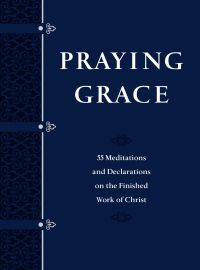
Praying GraceDavid A. Holland3h 2m4.7 (658)$10 · $0.00
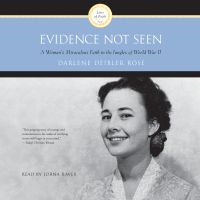
Evidence Not SeenDarlene Deibler Rose11h 11m4.6 (11.9K)$29 · $0.00
You may also like
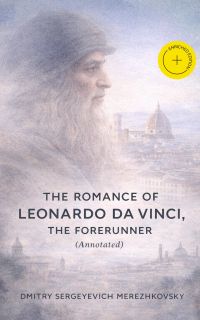
The Romance of Leonardo da Vinci, the Forerunner (Annotated)Dmitry Sergeyevich Merezhkovsky19h 3m4.1 (1.8K)$2 · $0.00
The Theory of the Leisure ClassThorstein Veblen10h 42m4.0 (14.5K)$10 · $0.00

CHANAKYANEETIB K Chaturvedi5h 45m4.0 (6.4K)$8
The SuppliantsAeschylus2h 40m3.8 (2.9K)$1 · $0.00
The Hunchback of Notre DameVictor Hugo20h 54m4.1 (259.2K)$1.20 · $0.00
LEVIATHAN (Complete Edition)Thomas Hobbes23h 49m3.9 (69.8K)$1.99 · $0.00
The Complete Works of Plato (Annotated)Plato141h 48m4.5 (3.1K)$2 · $0.00
The Captive MindCzeslaw Milosz9h 1m4.3 (6.3K)$20
Madame Bovary + Salammbô + Sentimental Education (3 Unabridged Classics) (Annotated)Gustave Flaubert46h 59m3.9 (20)$2 · $0.00
Karl BryullovGalina Leontyeva2h 58m4.5 (10)$16 · $0.00
The Greatest Works of Thomas MoreWilliam Roper, Thomas More40h 17m$2 · $0.00
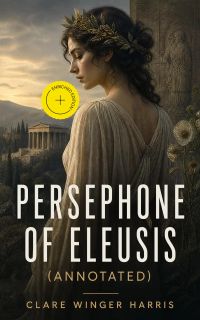
Persephone of Eleusis (Annotated)Clare Winger Harris6h 54m$2 · $0.00

Main Currents in Nineteenth Century Literature - 3. The Reaction in FranceGeorg Brandes12h 48m4.1 (21)$1 · $0.00
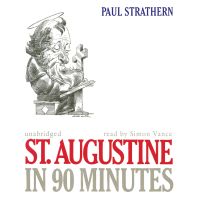
St. Augustine in 90 MinutesPaul Strathern1h 14m3.5 (1.1K)$7
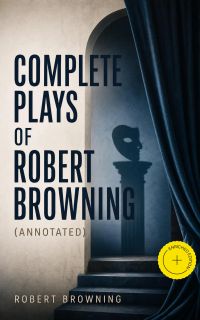
Complete Plays of Robert Browning (Annotated)Robert Browning29h 14m$2 · $0.00

The Best of the World's Classics (All 10 Volumes)Henry Cabot Lodge70h 49m4.3 (35)$1.99 · $0.00
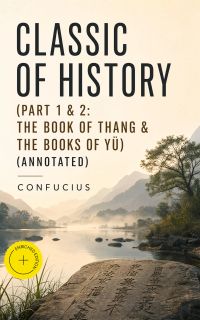
Classic of History (Part 1 & 2: The Book of Thang & The Books of Yü) (Annotated)Confucius2h 36m$2 · $0.00
Richard Wagner His Life and His Dramas (Annotated)W. J. Henderson15h 32m$2 · $0.00
The Last of the Legions and Other Tales of Long AgoArthur Conan Doyle4h 29m3.9 (166)$2.30

A Defence of VirginiaRobert Lewis Dabney10h4.0 (98)$1 · $0.00