
Audio only
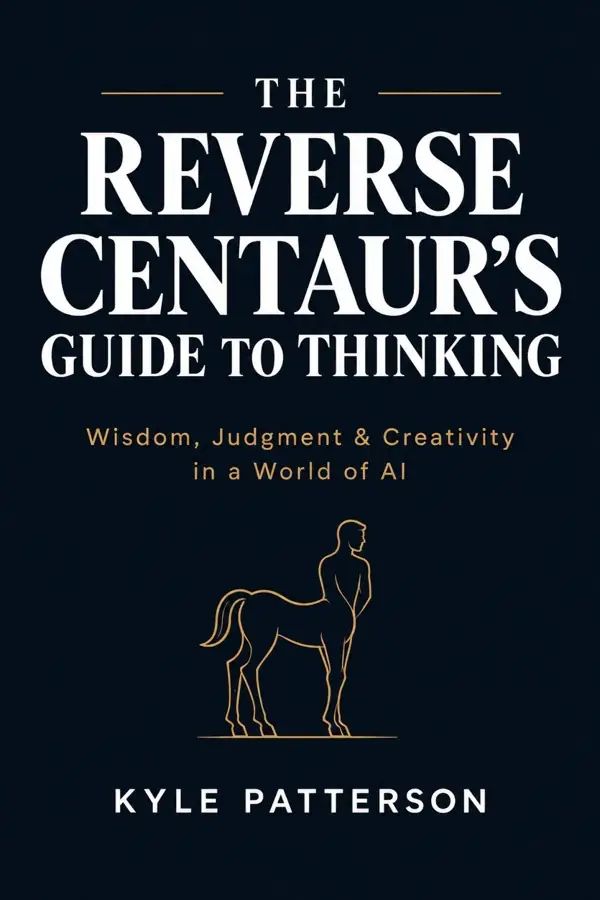
The Reverse Centaur's Guide to Thinking
Wisdom, Judgment & Creativity in a World of AIBy Kyle Patterson


Length2h 36m
About this audiobook
In chess, a human and a computer playing together, called a "centaur," can outperform even the most powerful AI alone — but only if the human is still steering. Most of us, without ever deciding to, have become the opposite: a reverse centaur, the head of a horse whose body is now in control. This book is the definitive guide to taking the reins back.
If you've noticed yourself reaching for an AI tool before you've even finished forming your own question, if you've felt your own thinking grow quietly weaker while your access to information has grown limitless, this book will show you exactly what's happening in your mind, and exactly how to reverse it. Drawing on cognitive science, the neuroscience of London's taxi drivers, Aristotle's philosophy of practical wisdom, and the writing of Socrates, Seneca, and Montaigne, this is a rigorous, research-backed guide to protecting the three human capacities artificial intelligence cannot replace.
Inside this essential guide to thinking clearly in the age of artificial intelligence, you'll discover:
✔ Why unlimited access to information has made us no wiser — and what wisdom actually requires that data never can ✔ The neuroscience of skill atrophy: what happens to your brain when a tool starts doing the thinking for you ✔ Why AI is excellent at answers and structurally incapable of judgment — and how to protect your own decision-making ✔ The difference between remix and genuine creativity, and a daily practice for making things that didn't exist before ✔ Why difficulty is often the mechanism of growth, not an obstacle to remove — the science of desirable difficulty ✔ A concrete framework for using AI as a collaborator instead of an oracle, without rejecting the technology ✔ How to raise children who can think independently in a world where the answer always arrives first
This is not another book about AI ethics, AI safety, or the future of work. It's a practical, philosophically grounded field guide for anyone who uses ChatGPT, Claude, or any AI tool regularly and wants to stay sharp, original, and genuinely in charge of their own mind rather than quietly outsourcing it one convenient shortcut at a time.
Whether you're worried about critical thinking in the age of AI, looking to improve your decision making skills, trying to protect your creativity from AI, or simply want practical wisdom for modern life, this book gives you the framework, the science, and the daily practices to remain the torso, not the head along for the ride.
The machine can answer almost anything. Only you can decide what's worth asking.
Scroll up and grab your copy today.
Audiobook details
GenreSelf-Help
Length2 hrs 36 mins
Narrated byListen with 1,000+ voices
FormateBook with Audio
Publish dateSep 10, 2026
LanguageEnglish
Table of contents
1Introduction
2A Note Before You Start: What "Reverse Centaur" Means, and Why It Should Worry You 5
3How to Use This Book: Three Human Capacities Machines Cannot Replace 6
4The 10-Minute Thinking Audit: How Much of Your Mind Have You Already Outsourced? 7
5Chapter 1: The Reverse Centaur Problem 9
Show all chaptersShow less
6Chapter 2: The Outsourced Mind 12
7Chapter 3: Wisdom Is Not Information 15
8Chapter 4: The Three Human Advantages 19
9Chapter 5: Wisdom — Knowing What Matters When the Machine Knows Everything 23
10Chapter 6: Judgment — Making the Calls a Model Cannot Make 26
11Chapter 7: Creativity — Making What Didn't Exist Before 29
12Chapter 8: The Friction Advantage 32
13Chapter 9: Becoming a Centaur, Not a Reverse Centaur 35
14Chapter 10: The Discernment Muscle 38
15Chapter 11: Solitude, Silence, and the Space Thinking Needs 41
16Chapter 12: Raising Thinkers in a World of Instant Answers 44
17Chapter 13: What the Old Thinkers Knew About Machines They Never Saw 47
18Chapter 14: The Reverse Centaur's Way Out 50
19The Full Thinking Self-Audit (Printable) 52
20Quick-Reference: All 12 Practices in One Place 53
21Further Reading & Research Cited 54
Learning to PrayJames Martin13h 24m4.5 (3.4K)$33 · $0.00
Truth Without ApologyAcharya Prashant6h 41m4.8 (2.2K)$18 · $0.00

Autism Out Loud: the instant New York Times Bestseller. Moving Stories and Parenting Lessons Learned from Three Mothers of Children with AutismKate Swenson, Carrie Cariello, Adrian Wood8h 41m4.8 (2.1K)$26 · $0.00

The StepsSylvester Stallone9h 4m4.8 (635)$29 · $0.00
Swayam Ki AwaazPrem Rawat8h 34m4.7 (1.1K)$26 · $0.00

Forever BoyKate Swenson9h 27m4.7 (5K)$29 · $0.00

You Are Worth ItKyle Carpenter, Don Yaeger8h 53m4.7 (4.8K)$29 · $0.00

The Happiest Man on EarthEddie Jaku3h 48m4.6 (178K)$7 · $0.00

Finding MeViola Davis9h 15m4.6 (256.4K)$29 · $0.00
Spiritual AnatomyDaaji Kamlesh D. Patel9h 47m4.7 (319)$29 · $0.00

The Dangerous Truth about Today’s MarijuanaLaura Stack CSP, MBA9h 57m4.7 (385)$20 · $0.00
The Gospel according to Spiritualism (Translated)Allan Kardec14h 39m4.6 (3.9K)$5.70 · $0.00

Birdie & HarlowTaylor Wolfe7h 50m4.6 (6.5K)$26 · $0.00

CrossroadsKaleb Dahlgren7h 56m4.6 (4.9K)$26 · $0.00

Life on the BridgeKaelynn Partlow5h 40m4.6 (1.1K)$24 · $0.00

Keep Your Love OnDanny Silk9h 4m4.6 (8.1K)$10 · $0.00
The Tao of Joy Every DayDerek Lin10h 24m4.6 (762)$20 · $0.00
UndividedVicky Beeching9h 2m4.6 (1.3K)$29 · $0.00

HE CAN WHO THINKS HE CAN & OTHER BOOKS ON SUCCESSOrison Swett Marden5h 54m4.6 (1.2K)$1.99 · $0.00
Level UpRob Dial7h 42m4.6 (3.3K)$26 · $0.00
You may also like
BlindsightMatt Johnson PhD, Prince Ghuman9h4.3 (791)$20 · $0.00
Attention SpanGloria Mark10h 52m3.7 (2.3K)$29 · $0.00
More Than WordsJohn Warner7h 46m4.0 (513)$23
Making SenseSam Harris22h 27m4.1 (3K)$46 · $0.00
The NumeratiStephen Baker7h 55m3.6 (2K)$17 · $0.00

The Ticket That ExplodedWilliam S. Burroughs9h 24m3.8 (3.9K)$20

Women Destroy Science Fiction!Christie Yant15h 10m4.1 (1.7K)$25
Brain BugsDean Buonomano8h 38m3.9 (3.5K)$20
The Creativity CodeMarcus du Sautoy9h 54m4.0 (2.2K)$20 · $0.00
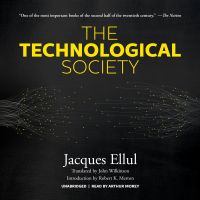
The Technological SocietyJacques Ellul21h 21m4.3 (2.3K)$30

We Have Been HarmonizedKai Strittmatter10h 29m4.3 (4.3K)$29 · $0.00

Words and Electricity: On the Fading Edge of LanguageTz47m4.4 (60)Free
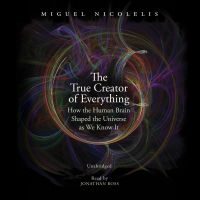
The True Creator of EverythingMiguel Nicolelis14h 41m3.9 (314)$23 · $0.00
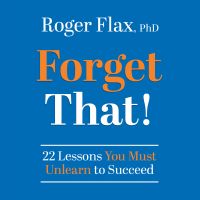
Forget That!Roger Flax PhD6h 44m$23
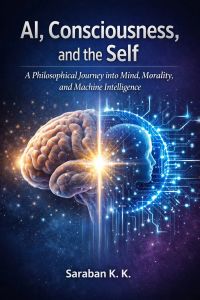
AI, Consciousness, and the SelfSaraban K. K. 50m4.9 (12) Only with Ultra

Prompt Your LifeDorian Frinch29m$14 · $0.00

Acquired TasteEric Manges8h 32m4.3 (31)Free
No More WorkJames Livingston3h 16m3.7 (449)$15

Conversations About Psychology, Volume 2Howard Burton9h 22m$10 · $0.00
Miracle by Price and two more storiesIrving E. Cox2h 45m$2.30