
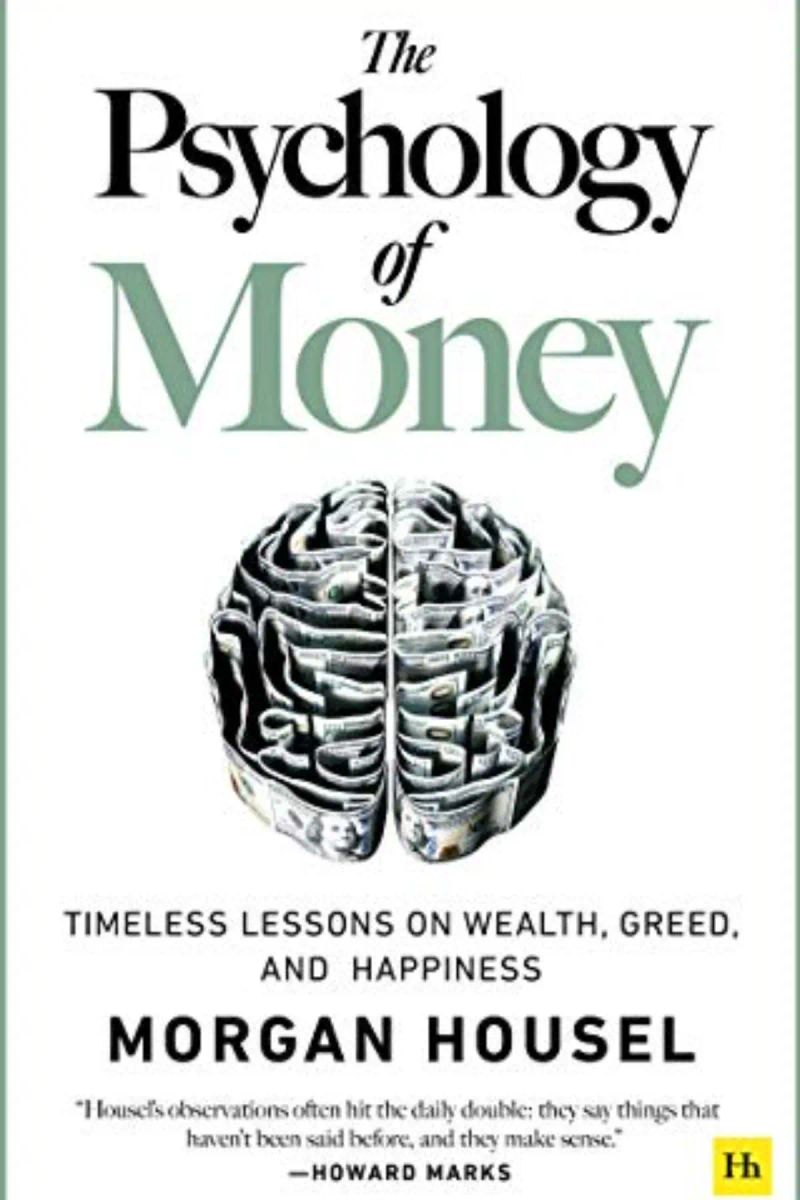
THE PSYCHOLOGY OF MONEY
A MindShelf Summary: Timeless Lessons on Wealth, Greed, and HappinessBy Morgan Housel


Length41m
About this audiobook
The Psychology of Money — MindShelf Summary
Morgan Housel argues financial success is less about knowledge, more about behavior. Luck and risk shape outcomes more than we admit, so judge decisions, not just results. The goalposts of "enough" keep moving—ambition often grows with wealth, tempting people to risk what they need for what they don't.
Compounding rewards patience: modest returns sustained over decades beat brilliant short bursts. Getting wealthy and staying wealthy require opposite skills—optimism to build, humility and margin-for-error to keep. A few outsized "tail events" drive most results, so survival matters more than being right often.
Ultimately, money's highest dividend isn't returns—it's freedom: control over your time and choices. Contentment, not comparison, ends the race.
Audiobook details
GenrePsychology, Business and Economics
Length41 mins
Narrated byListen with 1,000+ voices
FormateBook with Audio
Publish dateSep 8, 2020
LanguageEnglish
Table of contents
1Introduction
2Foreword: Why Smart People Make Terrible Financial Decisions
3Chapter 1: No One Is Crazy — How Your Personal History Shapes Your Financial Decisions
4Chapter 2: Luck and Risk — The Twin Forces That Shape Every Financial Outcome
5Chapter 3: Never Enough — The Dangerous Psychology of Moving Goalposts
Show all chaptersShow less
6Chapter 4: Compounding — The Most Powerful Force in Wealth Building
7Chapter 5: Getting Wealthy vs. Staying Wealthy — Two Very Different Skills
8Chapter 6: Tails, You Win — Why Extreme Events Drive Everything
9Chapter 7: Freedom — The Real Dividend of Wealth
10Chapter 8: Saving — The Most Powerful Financial Habit You Can Build
11Chapter 9: Reasonable Over Rational — Why Perfect Financial Decisions Don't Exist
12Key Takeaways — The Ten Principles of The Psychology of Money
13Final Words from MindShelf
Series
More from Morgan Housel
The 7 Habits of Highly Effective PeopleStephen R. Covey43m4.2 (934.8K)$4.99

The Mountain Is YouBrianna Wiest46m4.2 (175.9K)$4.99

The Power of Your Subconscious MindJoseph Murphy50m4.2 (467.4K)$4.99
The Asset Mindset: A MindShelf Guide to Financial FreedomMindShelf44m$2.99

IKIGAIMindShelf42m$4.99
THINKING, FAST AND SLOW Morgan Housel42m$4.99
What to Make of a LifeJim Collins13h 31m4.4 (793)$33 · $0.00

Matters of the HeartJacinta Nampijinpa Price9h 35m4.8 (359)$29 · $0.00

Black AF HistoryMichael Harriot15h 43m4.7 (14.6K)$33 · $0.00

Bad Fat Black GirlSesali Bowen6h 32m4.7 (2.8K)$24 · $0.00

Invisible StormJason Kander6h 48m4.7 (3.2K)$24 · $0.00

I Am The StormJanice Dean9h4.6 (1.5K)$8 · $0.00

On Democracies and Death CultsDouglas Murray10h 38m4.6 (6.5K)$29 · $0.00

TerraformPropaganda5h 39m4.7 (594)$24 · $0.00

Southern Horrors: Lynch Law in All Its Phases (Annotated)Ida B. Wells-Barnett2h 44m4.6 (1.3K)$2 · $0.00

Hour of the HeartIrvin D. Yalom, Benjamin Yalom8h 19m4.6 (2.3K)$26 · $0.00

Braving the TruthRachel Held Evans11h 31m4.7 (359)$29 · $0.00
Level UpRob Dial7h 42m4.6 (3.3K)$26 · $0.00

As a JewSarah Hurwitz8h 36m4.6 (1.2K)$26 · $0.00

Burn the HaystackJennie Young, PhD9h 30m4.6 (543)$29 · $0.00

Woman and the New Race (Annotated)Margaret Sanger6h 30m4.6 (1K)$1.99 · $0.00

Good InsideBecky Kennedy9h 55m4.5 (59.3K)$29 · $0.00

Du Bois: EssaysW.E.B. Du Bois6h 22m4.6 (1.5K)$1 · $0.00

The North American Indian (Illustrated Edition)Edward S. Curtis, Frederick Webb Hodge5h 59m4.6 (1.4K)$2 · $0.00

Valley of the BirdtailAndrew Stobo Sniderman, Douglas Sanderson10h 1m4.6 (2.4K)$29 · $0.00

Lies My Therapist Told MeGreg E. Gifford9h 3m4.6 (503)$29 · $0.00
Never Split the DifferenceChris Voss, Tahl Raz8h 7m4.4 (277.7K)$26 · $0.00
The Intelligent Investor Rev Ed.Benjamin Graham17h 48m4.3 (191.5K)$40 · $0.00
The Hard Thing About Hard ThingsBen Horowitz7h 57m4.2 (134.3K)$26 · $0.00
Boundaries for LeadersHenry Cloud7h 36m4.3 (3.6K)$26 · $0.00
Level UpRob Dial7h 42m4.6 (3.3K)$26 · $0.00

Eat It!Jordan Syatt, Michael Vacanti4h 40m4.6 (1.5K)$20 · $0.00

Progress and Poverty, Volumes I and II (Annotated)Henry George19h 21m4.6 (574)$1.99 · $0.00

Not Everything Counts but Everything Matters: The powerful and inspirational new book about leadership and achieving success from the visionary multi-premiership winning Panthers coachIvan Cleary6h 1m4.6 (680)$24 · $0.00
BuildTony Fadell11h 5m4.5 (14.3K)$8 · $0.00
The Joys Of CompoundingGautam Baid17h 34m4.5 (2.5K)$18 · $0.00
Basic EconomicsThomas Sowell18h 32m4.5 (29.3K)$28 · $0.00

The Ambuja StoryNarotam Sekhsaria13h 59m4.5 (830)$33 · $0.00

This Is Going to HurtAdam Kay5h 47m4.4 (444.7K)$24 · $0.00

Big TrustShadé Zahrai, Fayçal Sekkouah8h 36m4.6 (406)$26 · $0.00
The Intelligent Investor Third EditionBenjamin Graham, Jason Zweig20h4.4 (156.6K)$46 · $0.00

Bottle of LiesKatherine Eban14h 25m4.4 (12K)$33 · $0.00

The Antiracist Business BookTrudi Lebrón6h 10m4.6 (275)$17 · $0.00

The FormulaJoshua Robinson, Jonathan Clegg10h 41m4.4 (6.9K)$29 · $0.00

Let Them LeadJohn U. Bacon7h 10m4.5 (1.4K)$24 · $0.00

Secrets of the Millionaire MindT. Harv Eker5h 11m4.4 (301.4K)$24 · $0.00
You may also like

The Adrenal Thyroid RevolutionAviva Romm8h 40m4.1 (2.6K)$26 · $0.00

THINK AND GROW RICH! (Complete Edition)Napoleon Hill11h 38m4.2 (450.8K)$1 · $0.00

Long Story ShortMargot Leitman4h 53m3.9 (2.8K)$14 · $0.00

The 30-Day Alzheimer's SolutionDean Sherzai, Ayesha Sherzai3h 44m4.1 (1.3K)$18 · $0.00

The Elephant Man and Other Reminiscences (Annotated)Frederick Treves5h 8m4.1 (745)$0.99 · $0.00
Deliberate CalmJacqueline Brassey, Aaron De Smet, Michiel Kruyt9h 10m4.1 (360)$29 · $0.00

The Essays of Arthur Schopenhauer; Counsels and MaximsArthur Schopenhauer4h 53m4.2 (962)$2.30

Unwind Your MindEmma WhispersRed5h 4m4.2 (324)$24 · $0.00

Memory How to Develop, Train, and Use ItWilliam Walker Atkinson3h 56m4.0 (2.7K)$2.30

Talks To Teachers On Psychology; And To Students On Some Of Life's IdealsWilliam James7h 55m4.2 (1.7K)$1 · $0.00
Secrets of the Millionaire MindT. Harv Eker5h 11m4.4 (301.4K)$24 · $0.00

Emile Coue: Self Mastery Through Conscious Autosuggestion & The Practice of AutosuggestionEmile Coue6h 45m4.0 (2.3K)$1 · $0.00

Tell Me Everything You Don't RememberChristine Hyung-Oak Lee7h 26m3.7 (1.6K)$24 · $0.00

Project Manager Training SystemSherry Prindle5h 58m$75
Get Better at AnythingScott H. Young7h 43m3.9 (770)$26 · $0.00

Train Inner Strength & Willpower: How to Find a Self-Determined and Happy Life Without Inner Blockages With Effective Mental Training - Incl. The Best Tips & ExercisesCornelius Berger1h 2m$10 · $0.00

Brockwood Park 1975 - Public Discussion 1 - The action of total awarenessJ. Krishnamurti1h 28m$6 · $0.00

Cognitive Behavioral TherapyEric Holt1h 47m4.2 (41) Only with Ultra

Safe To FeelAmanda Fincham2h 35m$12 · $0.00

Make Your Brain SmarterSandra Bond Chapman PhD10h 10m3.7 (353)$20