
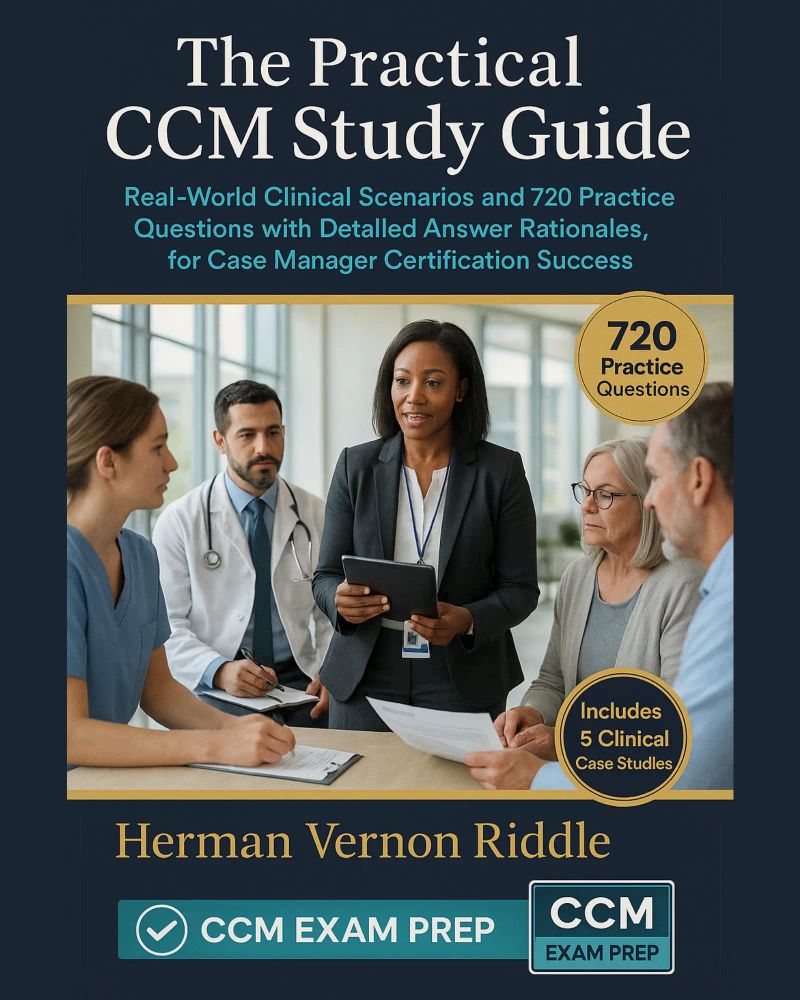
The Practical CCM Study Guide
Real-World Clinical Scenarios and 720 Practice Questions with Detailed Answer Rationales, for Case Manager Certification SuccessBy Herman Vernon Riddle


Length11h 7m
About this audiobook
This comprehensive resource covers all six CCM exam domains while connecting theory to actual case management practice through detailed patient cases that demonstrate how concepts apply in complex healthcare situations.
Five Comprehensive Clinical Scenarios
This study guide features five in-depth clinical scenarios that bring case management concepts to life
Each scenario includes detailed patient profiles, comprehensive assessments, intervention planning, challenges encountered, problem-solving approaches, outcomes achieved, and teaching points connecting to examination content. These scenarios develop the clinical reasoning and practical judgment that distinguish excellent case managers.
Complete Domain Coverage
This study guide addresses every area tested on the CCM examination with content proportional to actual exam weighting:
Care Delivery and Reimbursement Methods: Medicare Parts A, B, C, and D coverage and eligibility. Medicaid and dual-eligible populations. Managed care models and utilization management. Post-acute care settings including skilled nursing facilities, inpatient rehabilitation, long-term acute care, and home health. Payment methodologies including DRGs, capitation, and bundled payments. Workers' compensation systems. Prior authorization and appeals processes. Value-based care and accountable care organizations.
Psychosocial Concepts and Support Systems: Comprehensive psychosocial assessment approaches. Validated screening tools for depression, anxiety, substance use, and caregiver burden. Cultural competency and health literacy. Social determinants of health including housing, food security, and transportation. Motivational interviewing techniques. Stages of change model application. Grief, loss, and adjustment to illness. Trauma-informed care principles. Building social support and community connections.
Quality Outcomes Evaluation and Measurement: Donabedian model of structure, process, and outcome. Quality improvement methodologies including PDSA, Lean, and Six Sigma. Risk stratification and predictive modeling. HEDIS measures and CAHPS surveys. Accreditation standards from URAC, NCQA, and Joint Commission. Root cause analysis and failure mode effects analysis. Patient safety culture and high-reliability organizations. Evidence-based practice integration. Care transitions quality measurement.
Rehabilitation Concepts and Strategies: Functional assessment using FIM, Barthel Index, and Lawton IADL scales. Rehabilitation team composition and roles. Physical therapy, occupational therapy, and speech-language pathology scopes. Vocational rehabilitation and return-to-work planning. Functional capacity evaluations. ADA requirements and reasonable accommodations. Chronic disease self-management programs. Assistive technology and environmental modifications. Work hardening and transitional duty programs.
Ethical and Legal Practice Standards: Core ethical principles including autonomy, beneficence, nonmaleficence, justice, fidelity, and veracity. HIPAA Privacy and Security Rules. Informed consent requirements. Advance directives including living wills, healthcare proxies, and POLST forms. Scope of practice boundaries. Mandatory reporting obligations. Professional boundaries and conflicts of interest. Documentation standards and legal considerations.
Case Management Principles and Processes: Case management process from identification through evaluation. Comprehensive assessment methodologies. Care plan development with SMART goals. Care coordination across settings and providers. Discharge planning and transitions of care. Medication reconciliation practices. Patient engagement and activation strategies. Interdisciplinary collaboration and communication. Telephonic and field-based case management models. Disease management and population health approaches.
Audiobook details
GenreHealth and Wellness, Self-Help
Length11 hrs 7 mins
Narrated byListen with 1,000+ voices
FormateBook with Audio
Publish dateDec 4, 2025
LanguageEnglish
Table of contents
1The Practical CCM Study Guide
2Preface
3Chapter 1.0: Introduction to Case Management
41.1 Evolution of Case Management
51.2 Core Definitions and Philosophy
Show all chaptersShow less
61.3 Roles and Practice Settings
71.4 Case Study: Navigating Multiple Systems
81.5 CCMC Examination Structure
91.6 Eligibility Requirements
101.7 Study Strategies for Success
111.8 Case Study: Examination Preparation
121.9 Self Assessment Quiz
131.10 Chapter Summary
14Chapter 2.0: Case Management Concepts
152.1 The Case Management Process
162.2 Risk Stratification
172.3 Planning and Goal Setting
182.4 Case Study: Comprehensive Care Planning
192.5 Implementation and Coordination
202.6 Monitoring and Follow Up
212.7 Evaluation and Outcome Measurement
222.8 Case Management Models
232.9 Standards of Practice
242.10 Caseload Management
252.11 Documentation Essentials
262.12 Case Study: Documentation and Continuity
272.13 Chapter Summary
28Chapter 3.0: Healthcare Delivery Systems
293.1 United States Healthcare Overview
303.2 Healthcare Financing Mechanisms
313.3 Acute Care Settings
323.4 Post Acute Care Settings
333.5 Case Study: Navigating Post Acute Options
343.6 Ambulatory Care Settings
353.7 Behavioral Health Systems
363.8 Long Term Care Continuum
373.9 Case Study: Transitioning to Long Term Care
383.10 Workers Compensation Systems
393.11 Population Health Approaches
403.12 Community Resources
413.13 Chapter Summary
42Chapter 4.0: Healthcare Reimbursement Essentials
434.1 Insurance Types Overview
444.2 Medicare Structure Explained
454.3 Reimbursement Methodologies
464.4 Utilization Management Processes
474.5 Case Study: Authorization Challenges
484.6 Appeals and Denials Management
494.7 Cost Containment Strategies
504.8 Case Study: Cost Effective Care Planning

Eat It!Jordan Syatt, Michael Vacanti4h 40m4.6 (1.5K)$20 · $0.00

Consent Laid BareChanel Contos7h 11m4.5 (1.7K)$24 · $0.00
How to Make Disease DisappearRangan Chatterjee5h 26m4.5 (3.5K)$24 · $0.00

The Complete Herbal (Annotated)Nicholas Culpeper29h 8m4.5 (1.4K)$2 · $0.00

A Plague Upon Our HouseScott W. Atlas MD10h 37m4.5 (3.4K)$20 · $0.00
The Cancer CodeDr. Jason Fung10h 48m4.5 (5.3K)$29 · $0.00

The Gift of TherapyIrvin Yalom7h 39m4.5 (38.8K)$26 · $0.00

EarlySarah DiGregorio9h 47m4.5 (1.3K)$29 · $0.00

Bottle of LiesKatherine Eban14h 25m4.4 (12K)$33 · $0.00
The 36-Hour DayNancy L. Mace, Peter V. Rabins17h 13m4.4 (9.2K)$28 · $0.00

FlooredSara Reardon10h 36m4.5 (1K)$29 · $0.00
Radical RemissionKelly A. Turner9h 26m4.4 (8.1K)$29 · $0.00
The Sinatra SolutionStephen T. Sinatra MD9h4.5 (899)$20 · $0.00

The Songaminute ManSimon McDermott6h 12m4.5 (280)$24 · $0.00
Sometimes BrilliantLarry Brilliant12h 27m4.5 (954)$29 · $0.00

Live Your LifeAmanda Kloots, Anna Kloots10h 54m4.4 (13.7K)$29 · $0.00

All in Her HeadElizabeth Comen13h 25m4.4 (18.2K)$33 · $0.00
The Wisdom of Your BodyHillary McBride9h 14m4.4 (6.7K)$29 · $0.00
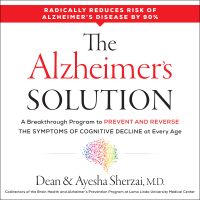
The Alzheimer's SolutionDean Sherzai, Ayesha Sherzai9h 47m4.4 (1.9K)$29 · $0.00
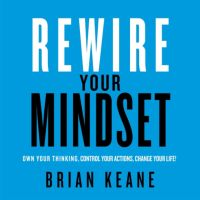
Rewire Your MindsetBrian Keane6h 49m4.5 (896)$23 · $0.00
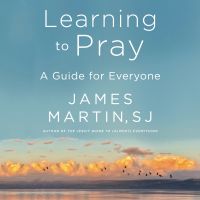
Learning to PrayJames Martin13h 24m4.5 (3.4K)$33 · $0.00

Finding MeViola Davis9h 15m4.6 (256.4K)$29 · $0.00

Spiritual AnatomyDaaji Kamlesh D. Patel9h 47m4.7 (319)$29 · $0.00

The Dangerous Truth about Today’s MarijuanaLaura Stack CSP, MBA9h 57m4.7 (384)$20 · $0.00

Birdie & HarlowTaylor Wolfe7h 50m4.6 (6.5K)$26 · $0.00

CrossroadsKaleb Dahlgren7h 56m4.6 (4.9K)$26 · $0.00

Life on the BridgeKaelynn Partlow5h 40m4.6 (1.1K)$24 · $0.00

Keep Your Love OnDanny Silk9h 4m4.6 (8.1K)$10 · $0.00

The Tao of Joy Every DayDerek Lin10h 24m4.6 (762)$20 · $0.00

UndividedVicky Beeching9h 2m4.6 (1.3K)$29 · $0.00
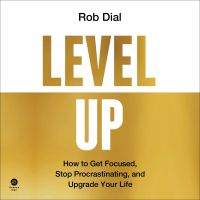
Level UpRob Dial7h 42m4.6 (3.3K)$26 · $0.00

Burn the HaystackJennie Young, PhD9h 30m4.6 (543)$29 · $0.00

ACRES OF DIAMONDS: Our Every-day Opportunities (Wisdom & Empowerment Series) (Annotated)Russell Conwell2h 26m4.6 (1K)$2 · $0.00

Good InsideBecky Kennedy9h 55m4.5 (59.3K)$29 · $0.00
The Lost VoiceGreta Morgan8h 30m4.7 (285)$26 · $0.00

Stripped DownBunnie Xo8h 25m4.5 (32.9K)$26 · $0.00

UnthinkableJamie Raskin15h 8m4.5 (9.3K)$8 · $0.00

Wallace D. Wattles Ultimate Collection Wallace D. Wattles16h 53m4.6 (1.3K)$1 · $0.00

Inquire WithinIn-Q2h 18m4.6 (993)$16 · $0.00

Under His WingsEmily Compagno7h 16m4.6 (848)$22 · $0.00
You may also like

The Healthy Pregnancy BookWilliam Sears MD, Martha Sears RN18h 11m4.2 (660)$25

Heading Home With Your NewbornLaura Jana14h 58m4.1 (3.6K)$17 · $0.00

The Breastfeeding Book, Revised EditionMartha Sears RN, William Sears MD14h 4m4.3 (1.6K)$23 · $0.00

Your Pregnancy Week by Week, 8th EditionGlade B. Curtis MD, MPH, OB/Gyn, Judith Schuler MS17h 32m4.1 (4K)$25 · $0.00

The Wound DresserWalt Whitman5h 17m4.2 (1.6K)$2.30

Motherless MothersHope Edelman5h 21m4.3 (1.1K)$24 · $0.00

DevotionDani Shapiro7h 20m4.0 (5.1K)$24 · $0.00
Act Like a Lady, Think Like a Man, Expanded EditionSteve Harvey6h 5m3.9 (68.9K)$24 · $0.00

Mars and Venus Starting OverJohn Gray3h 11m4.0 (1.4K)$18 · $0.00

Breakup BootcampAmy Chan8h 44m4.2 (1.7K)$26 · $0.00

Turn Around Bright EyesRob Sheffield6h 55m3.9 (4K)$24 · $0.00

The Weight of HimEthel Rohan11h 14m3.9 (1.3K)$20
Mindful BirthingNancy Bardacke15h 39m4.3 (3.9K)$33 · $0.00

Making ToastRoger Rosenblatt3h 22m3.9 (12.7K)$18 · $0.00
EarlySarah DiGregorio9h 47m4.5 (1.3K)$29 · $0.00
Pitch PerfectBill McGowan7h 52m4.0 (2.6K)$26 · $0.00
Not the Last GoodbyeDavid Servan-Schreiber2h 53m4.1 (785)$16 · $0.00

My Lovely Wife in the Psych WardMark Lukach8h 39m4.2 (19.9K)$26 · $0.00
Breaking AddictionLance M. Dodes5h 53m4.1 (625)$24 · $0.00
The 36-Hour DayNancy L. Mace, Peter V. Rabins17h 13m4.4 (9.2K)$28 · $0.00