


Length14h 25m
About this audiobook
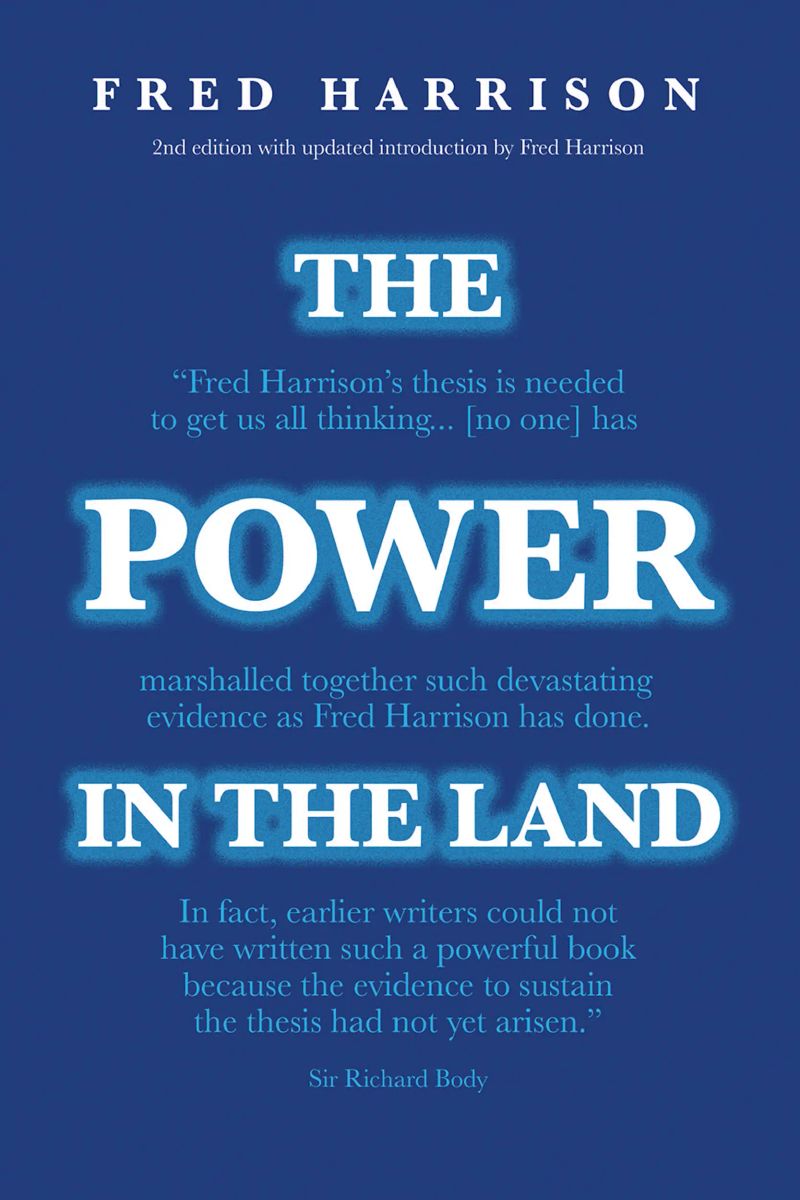
This book is as relevant today as it was when it was published in 1983: we are faced with another global depression, which as it deepens, intensifies the pressure on governments and puts policy-makers in a dilemma. Every prescription has its negative: monetarism - unemployment; Keynesianism - inflation; and the planned economy - authoritarianism. This dilemma, the author argues, stems from a distortion in our understanding of how the industrial economy works, a distortion he traces back to Adam Smith. Adam Smith provided the captains of industry with a theoretical framework and moral justification for the new mode of production which sprang from the Industrial Revolution. He believed he was setting out the rules for a free market system but, inconsistently, he granted landowners an exemption enabling them to exert a monopoly influence on the market which remains to this day. The Marxist critique blames the capitalist for the ills of the system, yet Marx himself acknowledged that the power of the owners of capital rested on the power inherent in land. Both Marx and Smith recognized the special role of landowners who, in the words of J.S.Mill, "grow richer in their sleep without working, risking or economizing", but neither pursued the macro-economic implications and, if anything, covered them up. The author looks at the implications: the conflict between labour and capital is a false one that obstructs a rational strategy for rescuing the Western economy; the origins of the collapse of the 1980s are to be found in land speculation; this exploitation of the unique power, intrinsic to land, gives rise to inner city decay, urban sprawl, misallocation of resources, mass unemployment and the meteoric rise of property values. The major industrial nations entered the 1990s in the midst of land booms offering riches for a few but unemployment for many: banks in Texas were bankrupted by massive speculation in real estate and even embassies had to abandon their offices because they could not afford the rents in Tokyo. In Britain, the spoils from housing - the direct result of the way the land market operates - have enriched owner-occupiers but crippled the flow of workers into regions where entrepreneurs wanted to invest and lead the economy back to full employment. Thus, it is the author's thesis that land speculation is the major cause of depressions. He shows how the land market functions to distort the relations between labour and capital and how land speculation periodically chokes off economic expansion, causing stagnation. The remedy proposed by the author is a fiscal one which would remove the disruptive factor of land speculation and transfer the burden of taxes from labour and capital to economic rent, a publicly created revenue. This would create employment and higher growth rates, while avoiding the inflation-risk policy of deficit financing; increased consumption and investment would be generated by the private sector, not government.
Audiobook details
Rating★★★★ 4.1 (15)
Includes Goodreads
GenreBusiness and Economics
Length14 hrs 25 mins
Narrated byListen with 1,000+ voices
FormateBook with Audio
Publish dateApr 15, 2021
LanguageEnglish
Table of contents
1Cover Page
2THE UNFREE MARKET
31: The Fatal Mistake
42: Laissez Faire: Adam Smith’s Version
53: Monopoly and the Veil of Secrecy
Show all chaptersShow less
64: The Power Loom Puzzle
7A THEORY OF RECESSIONS
85: Speculation: a US Hypothesis
96: 18-year Cycles: the UK Evidence
107: Under Siege: the Englishman’s Castle
11THE UNITED STATES ECONOMY
128: The Hoyt Heist
139: Recycling the Speculators
1410: Policies of Pillage
15THE JAPANESE ‘MIRACLE’
1611: Spirit of the Samurai
1712: The Conquest and Collapse
18THE SOCIALIST MODELS
1913: Marxist Theory and Soviet Experiment
2014: Nationalisation & the Mixed Economy
21LAND VALUE TAXATION
2215: The Single Tax and Laissez Faire
2316: Academie Strictures: a Critique
2417: Equity and Creative Financing
2518: Australia: a Case Study
26THE POVERTY OF POLITICS
2719: 1974-1978: Operation Lifeboat
2820: 1979: the Reagan-Thatcher Myth
2921: 1980s : Policies for Recovery
30CAPITALISM: 22: Requiem or Revival?
31BIBLIOGRAPHY AND INDEX
32Select Bibliography
More from Fred Harrison


Never Split the DifferenceChris Voss, Tahl Raz8h 7m4.4 (277.7K)$26 · $0.00
The Intelligent Investor Rev Ed.Benjamin Graham17h 48m4.3 (191.5K)$40 · $0.00
The Hard Thing About Hard ThingsBen Horowitz7h 57m4.2 (134.3K)$26 · $0.00
Boundaries for LeadersHenry Cloud7h 36m4.3 (3.6K)$26 · $0.00

Not Everything Counts but Everything Matters: The powerful and inspirational new book about leadership and achieving success from the visionary multi-premiership winning Panthers coachIvan Cleary6h 1m4.6 (680)$24 · $0.00
BuildTony Fadell11h 5m4.5 (14.3K)$8 · $0.00
The Joys Of CompoundingGautam Baid17h 34m4.5 (2.5K)$18 · $0.00
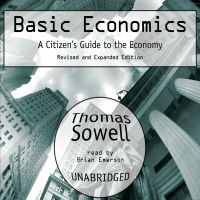
Basic EconomicsThomas Sowell18h 32m4.5 (29.3K)$28 · $0.00

Poor Charlie’s AlmanackGrover Gardener, Charles T. Munger13h 9m4.5 (24.7K)$18 · $0.00

The Ambuja StoryNarotam Sekhsaria13h 59m4.5 (830)$33 · $0.00

The Secret Door to SuccessFlorence Scovel Shinn2h 25m4.5 (2.1K)$1.20 · $0.00

This Is Going to HurtAdam Kay5h 47m4.4 (444.7K)$24 · $0.00

Big TrustShadé Zahrai, Fayçal Sekkouah8h 36m4.6 (406)$26 · $0.00
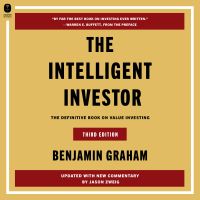
The Intelligent Investor Third EditionBenjamin Graham, Jason Zweig20h4.4 (156.6K)$46 · $0.00

Bottle of LiesKatherine Eban14h 25m4.4 (12K)$33 · $0.00

The Antiracist Business BookTrudi Lebrón6h 10m4.6 (275)$17 · $0.00
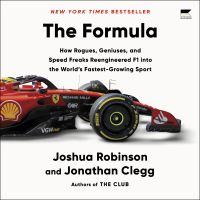
The FormulaJoshua Robinson, Jonathan Clegg10h 41m4.4 (6.9K)$29 · $0.00

Let Them LeadJohn U. Bacon7h 10m4.5 (1.4K)$24 · $0.00

Secrets of the Millionaire MindT. Harv Eker5h 11m4.4 (301.4K)$24 · $0.00

The Person You Mean to BeDolly Chugh9h 6m4.4 (7.2K)$29 · $0.00
You may also like

UndoctoredWilliam Davis MD15h 35m4.2 (3.7K)$23

The Injustice of PlaceKathryn J. Edin, H. Luke Shaefer, Timothy J. Nelson9h 56m4.3 (883)$29 · $0.00

Healthy Eating, Healthy WorldJ. Morris Hicks, Ken Kurson7h 39m4.1 (672)$17

Proposed Roads to Freedom Bertrand Russell5h 34m4.1 (1.2K)Free

The End of Heart DiseaseJoel Fuhrman9h 46m4.4 (3.6K)$29 · $0.00

The Sinatra SolutionStephen T. Sinatra MD9h4.5 (899)$20 · $0.00

Go GentlyBonnie Wright5h 35m4.2 (1.7K)$24 · $0.00

Constitution of the Republic of South Africa, 1996 — as amendedParliament of South Africa, Constitutional Assembly of South Africa8h 6m4.6 (396)$2 · $0.00
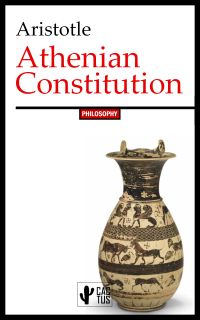
Athenian ConstitutionAristotle2h 43m4.0 (2.5K)$4 · $0.00

Silent Spring (Annotated)Rachel Carson13h 32m4.2 (222K)$2 · $0.00

AbolitionAngela Y. Davis12h 15m4.4 (5.6K)$25
Wheat Belly Slim GuideWilliam Davis MD3h 11m4.4 (533)$15 · $0.00

HuddleBrooke Baldwin9h 13m4.3 (807)$29 · $0.00

CountyDavid A. Ansell MD, MPH7h 6m4.2 (1.2K)$17

THE RIGHTS OF MAN: The French Revolution – Ideals, Arguments & MotivesThomas Paine11h 37m4.1 (26.5K)$1.99 · $0.00

MetabolicalRobert H. Lustig12h 4m4.4 (12.8K)$29 · $0.00

Poverty: Its Illegal Causes and Legal CureLysander Spooner4h 49m$2 · $0.00

Introduction to Non-ViolenceTheodore Paullin3h 12m$1 · $0.00

Epitome of the Pharmacopeia of the United States and the National FormularyTorald Hermann Sollmann, William August Puckner, Albion Walter Hewlett, Martin I. Wilbert14h 29m$1 · $0.00

Modern SocialismAnnie Besant2h 57m$1 · $0.00