
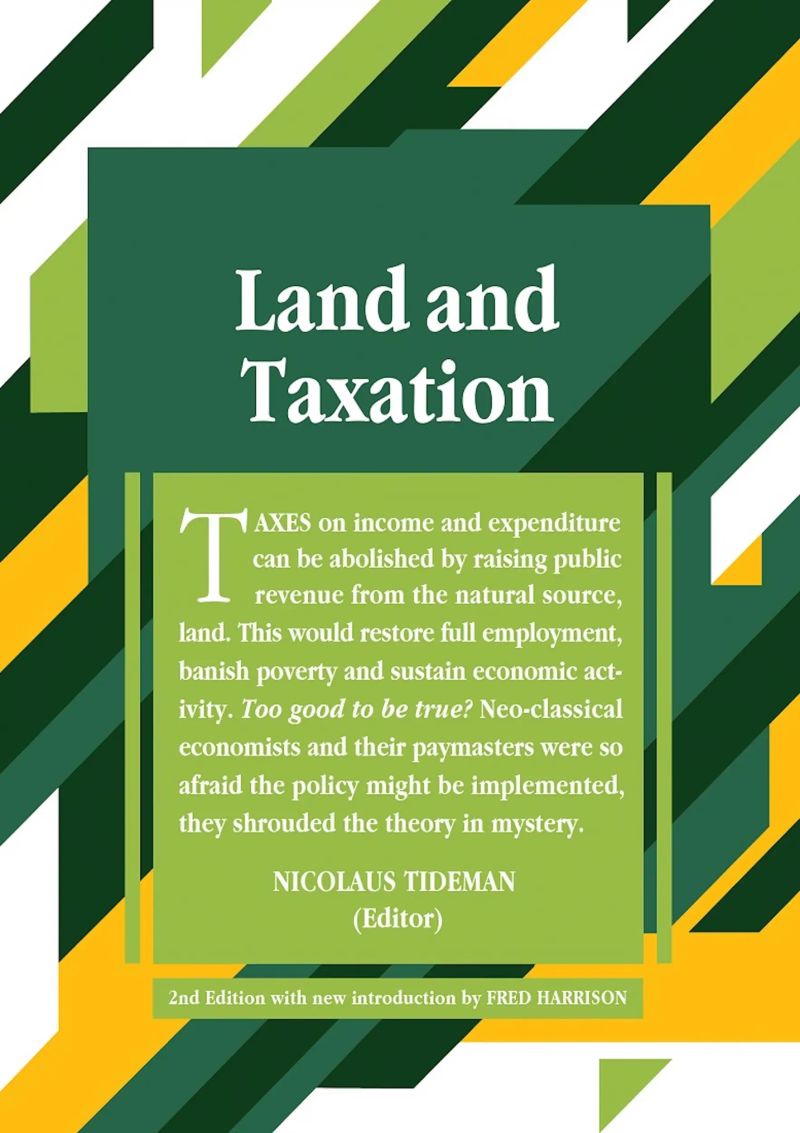
Land and Taxation
By Nicholas Tideman, V H Blundell, FRED FOLDVARY PhD, MASON GAFFNEY PhD, FRED HARRISON M.Sc.


Length7h 25m
About this audiobook
With an updated introduction by Fred Harrison, Shepheard Walwyn has now published this classic book as an eBook.
Economists know that the optimum conditions for private enterprise are achieved when taxes on the earned incomes of labour and capital are reduced to zero but, because neoclassical economic theory insists on treating land as capital, they dismiss the obvious alternative to taxing labour and capital – the unearned income from land.
Mason Gaffney explains the importance of recognising land as a distinctive factor of production and the consequences of its uniqueness for economic policy, for example, that income from land is subject to market forces quite different from those that determine a return on capital. Nic Tidman brings together the classical literature on land taxation to explain the argument that such taxation is an economically efficient and ethical revenue source.
The authors argue that reform of the structure of public finance would make it possible to restore full employment without causing inflation and to reduce the overall tax burden. Once again, Shepheard Walwyn presents a different approach to an old problem.
Audiobook details
GenreBusiness and Economics
Length7 hrs 25 mins
Narrated byListen with 1,000+ voices
FormateBook with Audio
Publish dateJan 31, 2023
LanguageEnglish
Table of contents
1Cover Page
2Introduction: Taxation as a Political Choice
3Prologue: Rent-ability
4Land as a Distinctive Factor of Production
5A Primary Distinctions
Show all chaptersShow less
6A-l. Land is not produced nor reproduceable
7A-2. Land as site is permanent and recyclable
8A-3. Land supply is fixed
9A-4. Land is immobile in space and uncontrollable in time
10A-5. Land does not turn over. It is recycled and is versatile
11A-6. Land is not interchangeable with capital
12A-7. Land rents are subject to market forces that differ from those that determine interest rates (the price of capital)
13A-8. Land price guides investors and determines the character of capital, as capital substitutes for 8 land
14A-9. Land is limitational
15A-10. Land value is not an economic fund
16B Major Economic Consequences
17B-l. The origin of property in land is not economic
18B-2. Much land remains untenured
19B-3. Landownership imparts superior bargaining power
20B-4. Land Rent does not evoke production, thrift or investment
21B-5. Land rent is a taxable surplus
22B-6. Uniformity in taxation between land and capital is not neutral
23B-7. Land values are hypersensitive to discount rates
24B-8. Land markets are dominated by access to long-term credit
25B-9. Control of land gravitates to financially “strong hands”
26B-10. Land markets are sticky
27B-11. Land is a major basis of market power
28B-12. Land income is much greater than the current cash flow
29B-13. Consuming land means pre-empting its time
30B-14. Land’s rent is its opportunity cost, regardless of use
31C Land-driven Booms and Busts
32C-l. Land value is used as the basis of credit and money
33C-2. Land valuation is subjective
34C-3. Land markets are prime causes of instability
35The Economics of Efficient Taxes on Land
36Poverty and the Theory of Wages: a “Geo-classical” analysis
37Flawed Land Acts 1947-1976
38Postscript on Neo-classicism
39About the Authors
Never Split the DifferenceChris Voss, Tahl Raz8h 7m4.4 (277.7K)$26 · $0.00
The Intelligent Investor Rev Ed.Benjamin Graham17h 48m4.3 (191.5K)$40 · $0.00
The Hard Thing About Hard ThingsBen Horowitz7h 57m4.2 (134.3K)$26 · $0.00
Boundaries for LeadersHenry Cloud7h 36m4.3 (3.6K)$26 · $0.00

Eat It!Jordan Syatt, Michael Vacanti4h 40m4.6 (1.5K)$20 · $0.00

Progress and Poverty, Volumes I and II (Annotated)Henry George19h 21m4.6 (574)$1.99 · $0.00

Not Everything Counts but Everything Matters: The powerful and inspirational new book about leadership and achieving success from the visionary multi-premiership winning Panthers coachIvan Cleary6h 1m4.6 (680)$24 · $0.00
BuildTony Fadell11h 5m4.5 (14.3K)$8 · $0.00
The Joys Of CompoundingGautam Baid17h 34m4.5 (2.5K)$18 · $0.00
Basic EconomicsThomas Sowell18h 32m4.5 (29.3K)$28 · $0.00

Poor Charlie’s AlmanackGrover Gardener, Charles T. Munger13h 9m4.5 (24.7K)$18 · $0.00

The Ambuja StoryNarotam Sekhsaria13h 59m4.5 (830)$33 · $0.00

The Secret Door to SuccessFlorence Scovel Shinn2h 25m4.5 (2.1K)$1.20 · $0.00

This Is Going to HurtAdam Kay5h 47m4.4 (444.7K)$24 · $0.00

Big TrustShadé Zahrai, Fayçal Sekkouah8h 36m4.6 (406)$26 · $0.00
The Intelligent Investor Third EditionBenjamin Graham, Jason Zweig20h4.4 (156.6K)$46 · $0.00

Bottle of LiesKatherine Eban14h 25m4.4 (12K)$33 · $0.00

The Antiracist Business BookTrudi Lebrón6h 10m4.6 (275)$17 · $0.00
The FormulaJoshua Robinson, Jonathan Clegg10h 41m4.4 (6.9K)$29 · $0.00
Let Them LeadJohn U. Bacon7h 10m4.5 (1.4K)$24 · $0.00
You may also like

UndoctoredWilliam Davis MD15h 35m4.2 (3.7K)$23
FairTax:The TruthBoortz Media Group LLC6h 35m4.3 (817)$24 · $0.00

No Is Not EnoughNaomi Klein7h 56m4.2 (14.1K)$17

F*ck SilenceJoe Walsh6h 55m4.1 (1.4K)$24 · $0.00

The Despot’s ApprenticeBrian Klaas9h 22m4.3 (778)$20
ShamelessBrian Tyler Cohen4h 38m4.5 (4.3K)$5 · $0.00
It’s Even Worse Than It LooksThomas E. Mann, Norman J. Ornstein6h 43m4.0 (4.6K)$18 · $0.00
How the Other Half BanksMehrsa Baradaran9h 35m4.2 (961)$20 · $0.00
Drain the SwampCongressman Ken Buck4h 30m4.3 (593)$20
The Trillion-Dollar ConspiracyJim Marrs15h 56m3.9 (1.6K)$33 · $0.00
FDR’s FollyJim Powell9h 27m4.0 (1.1K)$20

The Secret History of the War on CancerDevra Davis PhD, MPH19h 12m4.1 (784)$32 · $0.00

A Letter to a HinduLeo Tolstoy39m3.8 (1.2K)$1 · $0.00
Proposed Roads to Freedom Bertrand Russell5h 34m4.1 (1.2K)Free

Rethinking FandomCraig Calcaterra4h 25m4.1 (763)$15 · $0.00
Creating FreedomRaoul Martinez17h 34m4.3 (826)$23 · $0.00
Ricardo's LawFred Harrison14h 34m$6 · $0.00

The Progressive Era and the Rise of AmericaSantiago Machain5h 34m$21 · $0.00

Empower Patients: Two Doctors’ Cure for HealthcareDeane Waldman MD, MBA, Vance Ginn PhD3h 59m$20
GE2020: Fair or Foul?Bertha Henson6h 12m3.9 (72)$12 · $0.00