
Audio only


Length1h 39m
About this audiobook
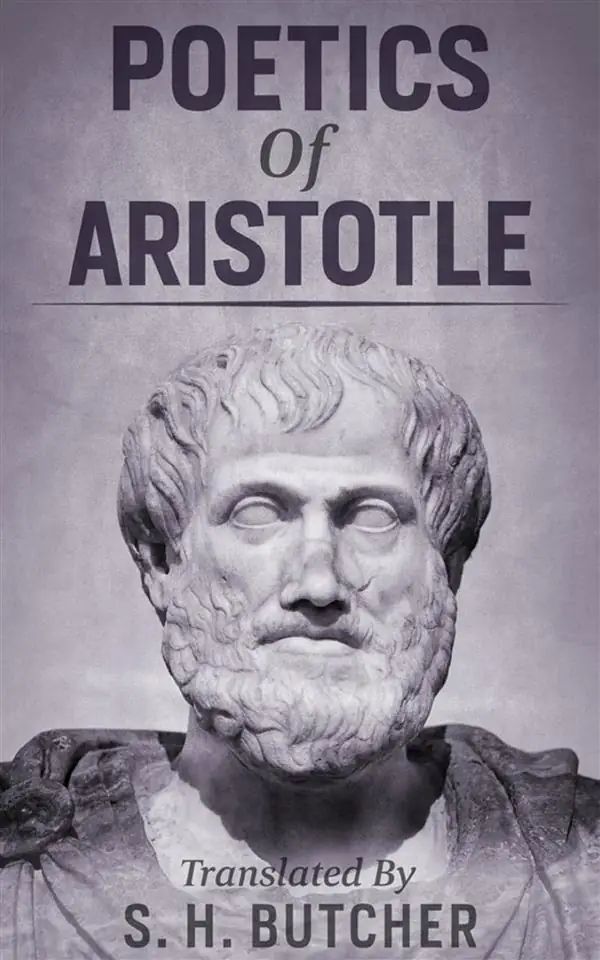
Among the most influential books in Western civilization, Aristotle's Poetics is really a treatise on fine art. In it are mentioned not only epic and dithyrambic poetry, but tragedy, comedy, and flute and lyre playing. Aristotle's conception of tragedy, i.e. the depiction of a heroic action that arouses pity and fear in the spectators and brings about a catharsis of those emotions, has helped perpetuate the Greek ideal of drama to the present day. Similarly, his dictums concerning unity of time and place, the necessity for a play to have a beginning, middle, and end, the idea of the tragic flaw and other concepts have had enormous influence down through the ages.
Throughout the work, Aristotle reveals not only a great intellect analyzing the nature of poetry, music, and drama, but also a down-to-earth understanding of the practical problems facing the poet and playwright. Now, in this inexpensive edition of the Poetics, readers can enjoy the seminal insights of one of the greatest minds in human history as he sets about laying the foundations of critical thought about the arts.
Audiobook details
Rating★★★★ 4.2 (82K)
Includes Goodreads, LibraryThing, Amazon, StoryGraph
GenrePhilosophy
Length1 hr 39 mins
Narrated byListen with 1,000+ voices
FormateBook with Audio
Publish dateAug 10, 2017
LanguageEnglish
Table of contents
1I ‘IMITATION’ THE COMMON PRINCIPLE OF THE ARTS OF POETRY
2II THE OBJECTS OF IMITATION
3III THE MANNER OF IMITATION
4IV THE ORIGIN AND DEVELOPMENT OF POETRY
5V DEFINITION OF THE LUDICROUS, AND A BRIEF SKETCH OF THE RISE OF COMEDY
Show all chaptersShow less
6VI DEFINITION OF TRAGEDY
7VII THE PLOT MUST BE A WHOLE
8VIII THE PLOT MUST BE A UNITY
9IX (PLOT CONTINUED.) DRAMATIC UNITY
10X (PLOT CONTINUED.) DEFINITIONS OF SIMPLE AND COMPLEX PLOTS
11XI (PLOT CONTINUED.) REVERSAL OF THE SITUATION, RECOGNITION, AND TRAGIC OR DISASTROUS INCIDENT DEFINED AND EXPLAINED
12XII THE ‘QUANTITATIVE PARTS’ OF TRAGEDY DEFINED
13XIII (PLOT CONTINUED.) WHAT CONSTITUTES TRAGIC ACTION
14XIV (PLOT CONTINUED.) THE TRAGIC EMOTIONS OF PITY AND FEAR SHOULD SPRING OUT OF THE PLOT ITSELF
15XV THE ELEMENT OF CHARACTER IN TRAGEDY
16XVI (PLOT CONTINUED.) RECOGNITION: ITS VARIOUS KINDS, WITH EXAMPLES
17XVII PRACTICAL RULES FOR THE TRAGIC POET
18XVIII FURTHER RULES FOR THE TRAGIC POET
19XIX THOUGHT, OR THE INTELLECTUAL ELEMENT, AND DICTION IN TRAGEDY
20XX DICTION, OR LANGUAGE IN GENERAL
21XXI POETIC DICTION
22XXII (POETIC DICTION CONTINUED.) HOW POETRY COMBINES ELEVATION OF LANGUAGE WITH PERSPICUITY
23XXIII EPIC POETRY
24XXIV (EPIC POETRY CONTINUED.) FURTHER POINTS OF AGREEMENT WITH TRAGEDY
25XXV CRITICAL OBJECTIONS BROUGHT AGAINST POETRY, AND THE PRINCIPLES ON WHICH THEY ARE TO BE ANSWERED
26XXVI A GENERAL ESTIMATE OF THE COMPARATIVE WORTH OF EPIC POETRY AND TRAGEDY
Poetics (Edición española traducida por Gutenberg Classics)Aristotle1h 43m$2.30 · $0.00
Nicomachean EthicsAristotle8h 51m4.2 (131.8K)$1.20 · $0.00
MetaphysicsAristotle11h 38m4.2 (21.9K)$1.20 · $0.00
Nicomachean EthicsAristotle8h 49m4.2 (139.3K)$1.20 · $0.00
PoeticsAristotle1h 37m4.1 (66K)$11 · $0.00
PoliticsAristotle9h 22m4.2 (50.6K)$11 · $0.00
On the SoulAristotle3h 25m4.1 (8K)$1.20 · $0.00
CategoriesAristotle1h 34m4.0 (2K)$1.20 · $0.00
On Generation and CorruptionAristotle2h 56m4.0 (452)$1.20 · $0.00
On the HeavensAristotle4h 7m4.0 (1.3K)$11 · $0.00
MetaphysicsAristotle11h 38m4.4 (1.5K)$2.30 · $0.00
The History of AnimalsAristotle13h 35m3.7 (57)$1.20 · $0.00
On Generation and CorruptionAristotle2h 58m3.5 (307)$1.80 · $0.00
The History of AnimalsAristotle13h 36m$1.80 · $0.00
PoliticsAristotle9h 23m4.2 (50.3K)$1.80 · $0.00
On the SoulAristotle3h 26m4.2 (8.1K)$1.80 · $0.00
On Sophistical RefutationsAristotle2h 27m3.8 (170)$1.80 · $0.00
On the HeavensAristotle4h 5m4.0 (431)$1.80 · $0.00
The Ethics of AristotleAristotle10h 39m4.1 (149.6K)$1.80 · $0.00
Moral Letters to LuciliusLucius Annaeus Seneca24h 26m4.5 (71.7K)$0.99 · $0.00
Lessons in TruthH. Emilie Cady3h 50m4.5 (2.4K)$20 · $0.00
Letters from a StoicSeneca6h 5m4.4 (80.4K)$6 · $0.00
The Discourses of EpictetusP. E. MATHESOM12h 47m4.4 (17.7K)$1.20 · $0.00
IlluminationsWalter Benjamin10h 12m4.4 (16.2K)$20 · $0.00
That Bird Has My WingsJarvis Jay Masters9h 49m4.4 (13.7K)$29 · $0.00

Tâo Teh KingLaozi2h 34m4.4 (230.9K)$2 · $0.00
SymposiumPlato3h 26m4.4 (97.9K)$1.20 · $0.00

Buddhist Boot CampTimber Hawkeye2h 39m4.4 (8.4K)$18 · $0.00
Enchiridion & The Discourses of Epictetus (Annotated)Arrian Epictetus18h 9m4.4 (3.5K)$2 · $0.00
The Meditations of the Emperor Marcus Aurelius AntoninusEmperor of Rome Marcus Aurelius5h 41m4.4 (1.8M)$1 · $0.00
Crime and PunishmentFyodor Dostoevsky23h 11m4.4 (1.3M)$12 · $0.00
MeditationsMarcus Aurelius5h 52m4.4 (433.7K)$1 · $0.00
Everyday DharmaSuneel Gupta5h 2m4.5 (761)$20 · $0.00
The Joyful Wisdom ("La Gaya Scienza")Friedrich Wilhelm Nietzsche11h 37m4.4 (26.6K)$1 · $0.00
The Art of LivingEpictetus, Sharon Lebell3h 16m4.4 (50.1K)$18 · $0.00
MeditationsEmperor Of Rome Marcus Aurelius7h 23m4.3 (477.5K)$1.20 · $0.00
The Imitation of ChristThomas à Kempis6h 27m4.3 (84.6K)$21 · $0.00
Sadhana: the realisation of lifeRabindranath Tagore3h 49m4.4 (8.6K)$6 · $0.00
SapiensYuval Noah Harari15h 18m4.3 (1.4M) · 1312$33 · $0.00
You may also like
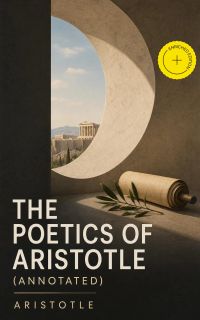
The Poetics of Aristotle (Annotated)Aristotle3h 14m4.1 (85.8K)$2 · $0.00
The Poetics of AristotleAristotle1h 35m4.0 (36.6K)Free
PoeticsAristotle1h 37m4.1 (66K)$11 · $0.00
The Legend of the Wandering KingLaura Gallego García4h 42m4.1 (4K)$17 · $0.00
AgamemnonAeschylus2h 26m4.1 (29K)$1.20 · $0.00
On the SublimeLonginus1h 59m4.0 (1.6K)Free

Poetical Works of Matthew ArnoldMatthew Arnold11h 18m4.0 (264)$1 · $0.00

Idylls of the King (Annotated)Alfred Tennyson10h 38m4.1 (13.1K)$2 · $0.00

The Gift of the MagiO. Henry13m4.3 (142.3K)$2 · $0.00
The Seven Plays in English VerseSophocles10h 19m4.3 (1.2K)$2.30
The Pied Piper of Hamelin (With Original Illustrations)Robert Browning8h 6m4.3 (1.2K)$1.99 · $0.00
Lament IJan Kochanowski (tłum. Dorothea Prall)1m4.1 (1.4K)Free
The Complete Poetry of Edgar Allan Poe (Illustrated Edition)Edgar Allan Poe19h 55m4.4 (20.3K)$1.99 · $0.00
Literature in the Elementary SchoolPorter Lander MacClintock6h 26m$2 · $0.00
Ratno DholiDhumketu, Jenny Bhatt, Jenny Bhatt10h 34m3.9 (88)$16 · $0.00
On the Nature of PoetryKenneth Verity15h 47m$6 · $0.00

Old Familiar FacesTheodore Watts-Dunton5h 48m$2 · $0.00
Nocturnal ApparitionsBruno Schulz6h 8m4.0 (92)$5 · $0.00
The Complete Poetry of John Keats (Annotated)John Keats33h 2m$2 · $0.00
The Greatest Poems & Carols for Christmas Time (Illustrated Edition)Robert Louis Stevenson, Henry Wadsworth Longfellow, Charles Kingsley, William Wordsworth, Walter Scott, Thomas Hardy, Samuel Taylor Coleridge, Rudyard Kipling, Emily Dickinson, Clement Clarke Moore, John Milton, Sara Teasdale, William Butler Yeats, Alfred Lord Tennyson, James Montgomery, William Thackeray2h 27m4.5 (12)$2 · $0.00