
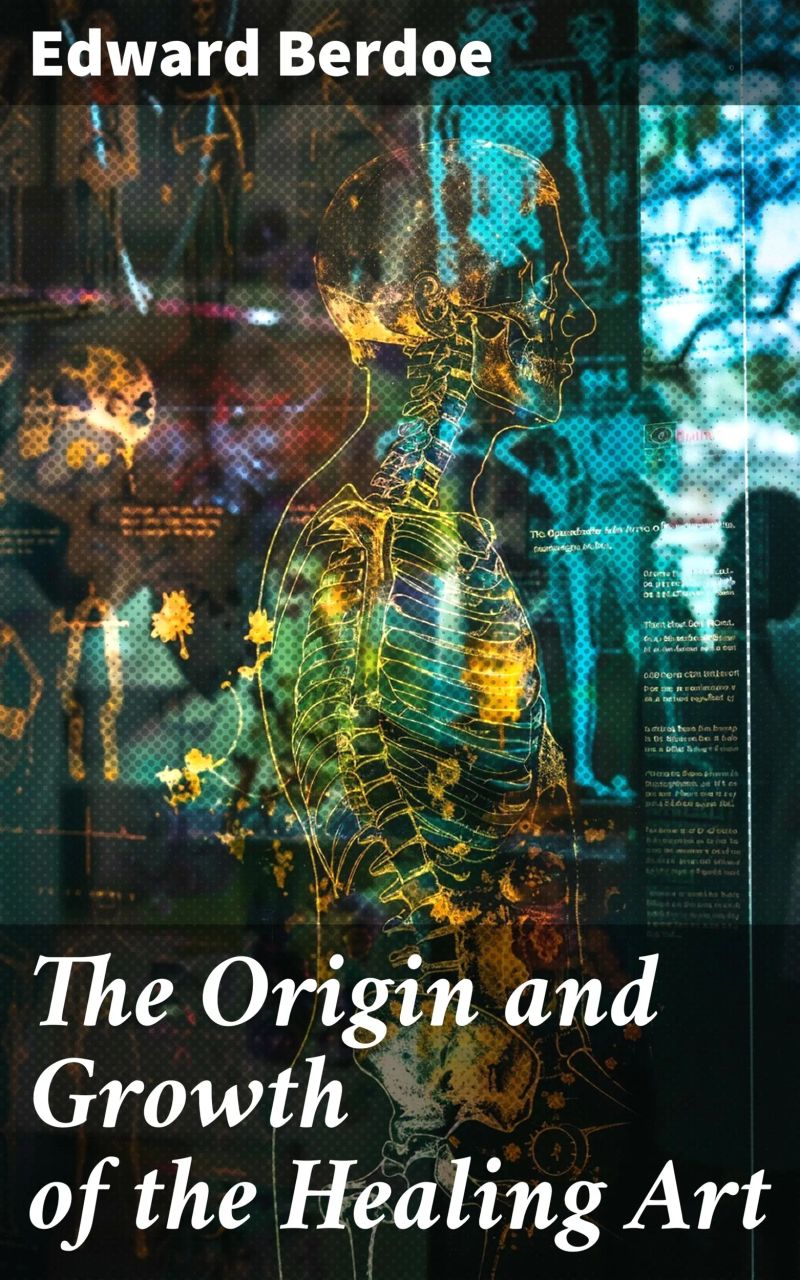
The Origin and Growth of the Healing Art
A Popular History of Medicine in All Ages and CountriesBy Edward Berdoe


Length21h 38m
About this audiobook
In "The Origin and Growth of the Healing Art," Edward Berdoe embarks on a meticulous examination of the evolution of medical practices and beliefs throughout history. This comprehensive work interweaves historical narrative with critical analysis, highlighting pivotal developments in the healing arts, from ancient rituals to contemporary medical advancements. Berdoe'Äôs prose is both engaging and scholarly, offering readers a window into the varying paradigms of health, illness, and treatment that have shaped human understanding over the ages. His exploration is contextualized within the broader landscape of social and scientific progress, making it a significant contribution to the history of medicine. Edward Berdoe, a pioneering figure in medical history, draws from his extensive background in literature and medicine to craft this influential text. His experiences and interest in the interplay between science and societal attitudes towards health likely shaped his inquiry into the healing arts. Throughout his career, Berdoe sought to bridge the gap between empirical knowledge and human experience, reflecting his belief in the importance of understanding the historical underpinnings of medical practices. This book is an essential read for scholars, medical professionals, and anyone intrigued by the historical trajectory of health and healing. Berdoe's insightful analysis encourages readers to reflect on the ongoing evolution of medical thought and its profound impact on contemporary society, making it a valuable addition to both academic and personal libraries.
Audiobook details
GenreHealth and Wellness
Length21 hrs 38 mins
Narrated byListen with 1,000+ voices
FormateBook with Audio
Publish dateNov 14, 2023
LanguageEnglish
Table of contents
1Introduction
2PREFACE.
3CONTENTS.
4CHAPTER I. PRIMITIVE MAN A SAVAGE.
5CHAPTER II. ANIMISM.
Show all chaptersShow less
6I. Anger of Offended Demons.
7II. Witchcraft as a Cause of Disease.
8III. Offence to the Dead as a Cause of Disease.
9CHAPTER IV. MAGIC AND SORCERY IN THE TREATMENT OF DISEASE.
10CHAPTER V. PRIMITIVE MEDICINE.
11CHAPTER VI. PRIMITIVE SURGERY.
12CHAPTER VII. UNIVERSALITY OF THE USE OF INTOXICANTS.
13CHAPTER VIII. CUSTOMS CONNECTED WITH PREGNANCY AND CHILD-BEARING.
14CHAPTER I. EGYPTIAN MEDICINE.
15CHAPTER II. JEWISH MEDICINE.
16CHAPTER III. THE MEDICINE OF CHALDÆA, BABYLONIA, AND ASSYRIA.
17CHAPTER IV. THE MEDICINE OF THE HINDUS.
18Japanese Medicine.
19CHAPTER VI. THE MEDICINE OF THE PARSEES.
20Gods of Medicine.
21The Medicine of Homer.
22The Temples of Æsculapius.
23The Early Ionic Philosophers.
24The School of the Pythagoreans at Crotona.
25Greek Theories of Disease.
26Schools of the Asclepiades.
27The Oath.
28The Law.
29The Dogmatic School.
30The School of Alexandria.
31School of the Empirics.
32The Scythians.
33Greek Medical Literature.
34School of the Methodists.
35Greek and Roman Pharmacy.
36The Sect of the Pneumatists.
37The Sect of the Eclectics
38Influence of Christianity
39Ancient Surgical Instruments.
40Gnostic and Christian Amulets.
41Herbs, Animals, etc., as Amulets.
42Knots as Charms.
43Precious Stones as Charms.
44Signatures.
45Numbers.
46Girdles.
47Spittle.
48Talismans.
49Scripts.
50Characts.
More from Edward Berdoe


The Lost VoiceGreta Morgan8h 30m4.7 (285)$26 · $0.00

Healthy Kids, Happy KidsElisa Song14h 18m4.6 (760)$33 · $0.00

Eat It!Jordan Syatt, Michael Vacanti4h 40m4.6 (1.5K)$20 · $0.00
Consent Laid BareChanel Contos7h 11m4.5 (1.7K)$24 · $0.00
How to Make Disease DisappearRangan Chatterjee5h 26m4.5 (3.5K)$24 · $0.00
The Complete Herbal (Annotated)Nicholas Culpeper29h 8m4.5 (1.4K)$2 · $0.00

A Plague Upon Our HouseScott W. Atlas MD10h 37m4.5 (3.4K)$20 · $0.00

The Cancer CodeDr. Jason Fung10h 48m4.5 (5.3K)$29 · $0.00

The Gift of TherapyIrvin Yalom7h 39m4.5 (38.8K)$26 · $0.00

EarlySarah DiGregorio9h 47m4.5 (1.3K)$29 · $0.00

Bottle of LiesKatherine Eban14h 25m4.4 (12K)$33 · $0.00
The 36-Hour DayNancy L. Mace, Peter V. Rabins17h 13m4.4 (9.2K)$28 · $0.00
FlooredSara Reardon10h 36m4.5 (1K)$29 · $0.00

Radical RemissionKelly A. Turner9h 26m4.4 (8.1K)$29 · $0.00
The Sinatra SolutionStephen T. Sinatra MD9h4.5 (899)$20 · $0.00

The Songaminute ManSimon McDermott6h 12m4.5 (280)$24 · $0.00
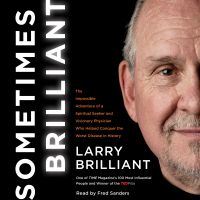
Sometimes BrilliantLarry Brilliant12h 27m4.5 (954)$29 · $0.00

Live Your LifeAmanda Kloots, Anna Kloots10h 54m4.4 (13.7K)$29 · $0.00

All in Her HeadElizabeth Comen13h 25m4.4 (18.2K)$33 · $0.00
The Wisdom of Your BodyHillary McBride9h 14m4.4 (6.7K)$29 · $0.00
You may also like
Advanced Course in Yogi Philosophy and Oriental OccultismWilliam Walker Atkinson10h4.4 (321)$3.50 · $0.00

The Secret Teachings Of All Ages (Annotated)Manly P. Hall35h 52m4.5 (4.6K)$3 · $0.00

The Black PulletAuthor Unknown1h 52m3.9 (1.3K)$4.10 · $0.00
The KybalionThree Initiates3h 47m4.3 (36.2K)$4.70 · $0.00
The Bible With and Without JesusAmy-Jill Levine, Marc Zvi Brettler14h 32m4.3 (1.3K)$33 · $0.00

The Hindu-Yogi Science of BreathWilliam Walker2h 30m4.1 (3.3K)$3.50 · $0.00

BagpussOliver Postgate15m4.5 (280)$7 · $0.00
Hatha YogaYoga Swami Svatmarama1h 28m4.3 (4.2K)$2.30
Energy MedicineJill Blakeway7h 11m4.4 (940)$24 · $0.00
The History of ChemistryThomas Thomson24h 14m4.0 (52)$1.99 · $0.00
On the Antiquity of the Chemical ArtJames Mactear1h 34m$2 · $0.00

The History of Chemistry (Vol.1&2) (Annotated)Thomas Thomson24h 10m4.2 (26)$2 · $0.00
Healing VibrationSofia Aruna/virginia Santos5h 47m$7 · $0.00
The Complete Treatise on GoldUnknown Author4h 27m$3.50 · $0.00
The Rosary of the PhilosophersArnaldus de Villa Nova4h 28m4.8 (12)$1.20 · $0.00

The Book of Talismans Amulets and Zodiacal GemsKate Pavitt, William Thomas6h 33m3.9 (239)$4.70 · $0.00
Deep ArcanaLiora A. Emsen / Luiz Santos6h 58m$7 · $0.00
Bodies and SoulsVictoria The Love Guru Foster7h 30m$4.10 · $0.00

Of Natural and Supernatural Things (Annotated)Basilius Valentinus4h 3m3.9 (16)$1.99 · $0.00
Bio-radiant Medicine (Translated)Emilio Fattori2h 48m$4 · $0.00