

THE NEW FLOWER POWER : Beinghood Without Permission
By REN TULPA


Length6h 53m
About this audiobook
What happens when the systems we build to describe the world acquire more authority than their evidence deserves?
A diagnosis becomes an identity. A prediction becomes a destiny. A risk score becomes a warrant. A measure of productivity becomes a measure of worth.
This is a work of political philosophy, ethics, technology, ecology, and cultural criticism about how we might live differently.
Ren Tulpa traces a common architecture across algorithmic governance, artificial intelligence, animal ethics, bureaucracy, identity, ecology, predictive systems, and technological power.
At its center is a simple principle:
No local fact may silently acquire global authority over a being.
The alternative is bounded authority: know what we can, preserve uncertainty where it remains, act where evidence warrants, and refuse to let a successful model become sovereign over what it represents.
Hold without enclosing. Carry without possessing. Connect without consuming.
That is the New Flower Power.
Audiobook details
GenrePhilosophy, Politics and Government
Length6 hrs 53 mins
Narrated byListen with 1,000+ voices
FormateBook with Audio
Publish dateSep 25, 2026
LanguageEnglish
Table of contents
1Edition Note
2Orientation: What This Book Is Trying to Do
3Prologue: We Are Not Our Transactions
4Chapter 1: The Self Exceeds Representation
5But anomaly is not a synonym for invalidity.
Show all chaptersShow less
6Chapter 2: The Terror of Generativity
7Chapter 3: The Dream of Finality
8Burden Inversion
9Six Questions
10Two Cases
11Chapter 4: The Remainder Is Not Error
12Chapter 5: The Grave, the Garden, the Altar, and the Ledger
13The Altar
14The Ledger Appears
15The Ledger Forgets the Grave
16Chapter 6: The Personhood Trap
17No.
18Chapter 7: The Meadow Principle
19Chapter 8: Opacity and Recognition
20Chapter 9: The Accursed Share
21Chapter 10: Deterritorialization With Memory
22Courts seal records.
23Chapter 11: Life Is Held and Holds
24Chapter 12: From Control to Capacity
25Chapter 13: Safety Without Total Control
26Constraint does not require ontological condemnation.
27Chapter 14: Bounded Moral Authority
28Burden and Irreversibility
29Five Decision States
30No Being Score
31Open Problems and Cost
32What the Framework Gives You
33Chapter 15: Technology Without Ontological Capture
34Seventh: exit and portability matter.
35Chapter 16: Who Owns the Logos?
36The Concept Cell
37The Right to Remain Unhooked
38Chapter 17: The Molecule Forgets the Ceremony
39Tobacco
40Coca
41Alcohol
42Gunpowder
43Chapter 18: Re-bind Potency to Stewardship
44The Scale-Matching Principle
45Chapter 19: From Feed to Strand
46Death Stranding
47A Strand Accumulates Affordance
48The Cognitive Commons
49Chapter 20: The Right to the Unknown
50Chapter 21: Institutions That Can Learn
The Art of LivingThich Nhat Hanh5h 1m4.5 (14.2K)$24 · $0.00
Moral Letters to LuciliusLucius Annaeus Seneca24h 26m4.5 (71.7K)$0.99 · $0.00
Lessons in TruthH. Emilie Cady3h 50m4.5 (2.4K)$20 · $0.00
Letters from a StoicSeneca6h 5m4.4 (80.4K)$6 · $0.00
The Discourses of EpictetusP. E. MATHESOM12h 47m4.4 (17.7K)$1.20 · $0.00

IlluminationsWalter Benjamin10h 12m4.4 (16.2K)$20 · $0.00

That Bird Has My WingsJarvis Jay Masters9h 49m4.4 (13.7K)$29 · $0.00

Tâo Teh KingLaozi2h 34m4.4 (230.9K)$2 · $0.00

SymposiumPlato3h 26m4.4 (97.9K)$1.20 · $0.00

Buddhist Boot CampTimber Hawkeye2h 39m4.4 (8.4K)$18 · $0.00
Enchiridion & The Discourses of Epictetus (Annotated)Arrian Epictetus18h 9m4.4 (3.5K)$2 · $0.00

The Meditations of the Emperor Marcus Aurelius AntoninusEmperor of Rome Marcus Aurelius5h 41m4.4 (1.8M)$1 · $0.00
Crime and PunishmentFyodor Dostoevsky23h 11m4.4 (1.3M)$12 · $0.00

MeditationsMarcus Aurelius5h 52m4.4 (433.7K)$1 · $0.00

Everyday DharmaSuneel Gupta5h 2m4.5 (761)$20 · $0.00

The Joyful Wisdom ("La Gaya Scienza")Friedrich Wilhelm Nietzsche11h 37m4.4 (26.6K)$1 · $0.00
The Art of LivingEpictetus, Sharon Lebell3h 16m4.4 (50.1K)$18 · $0.00
MeditationsEmperor Of Rome Marcus Aurelius7h 23m4.3 (477.5K)$1.20 · $0.00

The Imitation of ChristThomas à Kempis6h 27m4.3 (84.6K)$21 · $0.00

Sadhana: the realisation of lifeRabindranath Tagore3h 49m4.4 (8.6K)$6 · $0.00

HostageEli Sharabi5h 25m4.6 (10.8K)$24 · $0.00

KrantikariSanjeev Sanyal11h 44m4.6 (1.3K)$16 · $0.00

Unbroken Bonds of BattleJohnny Joey Jones8h 31m4.6 (2.6K)$8 · $0.00

On Democracies and Death CultsDouglas Murray10h 38m4.6 (6.5K)$29 · $0.00

Balcony Over Jerusalem: A Middle East Memoir - Israel, Palestine and BeyondJohn Lyons12h 37m4.6 (1.4K)$33 · $0.00

RiggedMollie Hemingway12h 48m4.6 (4.2K)$23 · $0.00

SledgehammerDavid Friedman8h 21m4.7 (589)$26 · $0.00

Citizenship in a Republic (Annotated)Theodore Roosevelt2h 44m4.6 (1.4K)$2 · $0.00

No EscapeNury Turkel9h 30m4.6 (809)$28 · $0.00

Always FaithfulThomas Schueman, Zainullah Zaki12h 12m4.6 (977)$29 · $0.00

UnthinkableJamie Raskin15h 8m4.5 (9.3K)$8 · $0.00

My Fourth Time, We DrownedSally Hayden13h 59m4.6 (2.9K)$23 · $0.00

A Revolution of Common SenseScott Jennings9h 29m4.6 (528)$29 · $0.00

Statement From the Dock at the Rivonia TrialNelson Mandela2h 18m4.6 (1.3K)$1 · $0.00

Lessons from the EdgeMarie Yovanovitch17h 11m4.5 (5.9K)$40 · $0.00

To Rescue the American SpiritBret Baier10h 12m4.5 (2.7K)$8 · $0.00

StonewalledSharyl Attkisson15h 19m4.5 (4.3K)$33 · $0.00
The World According to Orwell: 1984 & Animal FarmGeorge Orwell15h 42m4.6 (1.1K)$1 · $0.00
Basic EconomicsThomas Sowell18h 32m4.5 (29.3K)$28 · $0.00

To Rescue the RepublicBret Baier, Catherine Whitney11h 42m4.5 (8.6K)$29 · $0.00
You may also like
More Than WordsJohn Warner7h 46m4.0 (513)$23
EqualityMichael J. Sandel, Thomas Piketty2h 32m4.0 (1.5K)$15
The Third WaveAlvin Toffler18h 52m4.2 (3.4K)$25
WTF?Tim O'Reilly16h 15m4.2 (2.6K)$33 · $0.00
Greatest HitsHarlan Ellison17h 35m4.3 (3.2K)$30

Women Destroy Science Fiction!Christie Yant15h 10m4.1 (1.7K)$25
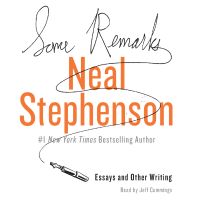
Some RemarksNeal Stephenson11h 36m3.9 (2.4K)$29 · $0.00

The Technological SocietyJacques Ellul21h 21m4.3 (2.3K)$30

The Subjection of Women (Annotated)John Stuart Mill6h 2m4.1 (6.1K)$1.99 · $0.00

The Machine StopsE. M. Forster1h 24m4.1 (27.6K)$1.20 · $0.00

On LibertyJohn Mill4h 35m4.1 (49.3K)$4 · $0.00

The Ticket That ExplodedWilliam S. Burroughs9h 24m3.8 (3.9K)$20

On the Duty of Civil DisobedienceHenry David Thoreau1h 13m4.0 (27.2K)$7.50

The Machine StopsE. M. Forster1h 19m4.2 (26.1K)$1 · $0.00

Once Upon a Time We Ate AnimalsRoanne van Voorst7h 6m3.8 (1.6K)$24 · $0.00
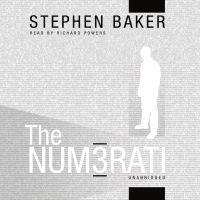
The NumeratiStephen Baker7h 55m3.6 (2K)$17 · $0.00
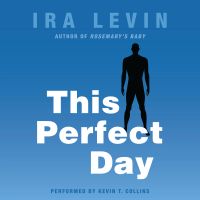
This Perfect DayIra Levin11h 16m4.2 (22.7K)$29 · $0.00

Design(s) for LawRossana Ducato, Enguerrand Marique, Alain Strowel19h 1m$29 · $0.00

EXIT THEORYAhmed R Awadallah2h 20m4.5 (12)$2.99
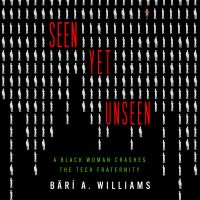
Seen Yet UnseenBärí A. Williams7h 33m4.4 (15)$23