
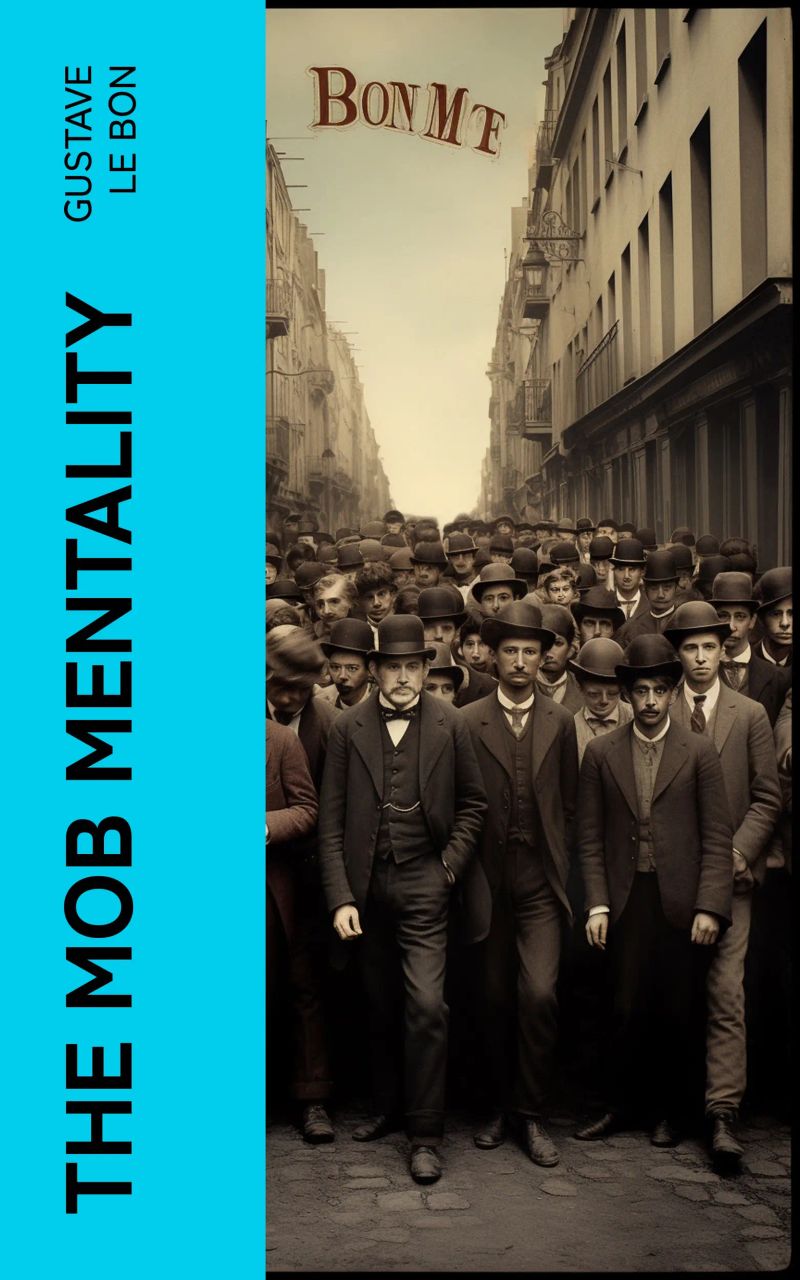
The Mob Mentality
The Crowd & The Psychology of RevolutionBy Gustave Le Bon


Length15h 35m
About this audiobook
This edition brings to you Le Bon's two most celebrated works, "The Crowd: A Study of the Popular Mind" and "The Psychology of Revolution", which made a breakthrough in what is now known as crowd psychology. Le Bon theorised about a new entity, "psychological crowd", which emerges from incorporating the assembled population not only forms a new body but also creates a collective "unconsciousness". As a group of people gather together and coalesces to form a crowd, there is a "magnetic influence given out by the crowd" that transmutes every individual's behaviour until it becomes governed by the "group mind"._x000D_ Gustave Le Bon was a French polymath whose areas of interest included anthropology, psychology, sociology, medicine, invention, and physics. Ignored or maligned by sections of the French academic and scientific establishment during his life due to his politically conservative and reactionary views, Le Bon was critical of democracy and socialism. Le Bon's works were influential to such disparate figures as Theodore Roosevelt and Benito Mussolini, Sigmund Freud and José Ortega y Gasset, Adolf Hitler and Vladimir Lenin.
Audiobook details
GenrePsychology
Length15 hrs 35 mins
Narrated byListen with 1,000+ voices
FormateBook with Audio
Publish dateDec 11, 2023
LanguageEnglish
Table of contents
1Preface
24Chapter III. The Revolutionary and Criminal Mentalities
2Introduction. The Era of Crowds
25Chapter IV. The Psychology of Revolutionary Crowds
3Chapter I. General Characteristics of Crowds.—Psychological Law of Their Mental Unity.
26Chapter V. The Psychology of the Revolutionary Assemblies
4Chapter II. The Sentiments and Morality of Crowds
27Part II. The French Revolution
5Chapter III. The Ideas, Reasoning Power, and Imagination of Crowds
28Chapter I. The Opinions of Historians Concerning the French Revolution
Show all chaptersShow less
6Chapter IV. A Religious Shape Assumed by All the Convictions of Crowds
29Chapter II. The Psychological Foundations of the Ancien Regime
7Chapter I. Remote Factors of the Opinions and Beliefs of Crowds
30Chapter III. Mental Anarchy at the Time of the Revolution and the Influence Attributed to the Philosophers
8Chapter II. The Immediate Factors of the Opinions of Crowds
31Chapter IV. Psychological Illusions Respecting the French Revolution
9Chapter III. The Leaders of Crowds and Their Means of Persuasion
32Chapter I. The Psychology of the Constituent Assembly
10Chapter IV. Limitations of the Variability of the Beliefs and Opinions of Crowds
33Chapter II. The Psychology of the Legislative Assembly
11Chapter I. The Classification of Crowds
34Chapter III. The Psychology of the Convention
12Chapter II. Crowds Termed Criminal Crowds
35Chapter IV. The Government of the Convention
13Chapter III. Criminal Juries
36Chapter V. Instances of Revolutionary Violence
14Chapter IV. Electoral Crowds
37Chapter VI. The Armies of the Revolution
15Chapter V. Parliamentary Assemblies
38Chapter VII. Psychology of the Leaders of the Revolution
16Introduction. The Revision of History
39Chapter I. The Last Convulsions of Anarchy—The Directory
17Part I. The Psychological Elements of Revolutionary Movements
40Chapter II. The Restoration of Order. The Consular Republic
18Chapter I. Scientific and Political Revolutions
41Chapter III. Political Consequences of the Conflict Between Traditions and Revolutionary Principles During the Last Century
19Chapter II. Religious Revolutions
42Chapter I. The Progress of Democratic Beliefs Since the Revolution
20Chapter III. The Action of Governments in Revolutions
43Chapter II. The Results of Democratic Evolution
21Chapter IV. The Part Played by the People in Revolutions
44Chapter III. The New Forms of Democratic Belief
22Chapter I. Individual Variations of Character in Time of Revolution
45Conclusions
23Chapter II. The Mystic Mentality and the Jacobin Mentality
More from Gustave Le Bon

Psychologie de l'éducationGustave Le Bon12h 43m$1 · $0.00

The Mob MentalityGustave Le Bon16h 56m$1 · $0.00

Psychologie des foulesGustave Le Bon5h 36m$1 · $0.00

Psychologie des foulesGustave Le Bon5h 36m$2 · $0.00

Psychologie de l'éducationGustave Le Bon10h 1m$2 · $0.00

Hier et demain : pensées brèvesGustave Le Bon4h 27m$1 · $0.00

Psychologie des foulesGustave Le Bon4h 5m$2 · $0.00

Lois psychologiques de l'évolution des peuplesGustave Le Bon5h 43m$2 · $0.00

Bad Fat Black GirlSesali Bowen6h 32m$24 · $0.00

Finding Your VoiceMannette Morgan8h 10m$20

Invisible StormJason Kander6h 48m$24 · $0.00

I've Been to the MountaintopMartin Luther King48m5 (1)$11 · $0.00

Ullathin KuralPrem Rawat8h 17m$18 · $0.00

I Am The StormJanice Dean9h$8 · $0.00

On Democracies and Death CultsDouglas Murray10h 38m$29 · $0.00

TerraformPropaganda5h 39m$24 · $0.00

Hour of the HeartIrvin D. Yalom, Benjamin Yalom8h 19m5 (1)$26 · $0.00

The Thomas Sowell ReaderThomas Sowell14h 51m$25
So You Want to Talk about RaceIjeoma Oluo7h 41m$17

Braving the TruthRachel Held Evans11h 31m$29 · $0.00
Level UpRob Dial7h 42m$26 · $0.00

As a JewSarah Hurwitz8h 36m$26 · $0.00

The North American Indian (Illustrated Edition)Edward S. Curtis, Frederick Webb Hodge6h$2 · $0.00

Burn the HaystackJennie Young, PhD9h 30m$29 · $0.00

Good InsideBecky Kennedy9h 55m$29 · $0.00

Du Bois: EssaysW.E.B. Du Bois6h 23m$1 · $0.00

Valley of the BirdtailAndrew Stobo Sniderman, Douglas Sanderson10h 1m$29 · $0.00

Lies My Therapist Told MeGreg E. Gifford9h 3m$29 · $0.00
You may also like

Psychology of CrowdsGustave le Bon6h 21m$3.50 · $0.00

The Source and Aim of Human Progress (A study in social psychology and social pathology)Boris Sidis3h 15m$1 · $0.00
Knowledge and DecisionsThomas Sowell20h 53m$30

Nietzsche: His Life and WorksAnthony M. Ludovici2h 32m$2 · $0.00

The Phenomenon and Causes of Crowd Psychology (The Complete Ten-Book Collection)Sigmund Freud, Charles Mackay, Jean-Jacques Rousseau, Gerald Stanley Lee, Gustave Le Bon, Walter Lippmann, William McDougall, Everett Dean Martin, Wilfred Trotter122h 55m$2 · $0.00

Why Men Fight: A method of abolishing the international duelBertrand Russell6h 2m$2 · $0.00

Postmodern DeconstructionJohn Warwick Montgomery, John Warwick Montgomery39m$3 · $0.00
The Collected Works of Friedrich NietzscheFriedrich Nietzsche92h$2 · $0.00

Don't Go to CollegeMichael Robillard, MA, MA, PhD, Timothy Gordon MA, PhL, JD6h 46m$17 · $0.00

Suicidal EmpathyGad Saad8h 24m5 (1)$28 · $0.00

The Psychic Soviet, and Other WorksIan F. Svenonius6h 8m$17 · $0.00
America's Cultural RevolutionChristopher F. Rufo11h 24m$29 · $0.00

War of the ClassesJack London3h 50m$2.30

Early Greek Philosophy & Other EssaysFriedrich Nietzsche6h 55m$12 · $0.00

The Constitution of the United StatesJames M. Beck4h 21m$2 · $0.00
The Republican BrainChris Mooney10h 54m$23 · $0.00

1922-2022Carolina Esser, Mhardoqueu G. Lima França6h 20m$12 · $0.00

The Nature of the Judicial ProcessBenjamin N. Cardozo3h 39m$20

UndoctrinateBonnie Kerrigan Snyder7h 47m$17

White GuiltShelby Steele5h 28m$24 · $0.00