
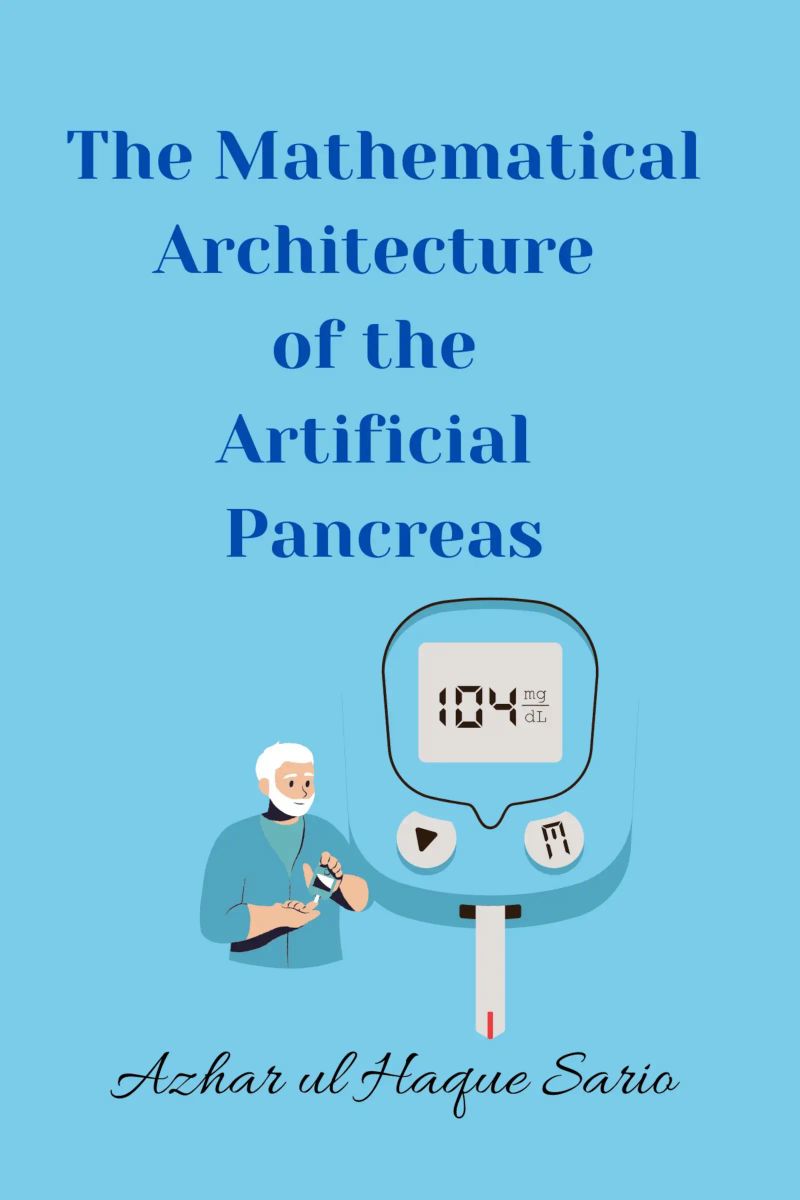
The Mathematical Architecture of the Artificial Pancreas
By Azhar ul Haque Sario

Length4h 28m
About this audiobook
The Artificial Pancreas is not a medical breakthrough—it is a mathematical solution to a profound failure of human physiology.
This book offers a clear and comprehensive exploration of the mathematical principles that enable the artificial pancreas to restore glucose control in type 1 diabetes. It begins with the limitations of manual therapy, where patients rely on simple rules like the 1800 Rule for insulin sensitivity and the 500 Rule for carbohydrate ratios. These static formulas, while useful starting points, fail to address the dynamic, nonlinear behavior of the glucose-insulin system. The narrative then progresses to the sophisticated mathematical frameworks that power closed-loop systems. It examines the differential equations modeling subcutaneous insulin absorption, meal-derived glucose appearance, and endogenous glucose production. Key concepts such as the Minimal Model, the Hovorka simulator, Kalman filtering for noise reduction, and the optimization techniques of Model Predictive Control are unpacked in detail. The book traces how these tools—ranging from compartment models and state-space formulations to cost functions and safety constraints—transform a chaotic metabolic process into a stable, automated control system.
What sets this book apart is its unwavering focus on the mathematical architecture that underpins artificial pancreas technology, rather than merely describing clinical outcomes or hardware. Most existing literature on diabetes management emphasizes practical usage, clinical trials, or engineering implementation, often treating the underlying control theory as a black box. This work bridges that gap by explicitly revealing the equations, derivations, and analytical methods—from Steele’s equation for glucose flux to the receding horizon optimization of MPC—that allow algorithms to predict, constrain, and stabilize glucose excursions. It demonstrates why predictive control outperforms traditional proportional-integral-derivative methods and how tools like insulin-on-board calculations and barrier functions enforce safety in the face of inherent delays and unremovable disturbances. By presenting these concepts as a coherent progression from heuristic approximations to differential calculus, the book provides readers—whether mathematicians, engineers, clinicians, or researchers—with a foundational understanding of how silicon replaces the lost regulatory capacity of pancreatic beta cells.
This book is independently produced by the author Azhar ul Haque Sario and has no affiliation with any commercial artificial pancreas systems, their manufacturers, or regulatory bodies. References to specific technologies, algorithms, and models are made solely for the purpose of technical description and analysis under nominative fair use.
Audiobook details
GenreHealth and Wellness, Self-Help
Length4 hrs 28 mins
Narrated byListen with 1,000+ voices
FormateBook with Audio
Publish dateNov 28, 2025
LanguageEnglish
Table of contents
1A Treatise on Control Theory Applied to Type 1 Diabetes Physiology
9Defining Accuracy
2The Heuristics of Open-Loop Control
10Measuring Glycemic Risk
3Quantifying the Disturbance
11Simple Feedback Control
4The Dynamics of the Actuator
12The Mathematical Solution
5Modeling the Disturbance
13Safety and Constraints
Show all chaptersShow less
6The Minimal Model
14The Physiological Challenge
7The Gold Standard Simulation
15About Author
8Estimating the Hidden State
Series

Architecting ProficiencyAzhar ul Haque Sario3h 26m$7

Architecting the Digital FortressAzhar ul Haque Sario3h 27m$7
Forging Silicon LogicAzhar ul Haque Sario3h 22m$7

Artificial Intelligence Implications for Business Strategy for 2026Azhar ul Haque Sario4h 57m5.0 (1)$7

Introduction to Engineering Mechanics for 2026Azhar ul Haque Sario5h 41m$7

Teenage Psychology for 2026Azhar ul Haque Sario3h 17m$7

Introduction to Computer Science 2026Azhar ul Haque Sario3h 27m$7

Machine Learning Specialization 2026Azhar ul Haque Sario2h 56m$7
Thermodynamics and Propulsion 2026Azhar ul Haque Sario3h 32m$7

How Thinking Machines Build FutureAzhar ul Haque Sario5h 20m$8

Constitutional AI and Principle Aligned ArchitecturesAzhar ul Haque Sario5h 30m$8
Advanced Compute Architectures and Deep Learning AccelerationAzhar ul Haque Sario5h 31m$8
Grow Your Wealth MindsetAzhar ul Haque Sario5h 33m$7

Your Freedom the Invisible WealthAzhar ul Haque Sario5h 28m$7

Dental Anesthesia and Behavioral Pain Management in 2026Azhar ul Haque Sario5h 3m$7

Making Agreements Fair and AgileAzhar ul Haque Sario5h 29m$7

Think Beyond FearAzhar ul Haque Sario5h 45m$7

The Complete LawyerAzhar ul Haque Sario5h 41m$7
Evolution Directs TomorrowAzhar ul Haque Sario5h 41m$7
Master Your Mind in 2026Azhar ul Haque Sario5h 58m$7

The Dangerous Truth about Today’s MarijuanaLaura Stack CSP, MBA9h 57m4.7 (385)$20 · $0.00

Hour of the HeartIrvin D. Yalom, Benjamin Yalom8h 19m4.6 (2.3K)$26 · $0.00

The Yoga Sutras of PatanjaliPatanjali4h 8m4.5 (18.5K)$6 · $0.00

The Lost VoiceGreta Morgan8h 30m4.7 (285)$26 · $0.00

Healthy Kids, Happy KidsElisa Song14h 18m4.6 (760)$33 · $0.00
Eat It!Jordan Syatt, Michael Vacanti4h 40m4.6 (1.5K)$20 · $0.00

Consent Laid BareChanel Contos7h 11m4.5 (1.7K)$24 · $0.00
How to Make Disease DisappearRangan Chatterjee5h 26m4.5 (3.5K)$24 · $0.00

The Complete Herbal (Annotated)Nicholas Culpeper29h 8m4.5 (1.4K)$2 · $0.00

A Plague Upon Our HouseScott W. Atlas MD10h 37m4.5 (3.4K)$20 · $0.00

The Cancer CodeDr. Jason Fung10h 48m4.5 (5.3K)$29 · $0.00

The Gift of TherapyIrvin Yalom7h 39m4.5 (38.8K)$26 · $0.00

EarlySarah DiGregorio9h 47m4.5 (1.3K)$29 · $0.00
Bottle of LiesKatherine Eban14h 25m4.4 (12K)$33 · $0.00
The 36-Hour DayNancy L. Mace, Peter V. Rabins17h 13m4.4 (9.2K)$28 · $0.00

FlooredSara Reardon10h 36m4.5 (1K)$29 · $0.00

Radical RemissionKelly A. Turner9h 26m4.4 (8.1K)$29 · $0.00
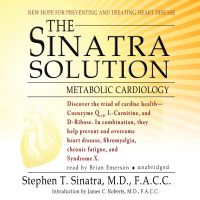
The Sinatra SolutionStephen T. Sinatra MD9h4.5 (899)$20 · $0.00

The Songaminute ManSimon McDermott6h 12m4.5 (280)$24 · $0.00
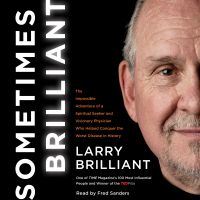
Sometimes BrilliantLarry Brilliant12h 27m4.5 (954)$29 · $0.00
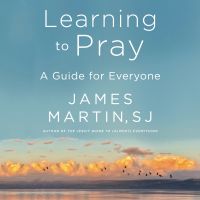
Learning to PrayJames Martin13h 24m4.5 (3.4K)$33 · $0.00

Autism Out Loud: the instant New York Times Bestseller. Moving Stories and Parenting Lessons Learned from Three Mothers of Children with AutismKate Swenson, Carrie Cariello, Adrian Wood8h 41m4.8 (2.1K)$26 · $0.00

The StepsSylvester Stallone9h 4m4.8 (635)$29 · $0.00
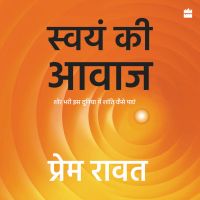
Swayam Ki AwaazPrem Rawat8h 34m4.7 (1.1K)$26 · $0.00

Forever BoyKate Swenson9h 27m4.7 (5K)$29 · $0.00

You Are Worth ItKyle Carpenter, Don Yaeger8h 53m4.7 (4.8K)$29 · $0.00

The Happiest Man on EarthEddie Jaku3h 48m4.6 (178K)$7 · $0.00

Finding MeViola Davis9h 15m4.6 (256.4K)$29 · $0.00
Spiritual AnatomyDaaji Kamlesh D. Patel9h 47m4.7 (319)$29 · $0.00
The Dangerous Truth about Today’s MarijuanaLaura Stack CSP, MBA9h 57m4.7 (385)$20 · $0.00
The Gospel according to Spiritualism (Translated)Allan Kardec14h 39m4.6 (3.9K)$5.70 · $0.00

Birdie & HarlowTaylor Wolfe7h 50m4.6 (6.5K)$26 · $0.00

CrossroadsKaleb Dahlgren7h 56m4.6 (4.9K)$26 · $0.00

Life on the BridgeKaelynn Partlow5h 40m4.6 (1.1K)$24 · $0.00

Keep Your Love OnDanny Silk9h 4m4.6 (8.1K)$10 · $0.00
The Tao of Joy Every DayDerek Lin10h 24m4.6 (762)$20 · $0.00

UndividedVicky Beeching9h 2m4.6 (1.3K)$29 · $0.00

HE CAN WHO THINKS HE CAN & OTHER BOOKS ON SUCCESSOrison Swett Marden5h 54m4.6 (1.2K)$1.99 · $0.00
Level UpRob Dial7h 42m4.6 (3.3K)$26 · $0.00

Burn the HaystackJennie Young, PhD9h 30m4.6 (543)$29 · $0.00
You may also like
Collected Writings of Nikola TeslaThomas Commerford Martin, Nikola Tesla19h 42m4.4 (2.8K)$1.99 · $0.00
Smarter Not HarderDave Asprey8h 32m3.9 (3.6K)$26 · $0.00
AI-Proof Your Career: Navigating the Future with ConfidenceJasper Livingstone7h 11m$6.90

First AidRafat Allam5h 39m$7 · $0.00
Think, Focus, Grow RichRobert4h 38m$6 · $0.00
Disturbance rejection control for bipedal robot walkersJaime Arcos Legarda4h 24m$7 · $0.00
IntelligenceSteve Pavlina2h 51m$8 · $0.00

ReplacedDisrupt.co.nz4h 4m$1.20 · $0.00
Conversations About NeuroscienceHoward Burton8h 53m$10 · $0.00
Dynasty of the Lost & Dark RecessGeorge O. Smith4h 4m3.4 (24)$2.30
What to Think About Machines That ThinkJohn Brockman14h 58m3.6 (605)$33 · $0.00

Tomorrow’s MedicineScientific American6h 6m3.9 (113)$17
Robot RightsDavid J. Gunkel10h 58m4.1 (122)$23 · $0.00
The In-Car-Nation CodeDr. Engelbert Wimmer20h 15m$21 · $0.00
In Our Own ImageGeorge Zarkadakis13h 48m3.8 (341)$23 · $0.00

Quick Guide To Customer ServiceGiancarlo Hernández Vela2h 20m$6 · $0.00
A Mixture of Genius and two more StoriesArnold Castle1h 30m$2.30
Scientometric Perspectives on Biomedical ResearchUnknown Author3h 58m$8 · $0.00
SurvivalBen Bova8h 27m3.9 (601)$20
The Essential Works of Nikola TeslaNikola Tesla48h 48m4.5 (33)$1.99 · $0.00