
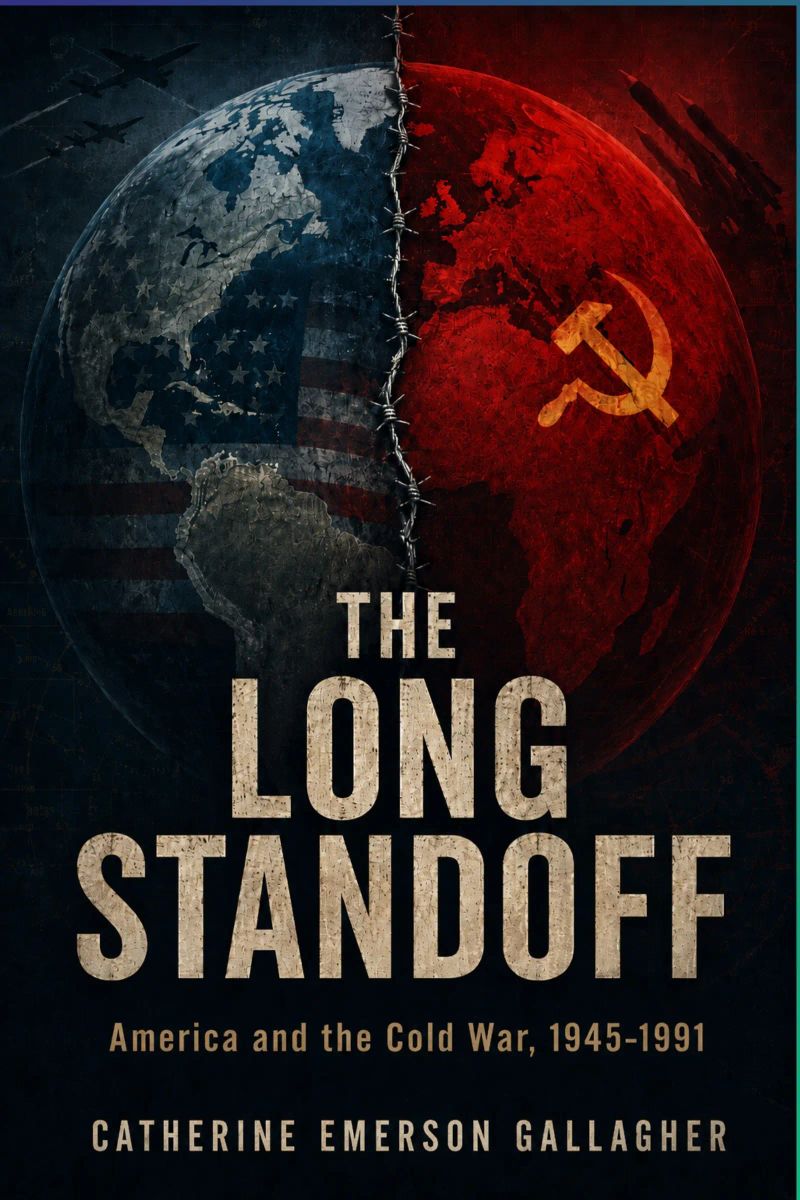
THE LONG STANDOFF
America and the Cold War, 1945–1991By Catherine Emerson Gallagher


Length7h 16m
About this audiobook
Cold War history, America and the Soviet Union 1945-1991 — the Iron Curtain, Korean War, McCarthyism, Cuban Missile Crisis, Vietnam, and the fall of the Berlin Wall in one complete narrative history.
On March 5, 1946, Winston Churchill stood at Westminster College in Fulton, Missouri — Truman seated behind him — and told the audience that an iron curtain had descended from Stettin to Trieste. Behind it, Hungary's communist party was deploying what leader Matyas Rakosi called "salami tactics," slicing off the noncommunist opposition one piece at a time. By 1947, former Prime Minister Ferenc Nagy had fled to Switzerland rather than face arrest. The Cold War had begun before anyone had agreed on a name for it.
This is the complete Cold War history of America's 46-year standoff. Historian Catherine Emerson Gallagher covers the full arc: George Kennan's 8,000-word Long Telegram of February 1946, the Marshall Plan, MacArthur's catastrophic advance to the Yalu, McCarthy's Wheeling speech with its contested list of 205 communists, the Cuban Missile Crisis, the 58,318 Americans who died in Vietnam and the North Vietnamese tanks crashing through Saigon's gates on April 30, 1975, and Gorbachev's glasnost unraveling what Stalin had built.
Inside this Cold War history:
• The Iron Curtain's construction — Soviet salami tactics in Poland, Hungary's show trials, Jan Masaryk's fall from a Prague window, and 3.5 million East Germans who fled before the Berlin Wall stopped the hemorrhage (Chapter 1)
• Korea and the MacArthur crisis — the Inchon landing's military brilliance, China's 300,000 troops massing in the mountains, the Chosin Reservoir at 30 below zero, and Truman's constitutionally correct but politically devastating dismissal of a national hero (Chapter 5)
• McCarthyism's mechanics and collapse — Alger Hiss, the Rosenberg executions, McCarthy's changing numbers (205, then 57, then "a lot"), Edward R. Murrow's March 1954 broadcast, and Joseph Welch's "Have you no sense of decency?" ending the senator's career (Chapter 6)
• Vietnam from escalation to fall — 630 helicopter sorties evacuating 1,373 Americans and 5,595 Vietnamese in 19 hours, thousands left behind at the embassy gates, and 800,000 refugees eventually resettled (Chapters 9-12)
• CIA covert action and its consequences — Iran 1953, Guatemala 1954, the Bay of Pigs, the Church Committee's revelation of assassination plots against eight foreign leaders, and the Zaire kleptocracy that American backing sustained for 32 years (Chapter 14)
• Reagan and the Soviet collapse — the Evil Empire speech, Stinger missiles for the Afghan mujahideen, Gorbachev's glasnost, and the night of November 9, 1989, when East Germans began dismantling the Wall (Chapters 17-20)
The Cold War killed millions in proxy conflicts from Korea to Vietnam to Angola to Afghanistan while keeping the two superpowers from direct battle for 46 years. Gallagher's Cold War history delivers every major episode — the strategy and the human cost, the intelligence operations and their blowback — from Churchill's curtain speech to the Wall's fall, without flinching from what the standoff required of those caught inside it.
For readers of David Halberstam's THE COLDEST WINTER and Max Hastings's VIETNAM: AN EPIC TRAGEDY.
Audiobook details
GenreHistory
Length7 hrs 16 mins
Narrated byListen with 1,000+ voices
FormateBook with Audio
Publish dateJun 1, 2026
LanguageEnglish
Table of contents
1Introduction
2Prologue: The World After the War
3PART ONE: ORIGINS (1945–1950)
4Chapter 1: The Iron Curtain Descends — The Soviet Takeover of Eastern Europe
5Chapter 2: The Truman Doctrine — Containing Communism
Show all chaptersShow less
6Chapter 3: The Marshall Plan — Rebuilding Europe
7Chapter 4: The Berlin Blockade and the Birth of NATO
8PART TWO: HOT WARS IN A COLD WAR (1950–1960)
9Chapter 5: Korea — The Forgotten War
10Chapter 6: McCarthyism — Fear, Loyalty, and the Red Scare at Home
11Chapter 7: Eisenhower and the New Look — Nuclear Deterrence and Massive Retaliation
12Chapter 8: Cuba — Bay of Pigs, Missile Crisis, and the Kennedy Test
13PART THREE: VIETNAM AND CRISIS (1961–1975)
14Chapter 9: The Escalation — Kennedy, Johnson, and Vietnam
15Chapter 10: The Home Front — Protest, Division, and the Counterculture
16Chapter 11: Nixon and Détente — Opening China and Ending Vietnam
17Chapter 12: The Fall of Saigon — America's Reckoning
18PART FOUR: THE GLOBAL COLD WAR (1950–1980)
19Chapter 13: Proxy Wars — The Third World as Cold War Battleground
20Chapter 14: CIA Operations — Coups, Assassination Plots, and Covert Action
21Chapter 15: The Arms Race — MAD, Nuclear Weapons, and the Culture of Fear
22Chapter 16: The Nonaligned Movement — The Third World Between the Superpowers
23PART FIVE: REAGAN AND THE END (1980–1991)
24Chapter 17: Reagan's Cold War — The Evil Empire and SDI
25Chapter 18: The Reagan Doctrine — Arming Anti-Communist Rebels Worldwide
26Chapter 19: Gorbachev — Glasnost, Perestroika, and the Soviet Unraveling
27Chapter 20: The Fall of the Wall — 1989 and the Cold War's End
28PART SIX: LEGACIES
29Chapter 21: What Won the Cold War — Competing Explanations
30Chapter 22: The National Security State — CIA, NSA, and Permanent Surveillance
31Chapter 23: The Human Cost — Proxy Wars, Authoritarian Clients, and Civilian Deaths
32Chapter 24: America After the Cold War — The Unipolar Moment and Its Illusions
33Epilogue: The Wall Comes Down
34Acknowledgments
35Selected Bibliography
36About the Author
More from Catherine Emerson Gallagher

A Brief History of IntelligenceMax S. Bennett12h 18m4.6 (6.6K)$29 · $0.00

The Happiest Man on EarthEddie Jaku3h 48m4.6 (178K)$7 · $0.00

MotherlandJulia Ioffe17h 52m4.7 (2.5K)$40 · $0.00

Where Cowards Go to DieBenjamin Sledge8h 42m4.7 (351)$20 · $0.00
RevolutionariesSanjeev Sanyal11h 23m4.6 (2.6K)$29 · $0.00
Days of Love and Rage: A Story of RevolutionAnand Gopal22h 36m4.7 (584)$34 · $0.00

We Crossed a Bridge and It TrembledWendy Pearlman6h4.6 (5.2K)$24 · $0.00
Unbroken Bonds of BattleJohnny Joey Jones8h 31m4.6 (2.6K)$8 · $0.00

The Daughter of AuschwitzTova Friedman, Malcolm Brabant7h 54m4.6 (16.7K)$26 · $0.00

Lily's PromiseLily Ebert, Dov Forman8h 54m4.6 (16.1K)$29 · $0.00
On Democracies and Death CultsDouglas Murray10h 38m4.6 (6.5K)$29 · $0.00

Across the RiverKent Babb11h 40m4.6 (927)$29 · $0.00

Balcony Over Jerusalem: A Middle East Memoir - Israel, Palestine and BeyondJohn Lyons12h 37m4.6 (1.4K)$33 · $0.00

BeyondStephen Walker15h 39m4.6 (3.2K)$33 · $0.00
Kings and PawnsHoward Bryant10h 9m4.6 (678)$29 · $0.00

No EscapeNury Turkel9h 30m4.6 (809)$28 · $0.00

Jubal Stone: U.S. Marshal: Blood Trail To Hell: A Western Adventure NovelCasey Nash3h 42m4.6 (3.2K)$18 · $0.00

Fall and RiseMitchell Zuckoff17h 23m4.6 (9.8K)$40 · $0.00
The SurvivorJosef Lewkowicz, Michael Calvin9h 22m4.6 (2.5K)$29 · $0.00

Always FaithfulThomas Schueman, Zainullah Zaki12h 12m4.6 (977)$29 · $0.00
You may also like
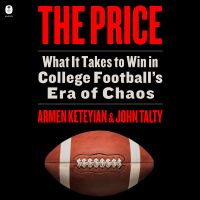
The PriceArmen Keteyian, John Talty13h 53m4.3 (825)$33 · $0.00
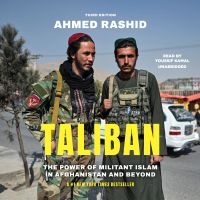
Taliban, Third EditionAhmed Rashid14h 26m4.2 (18.5K)$23
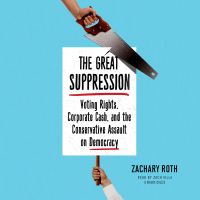
The Great SuppressionZachary Roth5h 5m4.0 (563)$20
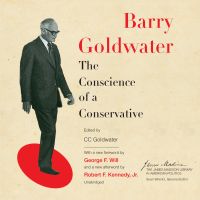
The Conscience of a ConservativeBarry Goldwater, CC Goldwater4h 7m4.0 (14.7K)$20
UnhumansPosobiec, Jack9h 34m4.1 (2.2K)Free
The Anatomy of FascismRobert O. Paxton11h 1m4.3 (7.7K)$23

China UnboundJoanna Chiu10h 7m4.2 (912)$20 · $0.00

Marked for DeathGeert Wilders8h 22m4.5 (530)$20 · $0.00
Imperial Life in the Emerald CityRajiv Chandrasekaran10h 19m4.1 (8.8K)$20
The Great DestroyerLimbaugh, David18h 6m4.0 (1.5K)Free
State and RevolutionVladimir Lenin4h 29m4.3 (22.4K)$4 · $0.00
The Iron HeelJack London9h 37m3.9 (17.8K)$6 · $0.00
I Can’t BreatheDavid Horowitz6h 7m4.3 (604)$17 · $0.00

Wages, Price and ProfitKarl Marx2h 18m4.3 (3.8K)$2 · $0.00
THE IRON HEEL (Political Dystopian Classic)Jack London11h 1m3.9 (16.3K)$1 · $0.00

People's Army: The Military Power of North KoreaAndrew Scobell, John M. Sanford, Daniel A. Pinkston, Strategic Studies Institute U.S. Congress, Donald Trump13h 45m$0.99 · $0.00

The United States in the Cold WarChristopher Collier, James Lincoln Collier2h 2m3.8 (58)$15
A SPLENDID LITTLE WARRichard Horace Pemberton5h 48m$7
THE TRUE FORCE OF NORTH KOREA: Military, Weapons of Mass Destruction and Ballistic Missiles, Including Reaction of the U.S. Government to the Korean Military ThreatAndrew Scobell, John M. Sanford, Daniel A. Pinkston, Strategic Studies Institute, U.S. Congress, Donald Trump13h 41m$1 · $0.00
The "City Guard"George Filmer, William D. O'Brien, A. McCulloch, W. J. Hayes, Irving B. Cook9h 37m$1 · $0.00