



Length14h 4m
About this audiobook
In Jonathan Edwards' 'The Freedom of the Will,' the author tackles the heavy theological concept of free will versus determinism, presenting his arguments with a profound and analytical approach. Edwards delves into the nature of the human will and its relationship to moral responsibility, exploring the complexities of divine sovereignty and human choice in a compelling manner. Written in a persuasive and academic style, this book is a significant contribution to the field of philosophy and theology, reflecting Edwards' deep understanding of the subject matter. The book is a must-read for those interested in exploring the intersection of faith, reason, and ethics in a thought-provoking manner. Jonathan Edwards, a renowned American theologian and philosopher, was known for his intellectual prowess and influential sermons. His profound insights into the human condition and his profound grasp of religious doctrine are evident in 'The Freedom of the Will,' making it a seminal work in the realm of theological discourse. I highly recommend this book to readers seeking a profound and stimulating exploration of the philosophical and theological implications of free will.
Audiobook details
Rating★★★★ 4.4 (1.3K)
Includes Goodreads, Amazon
GenreSpirituality and Religion
Length14 hrs 4 mins
Narrated byListen with 1,000+ voices
FormateBook with Audio
Publish dateDec 21, 2018
LanguageEnglish
Table of contents
1The Catholic Dogma (Extra Ecclesiam Nullus Omnino Salvatur)
2Preface
3Part I.
4Section 1. Concerning The Nature Of The Will.
5Section 2. Concerning The Determination Of The Will.
Show all chaptersShow less
6Section 3. Concerning The Meaning Of The Terms Necessity, Impossibility, Inability, &C; And Of Contingence.
7Section 4. Of The Distinction Of Natural And Moral Necessity, And Inability.
8Section 5. Concerning The Notion Of Liberty, And Of Moral Agency.
9Part II.
10Section I. Showing The Manifest Inconsistence Of The Arminian Notion Of Liberty Of Will, Consisting In The Will's Self-Determining Power.
11Section 2. Several Supposed Ways Of Evading The Forgoing Reasoning, Considered.
12Section 3. Whether Any Event Whatsoever, And Volition In Particular, Can Come To Pass Without A Cause Of Its Existence.
13Section 4. Whether Volition Can Arise Without A Cause, Through The Activity Of The Nature Of The Soul.
14Section 5. Showing, That If The Things Asserted In These Evasions Should Be Supposed To Be True, They Are Altogether Impertinent, And Can't Help The Cause Of Arminian Liberty.
15Section 6. Concerning The Will's Determining In Things Which Are Perfectly Indifferent, In The View Of The Mind.
16Section 7. Concerning The Notion Of Liberty Of Will Consisting In Indifference.
17Section 8. Concerning The Supposed Liberty Of The Will, As Opposite To All Necessity.
18Section 9. Of The Connection Of The Acts Of The Will With The Dictates Of The Understanding.
19Section 10. Volition Necessarily Connected With The Influence Of Motives.
20Section 11. The Evidence Of God's Certain Foreknowledge Of The Volitions Of Moral Agents.
21Section 12. God's Certain Foreknowledge Of The Future Volitions Of Moral Agents, Inconsistent With Such A Contingence Of Those Volitions, As Is Without All Necessity.
22Section 13. Whether We Suppose The Volitions Of Moral Agents To Be Connected With Any Thing Antecedent, Or Not, Yet They Must Be Necessary In Such A Sense As To Overthrow Arminian Liberty.
23Part III.
24Section 1. God's Moral Excellency Necessary, Yet Virtuous And Praise-Worthy.
25Section 2. The Acts Of The Will Of The Human Soul Of Jesus Christ Necessarily Holy, Yet Truly Virtuous, Praise-Worthy, Rewardable, &C.
26Section 3. The Case Of Such As Are Given Up Of God To Sin, And Of Fallen Man In General, Proves Moral Necessity And Inability To Be Consistent With Blame-Worthiness.
27Section 4. Command, And Obligation To Obedience, Consistent With Moral Inability To Obey.
28Section 5. That Sincerity Of Desires And Endeavours, Which Is Supposed To Excuse In The Non-Performance Of Things In Themselves Good, Particularly Considered.
29Section 6. Liberty Of Indifference, Not Only Not Necessary To Virtue, But Utterly Inconsistent With It; And All, Either Virtuous Or Vicious Habits Or Inclinations.
30Section 7. Arminian Notions Of Moral Agency Inconsistent With All Influence Of Motive And Inducement, In Either Virtuous Or Vicious Actions.
31Part IV.
32Section 1. The Essence Of The Virtue And Vice Of Dispositions Of The Heart, And Acts Of The Will, Lies Not In Their Cause, But Their Nature.
33Section 2. The Falseness And Inconsistence Of That Metaphysical Notion Of Action, And Agency, Which Seems To Be Generally Entertained By The Defenders Of The Arminian Doctrine Concerning Liberty, Moral Agency, &C.
34Section 3. The Reasons Why Some Think It Contrary To Common Sense, To Suppose Those Things Which Are Necessary, To Be Worthy Of Either Praise Or Blame.
35Section 4. It Is Agreeable To Common Sense, And The Natural Notions Of Mankind, To Suppose Moral Necessity To Be Consistent With Praise And Blame, Reward And Punishment.
36Section 5. Concerning Those Objections, That This Scheme Of Necessity Renders All Means And Endeavours For The Avoiding Of Sin, Or The Obtaining Virtue And Holiness.
37Section 6. Concerning That Objection Against The Doctrine Which Has Been Maintained, That It Agrees With The Stoical Doctrine Of Fate, And The Opinions Of Mr. Hobbes.
38Section 7. Concerning The Necessity Of The Divine Will.
39Section 8. Some Further Objections Against The Moral Necessity Of God's Volitions Considered.
40Section 9. Concerning That Objection Against The Doctrine Which Has Been Maintained, That It Makes God The Author Of Sin.
41Section 10. Concerning Sin's First Entrance Into The World.
42Section 11. Of A Supposed Inconsistence Of These Principles, With God's Moral Character.
43Section 12. Of A Supposed Tendency Of These Principles To Atheism And Licentiousness.
44Section 13. Concerning That Objection Against The Reasoning, By Which The Calvinistic Doctrine Is Supported, That It Is Metaphysical And Abstruse.
45Conclusion
More from Jonathan Edwards

Sinners in the Hands of an Angry God & Other Sermons (Annotated)Jonathan Edwards7h 51m4.7 (1.5K)$2 · $0.00
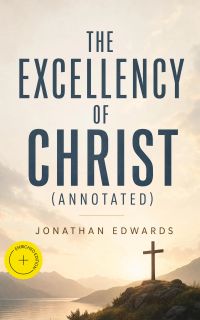
The Excellency of Christ (Annotated)Jonathan Edwards3h 17m4.7 (170)$2 · $0.00

Charity and Its Fruits (Annotated)Jonathan Edwards12h 39m4.6 (474)$2 · $0.00

The Excellency of ChristJonathan Edwards2h 51m4.6 (179)$1 · $0.00

Sinners in the Hands of an Angry God and Other SermonsJonathan Edwards7h 29m4.0 (2.7K)$1 · $0.00

The Freedom of the Will (Vol. 1-4)Jonathan Edwards15h 13m4.3 (1.6K)$1 · $0.00

Sinners in the Hands of an Angry God and Other SermonsJonathan Edwards8h 34m4.0 (5.8K)$2 · $0.00

The Freedom of the Will (Vol. 1-4)Jonathan Edwards13h 53m4.3 (2.2K)$2 · $0.00

The Religious Affections (Annotated)Jonathan Edwards19h 2m4.3 (7.3K)$2 · $0.00

The Excellency of ChristJonathan Edwards1h 38m4.6 (175)$2 · $0.00

The Religious Affections (Annotated)Jonathan Edwards19h 1m4.4 (7.9K)$1.99 · $0.00

Sinners in the Hands of an Angry GodJonathan Edwards8h 34m3.9 (6.3K)$1 · $0.00

The Religious Affections (Unabridged)Jonathan Edwards19h 8m4.4 (9.4K)$1.99 · $0.00

Sünder in den Händen eines zornigen GottesJonathan Edwards55m4.1 (16.5K)$5
31 Decrees of Blessing for Your LifePatricia King2h 38m4.8 (1.4K)$10 · $0.00

Loved BabySarah Philpott4h 51m4.8 (1.4K)$10 · $0.00

The QuranAllah23h 7m4.7 (136.1K)$1 · $0.00

The Secret of the RosaryLouis de Montfort6h 1m4.7 (16K)$2 · $0.00

The Holy Qur-an: Text, Translation and CommentaryAbdullah Yusuf Ali22h 16m4.7 (133K)$1 · $0.00

All of Grace (Annotated)Charles Spurgeon5h 1m4.7 (1.3K)$0.99 · $0.00

Steps to ChristEllen G. White3h 12m4.7 (13.8K)$2 · $0.00
The Doctrine and Selected CovenantsJoseph Smith13h 53m4.7 (10.4K)$1.99 · $0.00
Sinners in the Hands of an Angry God & Other Sermons (Annotated)Jonathan Edwards7h 51m4.7 (1.5K)$2 · $0.00

Swayam Ki AwaazPrem Rawat8h 34m4.7 (1.1K)$26 · $0.00

Behind the BadgeAdam Davis10h 18m4.7 (2.7K)$10 · $0.00

The New Human Revolution, vol. 1Daisaku Ikeda7h 46m4.7 (669)$12 · $0.00

You Are Worth ItKyle Carpenter, Don Yaeger8h 53m4.7 (4.8K)$29 · $0.00
Praying GraceDavid A. Holland3h 2m4.7 (658)$10 · $0.00

Evidence Not SeenDarlene Deibler Rose11h 11m4.6 (11.9K)$29 · $0.00

The Christ KeyChad Bird, Chad Bird7h 33m4.7 (592)$17.40 · $0.00

He and IGabrielle Bossis10h 12m4.7 (554)$17 · $0.00

Your Body Already KnowsNidhi Pandya Bhanshali9h 7m4.7 (360)$16 · $0.00

The Complete WorksFlorence Scovel Shinn7h 59m4.6 (6.6K)$2 · $0.00
Driven by EternityJohn Bevere3h 50m4.6 (3.2K)$10 · $0.00
You may also like

PenseesBlaise Pascal8h 40m4.2 (21.2K)$3.50 · $0.00
THE CRITIQUE OF PRACTICAL REASONImmanuel Kant8h 29m4.1 (14.1K)$1.99 · $0.00
Kant's Critique of JudgementImmanuel Kant13h 54m4.2 (10K)$2.30
What Christians BelieveC. S. Lewis49m4.5 (3.2K)$7

PhilebusPlato5h 19m4.1 (1.4K)$1 · $0.00

The EssaysFrancis Bacon5h 39m4.0 (6.1K)$1.20 · $0.00
Dialogues Concerning Natural ReligionDavid Hume3h 58m4.1 (8.9K)Free

Ethics (Complete Edition)Baruch Spinoza9h 53m4.2 (27K)$1 · $0.00

The Science of Being WellW. D. Wattles2h 34m4.2 (5K)$2.30
The Freedom of the Will (Vol. 1-4)Jonathan Edwards13h 53m4.3 (2.2K)$2 · $0.00
The Critique of Practical ReasonImmanuel Kant6h 51m4.1 (14.3K)$2.30
The Freedom of the Will (Vol. 1-4)Jonathan Edwards15h 13m4.3 (1.6K)$1 · $0.00

Dollars Want MeHenry Harrison52m4.2 (843)$3.50 · $0.00

Discourse on the MethodRené Descartes2h 24m4.0 (37.8K)$1.20 · $0.00

I and ThouMartin Buber5h 18m4.3 (31.6K)$14

EthicsBenedictus de Spinoza10h 58m4.3 (27.1K)$2 · $0.00

An Examination of President Edwards' Inquiry into the Freedom of the WillAlbert Taylor Bledsoe7h 5m$2 · $0.00

EvolutionF. B. Jevons7h 19m$2 · $0.00

Elements of MoralsPaul Janet8h 25m$2 · $0.00
History of Modern PhilosophyAlfred William Benn56m3.8 (26)$1 · $0.00