
Audio only


Length5h 3m
About this audiobook
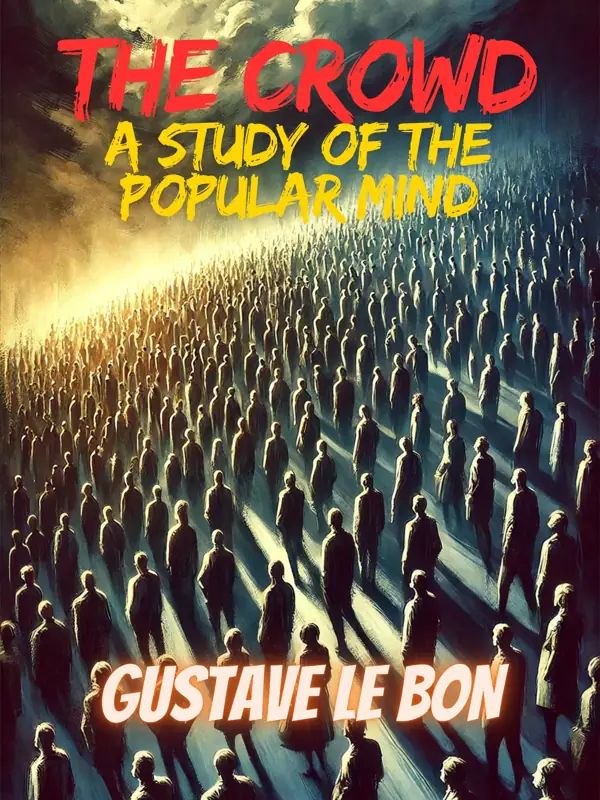
Published in 1895, it anticipated the instrumental use of crowds and the era of great dictatorships with extraordinary foresight. It influenced Freud, Theodore Roosevelt, Mussolini and De Gaulle. It paved the way for the emergence of a new discipline, social psychology, becoming a fundamental text in the sociology of communication. Crowds are a destructive force, lacking an overall vision, undisciplined. This makes them easily orientable and impressionable. The prestige and charisma of the leader, thanks to the repetitive use of a few simple slogans, not argued, is able to access their primitive collective unconscious and therefore to maneuver them. In the collective soul, the intellectual attitudes of men, and consequently their individuality, are annulled.
Audiobook details
Rating★★★★ 4.0 (25.7K)
Includes Goodreads, Amazon, LibraryThing, StoryGraph
GenreLiterary Classics, Biography and Memoir
Length5 hrs 3 mins
Narrated byListen with 1,000+ voices
FormateBook with Audio
Publish dateMar 4, 2025
LanguageEnglish
Table of contents
1Preface
2Introduction. The Era of Crowds
3Book I. The Mind of Crowds
4Chapter I. General Characteristics of Crowds. — Psychological Law of Their Mental Unity
5Chapter II. The Sentiments and Morality of Crowds
Show all chaptersShow less
6Chapter III. The Ideas, Reasoning Power, and Imagination of Crowds
7Chapter IV. A Religious Shape Assumed by All the Convictions of Crowds
8Book II. The Opinions and Beliefs of Crowds
9Chapter I. Remote Factors of the Opinions and Beliefs of Crowds
10Chapter II. The Immediate Factors of the Opinions of Crowds
11Chapter
12Chapter IV. Limitations of the Variability of the Beliefs and Opinions of Crowds
13Book III. The Classification and Description of the Different Kinds of Crowds
14Chapter I. The Classification of Crowds
15Chapter II. Crowds Termed Criminal Crowds
16Chapter III. Criminal Juries
17Chapter IV. Electoral Crowds
More from Gustave Le Bon
The Psychology of RevolutionGustave Le Bon9h 1m3.9 (1.1K)$1.20 · $0.00

Psychologie der massenGustave Le Bon2h 55m4.0 (27.2K)$4.70 · $0.00
Psicología de las masasGustave Le Bon2h 44m4.0 (26.4K)$4.60 · $0.00
Psicologia delle folleGustave Le Bon2h 41m4.1 (26K)$4.60 · $0.00
Psychologie des foulesGustave Le Bon2h 45m4.0 (26.7K)$4.60 · $0.00
Psicologia das multidõesGustave Le Bon2h 40m3.9 (26K)$4.60 · $0.00

To Kill a MockingbirdHarper Lee12h 18m4.5 (7.4M)$29 · $0.00

These Precious DaysAnn Patchett11h 14m4.5 (45.2K)$29 · $0.00

This Side of Paradise - The Original 1920 Edition (Annotated)F. Scott Fitzgerald11h 30m4.6 (1.6K)$2 · $0.00
The Great Gatsby: Original 1925 Edition (An F. Scott Fitzgerald Classic NovelFrancis Scott Fitzgerald4h 45m4.6 (9.3K)$18 · $0.00

TWELFTH NIGHTWilliam Shakespeare, Sidney Lee16h 38m4.6 (2.8K)$1.99 · $0.00

The Complete Histories / History Plays of William Shakespeare (Annotated)William Shakespeare29h 42m4.6 (2.3K)$1.99 · $0.00

Braving the TruthRachel Held Evans11h 31m4.7 (359)$29 · $0.00

The Old Man and the Sea (Annotated)Ernest Hemingway4h 27m4.6 (1.4K)$2 · $0.00

Henry V (The Play, Historical Background and Analysis of the Character in the Play)William Shakespeare, William Hazlitt8h 50m4.6 (1.3K)$1.99 · $0.00

H. P. LOVECRAFT Ultimate Collection: Novellas, Short Stories, Poetry & Essays (Annotated)H. P. Lovecraft12h 28m4.6 (2.3K)$2 · $0.00
Time RegainedMarcel Proust16h 8m4.5 (10.6K)$1.99 · $0.00

The Mis-Education of the NegroCarter Goodwin Woodson4h 32m4.5 (28.4K)$10 · $0.00
Lessons in TruthH. Emilie3h 50m4.6 (1.4K)$4.70 · $0.00

TORAH - Bilingual Edition: English/Hebrew (Annotated)Max Margolis, JPS28h 26m4.6 (1K)$2 · $0.00

Betty Crocker picture cooky bookBetty Crocker, Inc. General Mills2h 13m4.5 (6.5K)$1 · $0.00

The Complete Tales of Beatrix PotterBeatrix Potter3h 36m4.5 (75K)$3 · $0.00

Anne of Green GablesL. M. Montgomery11h 1m4.5 (1.2M)$2.30 · $0.00

Crime and Punishment (The Unabridged Garnett Translation) (Annotated)Fyodor Dostoevsky24h 25m4.5 (15.4K)$1.99 · $0.00

The North American IndianEdward S. Curtis, Frederick Webb Hodge6h4.5 (1.2K)$2 · $0.00

The Picture of Dorian Gray: The Uncensored 13 Chapter Version + The Revised 20 Chapter Version (Annotated)Oscar Wilde16h 12m4.5 (2.8K)$1.99 · $0.00

The Happiest Man on EarthEddie Jaku3h 48m4.6 (178K)$7 · $0.00

MotherlandJulia Ioffe17h 52m4.7 (2.5K)$40 · $0.00

Evidence Not SeenDarlene Deibler Rose11h 11m4.6 (11.9K)$29 · $0.00

Where Cowards Go to DieBenjamin Sledge8h 42m4.7 (351)$20 · $0.00

Will You Love Me?Cathy Glass9h 5m4.6 (9.3K)$29 · $0.00

Designing Terry Pratchett’s DiscworldPaul Kidby3h 52m4.7 (343)$20 · $0.00

HostageEli Sharabi5h 25m4.6 (10.8K)$24 · $0.00

Finding MeViola Davis9h 15m4.6 (256.4K)$29 · $0.00

The Dangerous Truth about Today’s MarijuanaLaura Stack CSP, MBA9h 57m4.7 (385)$20 · $0.00

Birdie & HarlowTaylor Wolfe7h 50m4.6 (6.5K)$26 · $0.00
The Lives of BrianBrian Johnson9h 45m4.6 (3.5K)$29 · $0.00

I Am The StormJanice Dean9h4.6 (1.5K)$8 · $0.00
Black History CollectionFrederick Douglass, Harriet Ann Jacobs, Booker T. Washington, W.E.B. Du Bois27h 9m4.6 (2.6K)$18 · $0.00

Just as I AmCicely Tyson16h 8m4.6 (99K)$33 · $0.00

Unbroken Bonds of BattleJohnny Joey Jones8h 31m4.6 (2.6K)$8 · $0.00

The Daughter of AuschwitzTova Friedman, Malcolm Brabant7h 54m4.6 (16.7K)$26 · $0.00
My Bondage and My Freedom (Annotated)Frederick Douglass15h 30m4.6 (2.4K)$2 · $0.00

Lily's PromiseLily Ebert, Dov Forman8h 54m4.6 (16.1K)$29 · $0.00

CrossroadsKaleb Dahlgren7h 56m4.6 (4.9K)$26 · $0.00

Across the RiverKent Babb11h 40m4.6 (927)$29 · $0.00
You may also like
Tertium Organum: The Third Canon of ThoughtP. D. Ouspensky14h 48m4.3 (688)$1.99 · $0.00
The Halo EffectPhil Rosenzweig6h 58m4.0 (6.5K)$20 · $0.00
Introduction to Mathematical PhilosophyBertrand Russell9h4.1 (2.8K)$1 · $0.00
Questions Are the AnswerHal Gregersen8h 45m4.1 (682)$29 · $0.00
Kant's Prolegomena to Any Future MetaphysicsImmanuel Kant4h 21m4.1 (12.1K)$1 · $0.00

The FieldLynne McTaggart10h 13m4.2 (8.8K)$29 · $0.00
THE THREE CRITIQUES: The Critique of Pure Reason, The Critique of Practical Reason & The Critique of JudgmentImmanuel Kant46h 10m4.5 (1.4K)$1 · $0.00
Tractatus Logico-PhilosophicusLudwig Wittgenstein4h 57m4.2 (31.9K)$1.99 · $0.00

Fundamental Principles of the Metaphysic of MoralsImmanuel Kant3h 21m4.0 (23.8K)$3.50 · $0.00

Talk to MeDean Nelson10h 9m4.3 (646)$29 · $0.00

THE CRITIQUE OF PURE REASONImmanuel Kant25h 39m4.1 (51.3K)$1.99 · $0.00
The Critique of Pure ReasonImmanuel Kant20h 32m4.1 (40.4K)$15 · $0.00
The Mystique of Enlightenment (Summarized Edition)U. G. Krishnamurti3h 11m4.4 (349)$2

The Three Critiques: The Critique of Pure Reason, Practical Reason and JudgmentImmanuel Kant46h 6m4.3 (15.5K)$1.99 · $0.00

On the Genealogy of MoralityFriedrich Nietzsche4h 31m4.3 (72.5K)Free
The Damned (Là-bas)Joris-Karl Huysmans8h 55m4.1 (5.8K)$1 · $0.00
Kant's Prolegomena to Any Future Metaphysics (Annotated)Immanuel Kant6h 3m4.1 (12.9K)$2 · $0.00
Groundwork of the Metaphysics of MoralsImmanuel Kant4h 47m4.0 (28.9K)$2 · $0.00
On Mr. Spencer's Data of EthicsMalcolm Guthrie3h 53m$2 · $0.00
A Discourse on Method, Meditations on the First Philosophy, and Principles of PhilosophyRené Descartes8h 8m3.9 (126)$17