
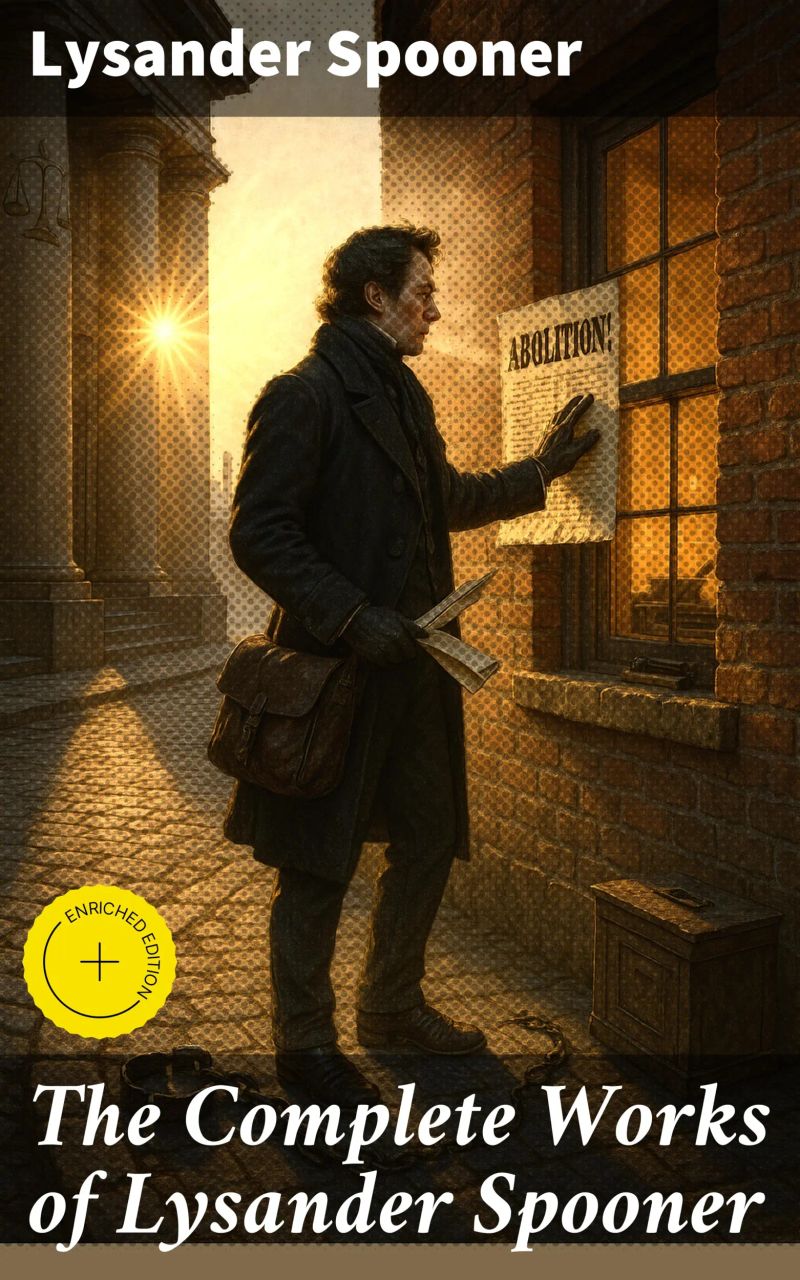
The Complete Works of Lysander Spooner
Enriched edition. Essays on Liberty and Individual Rights in 19th Century AmericaBy Lysander Spooner


Length88h 39m
About this audiobook
In "The Complete Works of Lysander Spooner," readers are invited into a vast intellectual landscape shaped by Spooner's radical ideas on liberty, justice, and individual rights. This comprehensive collection showcases his essays, legal writings, and polemics, characterized by a sharp, persuasive prose that challenges the status quo of 19th-century America. Spanning topics such as abolitionism, labor rights, and the critique of government authority, Spooner's works are anchored in a profound commitment to natural law and libertarian principles, offering an essential discourse in the canon of political philosophy and American thought. Lysander Spooner was a 19th-century abolitionist, lawyer, and anarchist thinker whose life experiences deeply influenced his writings. Born in 1808 in Massachusetts, Spooner harnessed his legal expertise to advocate for the disenfranchised, directly opposing prevailing societal norms with his iconoclastic views. His correspondence with contemporaries, including notable figures like Frederick Douglass, reveals a mind attuned to the complexities of justice and human rights, which laid the groundwork for his passionate arguments against the legitimacy of slavery and government coercion. This volume is highly recommended for scholars, students, and anyone seeking to explore the roots of libertarian thought and social justice. Spooner's eloquence and thought-provoking insights not only resonate with modern audiences but also challenge readers to rethink fundamental notions of authority, freedom, and the role of government in the pursuit of a just society.
In this enriched edition, we have carefully created added value for your reading experience:
- A comprehensive Introduction outlines these selected works' unifying features, themes, or stylistic evolutions.
- A Historical Context section situates the works in their broader era—social currents, cultural trends, and key events that underpin their creation.
- A concise Synopsis (Selection) offers an accessible overview of the included texts, helping readers navigate plotlines and main ideas without revealing critical twists.
- A unified Analysis examines recurring motifs and stylistic hallmarks across the collection, tying the stories together while spotlighting the different work's strengths.
- Reflection questions inspire deeper contemplation of the author's overarching message, inviting readers to draw connections among different texts and relate them to modern contexts.
- Lastly, our hand‐picked Memorable Quotes distill pivotal lines and turning points, serving as touchstones for the collection's central themes.
Audiobook details
GenrePolitics and Government
Length88 hrs 39 mins
Narrated byListen with 1,000+ voices
FormateBook with Audio
Publish dateDec 9, 2023
LanguageEnglish
Table of contents
1Introduction
2Introduction
3Historical Context
4Synopsis (Selection)
5Political Works
Show all chaptersShow less
6No Treason, No. I
7No Treason. No II - The Constitution
8No Treason. No VI - The Constitution of No Authority
9Vices are Not Crimes: A Vindication of Moral Liberty
10No. 1. Revolution: The Only Remedy for the Oppressed Classes of Ireland, England, and Other Parts of the British Empire
11Natural Law; or the Science of Justice
12Part First.
13Chapter II. The Science of Justice (Continued)
14Chapter III. Natural Law Contrasted With Legislation.
15A Letter to Thomas F. Bayard: Challenging his Right
16Section I.
17Section II.
18Section III.
19Section IV.
20Section V.
21Section VI.
22Section VII.
23Section VIII.
24Section IX.
25Section X.
26Section XI.
27Section XII.
28Section XIII.
29Section XIV.
30Section XV.
31Section XVI.
32Section XVII.
33Section XVIII.
34Section XIX.
35Section XX.
36Section XXI.
37Section XXII.
38Section XXIII.
39Section XXIV.
40Section XXV.
41Section XXVI.
42Section XXVII.
43Writings on Economics
44Poverty: Its Illegal Causes and Legal Cure
45Chapter I. Illegal Causes of Poverty.
46Chapter II. Economical Propositions.
47Chapter III. Economical Results from the Preceding Propositions
48Chapter IV. Social, Moral, Intellectual, and Political Results from the Preceding Propositions.
49Chapter V. The Legal Nature of Debt.
50Chapter VI. The Legal Nature of Debt.—(Continued.)
More from Lysander Spooner

Intellectual Property LawLysander Spooner10h 11m4.0 (156)$1.99 · $0.00
No Treason (Complete Edition)Lysander Spooner3h 52m4.3 (3.9K)$1.99 · $0.00

Sin traiciónLysander Spooner3h 22m4.4 (34)$15 · $0.00
The Complete Works of Lysander Spooner (Annotated)Lysander Spooner88h 47m$2 · $0.00

A Letter to Thomas F. BayardLysander Spooner20m3.6 (11)$2 · $0.00

A Letter to Grover ClevelandLysander Spooner5h 50m4.1 (19)$2 · $0.00
The Complete WorksLysander Spooner88h 54m$2 · $0.00

No TreasonLysander Spooner3h 5m4.4 (1.2K)$1 · $0.00
The Unconstitutionality of Slavery (Complete Edition)Lysander Spooner14h 55m4.3 (55)$1.99 · $0.00

Poverty: Its Illegal Causes and Legal CureLysander Spooner4h 49m$2 · $0.00
Complete WorksLysander Spooner88h 51m4.8 (12)$1.99 · $0.00

The Law of Intellectual PropertyLysander Spooner9h 15m4.2 (18)$2 · $0.00
RiggedMollie Hemingway12h 48m4.6 (4.2K)$23 · $0.00

SledgehammerDavid Friedman8h 21m4.7 (589)$26 · $0.00

Citizenship in a Republic (Annotated)Theodore Roosevelt2h 44m4.6 (1.4K)$2 · $0.00

No EscapeNury Turkel9h 30m4.6 (809)$28 · $0.00

Always FaithfulThomas Schueman, Zainullah Zaki12h 12m4.6 (977)$29 · $0.00

UnthinkableJamie Raskin15h 8m4.5 (9.3K)$8 · $0.00

My Fourth Time, We DrownedSally Hayden13h 59m4.6 (2.9K)$23 · $0.00

A Revolution of Common SenseScott Jennings9h 29m4.6 (528)$29 · $0.00

Statement From the Dock at the Rivonia TrialNelson Mandela2h 18m4.6 (1.3K)$1 · $0.00

Lessons from the EdgeMarie Yovanovitch17h 11m4.5 (5.9K)$40 · $0.00

To Rescue the American SpiritBret Baier10h 12m4.5 (2.7K)$8 · $0.00

StonewalledSharyl Attkisson15h 19m4.5 (4.3K)$33 · $0.00
The World According to Orwell: 1984 & Animal FarmGeorge Orwell15h 42m4.6 (1.1K)$1 · $0.00
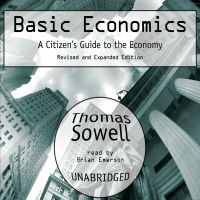
Basic EconomicsThomas Sowell18h 32m4.5 (29.3K)$28 · $0.00

To Rescue the RepublicBret Baier, Catherine Whitney11h 42m4.5 (8.6K)$29 · $0.00

Modern WarriorsPete Hegseth7h 10m4.5 (4.7K)$24 · $0.00

Philosophy and Opinions of Marcus Garvey (Annotated)Marcus Mosiah Garvey4h 42m4.5 (1.7K)$1.99 · $0.00

A Plague Upon Our HouseScott W. Atlas MD10h 37m4.5 (3.4K)$20 · $0.00

One Bright MoonAndrew Kwong12h 21m4.5 (813)$29 · $0.00

CredibleDeborah Tuerkheimer8h 5m4.6 (551)$26 · $0.00
You may also like
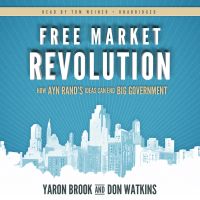
Free Market RevolutionYaron Brook, Don Watkins8h 13m4.4 (1K)$20 · $0.00

Southern Horrors: Lynch Law in All Its PhasesIda B. Wells-Barnett1h 3m4.4 (1.6K)$2.30

How Soccer Explains the WorldFranklin Foer7h 22m3.9 (14.9K)$24 · $0.00

America's Cultural RevolutionChristopher F. Rufo11h 24m4.5 (3.9K)$29 · $0.00

The MAGA DoctrineCharlie Kirk6h 34m4.1 (4.1K)$24 · $0.00
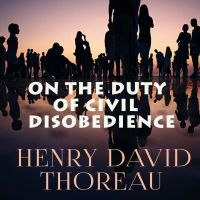
On the Duty of Civil DisobedienceHenry David Thoreau1h 10m4.0 (34.2K)$2 · $0.00

Southern Horrors: Lynch Law in All Its PhasesIda B. Wells-Barnett59m4.4 (990)Free
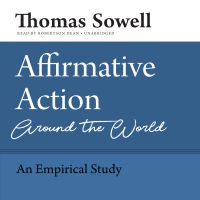
Affirmative Action Around the WorldThomas Sowell7h 24m4.4 (1.1K)$23

The Conscience of a Conservative (Annotated)Barry Goldwater4h 41m4.3 (13.1K)$2 · $0.00

Federalist & Anti-Federalist Papers - Complete EditionAlexander Hamilton, James Madison, John Jay, Samuel Bryan, Patrick Henry22h 28m4.3 (3K)$1.99 · $0.00
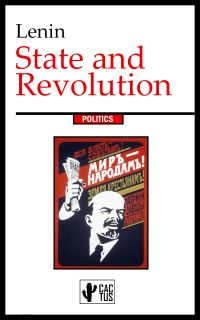
State and RevolutionVladimir Lenin4h 29m4.3 (22.4K)$4 · $0.00
Statement From the Dock at the Rivonia TrialNelson Mandela2h 18m4.6 (1.3K)$1 · $0.00
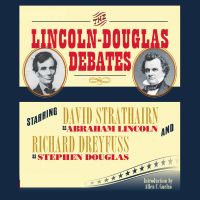
The Lincoln-Douglas DebatesAbraham Lincoln, Stephen Douglas16h 5m4.2 (472)$30

Empire of MudJ. D. Dickey9h 21m3.7 (1K)$20
The Social Contract (Annotated)Jean-Jacques Rousseau8h 19m3.7 (169)$2 · $0.00

History of the United States of America, Volume IIIGeorge Bancroft20h 9m3.9 (26)$30

Assata Taught MeDonna Murch6h 29m4.4 (185)$17 · $0.00

La bandera puertorriquenaAnika Aldamuy Denise36m$9 · $0.00
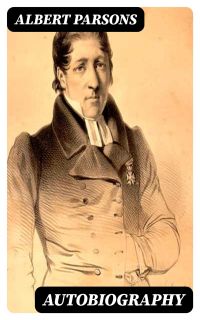
AutobiographyAlbert Parsons1h 25m4.3 (23)$2 · $0.00

International Religious Freedom Report 2006 - FranceUnited States Department of State1h 3m$1 · $0.00