
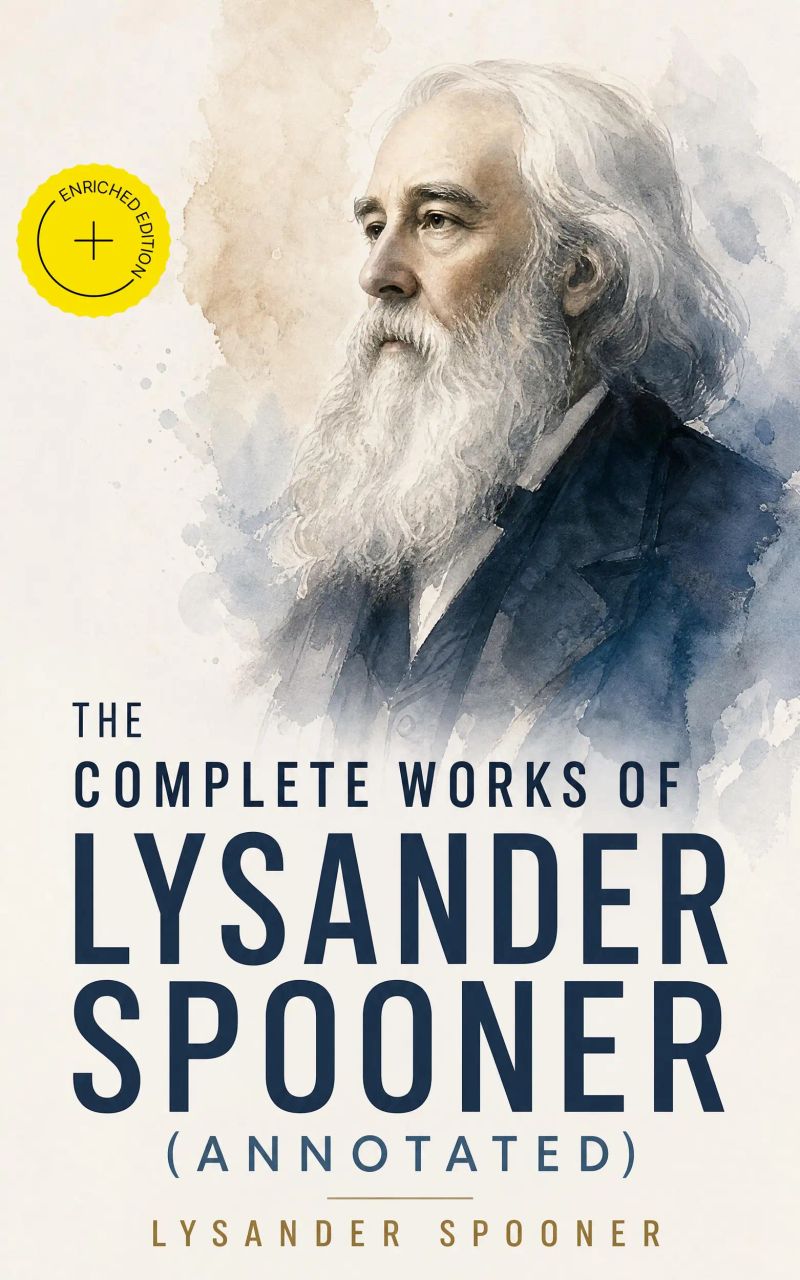
The Complete Works of Lysander Spooner (Annotated)
Enriched Edition. Natural Law, Abolition, and the Radical Defense of Liberty Against Constitutional and State AuthorityBy Lysander Spooner


Length88h 46m
About this audiobook
The Complete Works of Lysander Spooner gathers the writings of one of nineteenth-century America's most uncompromising legal and political thinkers, spanning natural law, abolitionism, constitutional interpretation, economics, individual liberty, and resistance to state authority. Written in a lucid, polemical, and lawyerly style, these essays and treatises belong to the radical reform tradition of antebellum and postbellum America, yet they also anticipate later libertarian and anarchist critiques of centralized power. Spooner (1808–1887) was a Massachusetts lawyer, entrepreneur, abolitionist, and theorist whose life furnished the practical and moral grounds of his thought. His challenge to the U.S. postal monopoly, his opposition to slavery, and his fierce scrutiny of the Constitution all shaped a body of work concerned with consent, justice, and the limits of political obligation. His writings reflect both the reform energies of his age and a deeply personal distrust of coercive institutions. This collection is indispensable for readers interested in American political thought, legal theory, abolitionist literature, or the intellectual origins of libertarianism. It rewards careful study, not merely as historical artifact, but as a sustained provocation to reconsider law, freedom, and moral authority.
This enriched edition has been carefully crafted to add value to your reading experience.
- A comprehensive Introduction outlines these selected works' unifying features, themes, or stylistic evolutions.
- A Historical Context section situates the works in their broader era—social currents, cultural trends, and key events that underpin their creation.
- A concise Synopsis (Selection) offers an accessible overview of the included texts, helping readers navigate plotlines and main ideas without revealing critical twists.
- A unified Analysis examines recurring motifs and stylistic hallmarks across the collection, tying the stories together while spotlighting the different work's strengths.
- Reflection questions inspire deeper contemplation of the author's overarching message, inviting readers to draw connections among different texts and relate them to modern contexts.
- Lastly, our hand‐picked Memorable Quotes distill pivotal lines and turning points, serving as touchstones for the collection's central themes.
Audiobook details
GenrePolitics and Government
Length88 hrs 46 mins
Narrated byListen with 1,000+ voices
FormateBook with Audio
Publish dateNov 21, 2023
LanguageEnglish
Table of contents
1The Complete Works of Lysander Spooner (Annotated)
2Introduction
3Historical Context
4Synopsis (Selection)
5Political Works
Show all chaptersShow less
6No Treason, No. I
7No Treason. No II - The Constitution
8No Treason. No VI - The Constitution of No Authority
9Vices are Not Crimes: A Vindication of Moral Liberty
10No. 1. Revolution: The Only Remedy for the Oppressed Classes of Ireland, England, and Other Parts of the British Empire
11Natural Law; or the Science of Justice
12Part First.
13Chapter II. The Science of Justice (Continued)
14Chapter III. Natural Law Contrasted With Legislation.
15A Letter to Thomas F. Bayard: Challenging his Right
16A Letter to Grover Cleveland, on his False Inaugural Address, the Usurpations and Crimes of Lawmakers and Judges, and the Consequent Poverty, Ignorance, and Servitude of the People
17Section I.
18Section II.
19Section III.
20Section IV.
21Section V.
22Section VI.
23Section VII.
24Section VIII.
25Section IX.
26Section X.
27Section XI.
28Section XII.
29Section XIII.
30Section XIV.
31Section XV.
32Section XVI.
33Section XVII.
34Section XVIII.
35Section XIX.
36Section XX.
37Section XXI.
38Section XXII.
39Section XXIII.
40Section XXIV.
41Section XXV.
42Section XXVI.
43Section XXVII.
44Writings on Economics
45Poverty: Its Illegal Causes and Legal Cure
46Chapter I. Illegal Causes of Poverty.
47Chapter II. Economical Propositions.
48Chapter III. Economical Results from the Preceding Propositions
49Chapter IV. Social, Moral, Intellectual, and Political Results from the Preceding Propositions.
50Chapter V. The Legal Nature of Debt.
More from Lysander Spooner

Intellectual Property LawLysander Spooner10h 11m4.0 (156)$1.99 · $0.00

The Illegal Causes and Legal Cure of PovertyLysander Spooner5h 41m$1.99 · $0.00

No Treason (Complete Edition)Lysander Spooner3h 52m4.3 (3.9K)$1.99 · $0.00

Sin traiciónLysander Spooner3h 22m4.4 (34)$15 · $0.00

The Complete Works of Lysander SpoonerLysander Spooner88h 40m$1 · $0.00

A Letter to Thomas F. BayardLysander Spooner20m3.6 (11)$2 · $0.00

A Letter to Grover ClevelandLysander Spooner5h 50m4.1 (19)$2 · $0.00

The Complete WorksLysander Spooner88h 54m$2 · $0.00

No TreasonLysander Spooner3h 5m4.4 (1.2K)$1 · $0.00
The Unconstitutionality of Slavery (Complete Edition)Lysander Spooner14h 55m4.3 (55)$1.99 · $0.00

Poverty: Its Illegal Causes and Legal CureLysander Spooner4h 49m$2 · $0.00
Complete WorksLysander Spooner88h 51m4.8 (12)$1.99 · $0.00

The Law of Intellectual PropertyLysander Spooner9h 15m4.2 (18)$2 · $0.00

KrantikariSanjeev Sanyal11h 44m4.6 (1.3K)$16 · $0.00

Unbroken Bonds of BattleJohnny Joey Jones8h 31m4.6 (2.6K)$8 · $0.00

On Democracies and Death CultsDouglas Murray10h 38m4.6 (6.5K)$29 · $0.00

Balcony Over Jerusalem: A Middle East Memoir - Israel, Palestine and BeyondJohn Lyons12h 37m4.6 (1.4K)$33 · $0.00

RiggedMollie Hemingway12h 48m4.6 (4.2K)$23 · $0.00

SledgehammerDavid Friedman8h 21m4.7 (589)$26 · $0.00

Citizenship in a Republic (Annotated)Theodore Roosevelt2h 44m4.6 (1.4K)$2 · $0.00

No EscapeNury Turkel9h 30m4.6 (809)$28 · $0.00

Always FaithfulThomas Schueman, Zainullah Zaki12h 12m4.6 (977)$29 · $0.00

UnthinkableJamie Raskin15h 8m4.5 (9.3K)$8 · $0.00

My Fourth Time, We DrownedSally Hayden13h 59m4.6 (2.9K)$23 · $0.00

A Revolution of Common SenseScott Jennings9h 29m4.6 (528)$29 · $0.00

Statement From the Dock at the Rivonia TrialNelson Mandela2h 18m4.6 (1.3K)$1 · $0.00

Lessons from the EdgeMarie Yovanovitch17h 11m4.5 (5.9K)$40 · $0.00

To Rescue the American SpiritBret Baier10h 12m4.5 (2.7K)$8 · $0.00

StonewalledSharyl Attkisson15h 19m4.5 (4.3K)$33 · $0.00
The World According to Orwell: 1984 & Animal FarmGeorge Orwell15h 42m4.6 (1.1K)$1 · $0.00
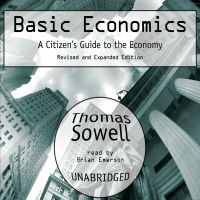
Basic EconomicsThomas Sowell18h 32m4.5 (29.3K)$28 · $0.00

To Rescue the RepublicBret Baier, Catherine Whitney11h 42m4.5 (8.6K)$29 · $0.00

Modern WarriorsPete Hegseth7h 10m4.5 (4.7K)$24 · $0.00
You may also like
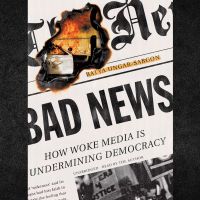
Bad NewsBatya Ungar-Sargon7h 50m4.1 (981)$20 · $0.00

America's Cultural RevolutionChristopher F. Rufo11h 24m4.5 (3.9K)$29 · $0.00

The Breakdown of Higher EducationJohn M. Ellis7h 47m4.2 (296)$17 · $0.00

Suicidal EmpathyGad Saad8h 24m4.1 (734)$28 · $0.00

I Can’t BreatheDavid Horowitz6h 7m4.3 (604)$17 · $0.00
No Treason (Complete Edition)Lysander Spooner3h 52m4.3 (3.9K)$1.99 · $0.00

Outrage, Inc.Derek Hunter7h 51m4.3 (1.3K)$26 · $0.00
No TreasonLysander Spooner3h 5m4.4 (1.2K)$1 · $0.00

The Authoritarian MomentBen Shapiro6h 12m4.2 (5.8K)$24 · $0.00

Crimes Against LibertyLimbaugh, David16h 3m4.1 (1.3K)Free

Stealing AmericaDinesh D'Souza11h 3m4.2 (2.8K)$29 · $0.00

Burn It DownMaureen Ryan13h 54m3.9 (3.5K)$33 · $0.00

Under Western EyesJoseph Conrad10h 53m4.0 (22.8K)$1 · $0.00

NobodyMarc Lamont Hill6h 5m4.4 (2.8K)$20

Noli me tangereJosé Rizal19h 35m4.3 (29.4K)$4 · $0.00

AlmightyDan Zak10h 49m4.1 (473)$20 · $0.00

Jihad AcademyNicolas Hénin4h 28m4.0 (405)$14

Southern Horrors: Lynch Law in All Its Phases (Annotated)Ida B. Wells-Barnett2h 44m4.6 (1.3K)$2 · $0.00

It’s Even Worse Than It LooksThomas E. Mann, Norman J. Ornstein6h 43m4.0 (4.6K)$18 · $0.00

Conspiracy of Catiline and the Jurgurthine War (Annotated)Sallust7h 45m4.1 (2.9K)$2 · $0.00