
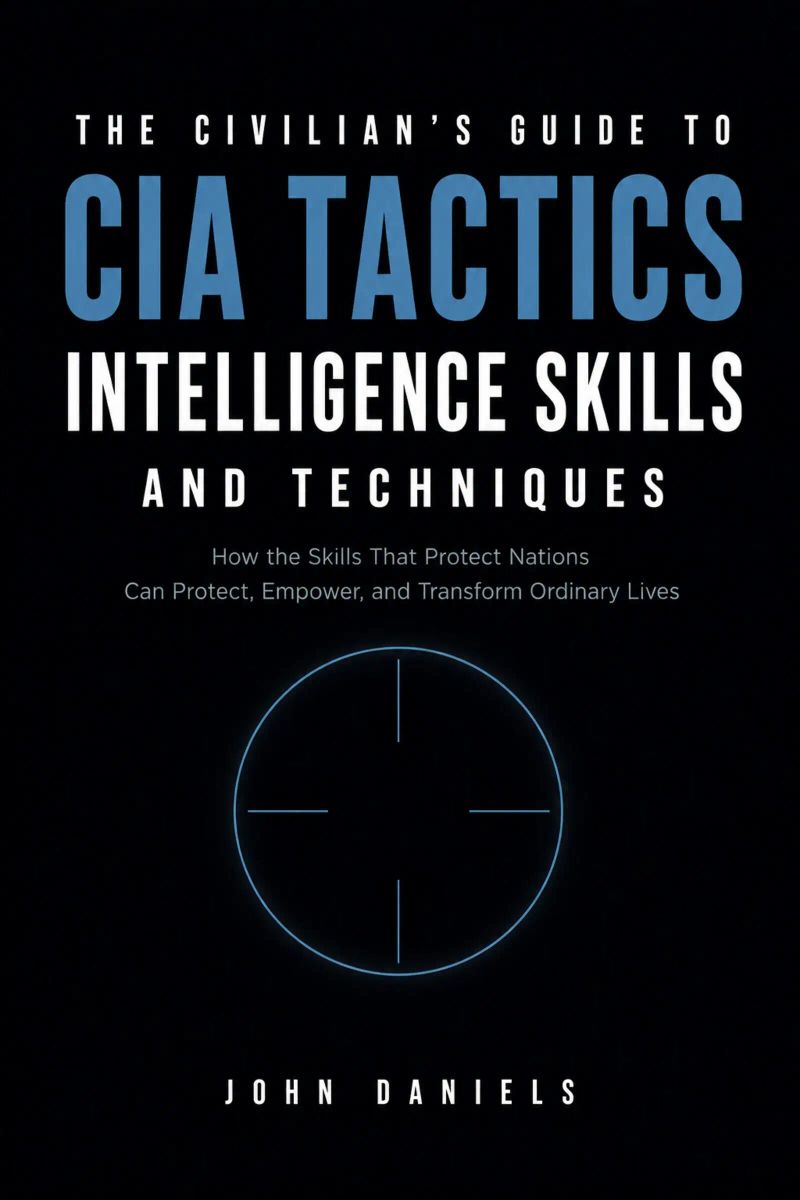
The Civilian's Guide to CIA Tactics, Intelligence Skills, and Techniques
How the Skills that Protects Nations can Protect, Empower, and Transform Ordinary LivesBy John Daniels


Length11h 15m
About this audiobook
What if the same mental skills that protect nations could protect your career, your family, and your life?
Every day, trained intelligence professionals walk into rooms you walk into, talk to people you talk to, and navigate threats you face — and they do it with a level of clarity, precision, and calm effectiveness that most people never develop. Not because they are smarter. Because they were trained differently.
The Civilian's Guide to CIA Tactics, Intelligence Skills, and Techniques is the most comprehensive, practical, and operationally grounded guide to professional intelligence tradecraft ever written for the general public. Drawing directly from declassified CIA training methodology, the published memoirs of former intelligence officers, decades of peer-reviewed research in cognitive psychology and behavioral science, and the documented operational history of the world's most capable intelligence services, this book delivers the complete professional intelligence toolkit — adapted, refined, and made immediately applicable to the real challenges of civilian life.
This is not a spy thriller. This is a field manual.
Across thirteen rigorously researched chapters, you will develop the same foundational capabilities that intelligence officers spend years building — organized into a coherent, practical system that works whether you are a business executive, entrepreneur, journalist, parent, traveler, security professional, or simply someone who is done navigating a complex world with insufficient tools.
Inside, you will master:
The intelligence analyst's mindset — the structured thinking framework that eliminates cognitive bias, defeats confirmation bias, and produces decisions that reflect reality rather than comfortable fiction. The situational awareness system used by CIA field officers — how to read any room, any street, and any environment with the trained perceptual precision that keeps professionals alive and effective in hostile conditions. The complete human intelligence (HUMINT) methodology — elicitation, rapid rapport building, source assessment, and the MICE framework for understanding why people share what they share. Professional deception detection — the verbal markers, behavioral clusters, cognitive load techniques, and baseline deviation analysis that replace unreliable gut instinct with systematic, evidence-based assessment. Surveillance and counter-surveillance tradecraft — Surveillance Detection Routes, fixed and mobile surveillance recognition, digital surveillance awareness, and cover for action principles. Open source intelligence (OSINT) — the professional methodology for finding, verifying, and analyzing publicly available information in an era of disinformation and information overload. The psychology of influence and persuasion — Cialdini's six principles as intelligence agencies apply them, framing and narrative control, propaganda anatomy, and inoculation theory for building manipulation resistance. Crisis cognition and decision-making — the OODA Loop, stress inoculation, cognitive tunneling prevention, and controlled triage thinking for high-stakes situations. Personal security and threat assessment — the capability-intent-opportunity threat matrix, protective intelligence methodology, travel security preparation, and home and digital perimeter assessment. Social engineering defense — how to recognize and neutralize pretexting attacks, urgency traps, phishing, vishing, smishing, and organizational manipulation attempts.
The book concludes with a complete personal…
Audiobook details
GenreTrue Crime, Business and Economics
Length11 hrs 15 mins
Narrated byListen with 1,000+ voices
FormateBook with Audio
LanguageEnglish
Table of contents
1The Civilian's Guide to CIA Tactics, Intelligence Skills, and Techniques
2FOREWORD: Why Intelligence Belongs to Everyone: How the Skills That Protect Nations Can Protect, Empower, and Transform Ordinary Lives
3CHAPTER 1: The Intelligence Mindset — Thinking Like an Analyst
4The most powerful tool in any intelligence professional's arsenal is not a gadget or a database — it is a disciplined way of thinking. This chapter rewires how you observe, interpret, and act on information.
51.1 Structured Analytic Thinking: Moving Beyond Gut Feelings
Show all chaptersShow less
61.2 The Analyst's Bias Audit: Identifying and Dismantling Your Own Blind Spots
71.3 Hypothesis Testing in Everyday Life: How Professionals Avoid Being Wrong
81.4 The "So What?" Discipline: Turning Raw Information into Actionable Conclusions
91.5 Red Team Thinking: Arguing Against Your Own Beliefs to Find the Truth
10CHAPTER 2: Situational Awareness — Reading Any Room, Street, or Space
11CIA officers are trained to absorb and process environmental information at a speed and depth that most people never develop. This chapter teaches you to do the same.
122.1 Baseline Behavior: How to Define "Normal" So You Instantly Spot "Wrong"
132.2 The 360-Degree Scan: Building Full Spatial Awareness Without Looking Paranoid
142.3 Pre-Attack Indicators: The Physical Signals People Display Before They Act
152.4 Environmental Mapping: How to Memorize and Exploit Any Space Within Minutes of Entering It
16CHAPTER 3: Human Intelligence (HUMINT) — The Art of Understanding People
17Intelligence agencies spend billions on technology, yet most of their best intelligence comes from people talking to people. This chapter teaches you the human collection skills that no satellite can replace.
183.1 Elicitation: The Science of Getting People to Volunteer Information They Never Planned to Share
193.2 Building Rapport Quickly: The Techniques Used to Make Strangers Trust You Within Minutes
203.3 Source Assessment: How to Evaluate Whether a Person Is Reliable, Motivated, or Compromised
213.4 The MICE Framework: Understanding Why People Share Secrets
223.5 The Strategic Conversation: Guiding Dialogue Without the Other Person Knowing
23CHAPTER 4: Observation and Memory — Seeing What Others Miss
24Field officers are trained to absorb, retain, and recall details with precision. Memory is not a gift — it is a system. This chapter teaches you that system.
254.1 The Method of Loci: The Ancient Technique Still Used by Intelligence Professionals Today
264.2 Photographic Detail Capture: Training Your Eyes to Record Like a Camera
274.3 Face, Name, and Pattern Retention: The Recall Drills Used in Operational Training
284.4 The After-Action Review: Debriefing Yourself After Every Significant Encounter
29CHAPTER 5: Deception Detection — Knowing When You Are Being Lied To
30Deception is everywhere — in boardrooms, relationships, negotiations, and headlines. Intelligence professionals are trained to detect it systematically rather than instinctively.
315.1 Verbal Deception Markers: The Language Patterns Liars Consistently Use
325.2 Behavioral Clusters: Why a Single Signal Means Nothing and a Pattern Means Everything
335.3 The Cognitive Load Method: Creating Mental Pressure That Exposes Fabricated Stories
345.4 Baseline Deviation Analysis: How to Detect When Someone Has Shifted From Their Normal
355.5 Disinformation vs. Misinformation: Recognizing Deliberate Manipulation in Media and Conversation
36CHAPTER 6: Surveillance and Counter-Surveillance — Seeing Without Being Seen
37Knowing whether you are being followed, monitored, or targeted is a critical survival and professional skill. This chapter gives civilians the tools to assess their own exposure and protect their movements.
386.1 Surveillance Detection Routes (SDRs): The Technique for Confirming You Are Being Followed
396.2 Fixed and Mobile Surveillance: How to Recognize Both and What to Do Next
406.3 Digital Surveillance Awareness: Identifying When Your Online Behavior Is Being Monitored
416.4 Cover for Action: Building Plausible Explanations for Your Movements and Activities
42CHAPTER 7: Open Source Intelligence (OSINT) — Mining Public Information Like a Professional
43In the digital age, an enormous amount of intelligence is available to anyone who knows how to look. This chapter teaches you the professional methodology for finding, verifying, and using open-source information.
447.1 The OSINT Cycle: Collecting, Processing, and Analyzing Publicly Available Information
457.2 Social Media as an Intelligence Platform: What People's Digital Footprints Reveal
467.3 Reverse Image Analysis, Metadata Extraction, and Geolocation From Open Sources
477.4 Verifying Information in a World of Fakes: The Lateral Reading Technique Used by Fact-Checkers and Analysts
487.5 Building an Intelligence Picture From Fragments: Mosaic Theory in Practice
49CHAPTER 8: Covert Communication and Operational Security — Protecting What You Know and Who You Know It From
50Operational security is not just for spies. In a world of data brokers, corporate espionage, and personal privacy threats, protecting your information is a life skill.

How to Escape from PrisonPaul Wood10h 29m4.5 (653)$29 · $0.00

Killer TriggersJoe Kenda8h 31m4.4 (6K)$20 · $0.00
BoundlessNick Kostov, Sean McLain9h 17m4.5 (1.1K)$29 · $0.00

Deadly ForceLawrence O'Donnell17h 18m4.5 (342)$40 · $0.00

Walking the BowlChris Lockhart, Daniel Mulilo Chama9h 7m4.4 (1.5K)$29 · $0.00

PapillonHenri Charriere18h 19m4.3 (90.2K)$40 · $0.00
The SuspectKent Alexander, Kevin Salwen14h 12m4.4 (3K)$23 · $0.00
The Cause of DeathCynric Temple-Camp8h 59m4.4 (1.4K)$29 · $0.00

GanglandJared Savage9h 21m4.4 (1.4K)$29 · $0.00
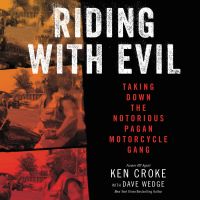
Riding with EvilKen Croke, Dave Wedge9h 42m4.3 (3.4K)$29 · $0.00
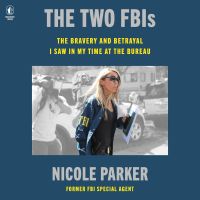
The Two FBIsNicole Parker10h 8m4.4 (499)$29 · $0.00
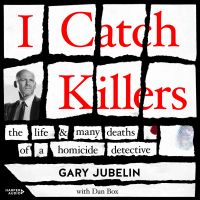
I Catch KillersGary Jubelin15h 32m4.3 (6.6K)$33 · $0.00

The Redemption Of Bobby LoveBobby Love, Cheryl Love9h 13m4.4 (956)$29 · $0.00

The Life We ChoseMatt Birkbeck8h 57m4.4 (1K)$29 · $0.00

The Truth About AaronJonathan Hernandez5h 15m4.3 (2.5K)$24 · $0.00

No Ordinary BirdArtis Henderson6h 23m4.4 (597)$24 · $0.00

I'll Be Gone in the DarkMichelle McNamara10h 7m4.3 (302.5K)$29 · $0.00

Beyond the Body FarmBill Bass, Jon Jefferson6h 17m4.3 (10.2K)$24 · $0.00
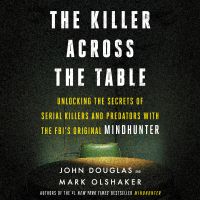
The Killer Across the TableJohn E. Douglas, Mark Olshaker11h 7m4.3 (37.5K)$8 · $0.00

Inside the CartelMartin Suarez, Ian Frisch10h 50m4.4 (583)$29 · $0.00
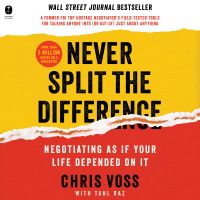
Never Split the DifferenceChris Voss, Tahl Raz8h 7m4.4 (277.7K)$26 · $0.00
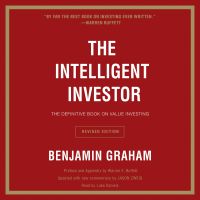
The Intelligent Investor Rev Ed.Benjamin Graham17h 48m4.3 (191.5K)$40 · $0.00
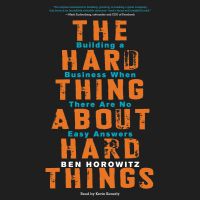
The Hard Thing About Hard ThingsBen Horowitz7h 57m4.2 (134.3K)$26 · $0.00
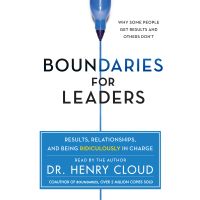
Boundaries for LeadersHenry Cloud7h 36m4.3 (3.6K)$26 · $0.00

Eat It!Jordan Syatt, Michael Vacanti4h 40m4.6 (1.5K)$20 · $0.00

Progress and Poverty, Volumes I and II (Annotated)Henry George19h 21m4.6 (574)$1.99 · $0.00
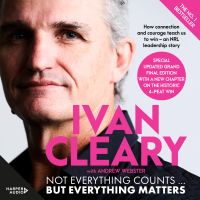
Not Everything Counts but Everything Matters: The powerful and inspirational new book about leadership and achieving success from the visionary multi-premiership winning Panthers coachIvan Cleary6h 1m4.6 (680)$24 · $0.00

BuildTony Fadell11h 5m4.5 (14.3K)$8 · $0.00
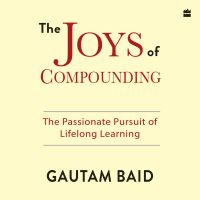
The Joys Of CompoundingGautam Baid17h 34m4.5 (2.5K)$18 · $0.00

Basic EconomicsThomas Sowell18h 32m4.5 (29.3K)$28 · $0.00

Poor Charlie’s AlmanackGrover Gardener, Charles T. Munger13h 9m4.5 (24.7K)$18 · $0.00

The Ambuja StoryNarotam Sekhsaria13h 59m4.5 (830)$33 · $0.00

The Secret Door to SuccessFlorence Scovel Shinn2h 25m4.5 (2.1K)$1.20 · $0.00

This Is Going to HurtAdam Kay5h 47m4.4 (444.7K)$24 · $0.00

Big TrustShadé Zahrai, Fayçal Sekkouah8h 36m4.6 (406)$26 · $0.00
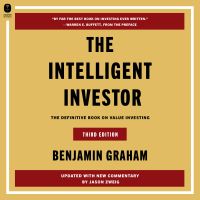
The Intelligent Investor Third EditionBenjamin Graham, Jason Zweig20h4.4 (156.6K)$46 · $0.00

Bottle of LiesKatherine Eban14h 25m4.4 (12K)$33 · $0.00

The Antiracist Business BookTrudi Lebrón6h 10m4.6 (275)$17 · $0.00

The FormulaJoshua Robinson, Jonathan Clegg10h 41m4.4 (6.9K)$29 · $0.00

Let Them LeadJohn U. Bacon7h 10m4.5 (1.4K)$24 · $0.00
You may also like
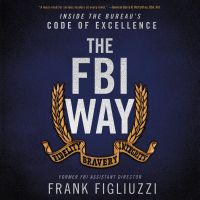
The FBI WayFrank Figliuzzi8h 4m4.1 (2.3K)$26 · $0.00
Human Intelligence Collector OperationsDepartment of the Army Headquarters18h4.3 (268)$2 · $0.00

The Submarine PlansAgatha Christie29m3.6 (1.2K)$2 · $0.00

Ride a Pale HorseHelen MacInnes12h 35m3.9 (1.8K)$23

Courting DisasterMarc A. Thiessen12h 18m4.1 (277)$23 · $0.00

No Safe PlaceMichael Ledwidge7h 24m4.2 (1.5K)$24 · $0.00

You Can't Lie to MeJanine Driver9h 20m3.9 (1.8K)$29 · $0.00

The RavagersDonald Hamilton5h 26m4.3 (973)$17

The Sky Is FallingSidney Sheldon8h 35m3.8 (26.3K)$26 · $0.00

Our Woman in MoscowBeatriz Williams12h 37m4.1 (35K)$33 · $0.00
Human Intelligence Collector OperationsDepartment of the Army Headquarters16h 13m4.1 (269)$2 · $0.00

Inside OutRichard Disney45m4.1 (1.7K) Only with Ultra

Deep FuryDavid Freed8h 47m4.3 (386)$23

Syndrome EFranck Thilliez13h 19m4.0 (8.5K)$25
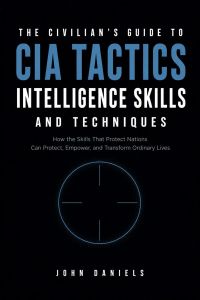
The Civilian's Guide to CIA Tactics, Intelligence Skills, and TechniquesJohn Daniels11h$14 · $0.00
Outsmart AnyoneJohn Daniels2h 29m$16 · $0.00
Human Intelligence Collector OperationsDepartment of the Army Headquarters17h 33m$1 · $0.00

Awakening Manipulation TriggersSara Melo1h 41m$1.80 · $0.00

Torture on Morris StreetArthur Leo Zagat36m$7 · $0.00

One ShotJames Blish32m3.3 (125)$2.30