
Audio only
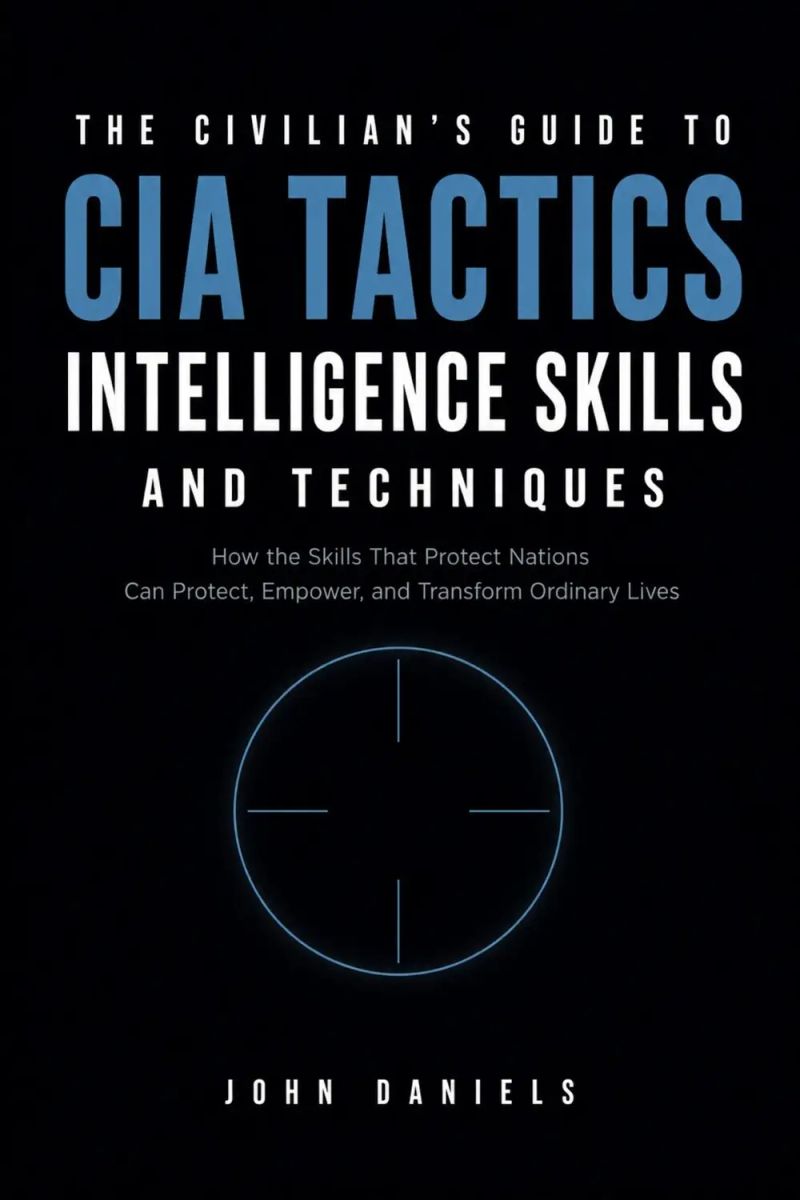
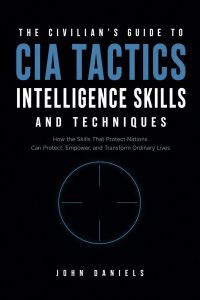
The Civilian's Guide to CIA Tactics, Intelligence Skills, and Techniques
By John Daniels


Length11h
About this audiobook
What if the same mental skills that protect nations could protect your career, your family, and your life?
Every day, trained intelligence professionals walk into rooms you walk into, talk to people you talk to, and navigate threats you face — and they do it with a level of clarity, precision, and calm effectiveness that most people never develop. Not because they are smarter. Because they were trained differently.
The Civilian's Guide to CIA Tactics, Intelligence Skills, and Techniques is the most comprehensive, practical, and operationally grounded guide to professional intelligence tradecraft ever written for the general public. Drawing directly from declassified CIA training methodology, the published memoirs of former intelligence officers, decades of peer-reviewed research in cognitive psychology and behavioral science, and the documented operational history of the world's most capable intelligence services, this book delivers the complete professional intelligence toolkit — adapted, refined, and made immediately applicable to the real challenges of civilian life.
This is not a spy thriller. This is a field manual.
Across thirteen rigorously researched chapters, you will develop the same foundational capabilities that intelligence officers spend years building — organized into a coherent, practical system that works whether you are a business executive, entrepreneur, journalist, parent, traveler, security professional, or simply someone who is done navigating a complex world with insufficient tools.
Inside, you will master:
The intelligence analyst's mindset — the structured thinking framework that eliminates cognitive bias, defeats confirmation bias, and produces decisions that reflect reality rather than comfortable fiction. The situational awareness system used by CIA field officers — how to read any room, any street, and any environment with the trained perceptual precision that keeps professionals alive and effective in hostile conditions. The complete human intelligence (HUMINT) methodology — elicitation, rapid rapport building, source assessment, and the MICE framework for understanding why people share what they share. Professional deception detection — the verbal markers, behavioral clusters, cognitive load techniques, and baseline deviation analysis that replace unreliable gut instinct with systematic, evidence-based assessment. Surveillance and counter-surveillance tradecraft — Surveillance Detection Routes, fixed and mobile surveillance recognition, digital surveillance awareness, and cover for action principles. Open source intelligence (OSINT) — the professional methodology for finding, verifying, and analyzing publicly available information in an era of disinformation and information overload. The psychology of influence and persuasion — Cialdini's six principles as intelligence agencies apply them, framing and narrative control, propaganda anatomy, and inoculation theory for building manipulation resistance. Crisis cognition and decision-making — the OODA Loop, stress inoculation, cognitive tunneling prevention, and controlled triage thinking for high-stakes situations. Personal security and threat assessment — the capability-intent-opportunity threat matrix, protective intelligence methodology, travel security preparation, and home and digital perimeter assessment. Social engineering defense — how to recognize and neutralize pretexting attacks, urgency traps, phishing, vishing, smishing, and organizational manipulation attempts.
The book concludes with a complete personal intelligence system — a sustainable, integrated daily practice that converts everything you have learned into a continuously operating advantage in your professional performance, personal security, and human understanding.
Audiobook details
GenreTrue Crime, Biography and Memoir, Politics and Government
Length11 hrs
Narrated byListen with 1,000+ voices
FormateBook with Audio
Publish dateSep 15, 2026
LanguageEnglish
Table of contents
1Introduction
2FOREWORD: Why Intelligence Belongs to Everyone 5: How the Skills That Protect Nations Can Protect, Empower, and Transform Ordinary Lives 5
3CHAPTER 1: The Intelligence Mindset — Thinking Like an Analyst 11
411
51.1 Structured Analytic Thinking: Moving Beyond Gut Feelings 12
Show all chaptersShow less
61.2 The Analyst's Bias Audit: Identifying and Dismantling Your Own Blind Spots 13
71.3 Hypothesis Testing in Everyday Life: How Professionals Avoid Being Wrong 15
81.4 The "So What?" Discipline: Turning Raw Information into Actionable Conclusions 16
91.5 Red Team Thinking: Arguing Against Your Own Beliefs to Find the Truth 17
10CHAPTER 2: Situational Awareness — Reading Any Room, Street, or Space 20
11. 20
122.1 Baseline Behavior: How to Define "Normal" So You Instantly Spot "Wrong" 21
132.2 The 360-Degree Scan: Building Full Spatial Awareness Without Looking Paranoid 22
142.3 Pre-Attack Indicators: The Physical Signals People Display Before They Act 24
152.4 Environmental Mapping: How to Memorize and Exploit Any Space Within Minutes of Entering It 25
16CHAPTER 3: Human Intelligence (HUMINT) — The Art of Understanding People 29
1729
183.1 Elicitation: The Science of Getting People to Volunteer Information They Never Planned to Share 30
193.2 Building Rapport Quickly: The Techniques Used to Make Strangers Trust You Within Minutes 32
203.3 Source Assessment: How to Evaluate Whether a Person Is Reliable, Motivated, or Compromised 33
213.4 The MICE Framework: Understanding Why People Share Secrets 35
223.5 The Strategic Conversation: Guiding Dialogue Without the Other Person Knowing 37
23CHAPTER 4: Observation and Memory — Seeing What Others Miss 40
2440
254.1 The Method of Loci: The Ancient Technique Still Used by Intelligence Professionals Today 41
264.2 Photographic Detail Capture: Training Your Eyes to Record Like a Camera 42
274.3 Face, Name, and Pattern Retention: The Recall Drills Used in Operational Training 44
284.4 The After-Action Review: Debriefing Yourself After Every Significant Encounter 46
29CHAPTER 5: Deception Detection — Knowing When You Are Being Lied To 49
30Deception is everywhere — in boardrooms, relationships, negotiations, and headlines. Intelligence professionals are trained to detect it systematically rather than instinctively.
315.1 Verbal Deception Markers: The Language Patterns Liars Consistently Use 50
325.2 Behavioral Clusters: Why a Single Signal Means Nothing and a Pattern Means Everything 52
335.3 The Cognitive Load Method: Creating Mental Pressure That Exposes Fabricated Stories 53
345.4 Baseline Deviation Analysis: How to Detect When Someone Has Shifted From Their Normal 55
355.5 Disinformation vs. Misinformation: Recognizing Deliberate Manipulation in Media and Conversation 57
36CHAPTER 6: Surveillance and Counter-Surveillance — Seeing Without Being Seen 60
3760
386.1 Surveillance Detection Routes (SDRs): The Technique for Confirming You Are Being Followed 61
396.2 Fixed and Mobile Surveillance: How to Recognize Both and What to Do Next 63
406.3 Digital Surveillance Awareness: Identifying When Your Online Behavior Is Being Monitored 65
416.4 Cover for Action: Building Plausible Explanations for Your Movements and Activities 67
42CHAPTER 7: Open Source Intelligence (OSINT) — Mining Public Information Like a Professional 70
4370
447.1 The OSINT Cycle: Collecting, Processing, and Analyzing Publicly Available Information 71
457.2 Social Media as an Intelligence Platform: What People's Digital Footprints Reveal 72
467.3 Reverse Image Analysis, Metadata Extraction, and Geolocation From Open Sources 74
477.4 Verifying Information in a World of Fakes: The Lateral Reading Technique Used by Fact-Checkers and Analysts 76
487.5 Building an Intelligence Picture From Fragments: Mosaic Theory in Practice 78
49CHAPTER 8: Covert Communication and Operational Security — Protecting What You Know and Who You Know It From 81
50Operational security is not just for spies. In a world of data brokers, corporate espionage, and personal privacy threats, protecting your information is a life skill. 81
More from John Daniels

How to Escape from PrisonPaul Wood10h 29m4.5 (653)$29 · $0.00

Killer TriggersJoe Kenda8h 31m4.4 (6K)$20 · $0.00
BoundlessNick Kostov, Sean McLain9h 17m4.5 (1.1K)$29 · $0.00
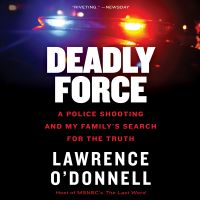
Deadly ForceLawrence O'Donnell17h 18m4.5 (342)$40 · $0.00

Walking the BowlChris Lockhart, Daniel Mulilo Chama9h 7m4.4 (1.5K)$29 · $0.00

PapillonHenri Charriere18h 19m4.3 (90.2K)$40 · $0.00
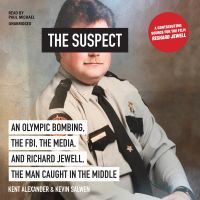
The SuspectKent Alexander, Kevin Salwen14h 12m4.4 (3K)$23 · $0.00

The Cause of DeathCynric Temple-Camp8h 59m4.4 (1.4K)$29 · $0.00

GanglandJared Savage9h 21m4.4 (1.4K)$29 · $0.00
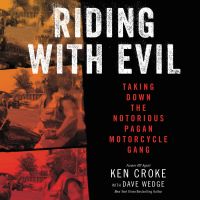
Riding with EvilKen Croke, Dave Wedge9h 42m4.3 (3.4K)$29 · $0.00
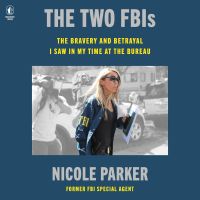
The Two FBIsNicole Parker10h 8m4.4 (499)$29 · $0.00
I Catch KillersGary Jubelin15h 32m4.3 (6.6K)$33 · $0.00

The Redemption Of Bobby LoveBobby Love, Cheryl Love9h 13m4.4 (956)$29 · $0.00

The Life We ChoseMatt Birkbeck8h 57m4.4 (1K)$29 · $0.00

The Truth About AaronJonathan Hernandez5h 15m4.3 (2.5K)$24 · $0.00

No Ordinary BirdArtis Henderson6h 23m4.4 (597)$24 · $0.00

I'll Be Gone in the DarkMichelle McNamara10h 7m4.3 (302.5K)$29 · $0.00

Beyond the Body FarmBill Bass, Jon Jefferson6h 17m4.3 (10.2K)$24 · $0.00
The Killer Across the TableJohn E. Douglas, Mark Olshaker11h 7m4.3 (37.5K)$8 · $0.00

Inside the CartelMartin Suarez, Ian Frisch10h 50m4.4 (583)$29 · $0.00

Matters of the HeartJacinta Nampijinpa Price9h 35m4.8 (359)$29 · $0.00
The StepsSylvester Stallone9h 4m4.8 (635)$29 · $0.00

How to Test Negative for StupidJohn Kennedy8h 13m4.7 (9.7K)$28 · $0.00

Bad Fat Black GirlSesali Bowen6h 32m4.7 (2.8K)$24 · $0.00

Send MeMarty Skovlund, Joe Kent8h 10m4.7 (1.6K)$26 · $0.00

John Muir: The Story of My Boyhood and Youth & Letters to a Friend (Annotated)John Muir10h 13m4.7 (1.1K)$1.99 · $0.00

Invisible StormJason Kander6h 48m4.7 (3.2K)$24 · $0.00

Forever BoyKate Swenson9h 27m4.7 (5K)$29 · $0.00

You Are Worth ItKyle Carpenter, Don Yaeger8h 53m4.7 (4.8K)$29 · $0.00

The Happiest Man on EarthEddie Jaku3h 48m4.6 (178K)$7 · $0.00

MotherlandJulia Ioffe17h 52m4.7 (2.5K)$40 · $0.00

Evidence Not SeenDarlene Deibler Rose11h 11m4.6 (11.9K)$29 · $0.00

Where Cowards Go to DieBenjamin Sledge8h 42m4.7 (351)$20 · $0.00

Will You Love Me?Cathy Glass9h 5m4.6 (9.3K)$29 · $0.00

Designing Terry Pratchett’s DiscworldPaul Kidby3h 52m4.7 (343)$20 · $0.00

HostageEli Sharabi5h 25m4.6 (10.8K)$24 · $0.00

Finding MeViola Davis9h 15m4.6 (256.4K)$29 · $0.00

The Dangerous Truth about Today’s MarijuanaLaura Stack CSP, MBA9h 57m4.7 (385)$20 · $0.00

Birdie & HarlowTaylor Wolfe7h 50m4.6 (6.5K)$26 · $0.00
The Lives of BrianBrian Johnson9h 45m4.6 (3.5K)$29 · $0.00
How to Test Negative for StupidJohn Kennedy8h 13m4.7 (9.7K)$28 · $0.00

Black AF HistoryMichael Harriot15h 43m4.7 (14.6K)$33 · $0.00

The Gulag Archipelago Volume 3Aleksandr I. Solzhenitsyn21h 56m4.7 (8.9K)$46 · $0.00
MotherlandJulia Ioffe17h 52m4.7 (2.5K)$40 · $0.00
HostageEli Sharabi5h 25m4.6 (10.8K)$24 · $0.00

KrantikariSanjeev Sanyal11h 44m4.6 (1.3K)$16 · $0.00

Unbroken Bonds of BattleJohnny Joey Jones8h 31m4.6 (2.6K)$8 · $0.00

On Democracies and Death CultsDouglas Murray10h 38m4.6 (6.5K)$29 · $0.00

Balcony Over Jerusalem: A Middle East Memoir - Israel, Palestine and BeyondJohn Lyons12h 37m4.6 (1.4K)$33 · $0.00
RiggedMollie Hemingway12h 48m4.6 (4.2K)$23 · $0.00

SledgehammerDavid Friedman8h 21m4.7 (589)$26 · $0.00

Citizenship in a Republic (Annotated)Theodore Roosevelt2h 44m4.6 (1.4K)$2 · $0.00

No EscapeNury Turkel9h 30m4.6 (809)$28 · $0.00

Always FaithfulThomas Schueman, Zainullah Zaki12h 12m4.6 (977)$29 · $0.00

UnthinkableJamie Raskin15h 8m4.5 (9.3K)$8 · $0.00

My Fourth Time, We DrownedSally Hayden13h 59m4.6 (2.9K)$23 · $0.00

A Revolution of Common SenseScott Jennings9h 29m4.6 (528)$29 · $0.00

Statement From the Dock at the Rivonia TrialNelson Mandela2h 18m4.6 (1.3K)$1 · $0.00

Lessons from the EdgeMarie Yovanovitch17h 11m4.5 (5.9K)$40 · $0.00

To Rescue the American SpiritBret Baier10h 12m4.5 (2.7K)$8 · $0.00
You may also like

The Premature BurialEdgar Allan Poe42m4.0 (15.1K)$1

Find MeJ.S. Monroe9h 37m3.7 (7.6K)$29 · $0.00

The Pit and the PendulumEdgar Allan Poe39m4.1 (2.6K)$2.30

Driving ForceElle James4h 58m4.6 (407)$20 · $0.00
Human Intelligence Collector OperationsDepartment of the Army Headquarters16h 13m4.1 (269)$2 · $0.00
You Can't Lie to MeJanine Driver9h 20m3.9 (1.8K)$29 · $0.00
The FBI WayFrank Figliuzzi8h 4m4.1 (2.3K)$26 · $0.00

No Safe PlaceMichael Ledwidge7h 24m4.2 (1.5K)$24 · $0.00

THE WHEEL SPINS (A British Mystery Classic)Ethel Lina White8h 8m3.9 (8.7K)$2.99 · $0.00

Courting DisasterMarc A. Thiessen12h 18m4.1 (277)$23 · $0.00

Texas Ranger DefenderLaura Scott5h 34m4.5 (352)$12 · $0.00

Ride a Pale HorseHelen MacInnes12h 35m3.9 (1.8K)$23

Scratch OneMichael Crichton writing as John LangeTM8h 24m3.6 (3.6K)$23

The Blonde IdentityAlly Carter9h 1m3.9 (45.7K)$29 · $0.00
The Civilian's Guide to CIA Tactics, Intelligence Skills, and TechniquesJohn Daniels11h 16m$11.50 · $0.00

The House of SpiesBen Westerham4h 55m3.6 (32)$4.99 · $0.00
The Official CIA interrogation and manipulation ManualCentral Intelligence Agency4h 29m3.9 (381)$12 · $0.00

Torture on Morris StreetArthur Leo Zagat36m$7 · $0.00

The Insurmountable Edge: Book OneThomas H. Goodfellow16h 14m4.0 (900)$25

One ShotJames Blish32m3.3 (125)$2.30