
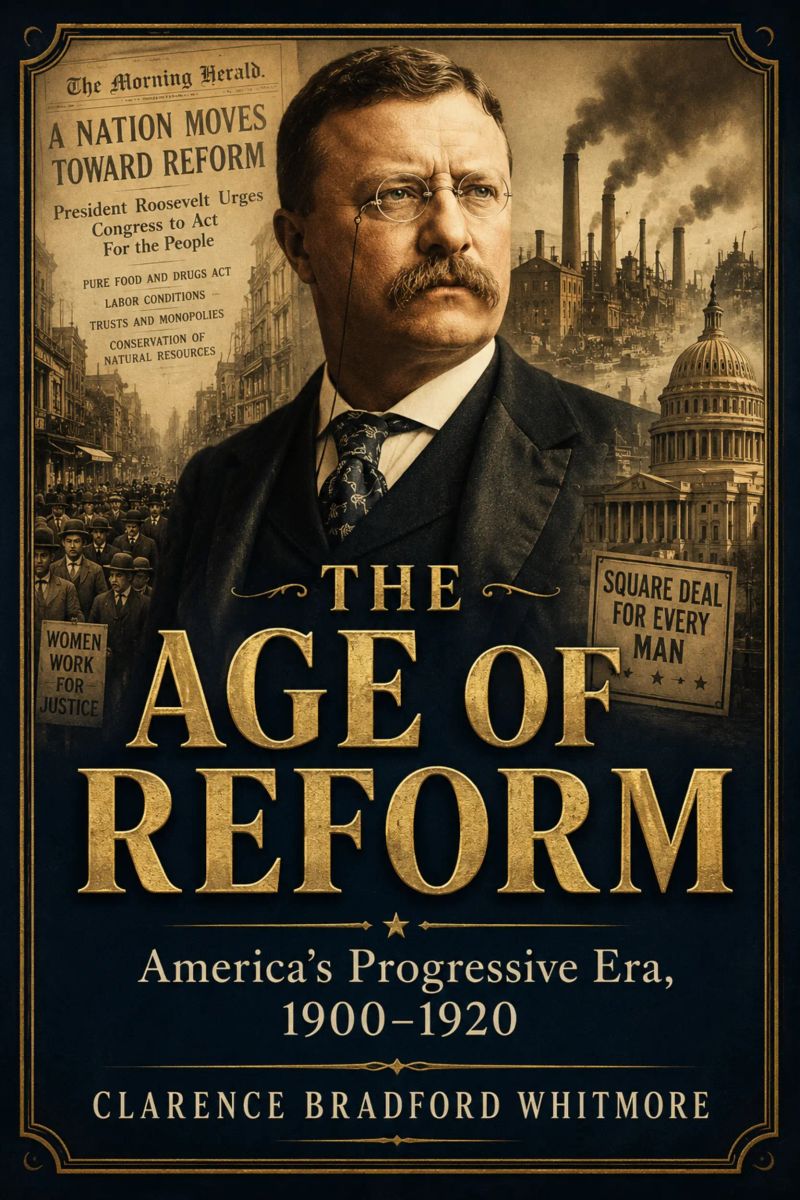
THE AGE OF REFORM
America's Progressive Era, 1900–1920By Clarence Bradford Whitmore


Length7h 27m
About this audiobook
Ida Tarbell took on Standard Oil — and won.** Upton Sinclair turned a meatpacking exposé into a national food-safety law. Theodore Roosevelt smashed monopolies. Jane Addams reinvented social work. Women won the vote. The country invented the income tax, the Federal Reserve, the national parks, and the eight-hour day — all in twenty years.
You sense modern America was built in the Progressive Era — but the textbook reduces the most reform-minded decades in U.S. history to a list of names and amendments. You're left with no real understanding of how a handful of journalists, presidents, organizers, and activists actually beat the corporations, the bosses, and the corrupt machines. If you care about reform today, about how change really happens, you need the full story of how it was done.
This book delivers it.
THE AGE OF REFORM: America's Progressive Era, 1900–1920** brings the era roaring back — the muckrakers, the trust-busters, the suffragettes, and the settlement houses — told as the page-turning fight it truly was.
Inside, you will discover:
HOW the muckrakers — Tarbell, Sinclair, Steffens, Riis — used journalism to topple corporate giants
WHY Theodore Roosevelt's trust-busting and conservation revolution shaped modern government
WHAT really happened in the fight for women's suffrage, child-labor laws, and the income tax
HOW the Progressive Era founded the Federal Reserve, food safety, and the national parks
WHY the reforms succeeded — and where they tragically failed on race and civil rights
This isn't a parade of dates. It's the Age of Reform as the human drama of organized citizens beating concentrated power.
The Progressives changed America. Learn how — and what we can still learn from them.
Audiobook details
GenreHistorical Fiction, Poetry, Literary Classics
Length7 hrs 27 mins
Narrated byListen with 1,000+ voices
FormateBook with Audio
LanguageEnglish
Table of contents
1Introduction
2Author’s Note
3Prologue: The Muckraker's America
4PART ONE: THEODORE ROOSEVELT AND THE SQUARE DEAL (1901–1909)
5Chapter 1: The Accidental President — Theodore Roosevelt Takes Power
Show all chaptersShow less
6Chapter 2: Trust-Busting — Roosevelt and the Corporations
7Chapter 3: Conservation — Roosevelt and the American Land
8Chapter 4: The Square Deal — Labor, Capital, and the Roosevelt Presidency
9PART TWO: THE MUCKRAKERS (1900–1914)
10Chapter 5: Ida Tarbell and Standard Oil — Journalism as Reform
11Chapter 6: The Jungle — Upton Sinclair and the Meatpacking Exposé
12Chapter 7: Lincoln Steffens and the Shame of the Cities
13Chapter 8: Jacob Riis and the Photography of Poverty
14PART THREE: THE REFORM MOVEMENT (1900–1916)
15Chapter 9: The Wisconsin Idea — Robert La Follette and State Reform
16Chapter 10: The Settlement House Movement — Jane Addams and Hull House
17Chapter 11: Women's Suffrage — The Long March to the Nineteenth Amendment
18Chapter 12: The NAACP — W. E. B. Du Bois and the Fight for Civil Rights
19PART FOUR: TAFT AND THE PARTY SPLIT (1909–1913)
20Chapter 13: William Howard Taft — The Reluctant Progressive
21Chapter 14: The Bull Moose Campaign — Roosevelt's Return and the Party Split
22Chapter 15: Woodrow Wilson and the New Freedom
23Chapter 16: The Constitutional Amendments — Income Tax, Senators, Prohibition, Suffrage
24PART FIVE: WILSON'S AMERICA (1913–1917)
25Chapter 17: The Federal Reserve — Reforming American Finance
26Chapter 18: Labor and the Law — The Clayton Act and Workers' Rights
27Chapter 19: Race in the Progressive Era — The Limits of Reform
28Chapter 20: The New Woman — Feminism, Work, and the Changing American Family
29PART SIX: THE PROGRESSIVE LEGACY (1917–PRESENT)
30Chapter 21: World War I and the End of Progressivism
31Chapter 22: Prohibition — The Progressive Crusade Gone Wrong
32Chapter 23: The Progressive Legacy — What Survived and What Didn't
33Chapter 24: The Progressive Tradition in American Politics
34Epilogue: What the Progressives Left Behind
35Acknowledgments
36Selected Bibliography
37About the Author
More from Clarence Bradford Whitmore

Lieutenant Hornblower (Annotated)C. S. Forester11h 41m4.5 (2.9K)$2 · $0.00

A Christmas Carol (Illustrated Edition)Charles Dickens3h 23m4.5 (21.2K)$1.99 · $0.00

Rilla of InglesideLucy Maud Montgomery11h 44m4.5 (48.2K)$2 · $0.00

The Viennese DressmakerKathryn Gauci11h 46m4.5 (2.1K)$23 · $0.00
The Man in the Brown Suit & They Came to BaghdadAgatha Christie15h 43m4.6 (495)$33 · $0.00

Under the Light of the Italian MoonJennifer Anton12h 28m4.5 (5.3K)$23 · $0.00

Jubilee, 50th Anniversary EditionMargaret Walker15h 43m4.5 (9.5K)$25 · $0.00

Pride and PrejudiceJane Austen14h 44m4.4 (4.7M)$2 · $0.00

Flying Colours (Annotated)Cecil Louis Troughton Smith9h 26m4.4 (10.1K)$2 · $0.00
With Love from HarlemReShonda Tate13h 48m4.5 (2K)$6 · $0.00

Sweet Home Highland ChristmasMay McGoldrick, Jan Coffey2h 54m4.5 (1.4K)$7 · $0.00

Rilla of InglesideL. M. Montgomery12h 25m4.4 (67.5K)$2 · $0.00

Death Comes for the Archbishop (Annotated)Willa Cather9h 13m4.4 (4.7K)$2 · $0.00

The Alice NetworkKate Quinn15h 7m4.4 (887.1K)$33 · $0.00

The Goddess of WarsawLisa Barr13h 4m4.4 (36.4K)$33 · $0.00

The Ohio River Trilogy: Betty Zane, The Spirit of the Border & The Last TrailZane Grey29h 8m4.4 (1.8K)$1 · $0.00

The Attic ChildLola Jaye14h 46m4.4 (21K)$33 · $0.00

Martyr of the CatacombsJames De Mille3h 41m4.5 (744)$1 · $0.00

Quo VadisHenryk Sienkiewicz22h 52m4.4 (62K)$21 · $0.00

Bring Up The BodiesHilary Mantel14h 35m4.4 (150K)$33 · $0.00
The Weary Blues (Annotated)Langston Hughes2h 13m4.5 (4.6K)$2 · $0.00

The Complete Poetical Works of Edgar Allan Poe (Illustrated)Edgar Allan Poe18h 27m4.5 (4.2K)$2 · $0.00

The Complete Poetry (Annotated)Oscar Wilde6h 44m4.5 (15.5K)$2 · $0.00

Saundarya LahariUnknown Author3h 16m4.6 (256)$18 · $0.00

The Mesnevi (Annotated)Maulana Jalal al-Din Rumi18h 41m4.5 (4.2K)$2 · $0.00

Songs of a SourdoughRobert W. Service2h 13m4.5 (13.6K)$1 · $0.00

Little Flower of Jesus (Annotated)Thérèse of Lisieux5h 4m4.5 (1.4K)$0.99 · $0.00

The Poems of LeopardiGiacomo Leopardi3h 9m4.5 (3.6K)$2 · $0.00

Nikki Giovanni: Love Poems & A Good CryNikki Giovanni2h 44m4.6 (405)$18 · $0.00

The Complete Poetry of Walt Whitman (Annotated)Walt Whitman19h 58m4.5 (4.2K)$0.99 · $0.00

A Year with RumiColeman Barks5h 56m4.5 (2.6K)$24 · $0.00
Complete Poetry of Rudyard Kipling (Annotated)Rudyard Kipling22h 50m4.5 (2.6K)$1.99 · $0.00
The Complete PoemsPaul Laurence Dunbar12h 40m4.5 (1.5K)$21 · $0.00

The Odes of John Keats - Complete CollectionJohn Keats22h 16m4.5 (1.3K)$1 · $0.00

SonnetsWilliam Shakespeare2h 39m4.4 (128.3K)$3 · $0.00

PoemsEdna St. Vincent Millay2h 39m4.5 (1.3K)$2 · $0.00

PoemsW. B. Yeats5h 6m4.4 (46.9K)$1 · $0.00
Metamorphoses (Annotated)Ovid28h 37m4.3 (80.8K)$2 · $0.00

THE FLOWERS OF EVILCharles Baudelaire2h 28m4.3 (94.6K)$1.99 · $0.00
A Book of Strife in the Form of The Diary of an Old SoulGeorge MacDonald2h 9m4.4 (839)$2 · $0.00

To Kill a MockingbirdHarper Lee12h 18m4.5 (7.4M)$29 · $0.00

These Precious DaysAnn Patchett11h 14m4.5 (45.2K)$29 · $0.00

The Complete Histories / History Plays of William Shakespeare (Annotated)William Shakespeare29h 42m4.6 (2.3K)$0.99 · $0.00

Braving the TruthRachel Held Evans11h 31m4.7 (359)$29 · $0.00

The Old Man and the Sea (Annotated)Ernest Hemingway4h 27m4.6 (1.4K)$2 · $0.00

Henry V (The Play, Historical Background and Analysis of the Character in the Play)William Shakespeare, William Hazlitt8h 50m4.6 (1.3K)$1.99 · $0.00

H. P. LOVECRAFT Ultimate Collection: Novellas, Short Stories, Poetry & Essays (Annotated)H. P. Lovecraft12h 28m4.6 (2.3K)$2 · $0.00
Time RegainedMarcel Proust16h 8m4.5 (10.6K)$1.99 · $0.00
The Mis-Education of the NegroCarter Goodwin Woodson4h 32m4.5 (28.4K)$10 · $0.00

TORAH - Bilingual Edition: English/Hebrew (Annotated)Max Margolis, JPS28h 26m4.6 (1K)$2 · $0.00

Betty Crocker picture cooky bookBetty Crocker, Inc. General Mills2h 13m4.5 (6.5K)$1 · $0.00

The Complete Tales of Beatrix PotterBeatrix Potter3h 36m4.5 (75K)$3 · $0.00

Anne of Green GablesL. M. Montgomery11h 1m4.5 (1.2M)$2.30 · $0.00

Crime and Punishment (The Unabridged Garnett Translation) (Annotated)Fyodor Dostoevsky24h 25m4.5 (15.4K)$0.99 · $0.00

The North American IndianEdward S. Curtis, Frederick Webb Hodge6h4.5 (1.2K)$2 · $0.00

The Picture of Dorian Gray: The Uncensored 13 Chapter Version + The Revised 20 Chapter Version (Annotated)Oscar Wilde16h 12m4.5 (2.8K)$0.99 · $0.00

Grimoire Of The Everyday WitchIsadora Lys / Virginia Santos5h 35m4.5 (3.9K)$9 · $0.00

Winnie-the-PoohAlan Alexander Milne2h 52m4.5 (401.1K)$3 · $0.00

Sitting PrettyRebekah Taussig7h 33m4.5 (18.9K)$26 · $0.00

The Poetic Edda & The Prose EddaSnorri Sturluson, Saemund Sigfusson9h 34m4.5 (4K)$1 · $0.00
You may also like

The Lion and the Unicorn (Annotated)Eric Arthur Blair4h 9m4.1 (3.9K)$1.99 · $0.00

The Declaration of IndependenceFounding Fathers, Thomas Jefferson9m4.5 (10.7K)$1 · $0.00
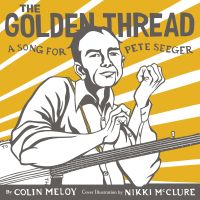
The Golden ThreadColin Meloy9m4.2 (267)$4 · $0.00
On the Social ContractJean-Jacques Rousseau5h 2m4.0 (69.6K)$14

Natural RivalsJohn Clayton9h 45m4.1 (476)$20

The United States ConstitutionUnited States32m4.5 (44.2K)$2 · $0.00

AnarchyErrico Malatesta2h 11m4.2 (2.2K)$1.99 · $0.00

AnarchyErrico Malatesta2h 31m4.1 (2K)$2 · $0.00

Hippie FoodJonathan Kauffman9h 13m4.1 (1.4K)$29 · $0.00

The Social Contract & DiscoursesJean-Jaques Rousseau13h 19m4.1 (5.8K)$2.30

The Argentine RepublicAnonymous1h 36m$2 · $0.00

Vegetable Dyes: Being a Book of Recipes and Other Information Useful to the DyerEthel Mairet2h 54m4.1 (70)$1 · $0.00

Peace on Our TermsMona L. Siegel11h 51m4.5 (29)$23
State of the Union Addresses of John Quincy AdamsJohn Quincy Adams3h 33m4.1 (18)$2 · $0.00

A Short History of AustraliaErnest Scott17h 33m3.8 (161)$1 · $0.00
Seventh State of the Union AddressUlysses S. Grant1h 24m$1 · $0.00

Argentina and UruguayGordon Ross11h 7m$2 · $0.00

Independent BohemiaVladimir Nosek5h 46m$2.30

The History of Philippine IslandsJoaquín Martínez de Zúñiga11h 55m4.1 (16)$1.99 · $0.00

Berlin at the Turn of the MillenniumIngo Latotzki, Claudia Latotzki1h 36m$8 · $0.00