
Audio only
Length2h 36m
About this audiobook
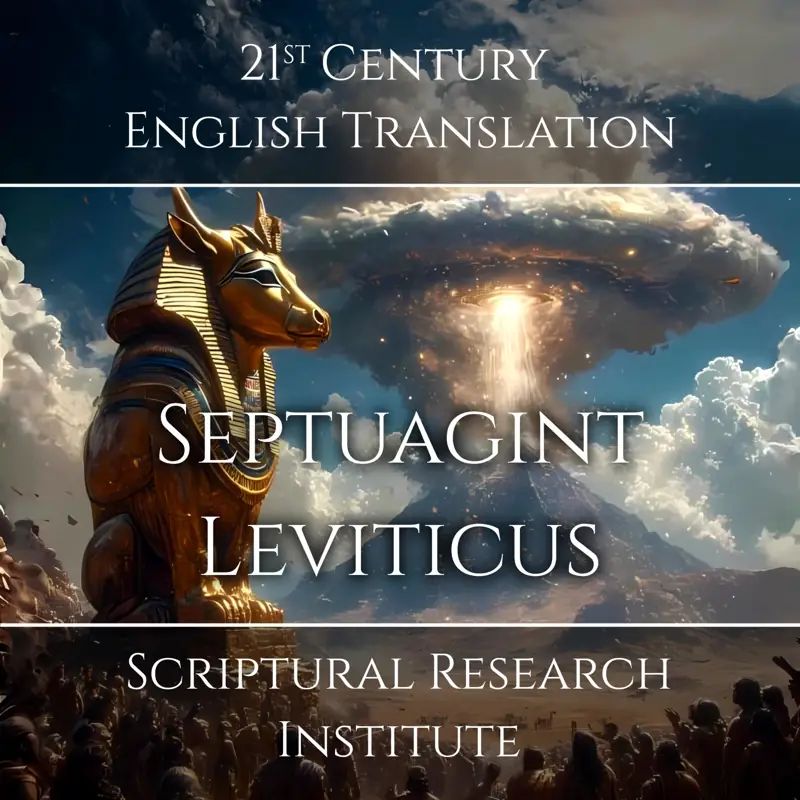
The Greek name of the book of Leviticus was "το Λευιτικόν," which translates as “of Levites.” The Levites were the priestly tribe of the Israelites, who the book of Leviticus establishes as hereditary priests, with established cities to live in. The Hebrew name of the book is Vayikrá. The Hebrew name is based on the first word of the book, which translates as “and he called.” The English name is a direct copy of the Old Latin name Leviticus, which shares a common origin with the Greek. This book was not in the Samareitikon, the translation of the Samaritan Torah made at the Library of Alexandria before the Septuagint, and therefore, the book “of Levites” likely seemed like an addition to the Greek translators working at the Library of Alexandria. The Old Latin translators seemed to have viewed the book the same way and named it accordingly.
The textual differences between the Greek Leviticus and Hebrew Vayikrá are far less significant than the textual differences in the other books of the Torah, supporting the book as having been written quite recently before it was translated into Greek. The laws of the book correlate with the religious reforms of the Judahite king Josiah, who reigned between 640 and 609 BCE. This was less than 400 years before the Greek translation was made. His reforms apparently began with someone finding an “original” copy of Moses’ laws in the Temple in Jerusalem, which then became the basis of his official Torah. The laws found in Leviticus parallel his reforms as described in 4ᵗʰ Kingdoms and Masoretic Kings, and therefore the book is generally viewed as originating in his time. This is supported by the fact that neither the Samaritans nor the Egypto-Israelites accepted the book in pre-Hellenic times. The Samaritans continued to use their four-book Torah until the Hasmonean dynasty destroyed all copies in the late-2nd century BCE.
The Egypto-Israelites were mostly descended from Arameans and Samaritans who were driven out of Hama, Damascus, and Samaria as the Neo-Assyrian Empire expanded in the 8th and 7th centuries BCE. They generally did not use a copy of the Torah and did not think much of Moses, which was common among the Aramaean Israelites. While some Israelite literature was translated into Demotic Egyptian and later the Egyptian form of Aramaic, there are no Egypto-Aramaic copies of Leviticus, or even fragments of the book, suggesting it was not used in Egypt.
The only Israelite priesthood that appears to have ever used the book of Leviticus was the Judahite priesthood, which explains why there are so few textual differences between the Greek and Hebrew versions. Judahite, the language in which it would have been written, was the Canaanite dialect that Classical Hebrew was based on. The only change to the book that the Hasmonean dynasty appears to have made was to transcribe it into the Aramaic square script, now known as the Hebrew script.
Audiobook details
GenreSpirituality and Religion
Length2 hrs 36 mins
Narrated byGoogle's Archie
FormatAudiobook
Publish dateOct 6, 2025
LanguageEnglish
Table of contents
1chapter
18chapter
2chapter
19chapter
3chapter
20chapter
4chapter
21chapter
5chapter
22chapter
Show all chaptersShow less
6chapter
23chapter
7chapter
24chapter
8chapter
25chapter
9chapter
26chapter
10chapter
27chapter
11chapter
28chapter
12chapter
29chapter
13chapter
30chapter
14chapter
31chapter
15chapter
32chapter
16chapter
33chapter
17chapter
Series
Tale of SinuheScriptural Research Institute1h 18m$4.10 · $0.00
Septuagint - ObadiahScriptural Research Institute24m$3.50 · $0.00
Septuagint - DeuteronomyScriptural Research Institute3h 19m4.8 (11)$5.80 · $0.00
Septuagint - AmosScriptural Research Institute1h 48m$3.50 · $0.00
Greek Apocalypse of EzraScriptural Research Institute27m4.6 (11)$3.50 · $0.00
Septuagint - JoelScriptural Research Institute45m$3.50 · $0.00
Septuagint - NahumScriptural Research Institute51m$3.50 · $0.00
Septuagint - ZakharianScriptural Research Institute1h 21m$3.50 · $0.00
Septuagint - DodekaScriptural Research Institute10h 14m$29 · $0.00
Septuagint - ZephaniahScriptural Research Institute1h 6m$3.50 · $0.00
Judahite Apocalypse of EzraScriptural Research Institute2h 52m$4.10 · $0.00
Ge'ez 1st MaccabeesScriptural Research Institute4h 28m$4.70 · $0.00
Septuagint - NahumScriptural Research Institute34m$4.10 · $0.00

Words of AhikarScriptural Research Institute2h 21m$5.80 · $0.00

The Life of WeniScriptural Research Institute29m$4.10 · $0.00
Septuagint - ShadrachScriptural Research Institute1h 4m$3.50 · $0.00
Septuagint - HoseaScriptural Research Institute1h 53m$3.50 · $0.00

Tale of the Shipwrecked SailorScriptural Research Institute26m4.3 (12)$3.50 · $0.00

Septuagint - ZakharianScriptural Research Institute56m$4.10 · $0.00
Septuagint - JoelScriptural Research Institute33m$4.10 · $0.00

The Holy Qur-an: Text, Translation and CommentaryAbdullah Yusuf Ali22h 16m4.7 (133K)$1 · $0.00

All of Grace (Annotated)Charles Spurgeon5h 1m4.7 (1.3K)$0.99 · $0.00

Steps to ChristEllen G. White3h 12m4.7 (13.8K)$2 · $0.00

The Doctrine and Selected CovenantsJoseph Smith13h 53m4.7 (10.4K)$1.99 · $0.00

Sinners in the Hands of an Angry God & Other Sermons (Annotated)Jonathan Edwards7h 51m4.7 (1.5K)$2 · $0.00
Swayam Ki AwaazPrem Rawat8h 34m4.7 (1.1K)$26 · $0.00

Behind the BadgeAdam Davis10h 18m4.7 (2.7K)$10 · $0.00

The New Human Revolution, vol. 1Daisaku Ikeda7h 46m4.7 (669)$12 · $0.00

You Are Worth ItKyle Carpenter, Don Yaeger8h 53m4.7 (4.8K)$29 · $0.00
Praying GraceDavid A. Holland3h 2m4.7 (658)$10 · $0.00

Evidence Not SeenDarlene Deibler Rose11h 11m4.6 (11.9K)$29 · $0.00
The Christ KeyChad Bird, Chad Bird7h 33m4.7 (592)$17.40 · $0.00
He and IGabrielle Bossis10h 12m4.7 (554)$17 · $0.00

Your Body Already KnowsNidhi Pandya Bhanshali9h 7m4.7 (360)$16 · $0.00

The Complete WorksFlorence Scovel Shinn7h 59m4.6 (6.6K)$2 · $0.00

Driven by EternityJohn Bevere3h 50m4.6 (3.2K)$10 · $0.00

Spiritual AnatomyDaaji Kamlesh D. Patel9h 47m4.7 (319)$29 · $0.00

The Mahabharata of Krishna-Dwaipayana Vyasa Translated into English ProseAnonymous8h 1m4.7 (1.9K)$2 · $0.00

The Chosen Book OneAmanda Jenkins, Kristen Hendricks, Dallas Jenkins3h 8m4.6 (4.9K)$10 · $0.00

The Grace MessageAndrew Farley8h 49m4.7 (433)$20 · $0.00
You may also like

ChristianityAnnie Besant11h 1m4.2 (320)$2 · $0.00

More and More and MoreJean-Baptiste Fressoz8h 7m4.0 (467)$26 · $0.00
Caesar and ChristWill Durant36h 28m4.5 (3.5K)$30

Our Occulted HistoryJim Marrs11h 54m4.1 (1.9K)$29 · $0.00

The Grand InquisitorFyodor Dostoyevsky1h 1m4.4 (10.6K)$2.30

The Chosen: Not My Will…Jerry B. Jenkins7h 54m4.8 (1.2K)$10 · $0.00

The Profits of ReligionUpton Sinclair10h 52m4.0 (1.6K)$1 · $0.00
The Lost GospelSimcha Jacobovici, Barrie Wilson12h 54m3.7 (1.2K)$23
EuthyphroPlato1h 1m4.1 (17.3K)$2.30

The Greek WayEdith Hamilton10h 45m4.1 (3.1K)$1 · $0.00

Girly DrinksMallory O'Meara11h 30m4.3 (7.9K)$29 · $0.00

BotticelliÉmile Gebhart, Victoria Charles4h 51m4.2 (24)$18 · $0.00

Essays and LecturesOscar Wilde5h 12m4.1 (187)Free

History Of Ancient CivilizationCharles Seignobos10h 20m3.5 (150)$1 · $0.00
God, the Invisible KingH. G. Wells4h 7m3.7 (546)$2.30 · $0.00
Jesus of Nazareth, A Biography, by John MarkAnonymous32m3.7 (10)$2 · $0.00
Christ Cult CodexDan Desmarques3h 18m5.0 (5) Only with Ultra

The Bible and Polygamy: Does the Bible Sanction Polygamy?John Philip Newman, Orson Pratt, George Albert Smith, George Q. Cannon4h 20m4.5 (11)$0.99 · $0.00

Christianity UnveiledPaul Henri Thiry baron d' Holbach5h 53m4.0 (145)$2 · $0.00

Areopagitica (Annotated)John Milton5h 40m$2 · $0.00