
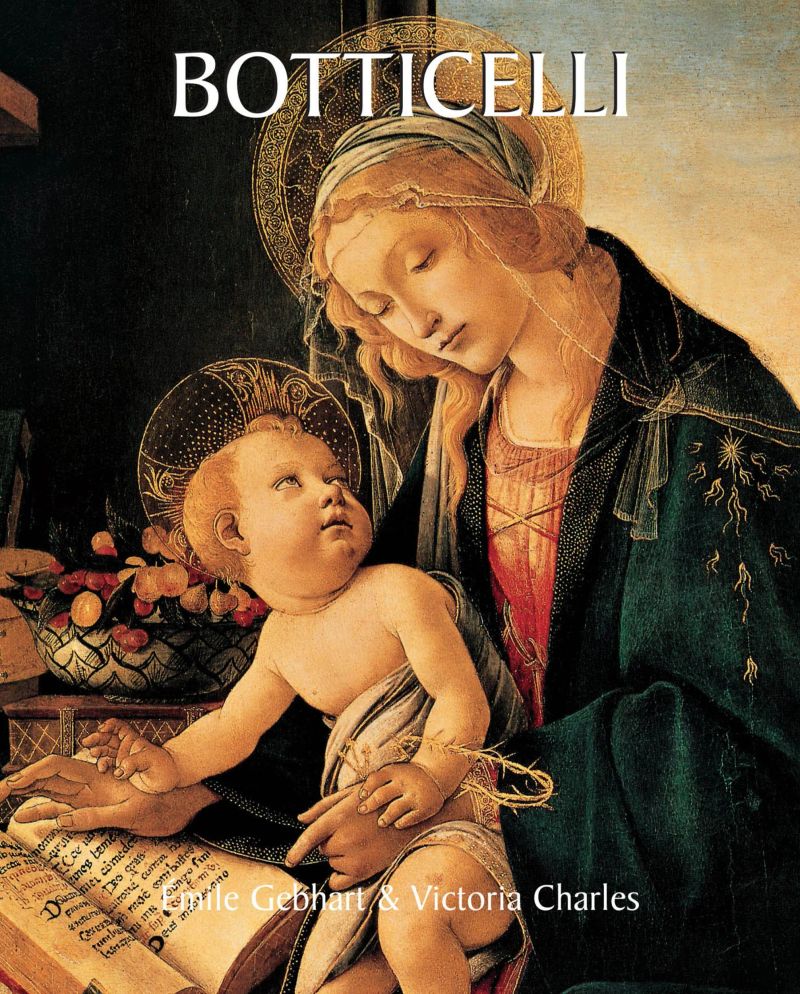


Length4h 51m
About this audiobook
He was the son of a citizen in comfortable circumstances, and had been, in Vasari's words, "instructed in all such things as children are usually taught before they choose a calling." However, he refused to give his attention to reading, writing and accounts, continues Vasari, so that his father, despairing of his ever becoming a scholar, apprenticed him to the goldsmith Botticello: whence came the name by which the world remembers him. However, Sandro, a stubborn-featured youth with large, quietly searching eyes and a shock of yellow hair – he has left a portrait of himself on the right-hand side of his picture of the Adoration of the Magi – would also become a painter, and to that end was placed with the Carmelite monk Fra Filippo Lippi. But he was a realist, as the artists of his day had become, satisfied with the joy and skill of painting, and with the study of the beauty and character of the human subject instead of religious themes. Botticelli made rapid progress, loved his master, and later on extended his love to his master's son, Filippino Lippi, and taught him to paint, but the master's realism scarcely touched Lippi, for Botticelli was a dreamer and a poet.
Botticelli is a painter not of facts, but of ideas, and his pictures are not so much a representation of certain objects as a pattern of forms. Nor is his colouring rich and lifelike; it is subordinated to form, and often rather a tinting than actual colour. In fact, he was interested in the abstract possibilities of his art rather than in the concrete. For example, his compositions, as has just been said, are a pattern of forms; his figures do not actually occupy well-defined places in a well-defined area of space; they do not attract us by their suggestion of bulk, but as shapes of form, suggesting rather a flat pattern of decoration. Accordingly, the lines which enclose the figures are chosen with the primary intention of being decorative.
It has been said that Botticelli, "though one of the worst anatomists, was one of the greatest draughtsmen of the Renaissance." As an example of false anatomy we may notice the impossible way in which the Madonna's head is attached to the neck, and other instances of faulty articulation and incorrect form of limbs may be found in Botticelli's pictures. Yet he is recognised as one of the greatest draughtsmen: he gave to 'line' not only intrinsic beauty, but also significance. In mathematical language, he resolved the movement of the figure into its factors, its simplest forms of expression, and then combined these various forms into a pattern which, by its rhythmical and harmonious lines, produces an effect upon our imagination, corresponding to the sentiments of grave and tender poetry that filled the artist himself.
This power of making every line count in both significance and beauty distinguishes the great master- draughtsmen from the vast majority of artists who used line mainly as a necessary means of representing concrete objects.
Audiobook details
Rating★★★★ 4.2 (24)
Includes Goodreads, Amazon
GenreOther
Length4 hrs 51 mins
Narrated byListen with 1,000+ voices
FormateBook with Audio
Publish dateMay 8, 2012
LanguageEnglish
Table of contents
1BOTTICELLI BOTTICELLI
2Botticelli’s Youth and Education
3Botticello” in homage to his first master, and
4Dominican clergy, and on occasion he would
5Vecchio and the farmers of the contadoto those beautiful works of
Show all chaptersShow less
6— Botticelli’s Youth and Education —
7Sixtus IV invited them to decorate the Sistine Chapel, Alexander VI
8extraordinary lifestyle. In their obituary, the good Carmelite friars
9Later, when Pope Clement VII locked up Benvenuto Cellini in the
10— Botticelli’s Youth and Education —
11Cennino Cennini. But in the course of the Quattrocento, a novice
12— Botticelli’s Youth and Education —
13Fra’ Filippo Lippi was called to Santa Maria dell’Assunta in
14Castagno, this violent realist of untamed imagination, Botticelli
15two sculptors. Free from doctrine, in a very Florentine, very
16adolescents into his marvellously beautiful angels, which his pupil
17Botticelli’s First Works
18— Botticelli’s First Works —
19Rome of Sixtus IV, the Bestia senza pace, fierce enemy of
20Santa Maria Maggiore of Florence for some time, dates from
21Madonna of the Rose Garden, at the end of the tabernacle where
22— Botticelli’s First Works —
23Among the young master’s paintings, the Madonnas convey
24— Botticelli’s First Works —
25God of Israel among the grass and the flowers towards her
26Assumption. The books of the institution show sums of
27perfection of the design.
28— Botticelli’s First Works —
29— Botticelli’s First Works —
30The Medici and Botticelli’s Pagan Initiation
31Fra’ Filippo Lippi, imitator of the Pollaiolo, Andrea
32wing of the Church.
33Germanic provinces, beyond France, all the way to the royal
34Lucretius, Marcus Aurelius or Plotinus.
35— The Medici and Botticelli’s Pagan Initiation —
36Xenocrates on his lips.
37Timaeus in the church of the Angeli in Florence with the same
38Judgement. The Florentines of the great era of the Medici no longer
39— The Medici and Botticelli’s Pagan Initiation —
40Florence. In his work Stanzas for the Tournament of Giuliano de’
41Santa Croce to the sound of tambourines and pipes, between silk
42— The Medici and Botticelli’s Pagan Initiation —
43Vien, ch io t’invilo nuda in mezzo il leito.
44medieval epics, a farce with grotesque witchcraft, the protagonist of
45cinque, io ne corrompo sei.”
46— The Medici and Botticelli’s Pagan Initiation —
47Florentine bankers, jealous of their Medici colleagues, who
48— The Medici and Botticelli’s Pagan Initiation —
49organiser in Florence and on the Florentine borders, and above all
50— The Medici and Botticelli’s Pagan Initiation —
More from Émile Gebhart, Victoria Charles



Mere ChristianityC. S. Lewis7h 7m4.4 (519.7K)$24 · $0.00

Her Daily BreadKate Wood12h 57m4.6 (153)$33 · $0.00
The Holy Bible - 1 SamuelKing James2h 13m4.8 (1.6K)$3 · $0.00

The American Standard Bible — The Gospel of MatthewMatthew3h 56m4.7 (3K)$2 · $0.00

Bad Fat Black GirlSesali Bowen6h 32m4.7 (2.8K)$24 · $0.00
The King James Audio Bible New Testament CompleteChristopher Glyn20h 2m4.7 (2.6K)$12 · $0.00
Faiths CheckbookCharles Spurgeon12h 44m4.7 (3.2K)$11 · $0.00

Ten Things I Wish You Knew About Your Child's Mental HealthDr. Billy Garvey4h 53m4.7 (2.4K)$20 · $0.00

Designing Terry Pratchett’s DiscworldPaul Kidby3h 52m4.7 (343)$20 · $0.00
The Chosen Book OneAmanda Jenkins, Kristen Hendricks, Dallas Jenkins3h 8m4.6 (4.9K)$10 · $0.00
The Lives of BrianBrian Johnson9h 45m4.6 (3.5K)$29 · $0.00
Expository Thoughts on the Gospel of LukeJ.C. Ryle27h 13m4.7 (536)$18 · $0.00

CrossroadsKaleb Dahlgren7h 56m4.6 (4.9K)$26 · $0.00

Across the RiverKent Babb11h 40m4.6 (927)$29 · $0.00

Brain Training for RidersAndrea Monsarrat Waldo5h 56m4.7 (550)$19 · $0.00

My Effin' LifeGeddy Lee17h 11m4.6 (13.1K)$40 · $0.00

Kings and PawnsHoward Bryant10h 9m4.6 (678)$29 · $0.00

The Elementia Chronicles #2: The New OrderSean Fay Wolfe11h 17m4.6 (841)$29 · $0.00
The ActsLuke2h 55m4.6 (19.7K)$12 · $0.00

New Testament - Easy NavigationWorld English Bible19h 35m4.6 (1.3K)$1.30 · $0.00
You may also like

History of the Decline and Fall of the Roman Empire — Volume 1Edward Gibbon20h 18m4.3 (14.6K)Free
Codex HammurabiHammurabi2h 34m3.9 (2.5K)$1 · $0.00

The Grand InquisitorFyodor Dostoyevsky1h 1m4.4 (10.6K)$2.30
DynastyTom Holland16h 4m4.3 (13.6K)$25
EuthyphroPlato1h 1m4.1 (17.3K)$2.30
The Profits of ReligionUpton Sinclair10h 52m4.0 (1.6K)$1 · $0.00
Caesar and ChristWill Durant36h 28m4.5 (3.5K)$30
History of the Decline and Fall of the Roman Empire — Volume 2Edward Gibbon21h 44m4.5 (1.7K)Free
THE ANNALSTacitus19h 7m4.2 (15.2K)$1.99 · $0.00
THE 12 CAESARSSuetonius16h 7m4.2 (32.6K)$2.99 · $0.00

The Chosen: Not My Will…Jerry B. Jenkins7h 54m4.8 (1.2K)$10 · $0.00
The Praise of Folly (Annotated)Desiderius Erasmus5h 25m4.0 (23.8K)$2 · $0.00

The Trial of Jesus from a Lawyer's Standpoint (Vol. 1&2) (Annotated)Walter M. Chandler24h 11m4.2 (163)$2 · $0.00
Roman Society from Nero to Marcus AureliusSamuel Dill26h 3m3.6 (13)$2 · $0.00
Roman Empire - The History & the Myth (Annotated)John Bagnell Bury27h 33m$2 · $0.00
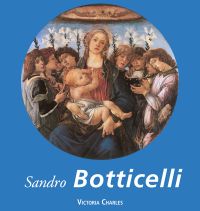
Sandro BotticelliVictoria Charles1h 24m4.2 (36)$8 · $0.00
Christ Cult CodexDan Desmarques3h 18m5.0 (5) Only with Ultra

The Bible and Polygamy: Does the Bible Sanction Polygamy?John Philip Newman, Orson Pratt, George Albert Smith, George Q. Cannon4h 20m4.5 (11)$0.99 · $0.00

The Plumed Serpent (Annotated)D. H. Lawrence21h 7m3.3 (1.8K)$2 · $0.00
Pharos and PharillonE. M. Forster2h 23m4.0 (164)$2.30 · $0.00