
Audio only
Length50m
About this audiobook
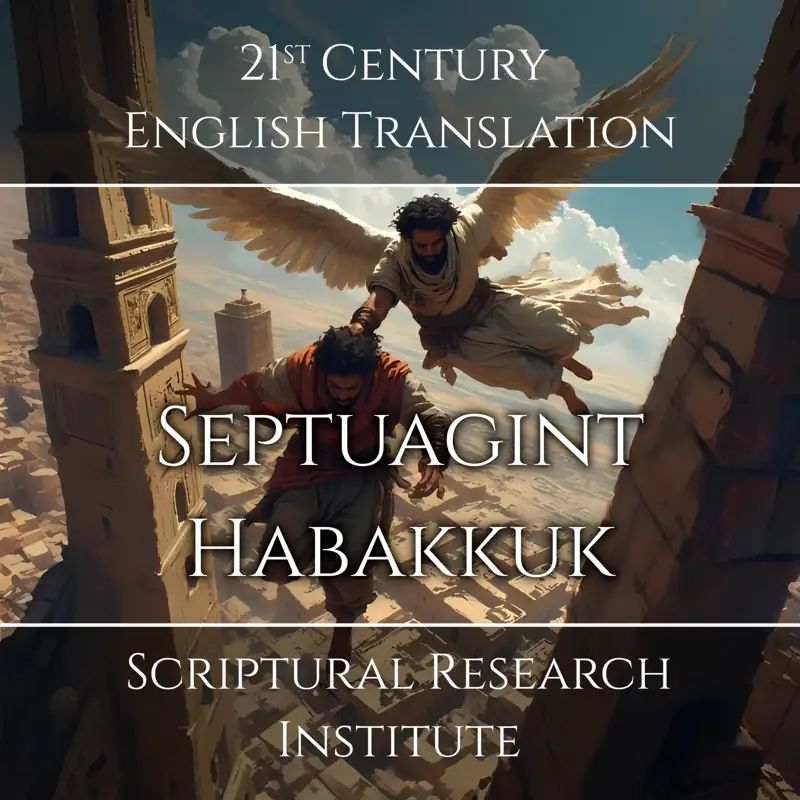
Most scholars accept that Habakkuk was written by a prophet called Habakkuk sometime during the Neo-Babylonian Era, or earlier during the late Neo-Assyrian era when the Babylonians were in revolt. Given that the rebels were not the ancient Chaldeans, but a branch of the Assyrian royal family, it seems unlikely that anyone would have referred to the rebels as Chaldeans. After the Assyrian empire had fallen, the rebel royal family in Babylon embraced the ancient Chaldean identity in order to cement their control over Babylonia, following which the remnants of the Assyrians in Babylonia were referred to as Chaldeans.
The Book of Habakkuk is considered unique among the books of the bible, as Habakkuk openly questions his Lord’s actions, which in the Masoretic version of the book, means he is questioning God. In the Septuagint’s version, his Lord was not necessarily God, as Habakkuk was either a polytheist or someone speaking to polytheists. As Habakkuk must have lived while the Chaldeans were around, he either lived before Abraham, when the original Chaldean people ruled Babylon, or during the Neo-Babylonian Empire, sometime between 626 and 539 BCE. There is nothing in the book of Habakkuk that indicates he lived in the 3rd millennium BCE, and his mentioning of the Kushites and Arabs is consistent with the political geography of the Neo-Babylonian Empire, when the Kingdom of Kush was backing the Egyptians against the Babylonians, and the Babylonians were trying to conquer the Arabs.
Habakkuk’s writing describes the Neo-Babylonians riding out and conquering the world, which was a description of the Neo-Babylonian Empire during King Nabopolassar’s reign, between 626 and 605 BCE, and during the reign of his son Nebuchadnezzar II, between 605 and 562 BCE. After Nebuchadnezzar II’s reign, the nobles of the Neo-Babylonian empire turned on each other, the self-declared “Chaldean” Dynasty lost power, and the empire slowly became weaker until Cyrus II of Persia conquered them in 539 BCE. If the Babylonian Empire was rapidly expanding in Habakkuk’s time, then he had to have been prophesying between 626 and 562 BCE, and yet his prophecy is not consistent with the religious reforms of King Josiah, who, beginning circa 632 BCE, banned the worship of all gods in Judah, other than his version of Yahweh.
Audiobook details
GenreSpirituality and Religion
Length50 mins
Narrated byGoogle's Archie
FormatAudiobook
Publish dateMay 4, 2025
LanguageEnglish
Table of contents
1chapter
6chapter
2chapter
7chapter
3chapter
8chapter
4chapter
9chapter
5chapter
Series
Tale of SinuheScriptural Research Institute1h 18m$4.10 · $0.00
Septuagint - ObadiahScriptural Research Institute24m$3.50 · $0.00
Septuagint - DeuteronomyScriptural Research Institute3h 19m4.8 (11)$5.80 · $0.00
Septuagint - AmosScriptural Research Institute1h 48m$3.50 · $0.00
Greek Apocalypse of EzraScriptural Research Institute27m4.6 (11)$3.50 · $0.00
Septuagint - JoelScriptural Research Institute45m$3.50 · $0.00
Septuagint - NahumScriptural Research Institute51m$3.50 · $0.00
Septuagint - ZakharianScriptural Research Institute1h 21m$3.50 · $0.00
Septuagint - DodekaScriptural Research Institute10h 14m$29 · $0.00
Septuagint - ZephaniahScriptural Research Institute1h 6m$3.50 · $0.00
Judahite Apocalypse of EzraScriptural Research Institute2h 52m$4.10 · $0.00
Ge'ez 1st MaccabeesScriptural Research Institute4h 28m$4.70 · $0.00
Septuagint - NahumScriptural Research Institute34m$4.10 · $0.00

Words of AhikarScriptural Research Institute2h 21m$5.80 · $0.00
The Life of WeniScriptural Research Institute29m$4.10 · $0.00
Septuagint - ShadrachScriptural Research Institute1h 4m$3.50 · $0.00
Septuagint - HoseaScriptural Research Institute1h 53m$3.50 · $0.00

Tale of the Shipwrecked SailorScriptural Research Institute26m4.3 (12)$3.50 · $0.00
Septuagint - ZakharianScriptural Research Institute56m$4.10 · $0.00
Septuagint - JoelScriptural Research Institute33m$4.10 · $0.00

Proud Police WifeRebecca Lynn4h 52m4.8 (14K)$10 · $0.00

I Hear His Whisper 365 Daily Devotions (Gift Edition)Brian Simmons, Gretchen Rodriguez9h 23m4.8 (2K)$10 · $0.00

A Little God Time for Women Morning & Evening DevotionalBroadStreet Publishing Group LLC15h 15m4.9 (1.2K)$10 · $0.00
The Chosen Presents: A Blended Harmony of the GospelsSteve Laube, Amanda Jenkins, Dallas Jenkins7h 8m4.9 (823)$10 · $0.00

Prayers from the Throne RoomBrian Simmons8h 55m4.9 (256)$10 · $0.00
31 Decrees of Blessing for Your LifePatricia King2h 38m4.8 (1.4K)$10 · $0.00

Loved BabySarah Philpott4h 51m4.8 (1.4K)$10 · $0.00

The QuranAllah23h 7m4.7 (136.1K)$1 · $0.00

The Secret of the RosaryLouis de Montfort6h 1m4.7 (16K)$2 · $0.00

The Holy Qur-an: Text, Translation and CommentaryAbdullah Yusuf Ali22h 16m4.7 (133K)$1 · $0.00

All of Grace (Annotated)Charles Spurgeon5h 1m4.7 (1.3K)$1.99 · $0.00

Steps to ChristEllen G. White3h 12m4.7 (13.8K)$2 · $0.00
The Doctrine and Selected CovenantsJoseph Smith13h 53m4.7 (10.4K)$1.99 · $0.00
Sinners in the Hands of an Angry God & Other Sermons (Annotated)Jonathan Edwards7h 51m4.7 (1.5K)$2 · $0.00

Swayam Ki AwaazPrem Rawat8h 34m4.7 (1.1K)$26 · $0.00

Behind the BadgeAdam Davis10h 18m4.7 (2.7K)$10 · $0.00
The New Human Revolution, vol. 1Daisaku Ikeda7h 46m4.7 (669)$12 · $0.00

You Are Worth ItKyle Carpenter, Don Yaeger8h 53m4.7 (4.8K)$29 · $0.00
Praying GraceDavid A. Holland3h 2m4.7 (658)$10 · $0.00

Evidence Not SeenDarlene Deibler Rose11h 11m4.6 (11.9K)$29 · $0.00
You may also like

Shu KingConfucius10h 4m4.0 (1.3K)$2 · $0.00
Myths and Legends of Ancient EgyptLewis Spence10h 45m4.0 (1.8K)$2.30

The Story of EgyptJoann Fletcher17h 26m4.0 (2K)$25
Mysteries Of MithraFranz Cumont5h 19m4.1 (1.6K)$1.20 · $0.00

The Art in Ancient EgyptGeorges Perrot, Charles Chipiez27h4.2 (53)$1.99 · $0.00
The Mythology of Babylonia and Assyria (Annotated)Donald A. Mackenzie18h 44m4.4 (12)$2.99 · $0.00
The Old Testament Interpreted: 20 Analytical BooksHarold B. Hunting, Amy Steedman, James Hartwell Willard, Theophilus G. Pinches, T. K. Cheyne, Marian MacLean Finney, Robertson L. Whiteside, A. L. O. E., Noel Hope, Mildred Duff, G. F. Maclear, Emma Howard Wight, Diodorus of Sicily, Flavius Josephus, Tacitus, Celsus, Emperor Julian, Porphyry, Thomas Taylor103h 40m$1.99 · $0.00

The Myths of Mexico & Peru (Annotated)Lewis Spence11h 47m3.3 (153)$2 · $0.00
A Few of the World’s Great ReligionsJoseph McCabe26m$3

The Virgin in ArtKyra Belán4h 3m4.3 (24)$18 · $0.00
Paganism Surviving in Christianity (Annotated)Abram Herbert Lewis9h 10m4.5 (120)$1.99 · $0.00

A Journey through Art of IndiaRobert Weinstein1h 26m$13 · $0.00
The Ancient Mythology: Egyptian, Assyrian, Babylonian, Greek and Roman MythsE. M. Berens, Lewis Spence35h 33m4.2 (19)$1.99 · $0.00
The Mythologies of Ancient Mexico and PeruLewis Spence2h 27m3.3 (153)$2 · $0.00

Historical Description of Westminster Abbey, Its Monuments and CuriositiesAnonymous5h 48m$1 · $0.00

Virgin PortraitsKlaus Carl1h 37m$13.50 · $0.00
Art and Civilization of PersiaVladimir Lukonin, Anatoli Ivanov8h 41m4.1 (27)$19 · $0.00
The Eternal Legacy of Ancient EgyptSantiago Machain7h 34m$24 · $0.00
The Religions of Ancient Egypt and Babylonia (Annotated)A. H. Sayce17h 20m3.6 (45)$2 · $0.00
ANCIENT EGYPT: History, Archaeology, Literature, Mythology & Ancient Egyptian TextsGeorge Rawlinson, Arthur Gilman, Gaston Maspero, Agnes Sophia Griffith Johns, E. A. Wallis Budge47h 14m4.2 (25)$1.99 · $0.00