
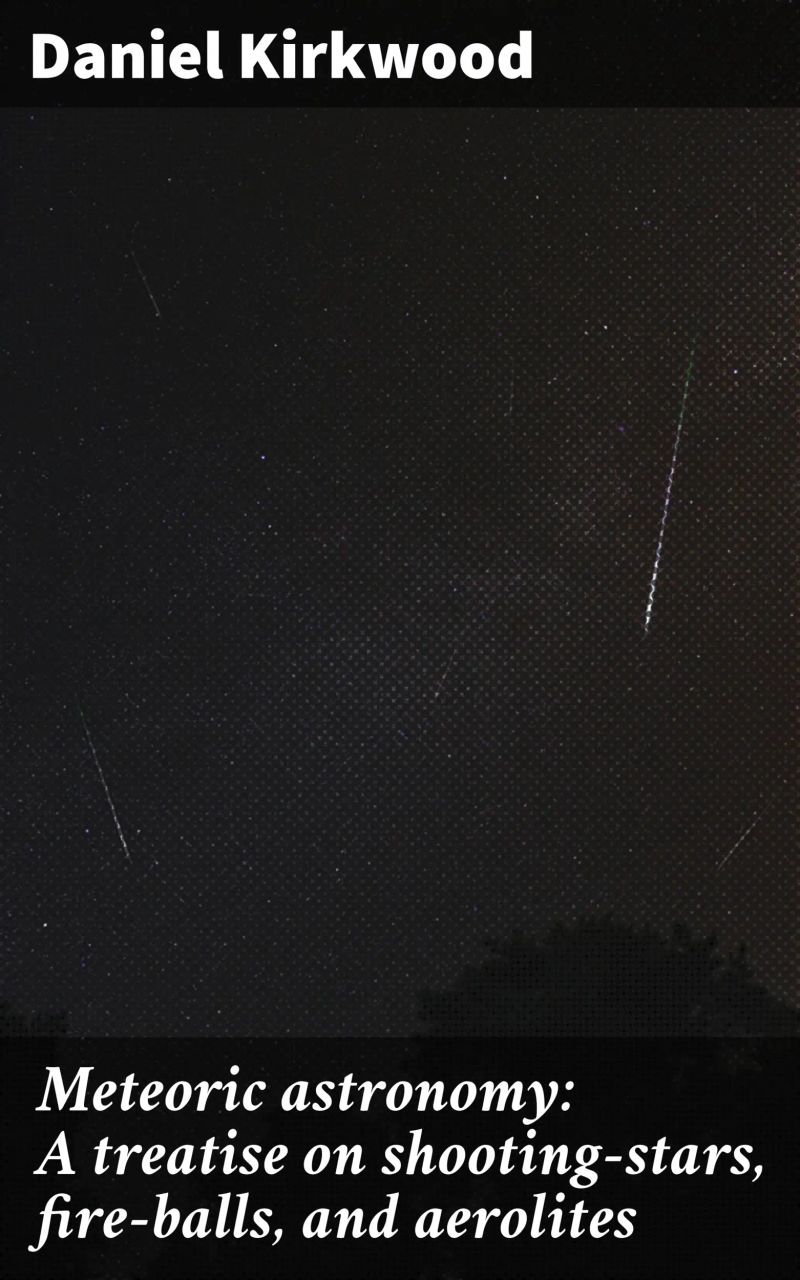
Meteoric astronomy: A treatise on shooting-stars, fire-balls, and aerolites
Unveiling the Mysteries of Celestial EventsBy Daniel Kirkwood


Length2h 47m
About this audiobook
In "Meteoric Astronomy: A Treatise on Shooting-Stars, Fire-Balls, and Aerolites," Daniel Kirkwood presents a meticulous exploration of meteoric phenomena, examining the nature, classification, and observational science behind shooting stars, fireballs, and meteorites. Employing a rigorous scientific style characteristic of mid-19th century natural philosophy, Kirkwood integrates observational data with theoretical frameworks, drawing on the burgeoning field of astronomy to illuminate the relationships between these celestial occurrences and their terrestrial impacts. This treatise serves not only as a detailed catalog of meteoric events but also as a reflection of the period'Äôs increasing interest in empiricism and the scientific method in understanding natural phenomena. Daniel Kirkwood, an eminent astronomer and professor, was profoundly influenced by the scientific advancements of his time, including the work of contemporaries like Olbers and Herschel. His background in both mathematics and astronomy fueled his drive to unravel the mysteries of meteoric phenomena, which were often shrouded in superstition and misunderstanding. Kirkwood's commitment to transforming meteoric studies into a serious scientific discipline is evident throughout this work, as he systematically organizes and presents his findings. This book is highly recommended for amateur astronomers, astrobiologists, and scholars interested in the historical context of astronomical studies. Kirkwood'Äôs blend of empirical analysis and clear prose makes it both an informative resource and a captivating read for anyone keen on understanding the dynamic interplay between celestial objects and our planet.
Audiobook details
GenreScience and Nature
Length2 hrs 47 mins
Narrated byListen with 1,000+ voices
FormateBook with Audio
Publish dateDec 18, 2019
LanguageEnglish
Table of contents
1PREFACE.
2INTRODUCTION. A GENERAL VIEW OF THE SOLAR SYSTEM.
3METEORIC ASTRONOMY.
4CHAPTER I. SHOOTING-STARS.
5I. The Meteors of November 12th–14th.
Show all chaptersShow less
6The Shower of November 14, 1866.: The Meteors of 1866 compared with those of former Displays.
7Discussion of the Phenomena.
8Elements of the Orbit.
9CHAPTER II. OTHER METEORIC RINGS.
10II. The Meteors of August 6th–11th.
11III. The Meteors of April 18th–26th.
12IV. The Meteors of December 6th–13th.
13V. The Meteors of January 2d–3d.
14General Remarks.
15CHAPTER III. AEROLITES.
16CHAPTER IV. CONJECTURES IN REGARD TO METEORIC EPOCHS.: The Epoch of November 29.
17CHAPTER V. GEOGRAPHICAL DISTRIBUTION OF METEORIC STONES—DO AEROLITIC FALLS OCCUR MORE FREQUENTLY BY DAY THAN BY NIGHT?—DO METEORITES, BOLIDES, AND THE MATTER OF ORDINARY SHOOTING-STARS, COEXIST IN THE SAME RINGS?
18I. The Epoch of November 11th–14th.
19II. The Epoch of August 7th–11th.
20III. The Epoch of December 6th–13th.
21IV. The Epoch of April 18th–26th.
22V. The Epoch of April 9th–12th.
23CHAPTER VI. PHENOMENA SUPPOSED TO BE METEORIC—METEORIC DUST—DARK DAYS.
24Meteoric Transits—Dark Days.
25Partial Interception of the Sun's Light and Heat.
26CHAPTER VII. FURTHER RESEARCHES OF REICHENBACH—THEORY OF METEORS—STABILITY OF THE SOLAR SYSTEM—DOCTRINE OF A RESISTING MEDIUM.
27CHAPTER VIII. DOES THE NUMBER OF AEROLITIC FALLS VARY WITH THE EARTH'S DISTANCE FROM THE SUN?—RELATIVE NUMBERS OBSERVED IN THE FORENOON AND AFTERNOON—EXTENT OF THE ATMOSPHERE AS INDICATED BY METEORS.
28CHAPTER IX. THE METEORIC THEORY OF SOLAR HEAT.: The Meteoric Theory.
29CHAPTER X. WILL THE METEORIC THEORY ACCOUNT FOR THE PHENOMENA OF VARIABLE AND TEMPORARY STARS?: Variable and Temporary Stars.
30CHAPTER XI. THE LUNAR AND SOLAR THEORIES OF THE ORIGIN OF AEROLITES.
31The Lunar Theory.
32The Solar Theory.
33CHAPTER XII. THE RINGS OF SATURN.
34CHAPTER XIII. THE ASTEROID RING BETWEEN MARS AND JUPITER.: Remarks on the foregoing Table.
More from Daniel Kirkwood

A Brief History of IntelligenceMax S. Bennett12h 18m4.6 (6.6K)$29 · $0.00
The Story of BirdsSteve Brusatte11h 49m4.6 (401)$29 · $0.00
Black Earth WisdomLeah Penniman11h 54m4.6 (577)$8 · $0.00

Total Cat MojoJackson Galaxy10h 13m4.5 (8.4K)$23 · $0.00

My Life Among the UnderdogsTia Torres5h 51m4.5 (4K)$24 · $0.00

What It Takes to Save a LifeKwane Stewart6h4.6 (556)$24 · $0.00

Pastoral SongJames Rebanks8h 35m4.5 (12K)$26 · $0.00

How Stella Learned to TalkChristina Hunger7h4.5 (10.9K)$24 · $0.00

Craig & FredCraig Grossi8h 6m4.5 (9.6K)$26 · $0.00
Celebrating BirdsNatalia Rojas, Ana Maria Martinez6h 47m4.6 (330)$24 · $0.00

Saving JemimaJulie Zickefoose4h 59m4.5 (749)$20 · $0.00

Will's Red CoatTom Ryan8h 23m4.5 (2.3K)$26 · $0.00
Of Time and TurtlesSy Montgomery10h 34m4.5 (5K)$29 · $0.00

THE WOLF TRILOGY: Call of the Wild, White Fang & The Son of the WolfJack London17h 31m4.5 (2.4K)$1.99 · $0.00

Zen and the Art of Saving the PlanetThich Nhat Hanh9h 20m4.5 (3.9K)$29 · $0.00

BLACK BEAUTY (With Original Illustrations)Anna Sewell7h 31m4.5 (1.3K)$1.99 · $0.00

Bottle of LiesKatherine Eban14h 25m4.4 (12K)$33 · $0.00
IngrainedCallum Robinson8h 10m4.5 (1.1K)$26 · $0.00

The Lion Tracker's Guide To LifeBoyd Varty3h 1m4.4 (4.8K)$18 · $0.00

Born for LoveBruce D. Perry, Maia Szalavitz11h 42m4.4 (4K)$29 · $0.00
You may also like

Dark Matter and the DinosaursLisa Randall12h 32m3.9 (5.8K)$33 · $0.00
OmnilingualH. Beam Piper2h 12m4.0 (1.3K)$10 · $0.00
Cosmic QueriesNeil deGrasse Tyson, James Trefil6h 18m4.3 (4.8K)$17 · $0.00

ExtraterrestrialAvi Loeb7h 7m4.0 (9K)$24 · $0.00
The Character of Physical LawRichard P. Feynman5h 57m4.4 (9.6K)$17
Astrophysics for Young People in a HurryNeil deGrasse Tyson3h 32m4.3 (15.1K)$15
The Theory of RelativityAlbert Einstein5h 6m4.2 (28.5K)$1.99 · $0.00
Light in the DarknessHeino Falcke10h 40m4.1 (711)$29 · $0.00
Tales of Space and TimeH.G. Wells8h 21m3.8 (1.5K)$1 · $0.00
Ask the Experts: AstronomyScientific American4h 49m4.5 (50)$15

All About Outer Space CollectionValerie Houston, Highlights for Children3h 34m$15

100,000 Whys for KidsKiddies Care3h 3m$10 · $0.00

Aliens Among UsMason A. Huntington6h 35m$4.10 · $0.00

Interstellar EncountersRuby M. Harris7h 13m$4.10 · $0.00
Meteoric astronomy: A treatise on shooting-stars, fire-balls, and aerolitesDaniel Kirkwood2h 47m$2 · $0.00

100,000 Whys For AdultsKiddies Care3h 13m$10 · $0.00

100,000 Whys For TeensKiddies Care3h 36m$10 · $0.00
When the Earth Had Two MoonsErik Asphaug9h 9m3.9 (981)$29 · $0.00
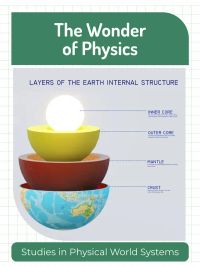
The Wonder of PhysicsRuby M. Harris6h 20m$4.10 · $0.00

From Earth To MarsJonathan Cardoso1h 26m$5 · $0.00