
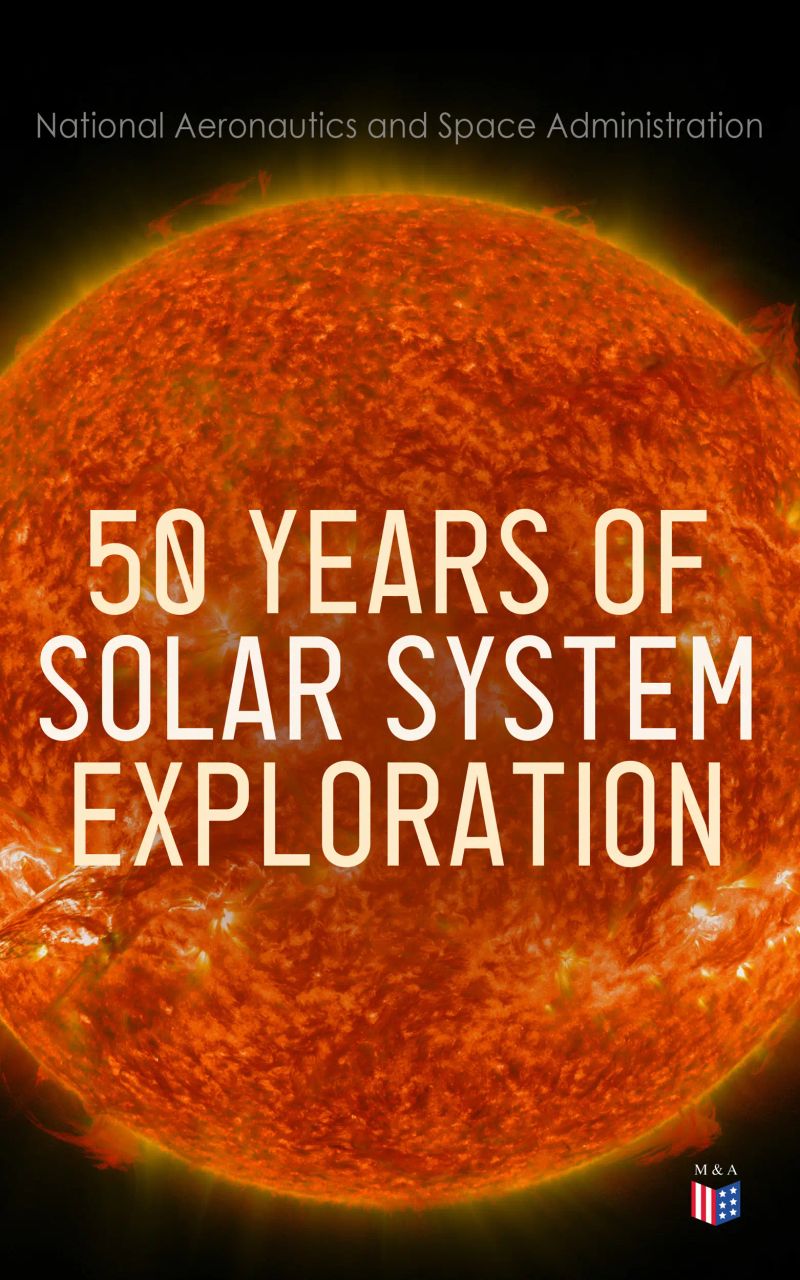
50 Years of Solar System Exploration
Historical Perspectives (With Original NASA Photographs)By National Aeronautics and Space Administration

Length12h 51m
About this audiobook
NASA's first successful mission to another planet, Mariner 2 to Venus in 1962, marked the beginning of what NASA Chief Scientist Jim Green describes in this volume as "a spectacular era" of solar system exploration. In its first 50 years of planetary exploration, NASA sent spacecraft to fly by, orbit, land on, or rove on every planet in our solar system, as well as Earth's Moon and several moons of other planets. Pluto, reclassified as a dwarf planet in 2006, was visited by the New Horizons spacecraft in 2015. In this volume, a diverse array of scholars addresses the science, technology, policy, and politics of planetary exploration. This volume offers a collection of in-depth studies of important projects, decisions, and milestones of this era. It is not possible to foresee what the next 50 years of NASA's planetary exploration program will reveal. However, the 2020s are already looking promising. Planetary missions in recent years have focused more and more on exploring potentially habitable environments in our solar system and developing a more in-depth understanding of the evolution of planetary environments. It is safe to say that by 2062, our understanding of our solar system will be radically different than it is today. And we will look forward to it.
Audiobook details
GenreTechnology, Science and Nature
Length12 hrs 51 mins
Narrated byListen with 1,000+ voices
FormateBook with Audio
Publish dateJul 2, 2022
LanguageEnglish
Table of contents
1Chapter 1 (pt. 1)
4Chapter 1 (pt. 4)
2Chapter 1 (pt. 2)
5Chapter 1 (pt. 5)
3Chapter 1 (pt. 3)
6Chapter 1 (pt. 6)
More from National Aeronautics and Space Administration

The Smell of Kerosene (Annotated)National Aeronautics and Space Administration, Donald L. Mallick, Peter W. Merlin11h 32m4.3 (523)$2 · $0.00
Mars: Our New Home?National Aeronautics and Space Administration, U.S. Congress5h 38m$2 · $0.00

Der Geruch von KerosinNational Aeronautics and Space Administration12h 55m4.3 (136)$2 · $0.00
Earth at NightNational Aeronautics and Space Administration2h 26m4.7 (196)$1 · $0.00
Mars: Our New Home? - National Plan to Conquer the Red Planet (Official Strategies of NASA & U.S. Congress) (Annotated)National Aeronautics and Space Administration, U.S. Congress6h 12m$0.99 · $0.00

The Smell of Kerosene: Pilot's "Day at the Office" (Annotated)National Aeronautics and Space Administration, Donald L. Mallick, Peter W. Merlin11h 33m4.4 (22)$0.99 · $0.00
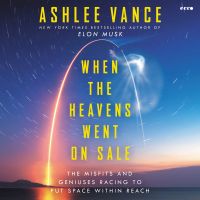
When the Heavens Went on SaleAshlee Vance18h 20m4.4 (3K)$40 · $0.00

Everybody Has a Podcast (Except You)Justin McElroy, Travis McElroy, Griffin McElroy5h 9m4.3 (2.3K)$24 · $0.00

Hands of TimeRebecca Struthers8h 8m4.4 (1.3K)$26 · $0.00

Never Lost AgainBill Kilday10h 1m4.4 (805)$29 · $0.00

How the Internet HappenedBrian McCullough13h 28m4.3 (2.7K)$23 · $0.00

Collected Writings of Nikola TeslaNikola Tesla, Thomas Commerford Martin21h 50m4.3 (1.7K)$1 · $0.00

Just AspireAjai Chowdhry9h 13m4.4 (260)$29 · $0.00

The Little Book of AliensAdam Frank8h 20m4.3 (1.3K)$26 · $0.00

The inventions, researches and writings of Nikola Tesla (Annotated)Thomas Commerford Martin16h 59m4.3 (1.3K)$2 · $0.00

KargilV.P. Malik15h 18m4.3 (2K)$24 · $0.00
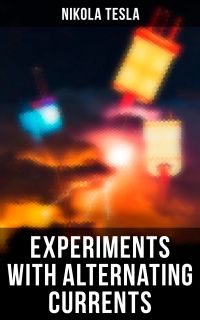
Experiments with Alternating CurrentsNikola Tesla9h 16m4.3 (874)$1.99 · $0.00

Fire on the HorizonTom Shroder, John Konrad8h 23m4.3 (858)$26 · $0.00
The Smell of Kerosene (Annotated)National Aeronautics and Space Administration, Donald L. Mallick, Peter W. Merlin11h 32m4.3 (523)$2 · $0.00

The Boy Who Harnessed the WindWilliam Kamkwamba, Bryan Mealer10h 5m4.2 (78.9K)$29 · $0.00

Across the Airless WildsEarl Swift10h 8m4.3 (1.3K)$29 · $0.00

Console WarsBlake J. Harris20h 41m4.2 (13.7K)$46 · $0.00

Improvised Munitions HandbookU.S. Department of Defense4h 49m4.3 (1.6K)$0.99 · $0.00
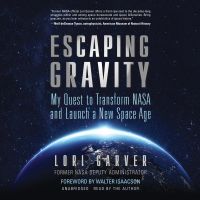
Escaping GravityLori Garver10h 54m4.2 (2.2K)$20 · $0.00

Wireless WarsJonathan Pelson8h 2m4.3 (418)$20 · $0.00

Let There Be WaterSeth M. Siegel8h 36m4.2 (2.3K)$20 · $0.00

A Brief History of IntelligenceMax S. Bennett12h 18m4.6 (6.6K)$29 · $0.00
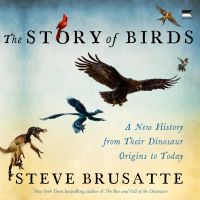
The Story of BirdsSteve Brusatte11h 49m4.6 (401)$29 · $0.00

Total Cat MojoJackson Galaxy10h 13m4.5 (8.4K)$23 · $0.00

My Life Among the UnderdogsTia Torres5h 51m4.5 (4K)$24 · $0.00

What It Takes to Save a LifeKwane Stewart6h4.6 (556)$24 · $0.00

Pastoral SongJames Rebanks8h 35m4.5 (12K)$26 · $0.00

How Stella Learned to TalkChristina Hunger7h4.5 (10.9K)$24 · $0.00

Craig & FredCraig Grossi8h 6m4.5 (9.6K)$26 · $0.00

Celebrating BirdsNatalia Rojas, Ana Maria Martinez6h 47m4.6 (330)$24 · $0.00

Saving JemimaJulie Zickefoose4h 59m4.5 (749)$20 · $0.00

Will's Red CoatTom Ryan8h 23m4.5 (2.3K)$26 · $0.00

Of Time and TurtlesSy Montgomery10h 34m4.5 (5K)$29 · $0.00

THE WOLF TRILOGY: Call of the Wild, White Fang & The Son of the WolfJack London17h 31m4.5 (2.4K)$1.99 · $0.00

Zen and the Art of Saving the PlanetThich Nhat Hanh9h 20m4.5 (3.9K)$29 · $0.00

BLACK BEAUTY (With Original Illustrations)Anna Sewell7h 31m4.5 (1.3K)$1.99 · $0.00

Bottle of LiesKatherine Eban14h 25m4.4 (12K)$33 · $0.00
IngrainedCallum Robinson8h 10m4.5 (1.1K)$26 · $0.00

The Lion Tracker's Guide To LifeBoyd Varty3h 1m4.4 (4.8K)$18 · $0.00

Born for LoveBruce D. Perry, Maia Szalavitz11h 42m4.4 (4K)$29 · $0.00

The Mountains of California (With Original Drawings & Photographs) (Annotated)John Muir11h 35m4.5 (1.1K)$2 · $0.00
You may also like
Mars Rover CuriosityRob Manning, William L. Simon7h 43m4.3 (1.7K)$20
The Little Book of AliensAdam Frank8h 20m4.3 (1.3K)$26 · $0.00
MarsLeonard David3h 27m4.1 (482)$15
Space Is Cool as F*ckKate Howells3h 6m4.3 (667)$15

Mission to MarsBuzz Aldrin4h 47m3.9 (1.7K)$17
Cosmic QueriesNeil deGrasse Tyson, James Trefil6h 18m4.3 (4.8K)$17 · $0.00
Across the Airless WildsEarl Swift10h 8m4.3 (1.3K)$29 · $0.00

OmnilingualH. Beam Piper2h 12m4.0 (1.3K)$10 · $0.00
The Theory of RelativityAlbert Einstein5h 6m4.2 (28.5K)$1.99 · $0.00
Neutrino HuntersRay Jayawardhana6h 4m4.1 (955)$17

SpacefarersChristopher Wanjek12h 1m4.1 (471)$23

ExtraterrestrialAvi Loeb7h 7m4.0 (9K)$24 · $0.00

Dark Matter and the DinosaursLisa Randall12h 32m3.9 (5.8K)$33 · $0.00

A Martian OdysseyStanley G. Weinbaum1h3.9 (2.4K)$2 · $0.00
All Around the MoonJules Verne11h 27m3.8 (10K)$1.20 · $0.00

The Universe And Our PlanetsKidsChoice47m$12 · $0.00
Exploring MarsScientific American10h 36m3.7 (23)$20
Missions to MarsLarry Crumpler12h 3m4.2 (44)$29 · $0.00
When the Earth Had Two MoonsErik Asphaug9h 9m3.9 (981)$29 · $0.00

Third ThoughtsSteven Weinberg6h 40m3.8 (381)$20