
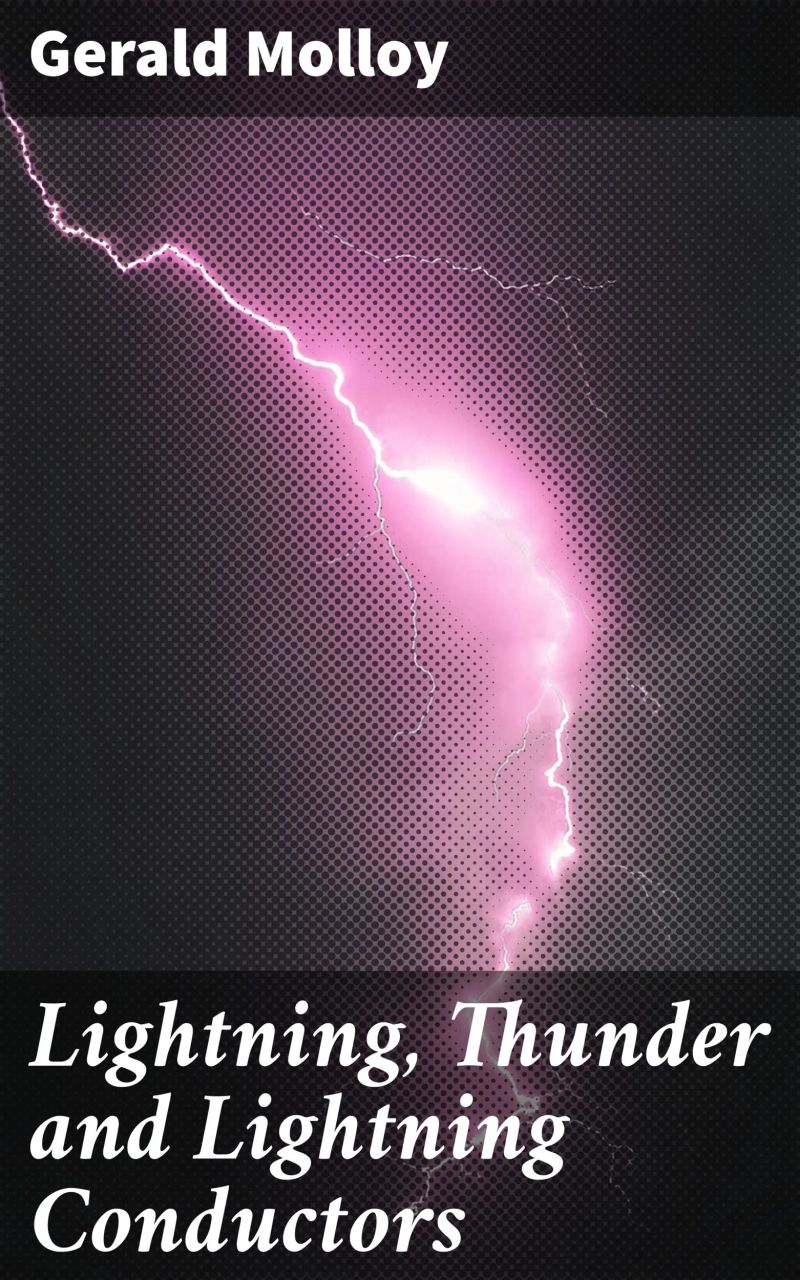
Lightning, Thunder and Lightning Conductors
Harnessing Nature's Electricity: The Science of Lightning ConductorsBy Gerald Molloy


Length1h 30m
About this audiobook
In "Lightning, Thunder and Lightning Conductors," Gerald Molloy provides an exceptional exploration of atmospheric phenomena, focusing particularly on the understanding and significance of lightning and its conductors. The book is meticulously structured and features a blend of scientific inquiry and vivid descriptions that showcase Molloy's mastery of both technical detail and engaging prose. Written during a period when electrical science was rapidly evolving, Molloy's work situates itself within the broader landscape of 19th-century scientific literature, marrying empirical research with literary flair to illuminate the mysteries of nature's electrostatic discharges. Gerald Molloy, an Irish priest and physicist, was deeply influenced by the burgeoning scientific discoveries of his time, which fueled his interest in the natural world. A scholar with a keen engagement in the intersection of science and faith, Molloy sought to make complex scientific concepts accessible to a wider audience. His background in both theology and the natural sciences uniquely positioned him to convey these topics with clarity and passion, allowing readers to appreciate the intricacies of lightning'Äîa phenomenon that has captivated human curiosity for centuries. This book is essential reading for anyone interested in the interplay between science and literature, as it not only elucidates the principles of electrical phenomena but also enriches one's appreciation for nature's grandeur. Recommended for scholars, educators, and enthusiasts alike, Molloy'Äôs work serves as both a historical document and a timeless inquiry into the forces that shape our understanding of the world.
Audiobook details
GenreScience and Nature
Length1 hr 30 mins
Narrated byListen with 1,000+ voices
FormateBook with Audio
Publish dateJul 10, 2023
LanguageEnglish
Table of contents
1Introduction
5NOTE II.
2Note to Page 20.
6FOOTNOTES:
3FOOTNOTES:
7FOOTNOTES:
4NOTE I.
More from Gerald Molloy


A Brief History of IntelligenceMax S. Bennett12h 18m4.6 (6.6K)$29 · $0.00
The Story of BirdsSteve Brusatte11h 49m4.6 (401)$29 · $0.00
Black Earth WisdomLeah Penniman11h 54m4.6 (577)$8 · $0.00

Total Cat MojoJackson Galaxy10h 13m4.5 (8.4K)$23 · $0.00

My Life Among the UnderdogsTia Torres5h 51m4.5 (4K)$24 · $0.00

What It Takes to Save a LifeKwane Stewart6h4.6 (556)$24 · $0.00

Pastoral SongJames Rebanks8h 35m4.5 (12K)$26 · $0.00
How Stella Learned to TalkChristina Hunger7h4.5 (10.9K)$24 · $0.00

Craig & FredCraig Grossi8h 6m4.5 (9.6K)$26 · $0.00
Celebrating BirdsNatalia Rojas, Ana Maria Martinez6h 47m4.6 (330)$24 · $0.00

Saving JemimaJulie Zickefoose4h 59m4.5 (749)$20 · $0.00

Will's Red CoatTom Ryan8h 23m4.5 (2.3K)$26 · $0.00
Of Time and TurtlesSy Montgomery10h 34m4.5 (5K)$29 · $0.00
THE WOLF TRILOGY: Call of the Wild, White Fang & The Son of the WolfJack London17h 31m4.5 (2.4K)$1.99 · $0.00

Zen and the Art of Saving the PlanetThich Nhat Hanh9h 20m4.5 (3.9K)$29 · $0.00

BLACK BEAUTY (With Original Illustrations)Anna Sewell7h 31m4.5 (1.3K)$1.99 · $0.00

Bottle of LiesKatherine Eban14h 25m4.4 (12K)$33 · $0.00
IngrainedCallum Robinson8h 10m4.5 (1.1K)$26 · $0.00

The Lion Tracker's Guide To LifeBoyd Varty3h 1m4.4 (4.8K)$18 · $0.00

Born for LoveBruce D. Perry, Maia Szalavitz11h 42m4.4 (4K)$29 · $0.00
You may also like
On the Origin of SpeciesCharles Darwin17h 4m4.2 (148K)$20 · $0.00
The Origin of SpeciesCharles Darwin14h 23m4.2 (163.7K)$9 · $0.00
Celebrating BirdsNatalia Rojas, Ana Maria Martinez6h 47m4.6 (330)$24 · $0.00

A Short History of the WorldH. G. Wells12h 5m3.9 (5.6K)$2.30

Asbestos, Its production and useRobert H. Jones2h 4m$2 · $0.00
The Life of the Caterpillar (Annotated)Jean-Henri Fabre8h 5m4.2 (34)$2 · $0.00
Musk-Ox, Bison, Sheep and GoatGeorge Bird Grinnell, Owen Wister, Caspar Whitney3h 23m$2 · $0.00

The Sea-Shore, Shown to the ChildrenTheodore Wood2h 54m$1 · $0.00

Guide To Building a Simple Chicken CoopWilliams Williams, Joshua Williams56m$14 · $0.00
The Life and Love of the InsectJean-Henri Fabre7h 30m$2.30

Bird Houses Boys Can BuildAlbert Frederick Siepert27m4.4 (11)$1 · $0.00
Gilbert Weather Bureau (Meteorology) for BoysA. C. Gilbert2h 25m$2 · $0.00

Creatures with ArmorJulie Murray11m$2
Insectivorous PlantsCharles Darwin15h 21m3.8 (44)$1 · $0.00

Seed DispersalW. J. Beal1h 35m$2 · $0.00

Core Concepts of the Constructed EnvironmentAnaya Thurlow13h 1m$50

The Botanist's Bookshelf: 8 Books on Plant IdentificationFrances Theodora Parsons, D. M. Crooks, Leonard Wheeler Kephart, Roy Watling, M. J. Richardson, Robert H. Mohlenbrock, Henry A. Gleason, Wilbur R. Mattoon, C. B. Webster, A. B. Brooks37h 17m$0.99 · $0.00

The Wild Elephant and the Method of Capturing and Taming it in CeylonJames Emerson Sir Tennent4h 16m$2 · $0.00

Cactus Culture for AmateursWilliam Watson6h 6m4.4 (10)$2 · $0.00
Conservation of marine birds of northern North AmericaVarious8h 16m$2 · $0.00