
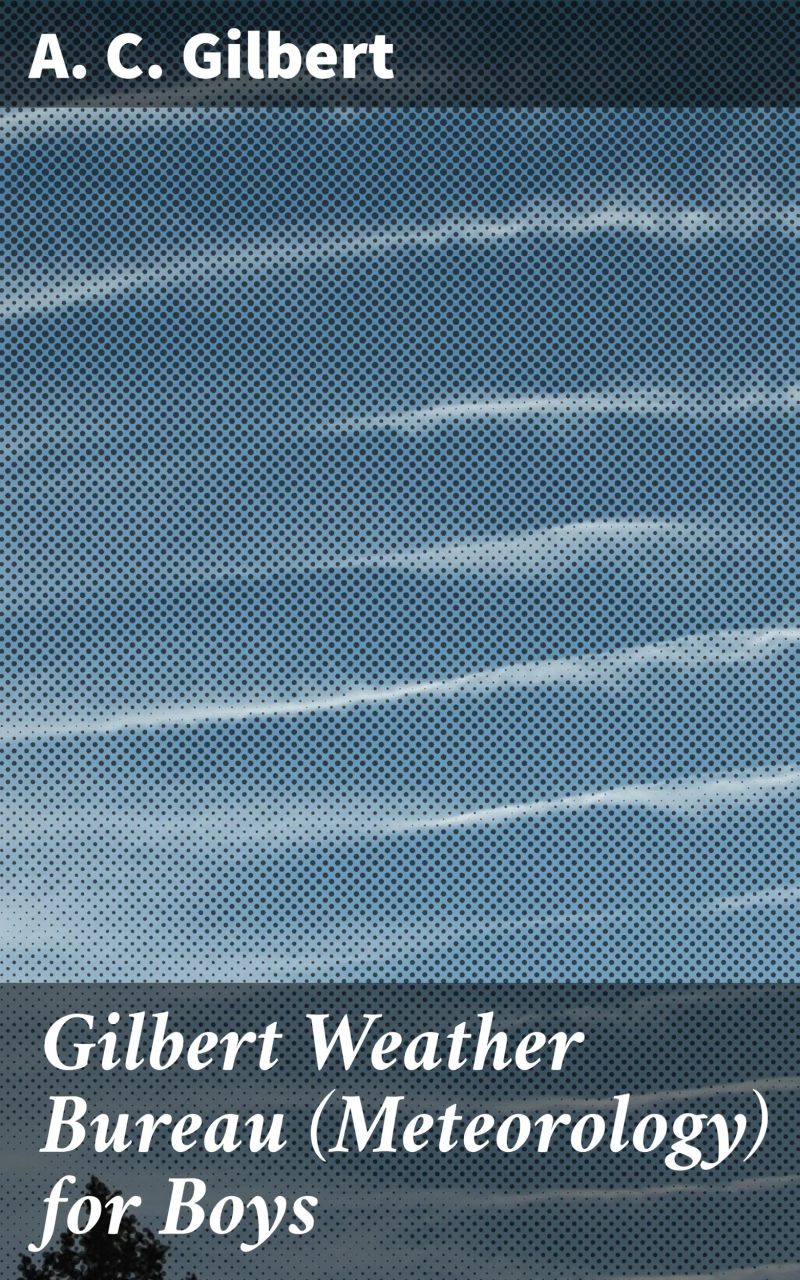
Gilbert Weather Bureau (Meteorology) for Boys
Exploring Meteorology: Fun Facts and Hands-On Experiments for Young ScientistsBy A. C. Gilbert


Length2h 25m
About this audiobook
In "Gilbert Weather Bureau (Meteorology) for Boys," A. C. Gilbert introduces young readers to the fascinating world of meteorology through a blend of engaging narratives and scientific principles. The book employs a didactic yet approachable literary style, enhancing children's curiosity about weather phenomena while providing foundational knowledge. Packed with vivid illustrations and hands-on experiments, it reflects the educational reform movements of the early 20th century, aiming to stimulate a scientific mindset among youth by making complex concepts accessible and enjoyable. A. C. Gilbert, an innovative educator and toy inventor, was driven by a passion for inspiring young minds. His background in science and education shaped his approach to teaching, as evidenced in this work, which bridges gaming and learning. Gilbert'Äôs commitment to fostering exploration and investigation is apparent, making his book a testament to his belief in the importance of experiential learning and hands-on activities, especially in the realms of science and technology. "Gilbert Weather Bureau" is a must-read for budding scientists and curious minds alike. Its engaging approach not only entertains but also instills a deep appreciation for the natural world, encouraging readers to explore the meteorological phenomena that shape their everyday lives. Perfect for classrooms and home libraries, this book equips young readers with knowledge and skills that extend beyond the page.
Audiobook details
GenreChildren's Literature
Length2 hrs 25 mins
Narrated byListen with 1,000+ voices
FormateBook with Audio
Publish dateAug 21, 2022
LanguageEnglish
Table of contents
1WEATHER INDICATIONS A Study of the Weather
26RAINFALL
2THE AIR
27WHY WE GET SUCH HEAVY RAINFALLS SOMETIMES AROUND MOUNTAINS
3EXPERIMENT NO. 1
28WINDS
4THE OCEAN OF AIR
29KINDS OF WINDS
5HOW TO PROVE BY EXPERIMENT THAT AIR HAS WEIGHT
30VELOCITY OF WIND
Show all chaptersShow less
6EXPERIMENT NO. 2
31THE FORCE OF THE WINDS
7CONCLUSION
32DAY SIGNALS
8EXPERIMENT NO. 3
33NIGHT SIGNALS
9EXPERIMENT NO. 4
34NAME OF WINDS
10EXPERIMENT NO. 5
35CLOUDS
11EXPERIMENT NO. 6
36ATMOSPHERIC DISTURBANCES
12WHAT HAPPENS
37LOW PRESSURE
13EXPERIMENT NO. 7
38AREAS OF HIGH PRESSURE
14EXPERIMENT NO. 8
39WHY AIR RISES
15EXPERIMENT NO. 9
40WHAT IS A CYCLONIC STORM?
16WHAT IS THE WEATHER?
41WHICH WAY DOES THE WIND BLOW AFTER A STORM?
17THE EFFECT OF THE SUN
42MOISTURE
18HUMIDITY
43EXPERIMENT NO. 10
19FOGS
44EXPERIMENT NO. 11
20HAIL
45HOW CAN WE USE THESE FACTS?
21SNOW
46APPEARANCES
22DEW
47WHAT THE CLOUDS INDICATE
23FROST
48SUNSET AS AN INDICATION
24THUNDER AND LIGHTNING
49WHAT THE SKY INDICATES
25TORNADOES
50WHAT FOG AND DEW INDICATE
The Nutcracker and The Mouse King (Annotated)E.T.A. Hoffmann4h 4m4.6 (1.5K)$2 · $0.00

REBECCA OF SUNNYBROOK FARM & NEW CHRONICLES OF REBECCA (Children's Book Classics) (Annotated)Kate Douglas Wiggin15h 32m4.6 (1.4K)$1.99 · $0.00

Just William (Illustrated) (Annotated)Richmal Crompton6h 30m4.6 (1.2K)$2 · $0.00
The Labors of Hercules BealGary D. Schmidt8h 17m4.6 (10.4K)$8 · $0.00

Clancy of the Overflow (The Matilda Saga, #9)Jackie French14h 24m4.6 (471)$33 · $0.00
The Great Fairy Tales - Oscar Wilde Edition (Illustrated) (Annotated)Oscar Wilde6h 31m4.6 (1.1K)$2 · $0.00

Alice's Adventures in WonderlandLewis Carroll3h4.5 (5.9K)$4.99 · $0.00

The Boy Who Followed His Father into AuschwitzJeremy Dronfield6h 54m4.5 (28.5K)$24 · $0.00

Bat and the End of EverythingElana K. Arnold2h 40m4.6 (2.3K)$18 · $0.00

Chronicles of Ancient Darkness #6: Ghost HunterMichelle Paver6h 20m4.5 (11.7K)$24 · $0.00

Masterminds: PaybackGordon Korman6h 51m4.5 (5.8K)$24 · $0.00

The House at Pooh CornerA. A. Milne, E. H. Shepard3h 6m4.5 (107.8K)$2 · $0.00

Anne of Green Gables (Annotated)Lucy Maud Montgomery13h 1m4.5 (2.8K)$2 · $0.00
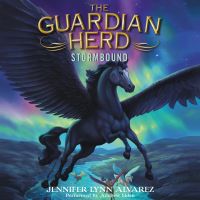
The Guardian Herd: StormboundJennifer Lynn Alvarez6h 19m4.5 (2.3K)$24 · $0.00

The One and Only FamilyKatherine Applegate3h 14m4.5 (7.5K)$18 · $0.00

Other Words for HomeJasmine Warga3h 50m4.5 (42.8K)$20 · $0.00

Amari and the Night BrothersB. B. Alston11h 11m4.5 (42.2K)$29 · $0.00

The Keepers #4: The Starlit LoomTed Sanders10h 56m4.6 (361)$29 · $0.00
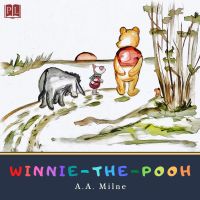
Winnie-the-PoohAlan Alexander Milne2h 52m4.5 (401.1K)$3 · $0.00

Anne of Green GablesL. M. Montgomery10h 42m4.5 (1.2M)$2 · $0.00
You may also like
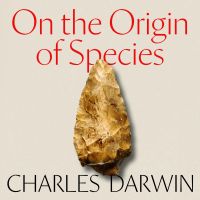
On the Origin of SpeciesCharles Darwin17h 4m4.2 (148K)$20 · $0.00
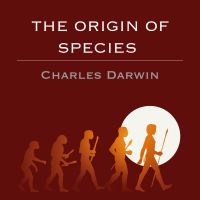
The Origin of SpeciesCharles Darwin14h 23m4.2 (163.7K)$9 · $0.00

A Short History of the WorldH. G. Wells12h 5m3.9 (5.6K)$2.30

Life On Earth 40th Anniversary EditionSir David Attenborough12h 27m4.6 (6.5K)$29 · $0.00
A Season on the WindKenn Kaufman8h 40m4.2 (963)$20

Insectivorous PlantsCharles Darwin15h 21m3.8 (44)$1 · $0.00
The Story Of The Universe Volume 3 (of 4) : The Earth's Garment : FloraEsther Singleton13h 55m$2.40

Plants and their childrenFrances Theodora Parsons6h 18m$1 · $0.00

The Botanist's Bookshelf: 8 Books on Plant IdentificationFrances Theodora Parsons, D. M. Crooks, Leonard Wheeler Kephart, Roy Watling, M. J. Richardson, Robert H. Mohlenbrock, Henry A. Gleason, Wilbur R. Mattoon, C. B. Webster, A. B. Brooks37h 17m$1.99 · $0.00
The Geographical Distribution of Animals (Vol.1&2)Alfred Russel Wallace40h 30m$2 · $0.00
Report on the Migration of Birds in the Spring and Autumn of 1882. Fourth ReportJ. A. Harvie-Brown, John Cordeaux, Alexander Goodman More, Richard Manliffe Barrington4h 29m$2 · $0.00

Seed DispersalW. J. Beal1h 35m$2 · $0.00
Bramble-Bees and OthersJean-Henri Fabre8h 34m4.1 (16)$1 · $0.00

The Wild Elephant and the Method of Capturing and Taming it in CeylonJames Emerson Sir Tennent4h 16m$2 · $0.00
Round the Year with Enid Blyton—Summer BookEnid Blyton2h$2 · $0.00

The Zoo BookEnid Blyton4h 4m4.1 (29)$2 · $0.00

The Sewerage of Sea Coast TownsHenry Charles Adams3h 59m$2 · $0.00

Adventures in the AntarcticKidsChoice1h 2m$12 · $0.00

Arizona Ghost TrailsRichard J. Hinton3h 35m$2.30
Practical Exercises in Elementary MeteorologyRobert DeCourcy Ward6h 13m$2 · $0.00