
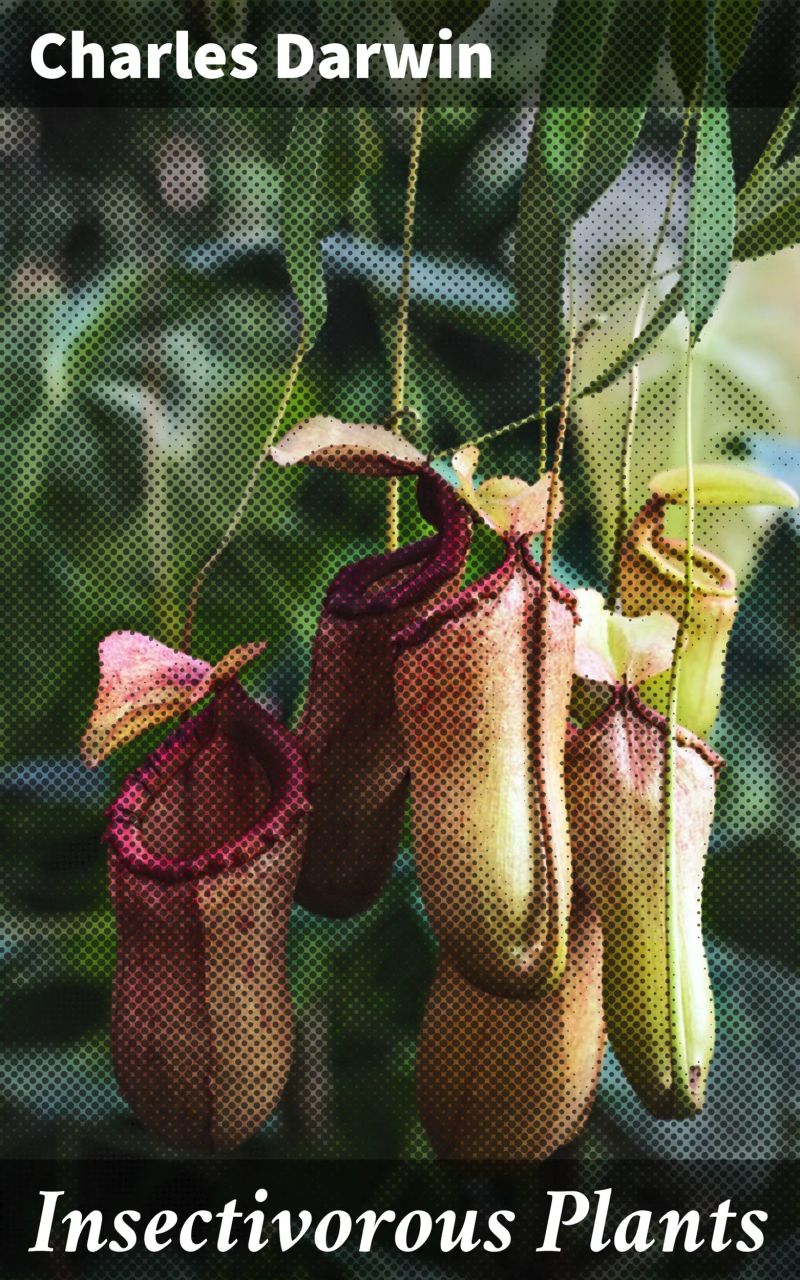
Insectivorous Plants
Exploring the Evolutionary World of Carnivorous PlantsBy Charles Darwin

Length15h 20m
About this audiobook
In "Insectivorous Plants," Charles Darwin meticulously explores the fascinating world of carnivorous plants, offering profound insights into their unique adaptations and ecological significance. Through meticulous observation and experimental methodology, Darwin presents a detailed analysis of how these remarkable organisms attract, trap, and digest insects to supplement their nutrient intake. The book is characterized by Darwin's signature clarity of prose and rigorous scientific inquiry, positioned within the broader context of his evolutionary theory. It stands as both a botanical treatise and a critical reflection on the interaction between flora and fauna, enriching the Victorian discourse on natural history. Charles Darwin, best known for his foundational work on evolution, was deeply intrigued by the intricate relationships in nature. His extensive travels and observations, particularly during the HMS Beagle expedition, shaped his understanding of adaptability and survival. This curiosity about the natural world led him to investigate the unusual mechanisms of insectivorous plants, emphasizing their roles within ecosystems and challenging contemporary views on plant life. I highly recommend "Insectivorous Plants" to anyone interested in botany, ecology, or the history of science. This work not only enriches our understanding of plant evolution and adaptation but also exemplifies Darwin's commitment to unraveling the complexities of the natural world, making it a captivating read for both scholars and amateurs alike.
Audiobook details
Rating★★★★ 3.8 (44)
Includes Goodreads
GenreScience and Nature
Length15 hrs 20 mins
Narrated byListen with 1,000+ voices
FormateBook with Audio
Publish dateNov 22, 2019
LanguageEnglish
Table of contents
1DETAILED TABLE OF CONTENTS.
2THE MOVEMENTS OF THE TENTACLES FROM THE CONTACT OF SOLID BODIES.
3AGGREGATION OF THE PROTOPLASM WITHIN THE CELLS OF THE TENTACLES.
4RECAPITULATION OF THE CHIEF OBSERVATIONS ON DROSERA ROTUNDIFOLIA.
5ON THE STRUCTURE AND MOVEMENTS OF SOME OTHER SPECIES OF DROSERA.
Show all chaptersShow less
6CHAPTER I. DROSERA ROTUNDIFOLIA, OR THE COMMON SUN-DEW.
7CHAPTER II. THE MOVEMENTS OF THE TENTACLES FROM THE CONTACT OF SOLID BODIES.
8CHAPTER III. AGGREGATION OF THE PROTOPLASM WITHIN THE CELLS OF THE TENTACLES.
9CHAPTER IV. THE EFFECTS OF HEAT ON THE LEAVES.
10CHAPTER V. THE EFFECTS OF NON-NITROGENOUS AND NITROGENOUS ORGANIC FLUIDS ON THE LEAVES.
11CHAPTER VI. THE DIGESTIVE POWER OF THE SECRETION OF DROSERA.
12CHAPTER VII. THE EFFECTS OF SALTS OF AMMONIA.
13CHAPTER VIII. THE EFFECTS OF VARIOUS OTHER SALTS AND ACIDS ON THE LEAVES.
14ACIDS, MUCH DILUTED, WHICH CAUSE INFLECTION.
15ACIDS, DILUTED TO THE SAME DEGREE, WHICH DO NOT CAUSE INFLECTION.
16CHAPTER IX. THE EFFECTS OF CERTAIN ALKALOID POISONS, OTHER SUBSTANCES AND VAPOURS.
17CHAPTER X. ON THE SENSITIVENESS OF THE LEAVES, AND ON THE LINES OF TRANSMISSION OF THE MOTOR IMPULSE.
18CHAPTER XI. RECAPITULATION OF THE CHIEF OBSERVATIONS ON DROSERA ROTUNDIFOLIA.
19CHAPTER XII. ON THE STRUCTURE AND MOVEMENTS OF SOME OTHER SPECIES OF DROSERA.
20CHAPTER XIII. DIONAEA MUSCIPULA.
21CHAPTER XIV. ALDROVANDA VESICULOSA.
22CHAPTER XV. DROSOPHYLLUM—RORIDULA—BYBLIS—GLANDULAR HAIRS OF OTHER PLANTS—CONCLUDING REMARKS ON THE DROSERACEAE.
23CHAPTER XVI. PINGUICULA.
24CHAPTER XVII. UTRICULARIA.
25CHAPTER XVIII. UTRICULARIA (continued).
26CONCLUSION.
27INDEX.
28A.
29B.
30C.
31D.
32F.
33H.
34I.
35J.
36K.
37L.
38M.
39N.
40O.
41P.
42Q.
43R.
44S.
45T.
46U.
47V.
48W.
49Z.

Die Abstammung des Menschen und die geschlechtliche Zuchtwahl (Mit Illustrationen)Charles Darwin37h 7m3.7 (71)$1 · $0.00

The Expression of the Emotions in Man and Animals (Evolutionary Theory)Charles Darwin12h 16m4.2 (6.1K)$1.99 · $0.00
Gesammelte Werke von Charles Darwin (Mit Illustrationen)Charles Darwin80h 15m4.5 (25)$1.50 · $0.00
El Origen del HombreCharles Darwin7h 39m4.1 (18.6K)$10 · $0.00
The Origin of SpeciesCharles Darwin14h 23m4.2 (163.7K)$9 · $0.00
El origen de las especiesCharles Darwin23h 25m4.2 (147.5K)$4.99 · $0.00

The Expression of the Emotions in Man and Animals (Annotated)Charles Darwin13h 44m$2 · $0.00

Die Entstehung der Arten (Kommentiert)Charles Darwin23h 17m$1.50 · $0.00

Die Abstammung des Menschen und die geschlechtliche Zuchtwahl (Kommentiert)Charles Darwin39h 40m4.3 (135)$2 · $0.00
The Descent of Man (Annotated)Charles Darwin32h 31m4.9 (94)$2 · $0.00
Geologische Beobachtungen über die Vulcanischen InselnCharles Darwin6h 51m3.8 (196)$2 · $0.00

Charles Darwin: His LifeCharles Darwin18h 6m3.9 (445)$2 · $0.00
ChiloéCharles Darwin2h 40m3.8 (152)$5 · $0.00

The Expression of the Emotions in Man and Animals (Annotated)Charles Darwin9h 27m4.1 (13.5K)$1.99 · $0.00

Die Reise mit der BeagleCharles Darwin24h 3m4.2 (40.6K)$3 · $0.00

The Formation of Vegetable Mould Through the Action of WormsCharles Darwin7h 58m4.1 (1.7K)$1 · $0.00

The Descent of Man, and Selection in Relation to SexCharles Darwin28h 1m4.1 (6.4K)$1 · $0.00

De Reis om de WereldCharles Darwin27h 10m4.1 (38.1K)$1 · $0.00

Die Entstehung der ArtenCharles Darwin23h 4m4.2 (125K)$2 · $0.00

A Brief History of IntelligenceMax S. Bennett12h 18m4.6 (6.6K)$29 · $0.00
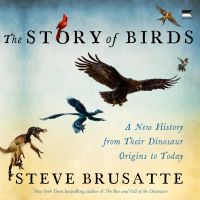
The Story of BirdsSteve Brusatte11h 49m4.6 (401)$29 · $0.00

Pastoral SongJames Rebanks8h 35m4.5 (12K)$26 · $0.00

How Stella Learned to TalkChristina Hunger7h4.5 (10.9K)$24 · $0.00

Craig & FredCraig Grossi8h 6m4.5 (9.6K)$26 · $0.00
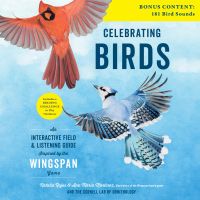
Celebrating BirdsNatalia Rojas, Ana Maria Martinez6h 47m4.6 (330)$24 · $0.00

Saving JemimaJulie Zickefoose4h 59m4.5 (749)$20 · $0.00

Will's Red CoatTom Ryan8h 23m4.5 (2.3K)$26 · $0.00

Of Time and TurtlesSy Montgomery10h 34m4.5 (5K)$29 · $0.00

THE WOLF TRILOGY: Call of the Wild, White Fang & The Son of the WolfJack London17h 31m4.5 (2.4K)$1.99 · $0.00

Zen and the Art of Saving the PlanetThich Nhat Hanh9h 20m4.5 (3.9K)$29 · $0.00

BLACK BEAUTY (With Original Illustrations)Anna Sewell7h 31m4.5 (1.3K)$1.99 · $0.00

Bottle of LiesKatherine Eban14h 25m4.4 (12K)$33 · $0.00
IngrainedCallum Robinson8h 10m4.5 (1.1K)$26 · $0.00

The Lion Tracker's Guide To LifeBoyd Varty3h 1m4.4 (4.8K)$18 · $0.00

Born for LoveBruce D. Perry, Maia Szalavitz11h 42m4.4 (4K)$29 · $0.00

The Mountains of California (With Original Drawings & Photographs) (Annotated)John Muir11h 35m4.5 (1.1K)$2 · $0.00

The New GuysMeredith Bagby16h 50m4.4 (1.2K)$40 · $0.00
Blue PasturesMary Oliver3h 23m4.4 (3.8K)$18 · $0.00
The Rise and Reign of the MammalsSteve Brusatte13h 26m4.4 (11.1K)$33 · $0.00
You may also like
A Season on the WindKenn Kaufman8h 40m4.2 (963)$20
On the Origin of SpeciesCharles Darwin17h 4m4.2 (148K)$20 · $0.00
The Origin of SpeciesCharles Darwin14h 23m4.2 (163.7K)$9 · $0.00
The Trapper's BibleLivingston, Eustace H18h 52m4.4 (1.2K)Free

The Prairie Traveller, a Hand-book for Overland ExpeditionsRandolph Barnes Marcy, Richard Francis Burton6h 16m4.1 (446)$1 · $0.00
On the origin of speciesCharles Darwin16h 50m4.2 (154.5K)$4 · $0.00

A Short History of the WorldH. G. Wells12h 5m3.9 (5.6K)$2.30

The Botanist's Bookshelf: 8 Books on Plant IdentificationFrances Theodora Parsons, D. M. Crooks, Leonard Wheeler Kephart, Roy Watling, M. J. Richardson, Robert H. Mohlenbrock, Henry A. Gleason, Wilbur R. Mattoon, C. B. Webster, A. B. Brooks37h 17m$0.99 · $0.00

Adventures in the AntarcticKidsChoice1h 2m$12 · $0.00
Report on the Migration of Birds in the Spring and Autumn of 1882. Fourth ReportJ. A. Harvie-Brown, John Cordeaux, Alexander Goodman More, Richard Manliffe Barrington4h 29m$2 · $0.00
Mesa Verde National ParkOrion C. Valemont2h 47m$2.30 · $0.00

The winners in life's race : Or, the great backboned familyArabella B. Buckley10h 29m$1 · $0.00

The Tractor HandbookSANTIAGO CARLOS5h 4m$10

Arizona Ghost TrailsRichard J. Hinton3h 35m$2.30

The Japanese Coffe MarketAdriana Roldán Pérez4h 33m$5 · $0.00

An Expedition through Bass's StraitMatthew Flinders3h 23m$2 · $0.00
The Bird Study BookThomas Gilbert Pearson3h 59m$16 · $0.00
Death Valley National ParkOrion C. Valemont2h 10m$2.30 · $0.00
The Geographical Distribution of Animals (Vol.1&2)Alfred Russel Wallace40h 30m$2 · $0.00
Stone Age: A Classic Coming of Age Fantasy Adventure (Unlocking the Secrets and Legacy of the Prehistoric Period, From Cave Dwellers to Culture Builders)Charles Rigney1h 14m$3.50 · $0.00