
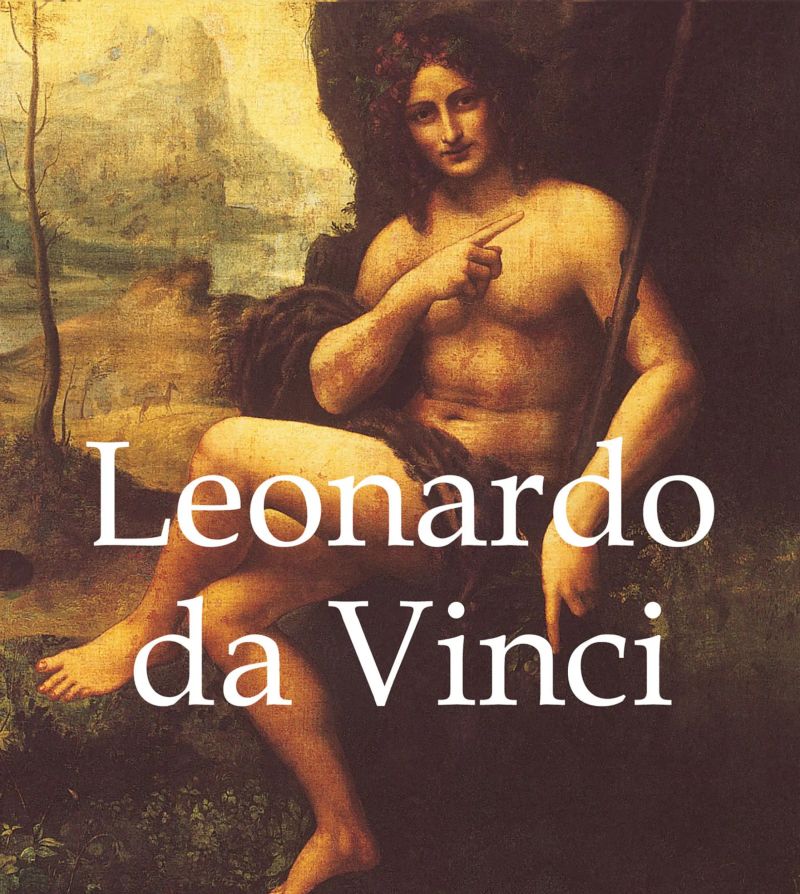


Length1h 48m
About this audiobook
Leonardo's early life was spent in Florence, his maturity in Milan, and the last three years of his life in France. Leonardo's teacher was Verrocchio. First he was a goldsmith, then a painter and sculptor: as a painter, representative of the very scientific school of draughtsmanship; more famous as a sculptor, being the creator of the Colleoni statue at Venice, Leonardo was a man of striking physical attractiveness, great charm of manner and conversation, and mental accomplishment. He was well grounded in the sciences and mathematics of the day, as well as a gifted musician. His skill in draughtsmanship was extraordinary; shown by his numerous drawings as well as by his comparatively few paintings. His skill of hand is at the service of most minute observation and analytical research into the character and structure of form. Leonardo is the first in date of the great men who had the desire to create in a picture a kind of mystic unity brought about by the fusion of matter and spirit. Now that the Primitives had concluded their experiments, ceaselessly pursued during two centuries, by the conquest of the methods of painting, he was able to pronounce the words which served as a password to all later artists worthy of the name: painting is a spiritual thing, cosa mentale. He completed Florentine draughtsmanship in applying to modelling by light and shade, a sharp subtlety which his predecessors had used only to give greater precision to their contours. This marvellous draughtsmanship, this modelling and chiaroscuro he used not solely to paint the exterior appearance of the body but, as no one before him had done, to cast over it a reflection of the mystery of the inner life. In the Mona Lisa and his other masterpieces he even used landscape not merely as a more or less picturesque decoration, but as a sort of echo of that interior life and an element of a perfect harmony. Relying on the still quite novel laws of perspective this doctor of scholastic wisdom, who was at the same time an initiator of modern thought, substituted for the discursive manner of the Primitives the principle of concentration which is the basis of classical art. The picture is no longer presented to us as an almost fortuitous aggregate of details and episodes. It is an organism in which all the elements, lines and colours, shadows and lights, compose a subtle tracery converging on a spiritual, a sensuous centre. It was not with the external significance of objects, but with their inward and spiritual significance, that Leonardo was occupied.
Audiobook details
Rating★★★★ 3.9 (26)
Includes Goodreads
GenreOther
Length1 hr 48 mins
Narrated byListen with 1,000+ voices
FormateBook with Audio
Publish dateJul 1, 2011
LanguageEnglish
Table of contents
1Leonardo da Vinci
2© Confidential Concepts, worldwide, USA
3Biography
4studio until 1477.
5bank of the Arno in the town of Vinci
Show all chaptersShow less
6Giovanni Amadori. For her part, Catarina
7As an artist, from his very first works, he
8Lily
91472 Oil on wood, 98 x 217 cm Galleria degli Ufizzi, Florence
101473 Pen and ink, 19 x 28.5 cm Galleria degli Ufizzi, Florence
11sculptor, an architect, an engineer and a
12At
131478 Oil on canvas, 49.5 x 33 cm Hermitage Museum, Saint Petersburg
14curious about all the sciences and intent on
15Milan the most important city in Italy and
16the
17But these roles of director and decorator
18long hall.
19c.1475-1480 Silverpoint, 28.7 x 21.1 cm British Museum, London
20architect and a theoretician of architecture.
21causes, and their remedies: “First, treat the
22Saint Jerome Praying in the Wilderness
23tryside a healthy and fertile place.
241483-1490 Oil on panel, 54.8 x 40.3 cm Czartoryski Museum, Krakow
25its nature, its currents, and its laws of
26fully profit from it.
271485-1490 Ms B. fol.17v Institut de France, Paris
28constant effort of his soul in the service of
29an occasion for research and discovery.
30In his letter to Ludovico il Moro, which
311489 Pen and ink, 19 x 13.3 cm Royal Library, Windsor Castle
32ACHA:LE:VI: - an abbreviation of Academia
33Various Studies
34A Study of a Woman’s Hands
35intensity of his youth in Florence.
361490 Pen and ink, 34.4 x 24.5 cm Galleria dell’Accademia, Venice
37preparations for an entertainment at the castle
38itself to him from an observation he alone
39himself to works of lesser importance; but he
40Did
41this
42artist as a humiliated man who
43A Rocky Ravine
44and, although sad, at peace with himself.
45In 1501 Leonardo appeared in Florence.
46stranger there. During the sixteen years that
47political and religious reform on his funeral
48c.1495 Pastel and charcoal, 40 x 32 cm Pinacoteca di Brera, Milan
49Saint Anne, the Virgin with the Child and Child John the Baptist
50Bembo, Bandello, Arioste, and Tasse all
More from Gabriel Séailles
Leonardo Da VinciGabriel Séailles1h 30m3.9 (26)$8 · $0.00
Leonardo da Vinci und KunstwerkeGabriel Séailles1h 55m$15 · $0.00
Léonard de Vinci et œuvres d'artGabriel Séailles1h 40m3.9 (26)$15 · $0.00
Léonard de VinciGabriel Séailles1h 52m3.9 (26)$13.50 · $0.00
Leonardo da Vinci and artworksGabriel Séailles1h 41m3.9 (26)$15 · $0.00
Leonardo da Vinci și opere de artăGabriel Séailles1h 39m$15 · $0.00
Leonardo da VinciGabriel Séailles1h 49m3.9 (26)$13.50 · $0.00
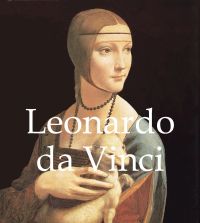
Leonardo da VinciGabriel Séailles2h 12m3.9 (26)$13.50 · $0.00
Mere ChristianityC. S. Lewis7h 7m4.4 (519.7K)$24 · $0.00

Her Daily BreadKate Wood12h 57m4.6 (153)$33 · $0.00
The Holy Bible - 1 SamuelKing James2h 13m4.8 (1.6K)$3 · $0.00
The American Standard Bible — The Gospel of MatthewMatthew3h 56m4.7 (3K)$2 · $0.00

Bad Fat Black GirlSesali Bowen6h 32m4.7 (2.8K)$24 · $0.00
The King James Audio Bible New Testament CompleteChristopher Glyn20h 2m4.7 (2.6K)$12 · $0.00
Faiths CheckbookCharles Spurgeon12h 44m4.7 (3.2K)$11 · $0.00

Ten Things I Wish You Knew About Your Child's Mental HealthDr. Billy Garvey4h 53m4.7 (2.4K)$20 · $0.00
Designing Terry Pratchett’s DiscworldPaul Kidby3h 52m4.7 (343)$20 · $0.00
The Chosen Book OneAmanda Jenkins, Kristen Hendricks, Dallas Jenkins3h 8m4.6 (4.9K)$10 · $0.00
The Lives of BrianBrian Johnson9h 45m4.6 (3.5K)$29 · $0.00
Expository Thoughts on the Gospel of LukeJ.C. Ryle27h 13m4.7 (536)$18 · $0.00

CrossroadsKaleb Dahlgren7h 56m4.6 (4.9K)$26 · $0.00

Across the RiverKent Babb11h 40m4.6 (927)$29 · $0.00
Brain Training for RidersAndrea Monsarrat Waldo5h 56m4.7 (550)$19 · $0.00
My Effin' LifeGeddy Lee17h 11m4.6 (13.1K)$40 · $0.00

Kings and PawnsHoward Bryant10h 9m4.6 (678)$29 · $0.00

The Elementia Chronicles #2: The New OrderSean Fay Wolfe11h 17m4.6 (841)$29 · $0.00
The ActsLuke2h 55m4.6 (19.7K)$12 · $0.00
New Testament - Easy NavigationWorld English Bible19h 35m4.6 (1.3K)$1.30 · $0.00
You may also like
As I see the world (Translated)Albert Einstain3h 6m4.2 (29.4K)$6.80 · $0.00
Leonardo Da Vinci - Artist, Thinker, and Man of ScienceEugène Müntz16h 56m3.6 (26)$19 · $0.00
Leonardo da Vinci and artworksGabriel Séailles1h 41m3.9 (26)$15 · $0.00
The Drawings of Leonardo da VinciC. Lewis Hind, Leonardo da Vinci42m4.2 (14)$1 · $0.00
Leonardo Da VinciGabriel Séailles1h 23m3.9 (26)$8 · $0.00
Leonardo da VinciGabriel Séailles1h 33m3.9 (26)$15 · $0.00

Dubai at the Turn of the MillenniumKlaus H. Carl1h 30m$8 · $0.00
1000 Monuments of GeniusChristopher E.M. Pearson9h 42m4.6 (19)$18 · $0.00
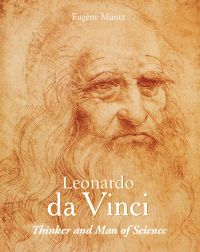
Leonardo Da Vinci - Thinker and Man of ScienceEugène Müntz8h 38m3.6 (26)$18 · $0.00

Elizabethan EnglandWilliam Harrison13h 30m3.9 (174)$2 · $0.00
Siam : The Land of the White Elephant as It Was and Is (Annotated)George B. Bacon7h 22m$0.99 · $0.00
Where Am I?A.G. Smith1h 26m4.2 (14)$8 · $0.00
Paris at the Turn of the MillenniumVéronique Laflèche2h 16m$8 · $0.00

Sketches of Travel in Normandy and MaineEdward A. Freeman4h 37m$2 · $0.00
The Motor Enthusiast's Dream Collection: 6 Interesting ReadsH. de Graffigny, James Slough Zerbe, Robert B. Meyer, Harold Whiting Slauson, Alfred Powell Morgan, Leonard S. Hobbs17h 39m$0.99 · $0.00

A Journey Through Invasion Narratives: 30 BooksPierre Loti, Judith Gautier, Erckmann-Chatrian, Margaret Ellen James, bárÃ3 MiklÃ3s JÃ3sika, Reginald Horsley, Robert Leighton, P. G. Wodehouse, W. H. Withrow, J. M. Kennedy, William Le Queux, Marguerite-Yerta Méléra, Gabrielle Yerta, Sister Marie Antoine, Cecil Torr, Robert Sellar, Randall Garrett, Charles D. Melson, Montgomery B. Gibbs, Jacob Abbott, Mary Platt Parmele, Donat Henchy O'Brien, E. Berkley, William McKay, Daniel E. Hungerford, Charles J. Murphy, Edward Foord, Vlas Mikhailovich Doroshevich, T. W. Rolleston, Edwin George Rundle220h 45m$0.99 · $0.00
BridgesVictoria Charles2h 6m4.5 (10)$12 · $0.00

Amazon - Historical OriginsCarlos Araujo Carujo3h 45m$7 · $0.00

GibraltarHenry M. Field3h 14m$1 · $0.00
First State of the Union AddressJohn Quincy Adams1h 2m4.1 (18)$1 · $0.00