
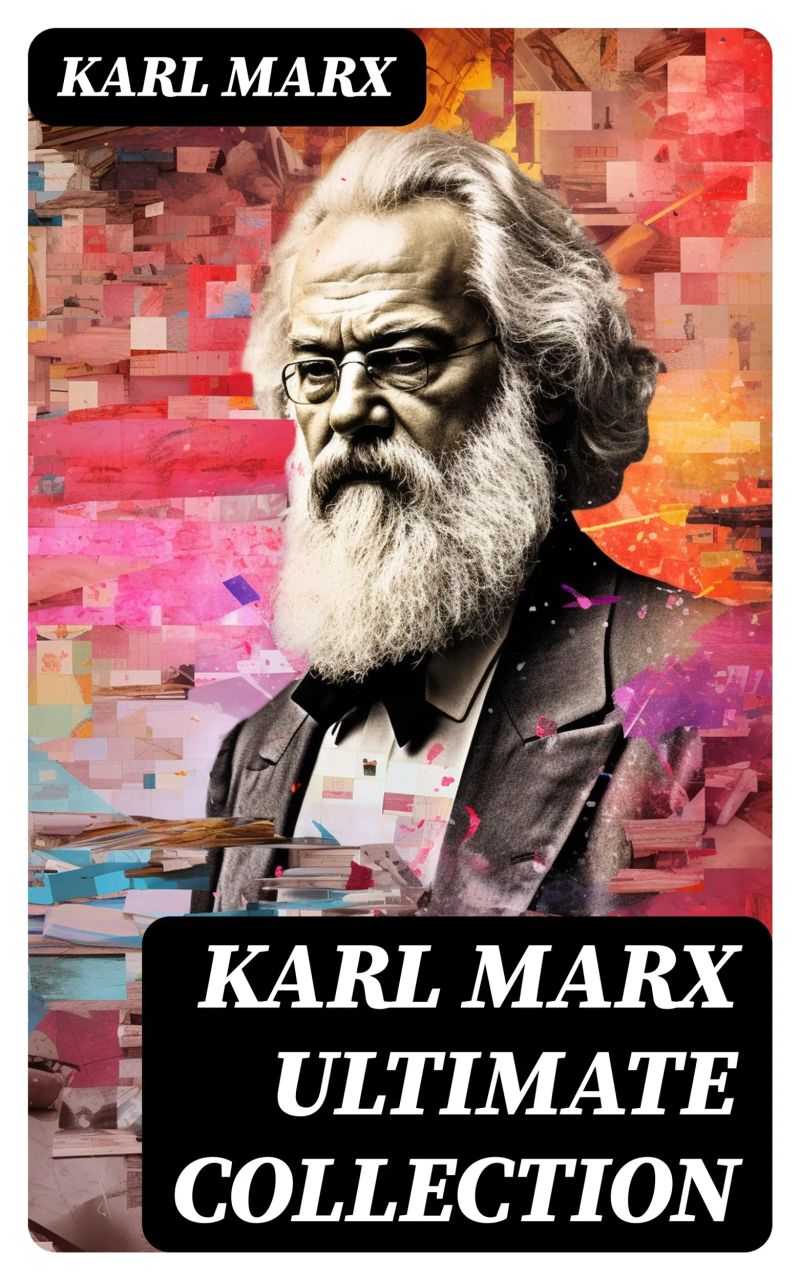
KARL MARX Ultimate Collection
Capital, Communist Manifesto, Wage Labor and Capital, Critique of the Gotha Program, Wages, Price and Profit, Theses on FeuerbachBy Karl Marx


Length131h 56m
About this audiobook
In "KARL MARX Ultimate Collection," readers encounter a comprehensive anthology that encapsulates the fundamental theories and socio-economic critiques of one of history's most influential thinkers. This collection spans Marx's prolific career, featuring seminal works such as "The Communist Manifesto" and "Das Kapital," which employ a blend of rigorous philosophical argumentation and vivid, accessible prose. The literary style is characterized by a dialectical approach, where Marx dissects capitalism, class struggle, and the historical materialism that underpins societal evolution, all framed within the turbulent socio-political context of the 19th century, particularly during the Industrial Revolution. Karl Marx, a German philosopher, economist, and revolutionary socialist, spent much of his life grappling with the injustices borne from economic systems that prioritized profit over human welfare. His socio-historical background as a political exile and critic of contemporary capitalism provided fertile ground for his theories, which aimed to inspire a more equitable society. The intense political climates of Europe, along with Marx's extensive studies in philosophy, economics, and history, heavily influenced his pioneering ideas that challenged the status quo. Highly recommended for anyone seeking profound insights into the origins and implications of modern political thought, this ultimate collection is an essential resource for both scholars and general readers alike. Engaging with Marx's work not only deepens one's understanding of social theory but also encourages critical reflection on contemporary socio-economic issues, making it a timeless cornerstone for academic study and personal enlightenment.
Audiobook details
Rating★★★★ 4.4 (615)
Includes Amazon, Goodreads, LibraryThing
GenrePhilosophy
Length131 hrs 56 mins
Narrated byListen with 1,000+ voices
FormateBook with Audio
Publish dateNov 9, 2023
LanguageEnglish
Table of contents
1KARL MARX Ultimate Collection
2Introduction
3Karl Marx: The Man and His Message
4Early Philosophical Works (Marx as a Young Hegelian)
5Critique of Hegel's Philosophy of Right
Show all chaptersShow less
6On the Jewish Question
7On the King of Prussia and Social Reform
8Theses on Feuerbach
9Moralising Criticism and Critical Morality: A Polemic Against Karl Heinzen
10Political Works
11Preface
12Manifesto of the Communist Party.
13I. Bourgeois and Proletarians.3
14II. Proletarians and Communists.
15III. Socialist and Communist Literature.
16IV. Position of the Communists in Relation to the Various Existing Opposition Parties.
17Translator's Preface
18I
19II
20III
21IV
22V
23VI
24VII
25Chapter I
26Chapter II
27Chapter III
28Chapter IV
29Chapter V
30Chapter VI
31Introduction
32The Begining of the Franco-Prussian War
33Prussian Occupation of France
34France Capitulates and the Government of Thiers
35Paris Workers' Revolution and Thiers' Reactionary Massacres
36The Paris Commune
37The Fall of Paris
38Foreword
39Letter to Bracke
40Part I
41Part II
42Part III
43Part IV
44Appendix
45Economic Works
46Introduction
47Chapter 1 Preliminary
48Chapter 2 What Are Wages?
49Chapter 3 By What is the Price of a Commodity Determined?
50Chapter 4 By What Are Wages Determined?
The Communist ManifestoKarl Marx3h 25m3.9 (262.2K)$1.99 · $0.00

Die heilige FamilieKarl Marx10h 50m3.8 (1.9K)$2 · $0.00
The XVIII Brumaire of Louis BonaparteKarl Marx6h 21m4.4 (12.9K)$1.99 · $0.00

Karl Marx: Der achtzehnte Brumaire des Louis NapoleonKarl Marx6h 36m4.3 (16.1K)$1 · $0.00

Differenz der demokritischen und epikureischen NaturphilosophieKarl Marx2h 38m4.0 (1.2K)$2 · $0.00

Zur JudenfrageKarl Marx1h 48m3.5 (1.5K)$1 · $0.00
Lohn, Preis und ProfitKarl Marx4h 10m4.4 (4.4K)$1 · $0.00
THE COMMUNIST MANIFESTO & CAPITALKarl Marx98h 8m4.3 (29)$1.99 · $0.00
Das Kapital: Band 1-3Karl Marx91h 36m4.5 (3K)$2 · $0.00

Zweites KaiserreichKarl Marx15h 27m$1 · $0.00
Das Kapital (Alle 3 Bände)Karl Marx91h 37m4.2 (15.4K)$2 · $0.00
The Process of Capitalist ProductionKarl Marx30h 4m4.4 (44.3K)$1.99 · $0.00
Lohnarbeit und KapitalKarl Marx1h 49m4.3 (5.6K)$1 · $0.00
CAPITAL (All 3 Books)Karl Marx92h 37m4.5 (16.5K)$2.99 · $0.00

Karl Marx: Zur Kritik der Hegelschen RechtsphilosophieKarl Marx9h 22m4.2 (1.2K)$1 · $0.00
The Process of Capitalist Production as a Whole (Capital Vol. III)Karl Marx41h 1m4.4 (2.2K)$1.99 · $0.00
Manifiesto ComunistaKarl Marx, Friederich Engels1h 57m3.9 (266.6K)$15 · $0.00
The Communist ManifestoKarl Marx1h 13m3.9 (240.6K)$3 · $0.00
Manifiesto comunistaKarl Marx, Friedrich Engels6h 9m3.9 (276.8K)$6
El Manifiesto ComunistaKarl Marx, Friedrich Engels2h 8m3.9 (273.3K)$0.99 · $0.00

WitnessAriel Burger8h 1m4.6 (1.3K)$20 · $0.00

The Magic PresenceGodfré Ray King10h 21m4.6 (307)$1.20 · $0.00

The Art of LivingThich Nhat Hanh5h 1m4.5 (14.2K)$24 · $0.00
Moral Letters to LuciliusLucius Annaeus Seneca24h 26m4.5 (71.7K)$0.99 · $0.00

Lessons in TruthH. Emilie Cady3h 50m4.5 (2.4K)$20 · $0.00
Letters from a StoicSeneca6h 5m4.4 (80.4K)$6 · $0.00
The Discourses of EpictetusP. E. MATHESOM12h 47m4.4 (17.7K)$1.20 · $0.00

IlluminationsWalter Benjamin10h 12m4.4 (16.2K)$20 · $0.00
That Bird Has My WingsJarvis Jay Masters9h 49m4.4 (13.7K)$29 · $0.00

Tâo Teh KingLaozi2h 34m4.4 (230.9K)$2 · $0.00
SymposiumPlato3h 26m4.4 (97.9K)$1.20 · $0.00

Buddhist Boot CampTimber Hawkeye2h 39m4.4 (8.4K)$18 · $0.00
Enchiridion & The Discourses of Epictetus (Annotated)Arrian Epictetus18h 9m4.4 (3.5K)$2 · $0.00

The Meditations of the Emperor Marcus Aurelius AntoninusEmperor of Rome Marcus Aurelius5h 41m4.4 (1.8M)$1 · $0.00
Crime and PunishmentFyodor Dostoevsky23h 11m4.4 (1.3M)$12 · $0.00

MeditationsMarcus Aurelius5h 52m4.4 (433.7K)$1 · $0.00

Everyday DharmaSuneel Gupta5h 2m4.5 (761)$20 · $0.00

The Joyful Wisdom ("La Gaya Scienza")Friedrich Wilhelm Nietzsche11h 37m4.4 (26.6K)$1 · $0.00
The Art of LivingEpictetus, Sharon Lebell3h 16m4.4 (50.1K)$18 · $0.00
MeditationsEmperor Of Rome Marcus Aurelius7h 23m4.3 (477.5K)$1.20 · $0.00
You may also like

The New World (Complete Edition)Winston Churchill14h 25m4.4 (2.5K)$1 · $0.00
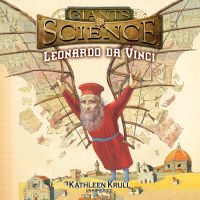
Leonardo Da VinciKathleen Krull2h 14m4.1 (371)$15
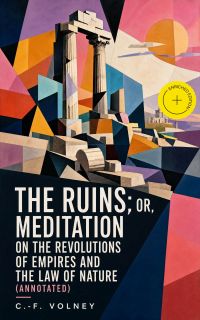
The Ruins; Or, Meditation on the Revolutions of Empires and the Law of Nature (Annotated)C.-F. Volney9h 58m4.1 (394)$0.99 · $0.00

A Short History of the United StatesRobert V. Remini10h 17m3.8 (1.1K)$29 · $0.00

The Magnificent Century (Annotated)Thomas Bertram Costain16h 8m4.2 (2K)$2 · $0.00

The Histories (Annotated)Tacitus12h 25m4.2 (5.6K)$2 · $0.00

Homage to CataloniaGeorge Orwell8h 40m4.2 (105.1K)$1.20 · $0.00

History of the Conquest of PeruWilliam Hickling Prescott28h 35m4.1 (1.1K)$1 · $0.00

American CarnageTim Alberta26h 21m4.3 (6K)$53 · $0.00
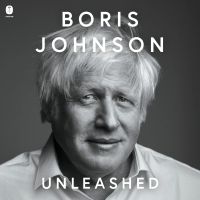
UnleashedBoris Johnson25h 41m4.1 (4.2K)$53 · $0.00

Discourses on LivyNiccolò Machiavelli16h 44m4.2 (12.5K)$2 · $0.00

The History of Thomas Jefferson PresidencyHenry Adams52h 50m4.4 (439)$1.99 · $0.00

Power, Inc.David Rothkopf16h 33m4.1 (303)$30 · $0.00

The Story of MankindHendrik Willem van Loon14h 3m3.6 (6K)$25

The New World (Annotated)Winston Churchill14h 34m$2 · $0.00

The Persian Wars (Annotated)Herodotus25h 22m$2 · $0.00

Renaissance in Italy (Vol. 1-7) (Annotated)John Addington Symonds110h 30m4.6 (12)$2 · $0.00

Ireland under the TudorsRichard Bagwell49h 55m4.1 (17)$2.99 · $0.00

The Drudge RevolutionMatthew Lysiak7h 7m4.3 (144)$17 · $0.00

Italian Renaissance (Annotated)John Addington Symonds99h 29m4.4 (11)$0.99 · $0.00