

JUMOR Laughing Through the Ages:
A Complete History of Jewish Humor, Its Roots, Its Forms, and Its Eternal SpiritBy Daniel Schwartz


Length1h 12m
About this audiobook
JUMOR: Laughing Through the Ages is, at its heart, a love letter to a people who looked at two thousand years of exile, persecution, impossible theology, overprotective mothers, and shtetl poverty — and responded by being extremely funny about it. Beginning with Sarah laughing at God in a tent and ending with a man on a desert island who has built a synagogue he refuses to enter, this book traces Jewish humor from its ancient biblical roots through the medieval badchen, the shtetls of Eastern Europe, the Borscht Belt, the television screen, and the internet meme, arguing along the way that the kvetch, the pun, the self-deprecating joke, and the question answered with another question are not merely forms of entertainment but a complete philosophical system
Audiobook details
GenreHumor
Length1 hr 12 mins
Narrated byListen with 1,000+ voices
FormateBook with Audio
Publish dateApr 15, 2026
LanguageEnglish
Table of contents
1Introduction
2Introduction: What Is Jewish Humor, and Why Does It Hurt So Good?
3Chapter One: In the Beginning Was the Punchline
4Chapter Two
5The Wandering Joke
Show all chaptersShow less
6The Shtetl Laughs
7Chapter Four: The Grammar of Jewish Jokes
8Chapter Five: The Pun, the Wordplay, and the Klezmer of Language
9Chapter Six: Self-Deprecation as a High Art Form
10Chapter Seven: The Jewish Mother and Other Sacred Comic Archetypes
11Chapter Eight: From Borscht Belt to Broadway
12Chapter Nine: The Philosophers of Funny
13Chapter Ten: Holocaust Humor and the Ethics of Dark Comedy
14Chapter Eleven: Israeli Humor
15Chapter Twelve: Jewish Humor in Film and Television
16Chapter Thirteen: The Future of Jewish Humor
17Afterword: A Final Joke (You Have Earned It)
18Summary
19Bibliography and Further Reading
20Primary Sources and Anthologies
21Historical and Critical Studies
22On Yiddish Language and Culture
23On American Jewish Comedy and Popular Culture
Series
More from Daniel Schwartz

THE FORTY DAYS BETWEEN RESURRECTION AND ASCENSIONDaniel Schwartz8h 37m$2.99 · $0.00

LOST IN TRANSLATIONDaniel Schwartz3h 34m4.6 (1.4K)$2.99 · $0.00

FINDING CHRIST IN THE PASSOVERDaniel Schwartz2h 29m4.6 (50)$2.99 · $0.00

The unseen Spiritual WorldDaniel Schwartz1h 49m4.8 (198)$2.99 · $0.00

REFUTING ANTI-MISSIONARIESDaniel Schwartz1h 50m$2.99 · $0.00
One Covenant, One BodyDaniel Schwartz3h 30m4.9 (267)$2.99 · $0.00

THE AMERICAN RESTORATION MANIFESTODan Schwartz5h 29m$2.99

When Heaven is SilentDaniel Schwartz2h4.7 (89)$2.99

CIDPDaniel Schwartz2h 47m$4.99 · $0.00

Advents of the Jewish MessiahDaniel Schwartz3h 13m4.8 (156)$2.99 · $0.00
Paul ReconsideredDaniel Schwartz1h 55m$2.99 · $0.00

Lost In TranslationAudrey Davis9h 15m4.4 (235)Free

The Life of DaiDai Henwood, Jaquie Brown8h 2m4.6 (790)$26 · $0.00

Welcome to PawneeJim O'Heir6h 24m4.5 (5.3K)$24 · $0.00
Going PostalTerry Pratchett13h 36m4.5 (163.8K)$33 · $0.00

Woman UninterruptedBrodie Kane7h 1m4.6 (562)$24 · $0.00

1984 & Animal Farm (Annotated)George Orwell15h 54m4.5 (220.8K)$1.99 · $0.00

Kingsblood Royal (Annotated)Sinclair Lewis14h 42m4.6 (264)$2 · $0.00

This Is Going to HurtAdam Kay5h 47m4.4 (444.7K)$24 · $0.00

You Will Get Through This NightDaniel Howell6h 56m4.4 (11.8K)$24 · $0.00

Northanger Abbey (Annotated)Jane Austen10h 7m4.5 (1.6K)$2 · $0.00

My Dear HamiltonStephanie Dray, Laura Kamoie23h 7m4.4 (63.6K)$46 · $0.00

THE SCREWTAPE LETTERS & SCREWTAPE PROPOSES A TOAST (Annotated)C. S. Lewis5h 6m4.4 (471K)$2 · $0.00

BufferingHannah Hart5h 55m4.4 (12.4K)$24 · $0.00

The Office BFFsJenna Fischer, Angela Kinsey8h 26m4.3 (45.4K)$26 · $0.00

The Collected Stories of Dorothy ParkerDorothy Parker8h 36m4.3 (13.6K)$1 · $0.00
LambChristopher Moore15h 22m4.3 (211.3K)$33 · $0.00

The Importance of Being Earnest (World's Classics Series)Oscar Wilde4h 10m4.3 (467.3K)$1.99 · $0.00

#IMomSoHardKristin Hensley, Jen Smedley7h 19m4.3 (7.3K)$24 · $0.00

Mixed PlateJo Koy8h 18m4.3 (7.1K)$26 · $0.00

Over the TopJonathan Van Ness5h 50m4.3 (87.3K)$24 · $0.00
You may also like

Let There Be LaughterMichael Krasny5h 41m4.1 (518)$24 · $0.00

A Room of One's OwnVirginia Woolf4h 2m4.2 (295.2K)$1 · $0.00

Black in BluesImani Perry9h 4m4.5 (3K)$5 · $0.00
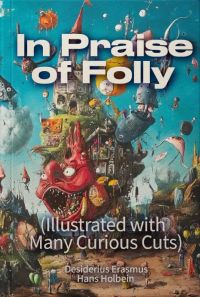
In Praise of Folly
Illustrated with Many Curious CutsErasmus, Desiderius, 1469-15364h 29m3.8 (20.5K)Free
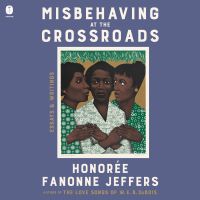
Misbehaving at the CrossroadsHonoree Fanonne Jeffers11h 35m4.5 (388)$29 · $0.00

IntentionsOscar Wilde6h 13m4.1 (993)$2 · $0.00

The Madman - His Parables & Poems (Illustrated) (Annotated)Kahlil Gibran2h 40m4.2 (16.7K)$0.99 · $0.00

The Courage to Be (Annotated)Paul Tillich6h 27m4.2 (6K)$2 · $0.00

Beyond Good and EvilFriedrich Nietzsche7h 10m4.2 (243.8K)$1.20 · $0.00

Why We ReadShannon Reed8h 55m3.9 (4.8K)$25 · $0.00

Idle Thoughts of an Idle FellowJerome K. Jerome4h 21m3.8 (3.3K)$2.30

The Path of LoveOSHO14h 37m4.4 (12K)$20 · $0.00

HereticsG. K. Chesterton7h 51m4.3 (8.4K)$2 · $0.00

Bouvard and Pécuchet (A Satirical Novel) (Annotated)Gustave Flaubert14h3.8 (4.6K)$2 · $0.00

Laughter: An Essay on the Meaning of the ComicHenri Bergson4h 12m3.9 (3.1K)Free

Life CeremonySayaka Murata5h 55m3.9 (32.1K)$17

H. L. Mencken - Premium CollectionGeorge Jean Nathan, H. L. Mencken51h 5m4.6 (21)$2 · $0.00

Jewish ComedyJeremy Dauber10h 50m3.9 (581)$23

H. L. Mencken - Premium Collection (Annotated)George Jean Nathan, H. L. Mencken50h 57m$2 · $0.00

The Essential Works of Henri Bergson (Annotated)Henri Bergson27h 38m$2 · $0.00