


Length7h 7m
About this audiobook
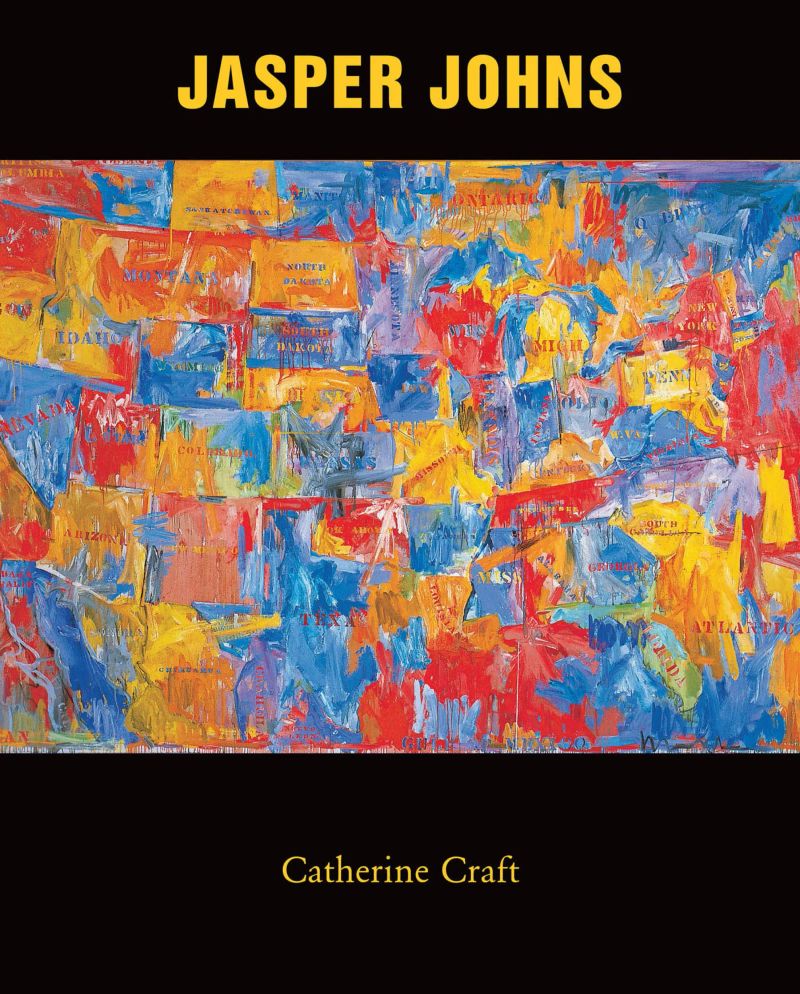
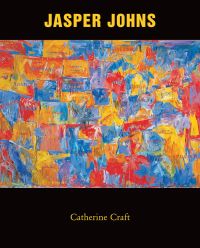
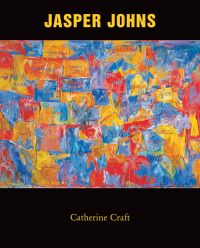
At a time when the dominant mode of painting, Abstract Expressionism, emphasised expressive drama through bold brushwork and largely abstract compositions, Johns' paintings of the American flag, targets, numbers and the alphabet demonstrated a decided departure from convention. Despite being painted with obvious care, they seemed emotionally reticent, cool and quiet, far from the emotional fireworks then fashionable. "It all began… with my painting a picture of an American flag. Using this design took care of a great deal for me because I didn't have to design it. So I went on to similar things like the targets - things the mind already knows. That gave me room to work on other levels. For instance, I've always thought of painting as a surface; painting it in one color made this very clear. Then I decided that looking at a painting should not require a special kind of focus like going to church. A picture ought to be looked at the same way you look at a radiator." Unlike most artists' statements in New York during the 1950s, Johns' remarks contained none of the familiar talk of doubt and angst, and his selection of subject matter appeared deliberate, thoughtful, and far removed from emotional attachments and desires. To younger artists, his art seemed not so much cold and unfeeling as clear-eyed and honest after the excesses of Abstract Expressionism. Furthermore, in selecting recognisable subjects, Johns seemed to reject prevailing abstract modes of painting, yet his subjects themselves - flags, targets, numbers - each possessed a vital characteristic of classic abstraction, namely, a flatness rendering them all but indistinguishable from the picture plane itself. This book underlines how Johns's work made the polarity between abstraction and representation that had dominated debates about modern art for decades seem suddenly obsolete, opening up other ways of thinking about art's relation to the world. It also tries to understand why, since his first exhibition at the Leo Castelli Gallery at the age of twenty-seven, he has remained one of the major artists of the contemporary artistic scene.
Audiobook details
Rating★★★★ 4.3 (39)
Includes Goodreads, Amazon
GenreOther
Length7 hrs 7 mins
Narrated byListen with 1,000+ voices
FormateBook with Audio
Publish dateMay 8, 2012
LanguageEnglish
Table of contents
1Jasper Johns
26The Changing Focus of the Eye
233 Ter – 33 Bis Mac Dinh Chi St.
27the eye.1
3List of Illustrations
28language and meaning and the relation of both to visual information.
4Acknowledgments
29The Freedom of Objects
5both a shock and a breath of fresh air.
30in work after work.
Show all chaptersShow less
6The Birth of an Artist
31The Changing Focus of the Eye
7objects themselves:
32Jasper Johns
8firms and warehouses.
33flag for a nation of forty-eight states that no longer exists?
9Being an Artist
34as much as the work.9
10Jasper Johns
35situation to the next.
11part of the work.
36The Changing Focus of the Eye
12the Self-Made Retrospectivewas more “authentic” than the other.
37Jasper Johns
13something possible for him as an artist:
38Changing Moods
14the box with the plaster cast.
39other’s company.
15quite specific to Johns:
40in these works.
16of its application.
41Jasper Johns
17very intimate situations.
42Johns and Rauschenberg:
18Jasper Johns
43The Artist and his Viewers
19that the viewer could share.
44a sound.
20matter and denial of conventional forms of self-expression.
45Jasper Johns
21Jasper Johns
46hanger in this painting and in Evian.
22Private and Public
47role of a viewer.
23Being an Artist
48Jasper Johns
24Jasper Johns
49for that matter, look.
25the artist himself.
50The Changing Focus of the Eye
More from Catherine Craft
Jasper JohnsCatherine Craft7h 22m4.2 (66)$18 · $0.00
Jasper JohnsCatherine Craft7h 54m4.0 (30)$18 · $0.00
Jasper JohnsCatherine Craft7h 26m4.3 (54)$18 · $0.00
Jasper JohnsCatherine Craft6h 28m3.6 (11)$18 · $0.00
Jasper JohnsCatherine Craft7h 19m$18 · $0.00
Mere ChristianityC. S. Lewis7h 7m4.4 (519.7K)$24 · $0.00

Her Daily BreadKate Wood12h 57m4.6 (153)$33 · $0.00
The Holy Bible - 1 SamuelKing James2h 13m4.8 (1.6K)$3 · $0.00
The American Standard Bible — The Gospel of MatthewMatthew3h 56m4.7 (3K)$2 · $0.00

Bad Fat Black GirlSesali Bowen6h 32m4.7 (2.8K)$24 · $0.00
The King James Audio Bible New Testament CompleteChristopher Glyn20h 2m4.7 (2.6K)$12 · $0.00
Faiths CheckbookCharles Spurgeon12h 44m4.7 (3.2K)$11 · $0.00
Ten Things I Wish You Knew About Your Child's Mental HealthDr. Billy Garvey4h 53m4.7 (2.4K)$20 · $0.00
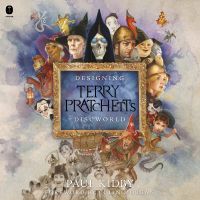
Designing Terry Pratchett’s DiscworldPaul Kidby3h 52m4.7 (343)$20 · $0.00
The Chosen Book OneAmanda Jenkins, Kristen Hendricks, Dallas Jenkins3h 8m4.6 (4.9K)$10 · $0.00
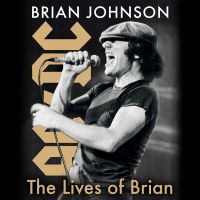
The Lives of BrianBrian Johnson9h 45m4.6 (3.5K)$29 · $0.00
Expository Thoughts on the Gospel of LukeJ.C. Ryle27h 13m4.7 (536)$18 · $0.00

CrossroadsKaleb Dahlgren7h 56m4.6 (4.9K)$26 · $0.00

Across the RiverKent Babb11h 40m4.6 (927)$29 · $0.00

Brain Training for RidersAndrea Monsarrat Waldo5h 56m4.7 (550)$19 · $0.00
My Effin' LifeGeddy Lee17h 11m4.6 (13.1K)$40 · $0.00

Kings and PawnsHoward Bryant10h 9m4.6 (678)$29 · $0.00

The Elementia Chronicles #2: The New OrderSean Fay Wolfe11h 17m4.6 (841)$29 · $0.00
The ActsLuke2h 55m4.6 (19.7K)$12 · $0.00
New Testament - Easy NavigationWorld English Bible19h 35m4.6 (1.3K)$1.30 · $0.00
You may also like
Alex & MeIrene Pepperberg5h 39m4.2 (21.9K)$24 · $0.00

The Natural State (Annotated)U. G. Krishnamurti8h 55m4.3 (364)$2 · $0.00
The Mystique of Enlightenment (Summarized Edition)U. G. Krishnamurti3h 11m4.4 (349)$2
Beyond Good and EvilFriedrich Nietzsche8h 10m4.2 (136.2K)$17
Psychotic Reactions and Carburetor DungLester Bangs16h 21m4.2 (10.3K)$25 · $0.00

Mr. Bennett and Mrs. BrownVirginia Woolf50m4.2 (850)$2 · $0.00
A ROOM OF ONE'S OWNVirginia Woolf5h 26m4.3 (346.9K)$1.99 · $0.00

SiddharthaHermann Hesse4h 12m4.2 (1M)$1.20 · $0.00
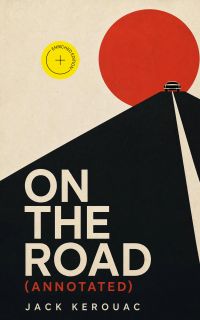
On the Road (Annotated)Jack Kerouac13h 39m4.1 (1K)$2 · $0.00
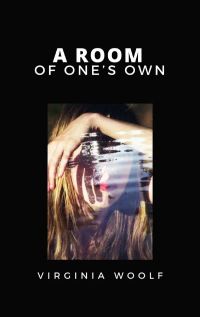
A Room of One’s OwnVirginia Woolf3h 56m4.3 (334.5K)$3.50 · $0.00

Beyond Good and EvilFriedrich Nietzsche7h 5m4.2 (137.8K)$2 · $0.00
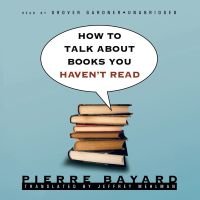
How to Talk about Books You Haven’t ReadPierre Bayard4h 29m3.5 (6.9K)$12 · $0.00

The Genealogy of MoralsFriedrich Nietzsche5h 43m4.3 (84.3K)$12
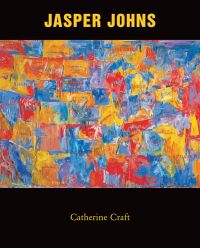
Jasper JohnsCatherine Craft6h 22m3.6 (11)$18 · $0.00
Some Diversions of a Man of LettersEdmund Gosse5h 28m$2 · $0.00
PicassoJp. A. Calosse1h 20m$7 · $0.00
PicassoJp. A. Calosse1h 21m$8 · $0.00
Jasper JohnsCatherine Craft6h 28m3.6 (11)$18 · $0.00
Amedeo ModiglianiKlaus H. Carl, Jane Rogoyska, Frances Alexander, D.H. Lawrence2h 11m4.3 (21)$16 · $0.00
Seeing Like an ArtistLincoln Perry6h 51m3.1 (63)$17