


Length1h 19m
About this audiobook
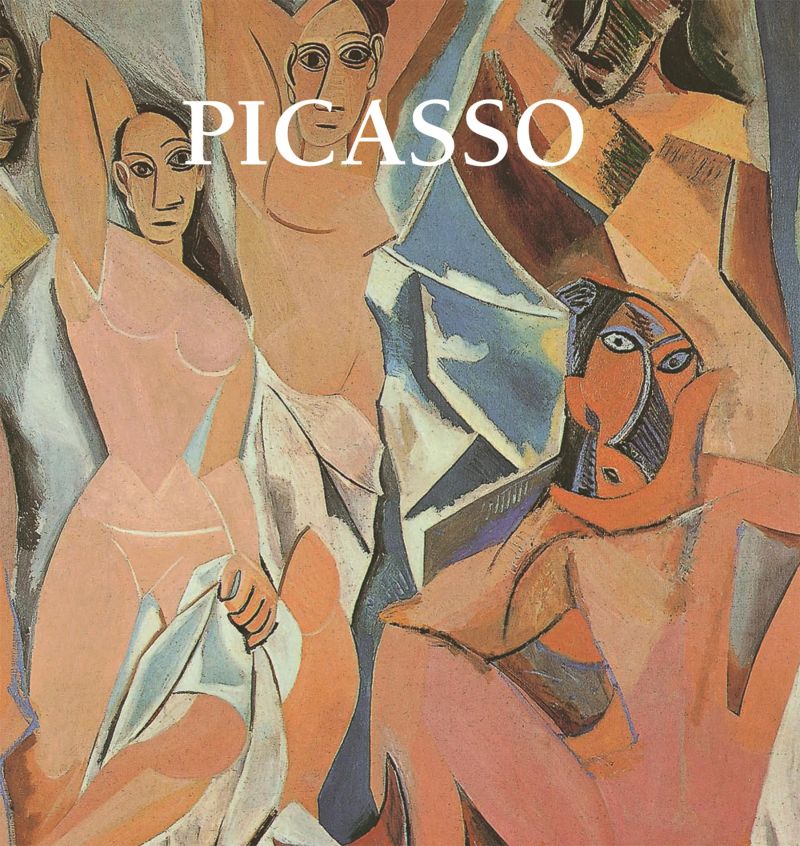
Picasso was born a Spaniard and, so they say, began to draw before he could speak. As an infant he was instinctively attracted to artist's tools. In early childhood he could spend hours in happy concentration drawing spirals with a sense and meaning known only to himself. At other times, shunning children's games, he traced his first pictures in the sand. This early self-expression held out promise of a rare gift. Málaga must be mentioned, for it was there, on 25 October 1881, that Pablo Ruiz Picasso was born and it was there that he spent the first ten years of his life. Picasso's father was a painter and professor at the School of Fine Arts and Crafts. Picasso learnt from him the basics of formal academic art training. Then he studied at the Academy of Arts in Madrid but never finished his degree. Picasso, who was not yet eighteen, had reached the point of his greatest rebelliousness; he repudiated academia's anemic aesthetics along with realism's pedestrian prose and, quite naturally, joined those who called themselves modernists, the non-conformist artists and writers, those whom Sabartés called "the élite of Catalan thought" and who were grouped around the artists' café Els Quatre Gats. During 1899 and 1900 the only subjects Picasso deemed worthy of painting were those which reflected the "final truth"; the transience of human life and the inevitability of death. His early works, ranged under the name of "Blue Period" (1901-1904), consist in blue-tinted paintings influenced by a trip through Spain and the death of his friend, Casagemas. Even though Picasso himself repeatedly insisted on the inner, subjective nature of the Blue Period, its genesis and, especially, the monochromatic blue were for many years explained as merely the results of various aesthetic influences. Between 1905 and 1907, Picasso entered a new phase, called "Rose Period" characterised by a more cheerful style with orange and pink colours. In Gosol, in the summer of 1906 the nude female form assumed an extraordinary importance for Picasso; he equated a depersonalised, aboriginal, simple nakedness with the concept of "woman". The importance that female nudes were to assume as subjects for Picasso in the next few months (in the winter and spring of 1907) came when he developed the composition of the large painting, Les Demoiselles d'Avignon. Just as African art is usually considered the factor leading to the development of Picasso's classic aesthetics in 1907, the lessons of Cézanne are perceived as the cornerstone of this new progression. This relates, first of all, to a spatial conception of the canvas as a composed entity, subjected to a certain constructive system. Georges Braque, with whom Picasso became friends in the autumn of 1908 and together with whom he led Cubism during the six years of its apogee, was amazed by the similarity of Picasso's pictorial experiments to his own. He explained that: "Cubism's main direction was the materialisation of space." After his Cubist period, in the 1920s, Picasso returned to a more figurative style and got closer to the surrealist movement. He represented distorted and monstrous bodies but in a very personal style. After the bombing of Guernica during 1937, Picasso made one of his most famous works which starkly symbolises the horrors of that war and, indeed, all wars. In the 1960s, his art changed again and Picasso began looking at the art of great masters and based his paintings on ones by Velázquez, Poussin, Goya, Manet, Courbet and Delacroix. Picasso's final works were a mixture of style, becoming more colourful, expressive and optimistic. Picasso died in 1973, in his villa in Mougins. The Russian Symbolist Georgy Chulkov wrote: "Picasso's death is tragic. Yet how blind and naïve are those who believe in imitating Picasso and learning from him. Learning what? For these forms have no corresponding emotions outside of Hell.
Audiobook details
GenreOther
Length1 hr 19 mins
Narrated byListen with 1,000+ voices
FormateBook with Audio
Publish dateDec 22, 2011
LanguageEnglish
Table of contents
1PICASSO
2Pablo
3From childhood to Cubism
4BIOGRAPHY
5LIST OF ILLUSTRATIONS
Show all chaptersShow less
61 D.-H. Kahnweiler, «Introduction: A Free Man» in Picasso in
72 D.H. Kahnweiler, «Huit entretiens avec Picasso», Le Point
84 A Picasso Anthology: Documents, Criticism, Reminiscences, ed. M.
9New York, XXVII, May 1910, pp. 400-414.
Edgar Degas et œuvres d'artJp. A. Calosse1h 17m$15 · $0.00
Pablo Picasso 1881 - 1914Jp. A. Calosse1h 23m4.6 (11)$8 · $0.00
Paul Gauguin und KunstwerkeJp. A. Calosse2h 1m$15 · $0.00
Van GoghJp. A. Calosse1h 10m$8 · $0.00
Nudes 120 illustrationsJp. A. Calosse1h 27m3.4 (17)$15 · $0.00
Paul Gauguin et œuvres d'artJp. A. Calosse3h 30m$15 · $0.00
Goya et œuvres d'artJp. A. Calosse1h 43m4.2 (23)$15 · $0.00
Goya 1746-1828Jp. A. Calosse39m3.7 (13)$15 · $0.00
LoveJp. A. Calosse1h 24m4.4 (12)$15 · $0.00
Love 120 illustrationsJp. A. Calosse1h 43m$15 · $0.00
The Origin of the WorldJp. A. Calosse, Hans-Jürgen Döpp1h 26m3.8 (30)$15 · $0.00
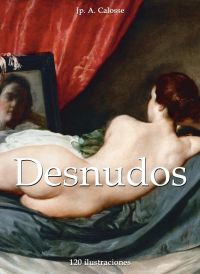
Desnudos 120 ilustracionesJp. A. Calosse1h 35m4.3 (10)$15 · $0.00
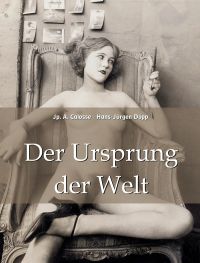
Der Ursprung der WeltJp. A. Calosse, Hans-Jürgen Döpp1h 44m3.4 (14)$15 · $0.00
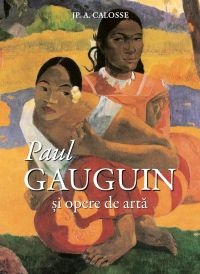
Paul Gauguin și opere de artăJp. A. Calosse1h 32m3.8 (37)$15 · $0.00
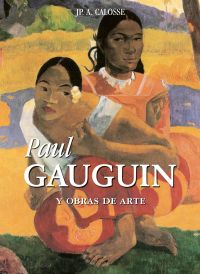
Paul Gauguin y obras de arteJp. A. Calosse1h 30m4.1 (18)$15 · $0.00
Die Kupferstecher der RenaissanceJp. A. Calosse5h 7m$18 · $0.00
Le Nu 120 illustrationsJp. A. Calosse1h 35m$15 · $0.00
Leonardo da VinciJp. A. Calosse1h 34m4.0 (49)$8 · $0.00
James McNeill WhistlerJp. A. Calosse1h 27m4.1 (17)$8 · $0.00
Leonard Da VinciJp. A. Calosse1h 40m4.2 (46)$8 · $0.00
Mere ChristianityC. S. Lewis7h 7m4.4 (519.7K)$24 · $0.00

Her Daily BreadKate Wood12h 57m4.6 (153)$33 · $0.00
The Holy Bible - 1 SamuelKing James2h 13m4.8 (1.6K)$3 · $0.00
The American Standard Bible — The Gospel of MatthewMatthew3h 56m4.7 (3K)$2 · $0.00
Bad Fat Black GirlSesali Bowen6h 32m4.7 (2.8K)$24 · $0.00
The King James Audio Bible New Testament CompleteChristopher Glyn20h 2m4.7 (2.6K)$12 · $0.00
Faiths CheckbookCharles Spurgeon12h 44m4.7 (3.2K)$11 · $0.00
Ten Things I Wish You Knew About Your Child's Mental HealthDr. Billy Garvey4h 53m4.7 (2.4K)$20 · $0.00
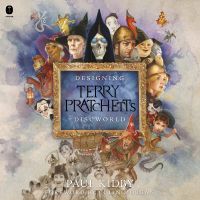
Designing Terry Pratchett’s DiscworldPaul Kidby3h 52m4.7 (343)$20 · $0.00
The Chosen Book OneAmanda Jenkins, Kristen Hendricks, Dallas Jenkins3h 8m4.6 (4.9K)$10 · $0.00
The Lives of BrianBrian Johnson9h 45m4.6 (3.5K)$29 · $0.00
Expository Thoughts on the Gospel of LukeJ.C. Ryle27h 13m4.7 (536)$18 · $0.00
CrossroadsKaleb Dahlgren7h 56m4.6 (4.9K)$26 · $0.00

Across the RiverKent Babb11h 40m4.6 (927)$29 · $0.00
Brain Training for RidersAndrea Monsarrat Waldo5h 56m4.7 (550)$19 · $0.00
My Effin' LifeGeddy Lee17h 11m4.6 (13.1K)$40 · $0.00
Kings and PawnsHoward Bryant10h 9m4.6 (678)$29 · $0.00

The Elementia Chronicles #2: The New OrderSean Fay Wolfe11h 17m4.6 (841)$29 · $0.00
The ActsLuke2h 55m4.6 (19.7K)$12 · $0.00
New Testament - Easy NavigationWorld English Bible19h 35m4.6 (1.3K)$1.30 · $0.00
You may also like
Savage BeautyNancy Milford24h 39m4.1 (10.7K)$30
Sartre in 90 MinutesPaul Strathern1h 41m3.7 (1.1K)$7

Mary JaneJessica Anya Blau9h 45m4.2 (166.6K)$29 · $0.00

Karl LagerfeldAlfons Kaiser14h 59m4.2 (317)$23 · $0.00
Words without MusicPhilip Glass15h 5m4.3 (7.4K)$23
The Portrait of a LadyHenry James26h 5m3.9 (116.7K)$1.20 · $0.00
George EliotKathryn Hughes20h 37m4.1 (546)$32
The Beautiful FallAlicia Drake16h 18m4.1 (3K)$23
In the WorldMaksim Gorky14h 58m4.3 (2.5K)$2 · $0.00
American NegraNatasha S. Alford10h 39m4.3 (474)$29 · $0.00
The Voyage OutVirginia Woolf13h 24m3.8 (15.5K)$25
Picasso and the Painting That Shocked the WorldMiles J. Unger15h 27m4.1 (657)$23

Darkwater: Voices from Within the VeilWilliam Edward Burghardt Du Bois7h 27m4.3 (2.5K)$2 · $0.00
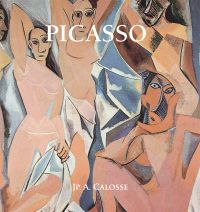
PicassoJp. A. Calosse1h 25m3.9 (28)$8 · $0.00
Passages from a Relinquished Work (From "Mosses from an Old Manse")Nathaniel Hawthorne36m3.1 (13)$2 · $0.00
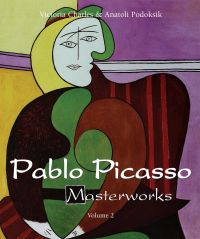
Pablo Picasso Masterworks - Volume 2Victoria Charles, Anatoli Podoksik1h 51m$18 · $0.00
Félix VallottonNathalia Brodskaïa2h 41m$16 · $0.00
KlimtJane Rogoyska, Patrick Bade1h 19m4.3 (171)$15 · $0.00
Critical Miscellanies: EmersonJohn Morley1h 13m$2 · $0.00
The Early Life of Mark Rutherford (W. Hale White)William Hale White16m$2 · $0.00