
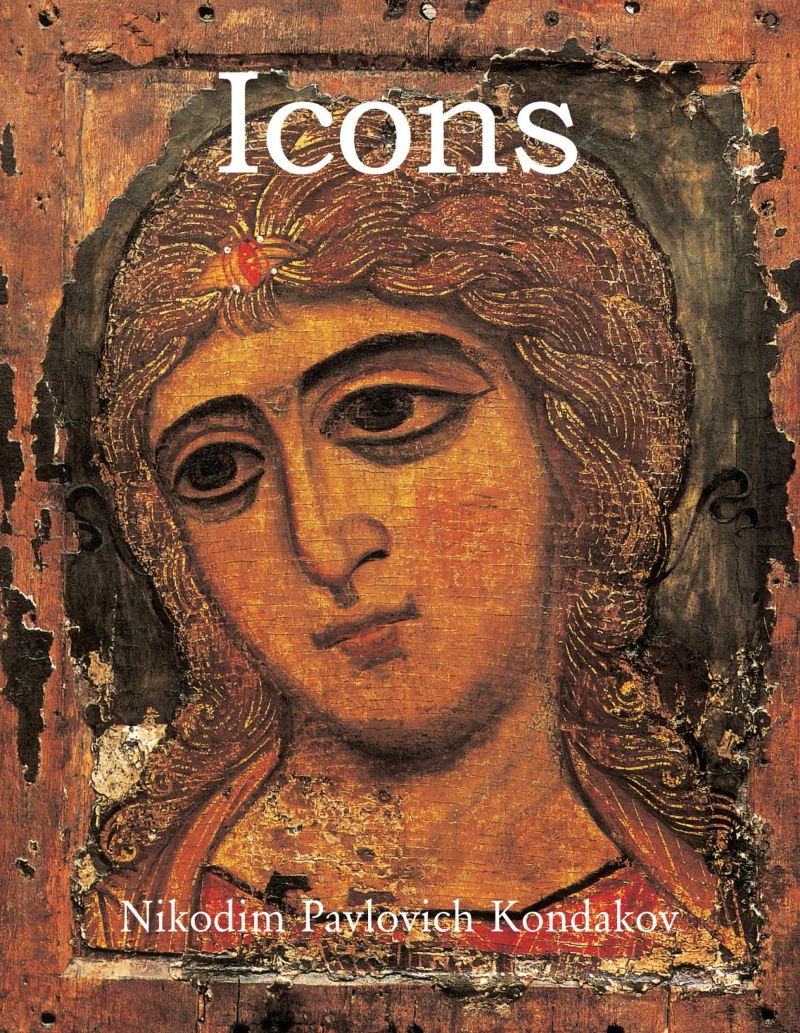
Icons
Sacred images of the Orthodox traditionBy Nikodim Pavlovich Kondakov

Length9h 7m
About this audiobook
Icon painting has reached its zenith in Ukraine between the 11th and 18th centuries. This art is appealing because of its great openness to other influences – the obedience to the rules of Orthodox Christianity in its early stages, the borrowing from Roman heritage or later to the Western breakthroughs – combined with a never compromised assertion of a distinctly Slavic soul and identity.
This book presents a handpicked and representative selection of works from the 11th century to the late Baroque period.
Audiobook details
GenreOther
Length9 hrs 7 mins
Narrated byListen with 1,000+ voices
FormateBook with Audio
Publish dateMay 8, 2012
LanguageEnglish
Table of contents
1Icons
2List of Illustrations
3Introduction
4a handicraft or kustár' product.1
5Blessing, 4th century.
Show all chaptersShow less
6Ostia.
7Archaeological Society in 1846.6
8of Russian Icon-painting.7
9Russian Schools of Icon-painting down to the end of the 17th century.9
10delicate half-tones.
11comparison and historical classification.
12Musée du Louvre, Paris.
13140 x 92 cm. The State
14century to the artistic influence of Italy.
15Origins: the Orient and Greece
16sacred significance of the honoured icon.17
17Saints in Medallions, 10th to 11th century.
18Mount Sinai, Egypt.
19not artistic, portraits.
20Collection, Paris.
21Istanbul.
22(molénnaya from molit’ sya to pray), that voiceless
23him by way of farewell to the dead brother in the
24appearance in the church, initially in the martyria, the
25Mount Sinai, Egypt.
26The Archangel Gabriel, 18th to 19th century.
27Clement), Macedonia.
28and his enamel icon on the Pala d’Oro in S. Mark’s, Venice.
29type, peculiar to icon-painting, distinguishes it from the work in manuscripts.
30Use and Place of Icons in Russia
31Bacchus, 7th century. Museum
32Oriental Art, Kiev.
3367 x 42 cm. The State
34St. Petersburg.
35Moscow.
36S. Panteleimon; from sudden death, S. Christopher.
37The Technique
38century.
39Teutonic Cemetery, Vatican.
40icons, much more so in icons with only one figure43.
41National Museum of History
42Recklinghausen, Germany.
43From the Church of the
44Moscow.
45Colouring and Pigments in Russian Icon-painting
46St. Petersburg.
47The unusual phenomenon of two-coloured reflexes in Greco-Italian and Nóvgorod icon-
48National Museum, Lviv, Ukraine.
49103 x 75 cm. Pinacoteca
50middle of the 14th century.
More from Nikodim Pavlovich Kondakov
ÍconosNikodim Pavlovich Kondakov7h 29m4.6 (12)$18 · $0.00
IkonenNikodim Pavlovich Kondakov9h 57m4.4 (18)$15.50 · $0.00
IcônesNikodim Pavlovich Kondakov9h 41m$18 · $0.00
IkonenNikodim Pavlovich Kondakov8h 51m4.5 (11)$18 · $0.00
IconsNikodim Pavlovich Kondakov7h 36m4.6 (21)$18 · $0.00
IcônesNikodim Pavlovich Kondakov8h 41m$18 · $0.00
Mere ChristianityC. S. Lewis7h 7m4.4 (519.7K)$24 · $0.00

Her Daily BreadKate Wood12h 57m4.6 (153)$33 · $0.00
The Holy Bible - 1 SamuelKing James2h 13m4.8 (1.6K)$3 · $0.00
The American Standard Bible — The Gospel of MatthewMatthew3h 56m4.7 (3K)$2 · $0.00

Bad Fat Black GirlSesali Bowen6h 32m4.7 (2.8K)$24 · $0.00
The King James Audio Bible New Testament CompleteChristopher Glyn20h 2m4.7 (2.6K)$12 · $0.00
Faiths CheckbookCharles Spurgeon12h 44m4.7 (3.2K)$11 · $0.00

Ten Things I Wish You Knew About Your Child's Mental HealthDr. Billy Garvey4h 53m4.7 (2.4K)$20 · $0.00
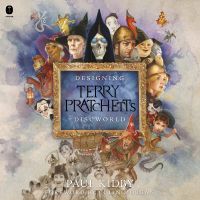
Designing Terry Pratchett’s DiscworldPaul Kidby3h 52m4.7 (343)$20 · $0.00
The Chosen Book OneAmanda Jenkins, Kristen Hendricks, Dallas Jenkins3h 8m4.6 (4.9K)$10 · $0.00
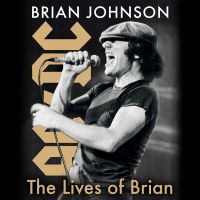
The Lives of BrianBrian Johnson9h 45m4.6 (3.5K)$29 · $0.00
Expository Thoughts on the Gospel of LukeJ.C. Ryle27h 13m4.7 (536)$18 · $0.00

CrossroadsKaleb Dahlgren7h 56m4.6 (4.9K)$26 · $0.00

Across the RiverKent Babb11h 40m4.6 (927)$29 · $0.00
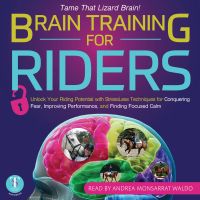
Brain Training for RidersAndrea Monsarrat Waldo5h 56m4.7 (550)$19 · $0.00
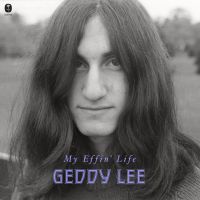
My Effin' LifeGeddy Lee17h 11m4.6 (13.1K)$40 · $0.00
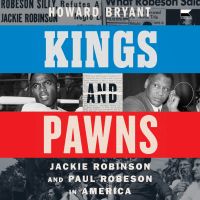
Kings and PawnsHoward Bryant10h 9m4.6 (678)$29 · $0.00

The Elementia Chronicles #2: The New OrderSean Fay Wolfe11h 17m4.6 (841)$29 · $0.00
The ActsLuke2h 55m4.6 (19.7K)$12 · $0.00
New Testament - Easy NavigationWorld English Bible19h 35m4.6 (1.3K)$1.30 · $0.00
You may also like
Shiva to ShankaraDevdutt Pattanaik3h 41m4.2 (628)$18 · $0.00
The ExodusRichard Elliott Friedman5h 51m4.2 (2K)$17
The Everlasting Man (Annotated)G. K. Chesterton12h 33m4.3 (17.7K)$1.99 · $0.00
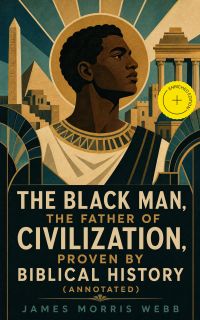
The Black Man, the Father of Civilization, Proven by Biblical History (Annotated)James Morris Webb1h 52m4.4 (1.1K)$0.99 · $0.00
The Outline of HistoryH. G. Wells44h 31m4.0 (6.4K)$40
The Bible With and Without JesusAmy-Jill Levine, Marc Zvi Brettler14h 32m4.3 (1.3K)$33 · $0.00
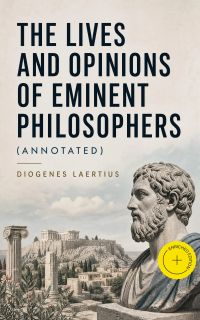
The Lives and Opinions of Eminent Philosophers (Annotated)Diogenes Laertius21h 28m4.1 (801)$2 · $0.00
The Lost Keys of FreemasonryManly P. Hall2h 31m4.3 (2.6K)$2 · $0.00
The Color of ChristEdward J. Blum, Paul Harvey12h 24m4.1 (699)$20 · $0.00
The Symbolism of FreemasonsAlbert Gallatin Mackey12h 37m3.9 (1.2K)$1.99 · $0.00
Jesus for the Non-ReligiousJohn Shelby Spong12h 22m4.2 (1.9K)$29 · $0.00
TalmudVarious Authors185h 19m4.4 (3.1K)$1 · $0.00
What is the Bible?Rob Bell6h 23m4.4 (12.6K)$24 · $0.00
Sadhana, The Realisation of LifeRabindranath Tagore3h 51m4.3 (2.5K)$3.50 · $0.00
The Creed of Half JapanArthur Lloyd10h 20m$21 · $0.00
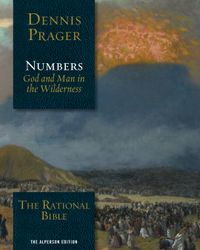
The Rational Bible: NumbersPrager, Dennis14h 39m4.7 (227)Free
Yale Required Reading - Collected Works (Vol. 1) (Annotated)Aristotle, Plato, Euripides, Gilbert Murray, Epictetus, Pindar, Theocritus, Homer, Plutarch, Aeschylus, Sophocles, Aristophanes, Herodotus, Anacreon, Sappho, Thucydides, Hesiod, Demosthenes, Lysias, Alcaeus, Archilochus, Theognis of Megara, Simonides of Ceos, Bacchylides, Apollonius, Callimachus201h 39m4.4 (12)$1.99 · $0.00
The Great Empires of the Ancient East (Annotated)George Rawlinson145h 1m$1.99 · $0.00
The Greatest Books of Spiritual WisdomSaint Augustine, Pope Gregory I, Martin Luther, Friedrich Nietzsche, Thomas Paine, Leo Tolstoy, Athanasius of Alexandria, Gregory of Nyssa, Basil the Great, John of Damascus, Saint Thomas Aquinas, Thomas à Kempis, St. Teresa of Ávila, Brother Lawrence, David Hume, Ludwig Feuerbach, Charles Spurgeon, Andrew Murray, G. K. Chesterton, Arthur Pink, John Stuart Mill, Ralph Waldo Emerson, H. Emilie Cady, James Allen, Prentice Mulford, Florence Scovel Shinn, Wallace D. Wattles476h 59m4.5 (120)$1.99 · $0.00

In Kali's Country: Tales from Sunny IndiaEmily Churchill Thompson Sheets5h 9m$2 · $0.00