

The Greatest Works of Immanuel Kant (Annotated)
Enriched Edition. Critical Writings on Reason, Morality, Judgment, Enlightenment, and Transcendental IdealismBy Immanuel Kant


Length83h 51m
About this audiobook
The Greatest Works of Immanuel Kant gathers the central writings through which modern philosophy was decisively reoriented: the critical inquiries into reason, morality, judgment, enlightenment, religion, and political right. Its style is rigorous, architectonic, and often demanding, yet animated by a profound ambition: to determine the limits and powers of human reason. Read together, these works illuminate Kant's place between Enlightenment rationalism and later German idealism, establishing the vocabulary of autonomy, duty, critique, and transcendental inquiry. Immanuel Kant (1724–1804), the Königsberg philosopher, lived a disciplined life devoted to teaching, reflection, and intellectual independence. Shaped by Newtonian science, Pietist moral seriousness, and debates between empiricism and rationalism, Kant sought to rescue knowledge from skepticism while preserving freedom and moral responsibility. His historical moment—the European Enlightenment, with its confidence in reason and reform—gave urgency to his question: what may human beings know, do, and hope? This collection is recommended for readers prepared to engage one of philosophy's most consequential minds in breadth rather than fragment. It rewards patience with conceptual clarity, ethical seriousness, and a vision of humanity as rational, free, and accountable.
This enriched edition has been carefully crafted to add value to your reading experience.
- A comprehensive Introduction outlines these selected works' unifying features, themes, or stylistic evolutions.
- The Author Biography highlights personal milestones and literary influences that shape the entire body of writing.
- A Historical Context section situates the works in their broader era—social currents, cultural trends, and key events that underpin their creation.
- A concise Synopsis (Selection) offers an accessible overview of the included texts, helping readers navigate plotlines and main ideas without revealing critical twists.
- A unified Analysis examines recurring motifs and stylistic hallmarks across the collection, tying the stories together while spotlighting the different work's strengths.
- Reflection questions inspire deeper contemplation of the author's overarching message, inviting readers to draw connections among different texts and relate them to modern contexts.
- Lastly, our hand‐picked Memorable Quotes distill pivotal lines and turning points, serving as touchstones for the collection's central themes.
Audiobook details
GenrePhilosophy
Length83 hrs 51 mins
Narrated byListen with 1,000+ voices
FormateBook with Audio
Publish dateDec 13, 2023
LanguageEnglish
Table of contents
1The Greatest Works of Immanuel Kant (Annotated)
2Introduction
3Author Biography
4Historical Context
5Synopsis (Selection)
Show all chaptersShow less
6Introduction:
7IMMANUEL KANT by Robert Adamson
8KANT’S INAUGURAL DISSERTATION OF 1770
9The Three Critiques:
10THE CRITIQUE OF PURE REASON
11Preface to the First Edition, 1781
12Preface to the Second Edition, 1787
13Introduction.
14I. Transcendental Doctrine of Elements.
15First Part. Transcendental Aesthetic.
16Second Part. Transcendental Logic. (pt. 1)
17Second Part. Transcendental Logic. (pt. 2)
18Second Part. Transcendental Logic. (pt. 3)
19Second Part. Transcendental Logic. (pt. 4)
20Second Part. Transcendental Logic. (pt. 5)
21Second Part. Transcendental Logic. (pt. 6)
22Second Part. Transcendental Logic. (pt. 7)
23II. Transcendental Doctrine of Method. (pt. 1)
24II. Transcendental Doctrine of Method. (pt. 2)
25THE CRITIQUE OF PRACTICAL REASON
26First Part. Elements of Pure Practical Reason.
27Book I. The Analytic of Pure Practical Reason. (pt. 1)
28Book I. The Analytic of Pure Practical Reason. (pt. 2)
29Book II. Dialectic of Pure Practical Reason.
30Second Part. Methodology of Pure Practical Reason.
31THE CRITIQUE OF JUDGEMENT
32EDITOR’S INTRODUCTION
33GLOSSARY OF KANT’S PHILOSOPHICAL TERMS
34PREFACE
35INTRODUCTION
36PART I CRITIQUE OF THE AESTHETICAL JUDGEMENT (pt. 1)
37PART I CRITIQUE OF THE AESTHETICAL JUDGEMENT (pt. 2)
38PART I CRITIQUE OF THE AESTHETICAL JUDGEMENT (pt. 3)
39PART II CRITIQUE OF THE TELEOLOGICAL JUDGEMENT (pt. 1)
40PART II CRITIQUE OF THE TELEOLOGICAL JUDGEMENT (pt. 2)
41PART II CRITIQUE OF THE TELEOLOGICAL JUDGEMENT (pt. 3)
42Critical Works:
43PROLEGOMENA TO ANY FUTURE METAPHYSICS (pt. 1)
44PROLEGOMENA TO ANY FUTURE METAPHYSICS (pt. 2)
45PROLEGOMENA TO ANY FUTURE METAPHYSICS (pt. 3)
46FUNDAMENTAL PRINCIPLES OF THE METAPHYSIC OF MORALS (pt. 1)
47FUNDAMENTAL PRINCIPLES OF THE METAPHYSIC OF MORALS (pt. 2)
48THE METAPHYSICS OF MORALS
49Translator's preface
50Bibliographical note

Zum ewigen FriedenImmanuel Kant, Sam Rokbuhm1h 18m$12 · $0.00
The Greatest Works of Immanuel KantImmanuel Kant83h 28m4.4 (142)$1.99 · $0.00

Untersuchung über die Deutlichkeit der Grundsätze der natürlichen Theologie und der MoralImmanuel Kant2h 49m4.0 (41)$1 · $0.00

Kant: Kritik der praktischen Vernunft, Kritik der reinen Vernunft & Kritik der UrteilskraftImmanuel Kant46h 31m4.5 (1.4K)$1 · $0.00
The Critique of Pure ReasonImmanuel Kant25h 41m4.1 (49.5K)$1.99 · $0.00
The Three Critiques: The Critique of Pure Reason, Practical Reason and JudgmentImmanuel Kant46h 6m4.3 (15.5K)$1.99 · $0.00

Physische GeographieImmanuel Kant13h 54m3.9 (47)$1 · $0.00

THE CRITIQUE OF JUDGMENTImmanuel Kant15h 35m4.1 (11.8K)$1.99 · $0.00
THE CRITIQUE OF PRACTICAL REASONImmanuel Kant8h 29m4.1 (14.1K)$1.99 · $0.00

Schriften zur physischen GeographieImmanuel Kant26h 23m4.4 (11)$1 · $0.00

Kritik der Urteilskraft: Die dritte KritikImmanuel Kant16h 25m4.1 (16.7K)$1 · $0.00
The Kantian Ethics: Metaphysics of Morals, The Critique of Practical Reason & Perpetual PeaceImmanuel Kant23h 29m$1.99 · $0.00
THE CRITIQUE OF PURE REASONImmanuel Kant25h 39m4.1 (51.3K)$1.99 · $0.00
IMMANUEL KANT: Philosophical Books, Critiques & EssaysImmanuel Kant83h 15m4.4 (143)$1.99 · $0.00
The Kantian Ethics: Metaphysics of MoralsImmanuel Kant23h 30m4.1 (5.1K)$1.99 · $0.00

Crítica de la Razón PuraImmanuel Kant26h 12m4.1 (51.4K)$11 · $0.00

Träume eines Geistersehers, erläutert durch Träume der Metaphysik (Kommentiert)Immanuel Kant4h 2m3.8 (189)$1 · $0.00
Metaphysische Anfangsgründe der Naturwissenschaft (Kommentiert)Immanuel Kant6h 33m4.1 (145)$1 · $0.00

Teoría y praxisImmanuel Kant4h 2m3.9 (243)$11 · $0.00

Schriften zur Geschichtsphilosophie, Ethik und Politik (Kommentiert)Immanuel Kant9h 3m4.5 (11)$1 · $0.00
Moral Letters to LuciliusLucius Annaeus Seneca24h 26m4.5 (71.7K)$0.99 · $0.00

Lessons in TruthH. Emilie Cady3h 50m4.5 (2.4K)$20 · $0.00
The Discourses of EpictetusP. E. MATHESOM12h 47m4.4 (17.7K)$1.20 · $0.00
IlluminationsWalter Benjamin10h 12m4.4 (16.2K)$20 · $0.00
That Bird Has My WingsJarvis Jay Masters9h 49m4.4 (13.7K)$29 · $0.00

Tâo Teh KingLaozi2h 34m4.4 (230.9K)$2 · $0.00
SymposiumPlato3h 26m4.4 (97.9K)$1.20 · $0.00

Buddhist Boot CampTimber Hawkeye2h 39m4.4 (8.4K)$18 · $0.00
Enchiridion & The Discourses of Epictetus (Annotated)Arrian Epictetus18h 9m4.4 (3.5K)$2 · $0.00

The Meditations of the Emperor Marcus Aurelius AntoninusEmperor of Rome Marcus Aurelius5h 41m4.4 (1.8M)$1 · $0.00
Crime and PunishmentFyodor Dostoevsky23h 11m4.4 (1.3M)$12 · $0.00

MeditationsMarcus Aurelius5h 52m4.4 (433.7K)$1 · $0.00

Everyday DharmaSuneel Gupta5h 2m4.5 (761)$20 · $0.00

The Joyful Wisdom ("La Gaya Scienza")Friedrich Wilhelm Nietzsche11h 37m4.4 (26.6K)$1 · $0.00
The Art of LivingEpictetus, Sharon Lebell3h 16m4.4 (50.1K)$18 · $0.00
MeditationsEmperor Of Rome Marcus Aurelius7h 23m4.3 (477.5K)$1.20 · $0.00

The Imitation of ChristThomas à Kempis6h 27m4.3 (84.6K)$21 · $0.00

Sadhana: the realisation of lifeRabindranath Tagore3h 49m4.4 (8.6K)$6 · $0.00
SapiensYuval Noah Harari15h 18m4.3 (1.4M) · 1253$33 · $0.00

You BelongSebene Selassie8h 35m4.4 (2.7K)$26 · $0.00
You may also like
Human Nature and ConductJohn Dewey9h 22m4.2 (1.5K)$0.60 · $0.00

The Big SortBill Bishop12h 31m3.8 (2.4K)$33 · $0.00
Nicomachean EthicsAristotle10h 50m4.2 (76K)$1 · $0.00
The Complete Works of Plato (Annotated)Plato141h 48m4.5 (3.1K)$2 · $0.00

LeviathanThomas Hobbes23h3.9 (68.7K)$2.30

The Essays of Arthur Schopenhauer; On Human NatureArthur Schopenhauer4h 22m4.2 (923)$2 · $0.00
What's Wrong with the WorldG. K. Chesterton6h 16m4.2 (15.8K)$2.30
A TREATISE OF HUMAN NATURE ABCD24h 51m4.1 (19.3K)Free
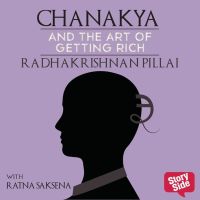
Chanakya and the Art of Getting RichRadhakrishnan Pillai4h 9m3.9 (1.1K)$8

The Twilight of the American EnlightenmentGeorge M. Marsden6h 24m4.1 (435)$20
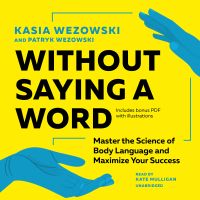
Without Saying a WordKasia Wezowski, Patryk Wezowski4h 44m3.9 (1K)$20
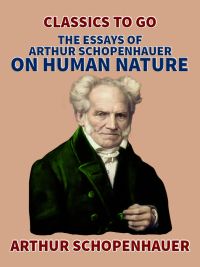
The Essays of Arthur Schopenhauer; On Human NatureArthur Schopenhauer3h 27m4.0 (2.2K)$2.30

The War on the WestDouglas Murray12h 42m4.3 (15.4K)$33 · $0.00

Sex ScandalAshley McGuire7h 9m4.0 (452)$20
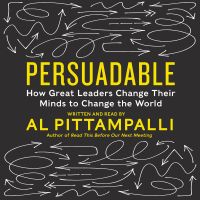
PersuadableAl Pittampalli7h 3m4.2 (296)$24 · $0.00
Capitalism, Socialism and DemocracyJoseph A. Schumpeter18h 23m4.1 (4.3K)$8 · $0.00

Lectures on the English Poets; Delivered at the Surrey InstitutionWilliam Hazlitt4h 38m3.9 (36)$2 · $0.00
The theory and practice of argumentation and debateVictor Alvin Ketcham11h 59m$1 · $0.00

The Education of the NegroCharles Dudley Warner37m$1.20 · $0.00
ON LIBERTY - The Philosophy of Individual Freedom (Annotated)John Stuart Mill, W. L. Courtney5h 58m$2 · $0.00