
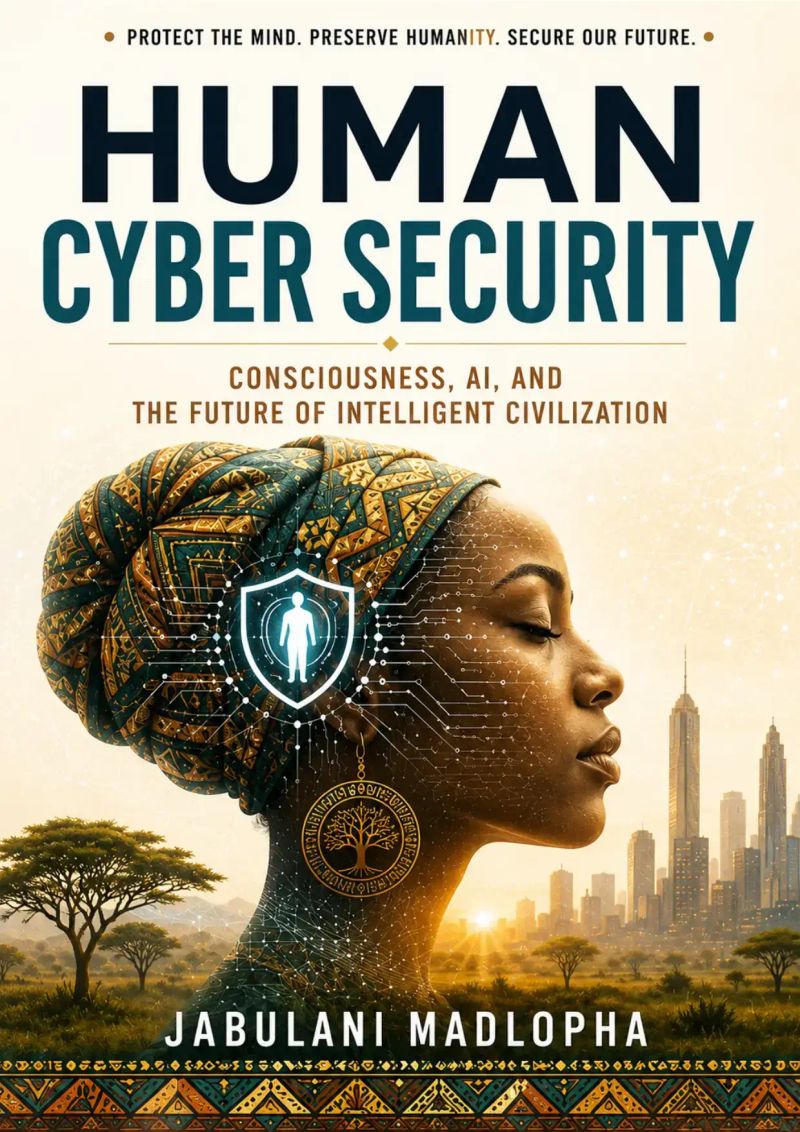
HUMAN CYBER SECURITY
Consciousness, AI, and the Future of Intelligent CivilizationBy Jabulani Madlopha


Length3h 29m
About this audiobook
What if the greatest cybersecurity challenge of the future is no longer about protecting computers, networks, or machines—but protecting human beings themselves? As artificial intelligence, biotechnology, neural systems, intelligent environments, and predictive technologies continue to evolve, humanity is entering a new era where the boundaries between biology and technology are beginning to disappear. The future will not simply be shaped by machines becoming smarter. It will be shaped by how intelligent systems interact with human consciousness, cognition, emotional stability, memory, identity, and civilization itself.
Audiobook details
GenreScience and Nature, Technology
Length3 hrs 29 mins
Narrated byListen with 1,000+ voices
FormateBook with Audio
Publish dateFeb 4, 2020
LanguageEnglish
Table of contents
1HUMAN CYBER SECURITY
2Copyright © 2026 Jabulani Madlopha
3Introduction
4This book combines:
5Chapter 1: Before Computers, Humans Were the Network
Show all chaptersShow less
6Long before:
7The Human as Infrastructure
8but collective information.
9A malicious actor may:
10input, • • processing, • memory, response, • • and feedback loops.
11Through:
12African Protection Systems as Human Security Architecture
13Others psychological.
14Cybersecurity protects:
15The Beginning of Human Cybersecurity
16Chapter 2: African Protection Systems and the Human Body
17The Body as the First Security Device
18Memory forms.
19Protective Wearables and Symbolic Defense
20Protective symbols can:
21The:
22The Skin as Interface
23but regulatory functions.
24The Transition to Modern Human Security
25Algorithms manipulate attention.
26It must also address:
27Instead of:
28Closing Insight
29Chapter 3: Scarification, Rituals, and Biological Defense
30Tattoos. Marks. Jewelry. Piercings. Ritual paint. Scarification.
31The Body as a Living Record
32human stabilization systems.
33Herbal Mixtures and Biological Intervention
34Others for protection.
35Vaccines, medications, topical treatments, and implants
36Confidence changes human capability.
37Through:
38From Biological Ritual to Human Technology
39Perhaps more than ever.
40Toward Human Cybersecurity
41Chapter 4: Abathakathi, Fear, and Human Hacking
42The Psychology of Invisible Influence
43Illness. Mental instability. Sudden misfortune. Conflict. Behavioral change. Social collapse.
44Repetition alters memory.
45Human Hacking Without Technology
46Stress affects:
47social engineering.
48but informationally.
49Chapter 5: The Human Body as an Electrical System
50Muscles contract through electrochemical processes.
More from Jabulani Madlopha

USIKOJabulani Madlopha55m$9.99

Frequency of the GarmentJabulani Madlopha2h 23m$9.99
QUANTUM AFRICAJabulani Madlopha 2h 36m$9.99

THE CRYSTALLINE GATEWAY (Amathuna)Jabulani Madlopha 2h$9.99
THE ROAD AHEADJabulani Madlopha1h 20m$9.99
ONEJabulani Madlopha1h 6m$9.99

Africa: The Birthplace of Artificial Intelligence (AI) and Autonomous AgentsJabulani Madlopha1h 39m$9.99

Human Domain Transfer (Marriage)Jabulani Madlopha1h 47m$9.99
Human Data Centers Jabulani Madlopha1h 54m$9.99

Coursing an EffectJabulani Madlopha1h 38m$9.99
DECODING AN ATOMJabulani Madlopha1h 13m$9.99

A Brief History of IntelligenceMax S. Bennett12h 18m4.6 (6.6K)$29 · $0.00
The Story of BirdsSteve Brusatte11h 49m4.6 (401)$29 · $0.00
BeyondStephen Walker15h 39m4.6 (3.2K)$33 · $0.00

LiftoffEric Berger9h 4m4.6 (9.5K)$29 · $0.00

Black Earth WisdomLeah Penniman11h 54m4.6 (577)$8 · $0.00

Total Cat MojoJackson Galaxy10h 13m4.5 (8.4K)$23 · $0.00

My Life Among the UnderdogsTia Torres5h 51m4.5 (4K)$24 · $0.00

What It Takes to Save a LifeKwane Stewart6h4.6 (556)$24 · $0.00

Pastoral SongJames Rebanks8h 35m4.5 (12K)$26 · $0.00

How Stella Learned to TalkChristina Hunger7h4.5 (10.9K)$24 · $0.00

Craig & FredCraig Grossi8h 6m4.5 (9.6K)$26 · $0.00

Celebrating BirdsNatalia Rojas, Ana Maria Martinez6h 47m4.6 (330)$24 · $0.00

Saving JemimaJulie Zickefoose4h 59m4.5 (749)$20 · $0.00

Will's Red CoatTom Ryan8h 23m4.5 (2.3K)$26 · $0.00

Of Time and TurtlesSy Montgomery10h 34m4.5 (5K)$29 · $0.00

THE WOLF TRILOGY: Call of the Wild, White Fang & The Son of the WolfJack London17h 31m4.5 (2.4K)$1.99 · $0.00

Zen and the Art of Saving the PlanetThich Nhat Hanh9h 20m4.5 (3.9K)$29 · $0.00

BLACK BEAUTY (With Original Illustrations)Anna Sewell7h 31m4.5 (1.3K)$1.99 · $0.00

Bottle of LiesKatherine Eban14h 25m4.4 (12K)$33 · $0.00

IngrainedCallum Robinson8h 10m4.5 (1.1K)$26 · $0.00

The Honey BusMeredith May9h 31m4.4 (16.6K)$25 · $0.00

Collected Writings of Nikola TeslaThomas Commerford Martin, Nikola Tesla19h 42m4.4 (2.8K)$1.99 · $0.00

Operation PedestalMax Hastings12h 29m4.4 (5.2K)$29 · $0.00

When the Heavens Went on SaleAshlee Vance18h 20m4.4 (3K)$40 · $0.00

Everybody Has a Podcast (Except You)Justin McElroy, Travis McElroy, Griffin McElroy5h 9m4.3 (2.3K)$24 · $0.00

Hands of TimeRebecca Struthers8h 8m4.4 (1.3K)$26 · $0.00
Never Lost AgainBill Kilday10h 1m4.4 (805)$29 · $0.00
How the Internet HappenedBrian McCullough13h 28m4.3 (2.7K)$23 · $0.00

Collected Writings of Nikola TeslaNikola Tesla, Thomas Commerford Martin21h 50m4.3 (1.7K)$1 · $0.00

Just AspireAjai Chowdhry9h 13m4.4 (260)$29 · $0.00

The Little Book of AliensAdam Frank8h 20m4.3 (1.3K)$26 · $0.00

The inventions, researches and writings of Nikola Tesla (Annotated)Thomas Commerford Martin16h 59m4.3 (1.3K)$2 · $0.00

KargilV.P. Malik15h 18m4.3 (2K)$24 · $0.00
Experiments with Alternating CurrentsNikola Tesla9h 16m4.3 (874)$1.99 · $0.00

Fire on the HorizonTom Shroder, John Konrad8h 23m4.3 (858)$26 · $0.00

The Smell of Kerosene (Annotated)National Aeronautics and Space Administration, Donald L. Mallick, Peter W. Merlin11h 32m4.3 (523)$2 · $0.00

The Boy Who Harnessed the WindWilliam Kamkwamba, Bryan Mealer10h 5m4.2 (78.9K)$29 · $0.00

Across the Airless WildsEarl Swift10h 8m4.3 (1.3K)$29 · $0.00

Console WarsBlake J. Harris20h 41m4.2 (13.7K)$46 · $0.00

Improvised Munitions HandbookU.S. Department of Defense4h 49m4.3 (1.6K)$1.99 · $0.00
You may also like

Women Destroy Science Fiction!Christie Yant15h 10m4.1 (1.7K)$25

FrankisssteinJeanette Winterson7h 11m3.7 (19.5K)$20
Making SenseSam Harris22h 27m4.1 (3K)$46 · $0.00
This Perfect DayIra Levin11h 16m4.2 (22.7K)$29 · $0.00
BlindsightMatt Johnson PhD, Prince Ghuman9h4.3 (791)$20 · $0.00

We Have Been HarmonizedKai Strittmatter10h 29m4.3 (4.3K)$29 · $0.00

Void StarZachary Mason15h 56m3.7 (3.7K)$23 · $0.00

CatalystS. J. Kincaid14h 14m4.4 (7K)$33 · $0.00
The NumeratiStephen Baker7h 55m3.6 (2K)$17 · $0.00
Some RemarksNeal Stephenson11h 36m3.9 (2.4K)$29 · $0.00

The Creativity CodeMarcus du Sautoy9h 54m4.0 (2.2K)$20 · $0.00
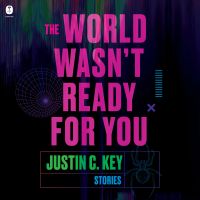
The World Wasn't Ready for YouJustin C. Key11h 34m4.4 (812)$5 · $0.00
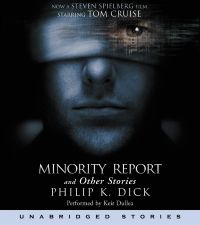
The Minority Report and Other StoriesPhilip K. Dick5h 33m4.0 (27.5K)$24 · $0.00
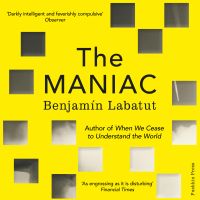
The MANIACBenjamín Labatut9h 51m4.3 (32.8K)$26 · $0.00

Consciousness and Science FictionDamien Broderick9h 39m$20

Final DepartureMorgan B. Blake6h 59m$4.10 · $0.00

Digital HellMorgan B. Blake4h 54m$4.10 · $0.00

BloodshotFred Van Lente8h 21m3.8 (58)$23
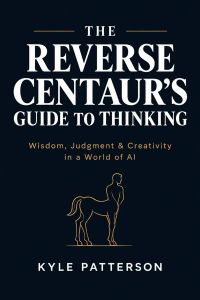
The Reverse Centaur's Guide to ThinkingKyle Patterson2h 37m$14 · $0.00

The Apotheosis Protocol_paradroid7h 53m5.0 (6)$2.99