

How to Set Healthy Screen-Time Rules Without Daily Arguments
By Max Paradox


Length6h 56m
About this audiobook
"Five more minutes."
If those three words regularly turn your living room into a negotiation chamber, this book is for you.
Setting healthy screen-time limits sounds simple until real family life gets involved. Your child is halfway through a game. Their friends are online. One episode automatically becomes another. Homework still needs doing. Bedtime is approaching. You are tired. And somehow a rule that began as "tablet off at eight" has become a twenty-minute debate involving fairness, siblings, classmates, yesterday, and a family you have never met whose children apparently have unlimited Wi-Fi.
How to Set Healthy Screen-Time Rules Without Daily Arguments is a practical, funny guide to creating screen rules that children can understand, parents can realistically enforce, and families can maintain without turning every shutdown into a power struggle.
Max Paradox skips the guilt, panic, and fantasy advice that assumes parents have unlimited patience and children voluntarily place their devices on the charger with gratitude.
Instead, you will learn how to:
create clear screen limits without overcomplicating family life;
stop vague rules that invite constant negotiation;
design predictable screen endings that reduce shutdown battles;
use consequences that teach responsibility instead of creating bigger fights;
decide which rules should be firm and where flexibility makes sense;
handle gaming, streaming, phones, social media, school screens, and shared devices differently when necessary;
protect homework, sleep, meals, and family time;
use timers, charging stations, parental controls, and environmental changes effectively;
give older children more independence without removing every boundary;
manage sibling differences without conducting nightly fairness trials;
handle vacations, sick days, sleepovers, bad weeks, and screen-rule drift;
know what to do when the main strategy simply is not working.
Most importantly, the book shows how to move from constant parental enforcement toward something much more useful: a child who gradually learns to manage technology independently.
You do not need to eliminate screens. You do not need perfect consistency. And you definitely do not need to become the full-time director of your household's Department of Device Regulation.
You need a system that still works when dinner is late, homework takes longer than expected, your child wants one more round, and your energy level is approximately potato.
Clear rules. Predictable transitions. Fewer negotiations. More responsibility over time.
And considerably fewer evenings spent arguing about whether "five more minutes" means five actual minutes.
This publication was prepared with the assistance of tools that support the creative process, including artificial intelligence-based solutions. The final concept, structure, and editing belong to the author.
Audiobook details
GenreSelf-Help
Length6 hrs 56 mins
Narrated byListen with 1,000+ voices
FormateBook with Audio
Publish dateSep 13, 2026
LanguageEnglish
Table of contents
1INTRO
2Chapter 1 - The Argument Is Usually Not About the Screen
3Chapter 2 - Vague Rules Create Professional Negotiators
4Chapter 3 - Your Child Is Not a Tiny Adult With Worse Wi-Fi
5Chapter 4 - The Rules You Break Teach More Than the Rules You Announce
Show all chaptersShow less
6Chapter 5 - Bigger Punishments Do Not Create Better Habits
7Chapter 6 - Do Not Make Willpower Fight the Entire Internet
8Chapter 7 - Stop Negotiating the Same Rule Every Day
9Chapter 8 - Screens Cannot Be the Answer to Every Feeling
10Chapter 9 - Build a Screen Schedule That Survives Tuesday
11Chapter 10 - Say Less During the Fight
12Chapter 11 - Give Them a Voice Without Handing Over the Remote
13Chapter 12 - Different Screens Need Different Rules
14Chapter 13 - Fair Does Not Mean Everybody Gets the Same Rule
15Chapter 14 - Teach Them to Manage the Limit Before You Remove It
16Chapter 15 - When Real Life Eats the Schedule
17Chapter 16 - What to Do When You Are Too Tired to Parent the Router
18Chapter 17 - When the Rule Works Everywhere Except Your House
19Chapter 18 - Notice the Drift Before the Arguments Return
20Chapter 19 - Make the Rule Bigger Than the Device
21Chapter 20 - The System That Ends the Daily Argument

I'm Afraid to Spend Money Even When I Can Afford It - How to Stop Treating Every $20 Purchase Like the Beginning of BankruptcyMax Paradox6h 50m$7.70 · $0.00

Mam 8462 zdjęcia i boję się usunąć choć jedno - Jak posprzątać cyfrowe życie bez oglądania wakacji z 2014 rokuMax Paradox5h 41m$7.70 · $0.00
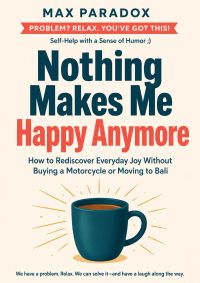
Nothing Makes Me Happy Anymore - How to Rediscover Everyday Joy Without Buying a Motorcycle or Moving to BaliMax Paradox7h 19m$7.70 · $0.00

Every Day I Have to Figure Out What to Eat - How to Stop Losing Your Life to “What's for Dinner?”Max Paradox6h 58m$7.70 · $0.00

The Absurdities of Being a Lawyer - A Quietly Exhausting Guide to a Profession That Never Asked If You’re OkayMax Paradox4h 40m$7.70 · $0.00

The Absurdity of Owning Android Devices - Freedom, Features, and the Mild Chaos of Living in an Open EcosystemMax Paradox3h 51m$7.70 · $0.00

The Absurd War Between Apple and Android - How Two Rectangles Turned Into Tribes, Identities, and Endless ArgumentsMax Paradox3h 51m$7.70 · $0.00

Mój mózg chce wszystko w trzydzieści sekund - Jak odzyskać koncentrację po latach rolek, Shortsów i TikTokaMax Paradox5h 51m$7.70 · $0.00

My Parents Still Treat Me Like a Child - How to Be an Adult Even at Family DinnerMax Paradox7h 33m$7.70 · $0.00

I Can't Watch a Movie Without Checking My Phone - How to Recover the Ability to Do One Thing at a TimeMax Paradox7h 13m$7.70 · $0.00

AI miało oszczędzać mi czas, a mam jeszcze więcej roboty - Jak korzystać z automatyzacji bez automatycznego dokładania sobie obowiązkówMax Paradox5h 15m$7.70 · $0.00

Before I Choose Anything, I Need Fourteen More Reviews - How to Make Decisions Without Writing a Dissertation on Every PurchaseMax Paradox7h 3m$7.70 · $0.00

My Partner Doesn't Listen to Me - How to Talk Without Ending the Conversation by Slamming a CabinetMax Paradox6h 53m$7.70 · $0.00

Nic mnie już nie cieszy - Jak odzyskać zwykłą radość bez kupowania motocykla i przeprowadzki na BaliMax Paradox5h 20m$7.70 · $0.00

I Buy Healthy Food and Then Order Pizza - How to Plan Meals for the Person You Actually AreMax Paradox7h 34m$7.70 · $0.00

How to Be Productive While Doing Absolutely Nothing - The Ultimate Guide to Looking Busy, Feeling Accomplished, and Getting Nothing DoneMax Paradox1h 42m$7.70 · $0.00

Płacę za siłownię, żeby czuła moje wsparcie - Jak zacząć się ruszać bez rozpoczynania nowego życia od poniedziałkuMax Paradox5h 30m$7.70 · $0.00

The Internet Convinced Me I Have Seventeen Diseases - How to Stop Diagnosing Yourself After Three Reels and One CommentMax Paradox6h 17m$7.70 · $0.00

Labubu - A Quiet Study of How Something Small Took Over Without AskingMax Paradox4h 23m$7.70 · $0.00
Learning to PrayJames Martin13h 24m4.5 (3.4K)$33 · $0.00

Swayam Ki AwaazPrem Rawat8h 34m4.7 (1.1K)$26 · $0.00

Forever BoyKate Swenson9h 27m4.7 (5K)$29 · $0.00

You Are Worth ItKyle Carpenter, Don Yaeger8h 53m4.7 (4.8K)$29 · $0.00

The Happiest Man on EarthEddie Jaku3h 48m4.6 (178K)$7 · $0.00

Finding MeViola Davis9h 15m4.6 (256.4K)$29 · $0.00

Spiritual AnatomyDaaji Kamlesh D. Patel9h 47m4.7 (319)$29 · $0.00

The Dangerous Truth about Today’s MarijuanaLaura Stack CSP, MBA9h 57m4.7 (385)$20 · $0.00

The Gospel according to Spiritualism (Translated)Allan Kardec14h 39m4.6 (3.9K)$5.70 · $0.00

Birdie & HarlowTaylor Wolfe7h 50m4.6 (6.5K)$26 · $0.00

CrossroadsKaleb Dahlgren7h 56m4.6 (4.9K)$26 · $0.00

Life on the BridgeKaelynn Partlow5h 40m4.6 (1.1K)$24 · $0.00

Keep Your Love OnDanny Silk9h 4m4.6 (8.1K)$10 · $0.00

The Tao of Joy Every DayDerek Lin10h 24m4.6 (762)$20 · $0.00

UndividedVicky Beeching9h 2m4.6 (1.3K)$29 · $0.00

HE CAN WHO THINKS HE CAN & OTHER BOOKS ON SUCCESSOrison Swett Marden5h 54m4.6 (1.2K)$1.99 · $0.00
Level UpRob Dial7h 42m4.6 (3.3K)$26 · $0.00

Burn the HaystackJennie Young, PhD9h 30m4.6 (543)$29 · $0.00

ACRES OF DIAMONDS: Our Every-day Opportunities (Wisdom & Empowerment Series) (Annotated)Russell Conwell2h 26m4.6 (1K)$2 · $0.00

Good InsideBecky Kennedy9h 55m4.5 (59.3K)$29 · $0.00