

Herbalism for Beginners – A Complete Guide to Medicinal Plants, Their Properties, Applications
By Mateusz Janeczek


Length12h 49m
About this audiobook
One plant. Many compounds. Properties its name alone cannot reveal. We may recognize mint, chamomile, and nettle by name—but what do we really know about their composition and uses? Why aren’t an infusion and an essential oil made from the same plant interchangeable? What changes during drying? Where does tradition end and scientific evidence begin? Herbalism for Beginners invites you to look at familiar herbs with fresh understanding. You’ll learn the basics of plant identification, the main groups of compounds they contain, and how harvesting, processing, and storage affect the quality of herbal materials. You’ll explore the characteristics of mint, lemon balm, lavender, chamomile, sage, ginger, and other plants used in herbal traditions. You’ll also learn why contraindications, possible interactions, and differences between preparations matter. You don’t need any background in botany or chemistry: each topic builds on the last, guiding you from the basic concepts toward a clearer understanding of information about herbs. Open the book and get to know plants more closely!
Audiobook details
Rating★★★★★ 4.6 (12)
Includes Amazon
GenreHealth and Wellness, Self-Help
Length12 hrs 49 mins
Narrated byListen with 1,000+ voices
FormateBook with Audio
Publish dateNov 8, 2026
LanguageEnglish
Table of contents
1Introduction
2Chapter 1. What is herbalism?
3Chapter 2. The world of plants - the basics of botany
4Chapter 3. Construction and functioning of plants
5Chapter 4. Recognition and classification of medicinal plants
Show all chaptersShow less
6Chapter 5. Biologically active substances of plants
7Chapter 6. How do plant substances affect the human body?
8Chapter 7. Properties and applications of medicinal plants
9Chapter 8. Safety of medicinal plants
10Chapter 9. Herbal raw materials – types and properties
11Chapter 10. Extraction, drying and storage of raw materials
12Chapter 11. Forms of plant preparations
13Chapter 12. Quality and authenticity of herbal products
14Chapter 13. Mint, lemon balm and thyme
15Chapter 14. Chamomile, marigold and yarrow
16Chapter 15. Sage, lavender and rosemary
17Chapter 16. Nettle, plantain and horsetail
18Chapter 17. Linden, Rose Hip and Black Elder
19Chapter 18. Valerian, Marshmallow and Ginger
20Chapter 19. Variety of medicinal plants in the world
21Chapter 20. Herbalism in the 21st century - science and the future

Zielarstwo dla początkujących – Kompletny przewodnik po roślinach leczniczych, ich właściwościach i zastosowaniachMateusz Janeczek12h 59m4.6 (15)$5.10 · $0.00

Runen für Anfänger – Der vollständige Leitfaden zu Weissagung, Schutz und dem Pfad der KraftMateusz Janeczek6h$5.10 · $0.00

Feng Shui für Anfänger – Harmonie, Energie und Heiliger RaumMateusz Janeczek7h 16m$5.10 · $0.00

Der Reiki-Kodex Die Heilige Geometrie der Heilenden EnergieMateusz Janeczek4h 8m$5.10 · $0.00

Tarot für Einsteiger – Der vollständige Leitfaden zum KartenlegenMateusz Janeczek4h 21m$5.10 · $0.00
Reiki for Beginners – The Complete Guide from the Basics Energy, Healing, and Step-by-Step PracticeMateusz Janeczek5h 38m$6.40 · $0.00
Manifestation for Beginners – A Beginner’s Guide to the Law of Attraction and MindfulnessMateusz Janeczek5h 1m$6.40 · $0.00

Qi Gong for Beginners – A Natural Way to More Energy, Better Sleep, and Less StressMateusz Janeczek4h 14m$6.40 · $0.00
Tarot for Beginners – The Complete Guide to Card ReadingMateusz Janeczek4h$6.40 · $0.00

Akashic Records for Beginners – How to Read Spiritual Messages, Develop Intuition, and Discover the Wisdom of the SoulMateusz Janeczek14h 18m$6.40 · $0.00

Kundalini for Beginners – Understand Your Energy. Awaken Your Potential.Mateusz Janeczek10h 15m$6.40 · $0.00

Synchronicity for Beginners – How to Recognize the Signs, Understand Their Meaning and Align with the Flow of the UniverseMateusz Janeczek8h 59m$6.40 · $0.00

Dark Psychology for Beginners – How to Analyze People, Detect Manipulation, and Protect Yourself from Mind GamesMateusz Janeczek5h 36m$6.40 · $0.00
Tai Chi for Beginners – The Complete Guide from the BasicsMateusz Janeczek5h 46m$6.40 · $0.00

Energy Reading for Beginners – How to Feel, Understand and Use Energy in Everyday LifeMateusz Janeczek3h 28m$6.40 · $0.00
Shadow Work for Beginners – Understand Yourself, Feel Better and Heal Emotional PatternsMateusz Janeczek5h 50m$6.40 · $0.00

Feng Shui for Beginners – Harmony, Energy, and Sacred SpaceMateusz Janeczek6h 39m$6.40 · $0.00

Channeling for Beginners – How to Connect with Higher ConsciousnessMateusz Janeczek5h 30m$6.40 · $0.00
Magic for Beginners – Spells, Rituals, and IntentionsMateusz Janeczek4h 2m$6.40 · $0.00

The Dangerous Truth about Today’s MarijuanaLaura Stack CSP, MBA9h 57m4.7 (385)$20 · $0.00
Hour of the HeartIrvin D. Yalom, Benjamin Yalom8h 19m4.6 (2.3K)$26 · $0.00

The Yoga Sutras of PatanjaliPatanjali4h 8m4.5 (18.5K)$6 · $0.00

The Lost VoiceGreta Morgan8h 30m4.7 (285)$26 · $0.00

Healthy Kids, Happy KidsElisa Song14h 18m4.6 (760)$33 · $0.00

Eat It!Jordan Syatt, Michael Vacanti4h 40m4.6 (1.5K)$20 · $0.00

Consent Laid BareChanel Contos7h 11m4.5 (1.7K)$24 · $0.00

How to Make Disease DisappearRangan Chatterjee5h 26m4.5 (3.5K)$24 · $0.00

The Complete Herbal (Annotated)Nicholas Culpeper29h 8m4.5 (1.4K)$2 · $0.00

A Plague Upon Our HouseScott W. Atlas MD10h 37m4.5 (3.4K)$20 · $0.00

The Gift of TherapyIrvin Yalom7h 39m4.5 (38.8K)$26 · $0.00

EarlySarah DiGregorio9h 47m4.5 (1.3K)$29 · $0.00

Bottle of LiesKatherine Eban14h 25m4.4 (12K)$33 · $0.00
The 36-Hour DayNancy L. Mace, Peter V. Rabins17h 13m4.4 (9.2K)$28 · $0.00

FlooredSara Reardon10h 36m4.5 (1K)$29 · $0.00

Radical RemissionKelly A. Turner9h 26m4.4 (8.1K)$29 · $0.00

The Sinatra SolutionStephen T. Sinatra MD9h4.5 (899)$20 · $0.00

The Songaminute ManSimon McDermott6h 12m4.5 (280)$24 · $0.00
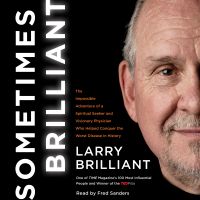
Sometimes BrilliantLarry Brilliant12h 27m4.5 (954)$29 · $0.00

Live Your LifeAmanda Kloots, Anna Kloots10h 54m4.4 (13.7K)$29 · $0.00
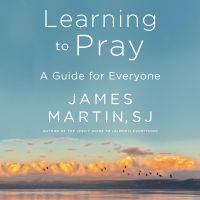
Learning to PrayJames Martin13h 24m4.5 (3.4K)$33 · $0.00

Autism Out Loud: the instant New York Times Bestseller. Moving Stories and Parenting Lessons Learned from Three Mothers of Children with AutismKate Swenson, Carrie Cariello, Adrian Wood8h 41m4.8 (2.1K)$26 · $0.00

The StepsSylvester Stallone9h 4m4.8 (636)$29 · $0.00

Swayam Ki AwaazPrem Rawat8h 34m4.7 (1.1K)$26 · $0.00

Forever BoyKate Swenson9h 27m4.7 (5K)$29 · $0.00

You Are Worth ItKyle Carpenter, Don Yaeger8h 53m4.7 (4.8K)$29 · $0.00

The Happiest Man on EarthEddie Jaku3h 48m4.6 (178K)$7 · $0.00

Finding MeViola Davis9h 15m4.6 (256.4K)$29 · $0.00
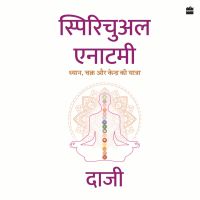
Spiritual AnatomyDaaji Kamlesh D. Patel9h 47m4.7 (319)$29 · $0.00
The Dangerous Truth about Today’s MarijuanaLaura Stack CSP, MBA9h 57m4.7 (385)$20 · $0.00

The Gospel according to Spiritualism (Translated)Allan Kardec14h 39m4.6 (3.9K)$5.70 · $0.00

Birdie & HarlowTaylor Wolfe7h 50m4.6 (6.5K)$26 · $0.00

CrossroadsKaleb Dahlgren7h 56m4.6 (4.9K)$26 · $0.00

Life on the BridgeKaelynn Partlow5h 40m4.6 (1.1K)$24 · $0.00

Keep Your Love OnDanny Silk9h 4m4.6 (8.1K)$10 · $0.00

The Tao of Joy Every DayDerek Lin10h 24m4.6 (762)$20 · $0.00
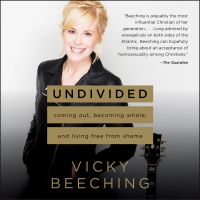
UndividedVicky Beeching9h 2m4.6 (1.3K)$29 · $0.00

HE CAN WHO THINKS HE CAN & OTHER BOOKS ON SUCCESSOrison Swett Marden5h 54m4.6 (1.2K)$0.99 · $0.00
Level UpRob Dial7h 42m4.6 (3.3K)$26 · $0.00

Burn the HaystackJennie Young, PhD9h 30m4.6 (543)$29 · $0.00
You may also like
The Meaning of It AllRichard P. Feynman2h 51m4.1 (14K)$12

Splat the Cat: Fishy TalesRob Scotton3m4.1 (467)$4 · $0.00

On the HeavensAristotle4h 5m4.0 (431)$1.80 · $0.00

Leonardo da Vinci: Thoughts on Art & Life (Annotated)Leonardo da Vinci6h 32m4.1 (823)$1.99 · $0.00

Insect ManufacturesAnonymous2h 34m$2.40

How to Make Money Flipping Boats - How to Assess Hulls, Engines, and Systems, Control Renovation Costs, and Sell in SeasonJACK FLIPWELL2h 1m$5.10

The Craft of Wood: 4 Classic Books for WoodworkersGeorge Alexander Ross, Edwin W. Foster, Archie Seldon Milton, Otto K. Wohlers, William Noyes12h 52m4.6 (10)$1.99 · $0.00
Drawing Horses. Practical guide to drawing horsesRoberto Fabbretti11m4.3 (11)$10 · $0.00

The Money Pit, Vol. 9Tom Kraeutler, Leslie Segrete10h 37m$20
HerbariumKlaus Carl46m4.3 (11)$15 · $0.00

Anatomy of the CatJacob Reighard, H. S. Jennings16h 28m4.0 (11)$1 · $0.00

Machines that BuildJulie Murray14m$1
Rust, Smut, Mildew, & Mould: An Introduction to the Study of Microscopic FungiM. C. Cooke7h 20m4.2 (16)$1 · $0.00

The Geographical Distribution of AnimalsAlfred Russel Wallace42h 20m4.2 (132)$0.99 · $0.00

On the Generation of AnimalsAristotle8h 13m4.0 (258)$1 · $0.00

Englisch lernen Audio – London on a budgetOwen Connors1h$17

The Bird Study BookThomas Gilbert Pearson3h 59m$16 · $0.00

Let's learn English and discover the world of animalsGiovanna Mazzoni, Elena Ercole33m$13 · $0.00
Natural CuriositiesAlfred Wallace Wallace1h 51m$15 · $0.00

Studies in SpermatogenesisN. M. Stevens2h 48m$0.99 · $0.00