
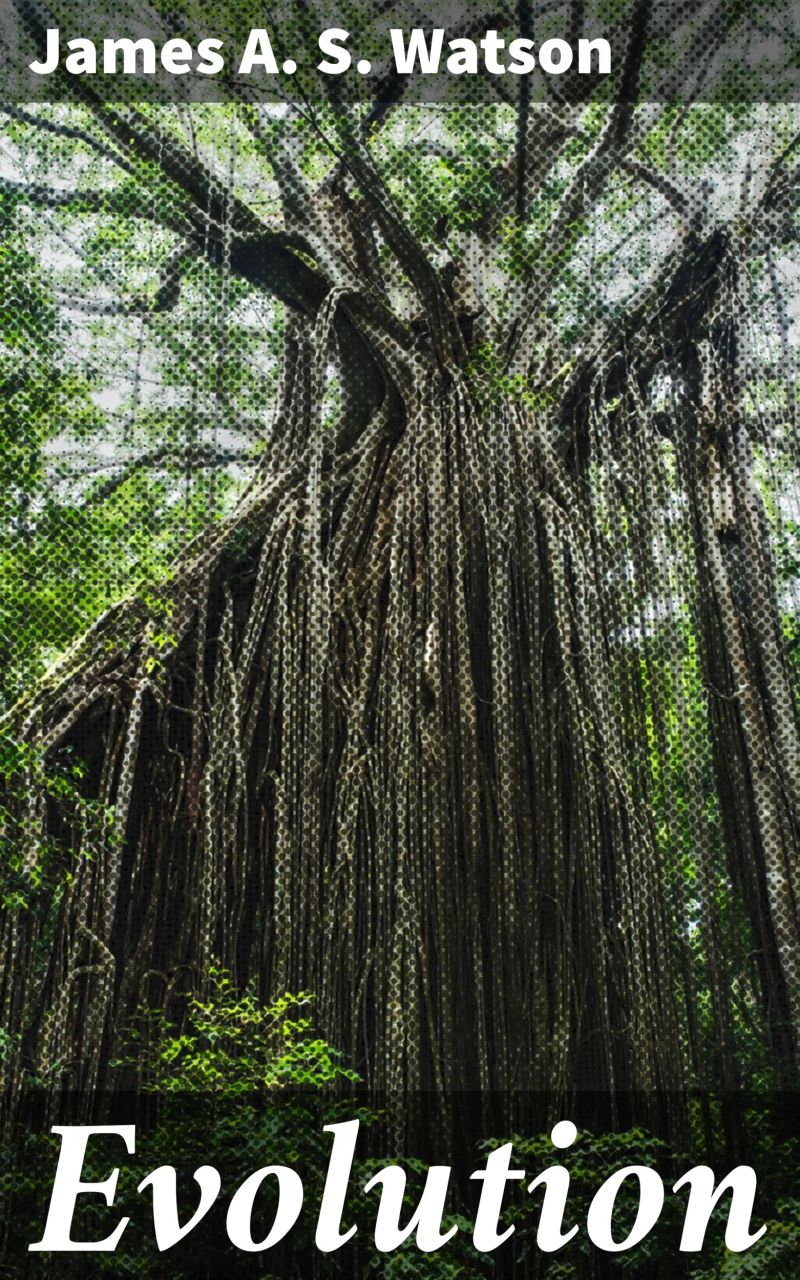
Evolution
Exploring Evolutionary Theory: A Journey Through Science and SocietyBy James A. S. Watson


Length2h 37m
About this audiobook
In "Evolution," James A. S. Watson deftly navigates the complex intersection of biology, philosophy, and ethics to explore the profound implications of evolutionary theory on the human condition. The book combines rigorous scientific analysis with a poetic narrative style, making it accessible to both scholars and general readers. Watson employs a multi-disciplinary approach, invoking historical context, from the theories of Darwin to contemporary debates in evolutionary psychology, effectively framing evolution not just as a biological process but as a foundational element influencing culture, society, and personal identity. James A. S. Watson, a renowned biologist and philosopher, has dedicated his career to the exploration of the impact of evolutionary biology on human thought and understanding. His extensive research on genetic diversity and species adaptation, paired with a keen interest in the philosophical ramifications of scientific discovery, has uniquely equipped him to address the multifaceted questions surrounding evolution. Watson'Äôs depth of knowledge is reflected in his eloquent prose, as he synthesizes complex scientific ideas into a cohesive and thought-provoking narrative. I highly recommend "Evolution" to anyone seeking a deeper understanding of humanity's place in the natural world. Watson's ability to merge scientific rigor with philosophical inquiry offers readers a nuanced perspective on evolution that transcends traditional academic boundaries. This book is essential reading for those curious about the challenges and wonders of evolutionary thought in contemporary society.
Audiobook details
GenreScience and Nature
Length2 hrs 37 mins
Narrated byListen with 1,000+ voices
FormateBook with Audio
Publish dateMay 19, 2021
LanguageEnglish
Table of contents
1Introduction
5CHAPTER IV
2CHAPTER I: THE VARIATION OF PIGEONS UNDER DOMESTICATION.
6CHAPTER V
3CHAPTER II
7CHAPTER VI
4CHAPTER III

A Brief History of IntelligenceMax S. Bennett12h 18m4.6 (6.6K)$29 · $0.00
The Story of BirdsSteve Brusatte11h 49m4.6 (401)$29 · $0.00

BeyondStephen Walker15h 39m4.6 (3.2K)$33 · $0.00

LiftoffEric Berger9h 4m4.6 (9.5K)$29 · $0.00
Black Earth WisdomLeah Penniman11h 54m4.6 (577)$8 · $0.00

Total Cat MojoJackson Galaxy10h 13m4.5 (8.4K)$23 · $0.00

My Life Among the UnderdogsTia Torres5h 51m4.5 (4K)$24 · $0.00

What It Takes to Save a LifeKwane Stewart6h4.6 (556)$24 · $0.00

Pastoral SongJames Rebanks8h 35m4.5 (12K)$26 · $0.00

How Stella Learned to TalkChristina Hunger7h4.5 (10.9K)$24 · $0.00

Craig & FredCraig Grossi8h 6m4.5 (9.6K)$26 · $0.00
Celebrating BirdsNatalia Rojas, Ana Maria Martinez6h 47m4.6 (330)$24 · $0.00

Saving JemimaJulie Zickefoose4h 59m4.5 (749)$20 · $0.00

Will's Red CoatTom Ryan8h 23m4.5 (2.3K)$26 · $0.00

Of Time and TurtlesSy Montgomery10h 34m4.5 (5K)$29 · $0.00
THE WOLF TRILOGY: Call of the Wild, White Fang & The Son of the WolfJack London17h 31m4.5 (2.4K)$1.99 · $0.00

Zen and the Art of Saving the PlanetThich Nhat Hanh9h 20m4.5 (3.9K)$29 · $0.00

BLACK BEAUTY (With Original Illustrations)Anna Sewell7h 31m4.5 (1.3K)$1.99 · $0.00

Bottle of LiesKatherine Eban14h 25m4.4 (12K)$33 · $0.00
IngrainedCallum Robinson8h 10m4.5 (1.1K)$26 · $0.00
You may also like
A New Bat (Myotis) From MexicoE. Raymond Hall5m$1 · $0.00

The Boston School Atlas, Embracing a Compendium of GeographyB. Franklin Edmands3h 30m$2 · $0.00
Glimpses of Ocean Life; Or, Rock-Pools and the Lessons they TeachJohn Harper7h 31m$2 · $0.00

The WoodpeckersFannie Hardy Eckstorm2h 14m3.8 (10)$2 · $0.00

The Microscope. Its History, Construction, and Application 15th edJabez Hogg20h 57m$1 · $0.00
Taxidermy and Zoological Collecting (Annotated)William T. Hornaday, W. J. Holland15h 10m$0.99 · $0.00
A Pictorial Atlas of Fossil RemainsGideon Algernon Mantell5h 1m$2.30
Extensions of Known Ranges of Mexican BatsSydney Anderson9m$2 · $0.00

A Hand-book of Precious StonesMeyer D. Rothschild2h 33m$1 · $0.00
Tadarida femorosacca (Merriam) in Tamaulipas, MexicoWalter Woelber Dalquest, E. Raymond Hall2m$2 · $0.00
Peat and its Uses as Fertilizer and FuelSamuel W. Johnson5h 13m$1 · $0.00
Practical Soil Mechanics and GeologyBethany Cargill15h 49m$75
Popular lessons in astronomyFrancis J. Grund27m$2 · $0.00
HerbariumKlaus Carl1h 6m4.5 (11)$13.50 · $0.00

Dogs of All NationsEsplin Mason4h 35m4.2 (23)$2.30

FishNaumann & Göbel Verlag3h 26m$5 · $0.00

The Art of Wood FinishingNita Hubbert5h 55m$2.30
On Generation and CorruptionAristotle2h 56m4.0 (452)$1.20 · $0.00

Flowers And Their FriendsMargaret Warner Morley4h 26m$2.30

The Ultimate Dog Fact Book for Kids!Caterina Christakos11m$3