


Length2h 16m
About this audiobook
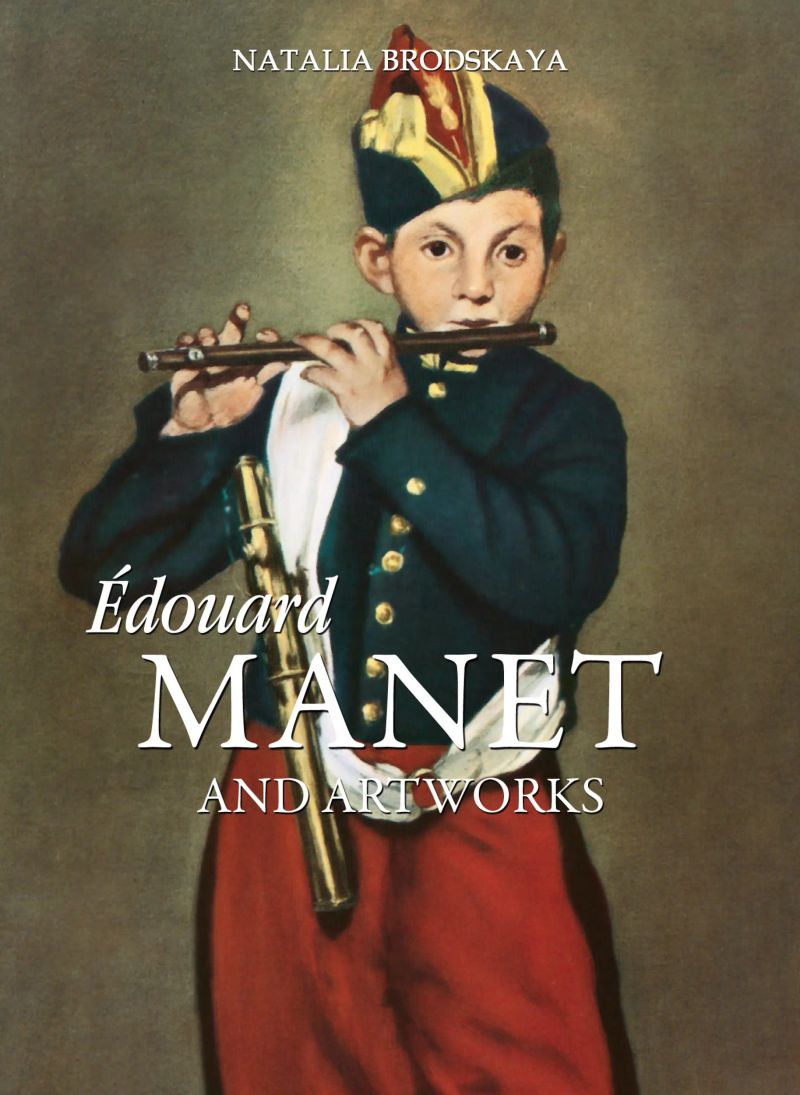
Manet is one of the most famous artists from the second half of the nineteenth century linked to the impressionists, although he was not really one of them. He had great influence on French painting partly because of the choice he made for his subjects from everyday life, the use of pure colours, and his fast and free technique. He made, in his own work, the transition between Courbet's Realism and the work of the impressionists.
Born a high bourgeois, he chose to become a painter after failing the entry to the Marine School. He studied with Thomas Couture, an Academic painter, but it was thanks to the numerous travels he made around Europe from 1852 that he started to find out what would become his own style.
His first paintings were mostly portraits and genre scenes, inspired by his love for Spanish masters like Velázquez and Goya. In 1863 he presented his masterpiece Luncheon on the Grass at the Salon des Refusés. His work started a fight between the defenders of Academic art and the young "refusés" artists. Manet became the leader of this new generation of artists.
From 1864, the official Salon accepted his paintings, still provoking loud protests over works such as Olympia in 1865. In 1866, the writer Zolá wrote an article defending Manet's work. At that time, Manet was friends with all the future great impressionist masters: Edgar Degas, Claude Monet, Auguste Renoir, Alfred Sisley, Camille Pissarro and Paul Cézanne, and he influenced their work, even though he cannot strictly be counted as one of them. In 1874 indeed, he refused to present his paintings in the First Impressionist Exhibition. His last appearance in the official Salon was in 1882 with A Bar at the Folies-Bergère, one of his most famous works. Suffering from gangrene during the year 1883, he painted flower still-lifes until he became too weak to work. He died leaving behind a great number of drawings and paintings.
Audiobook details
Rating★★★★ 4.2 (59)
Includes Amazon, Goodreads, LibraryThing
GenreOther
Length2 hrs 16 mins
Narrated byListen with 1,000+ voices
FormateBook with Audio
Publish dateNov 14, 2023
LanguageEnglish
Table of contents
1Introduction
2Self-Portrait with a Palette, 1879
3Biography
4The Absinthe Drinker, 1858-1859
5Édouard Manet (1832-1883)
Show all chaptersShow less
6Boy with Cherries, 1858-1859
7The Surprised Nymph, 1858-1860
8Fishing, c. 1860-1861
9The Students of Salamanca, 1860
10Portrait of a Man, 1860
11Spanish Cavaliers, c. 1860
12Portraits of Mr and Mrs Auguste Manet, 1860
13Portrait of Roudier, c. 1860
14Woman at Her Toilette, 1861
15The Spanish Singer (The Guitarero), 1861-1862
16Study of Miss Victorine Meurent in the Costume of an Espada, c. 1862
17The Old Musician, 1862
18Ballet Shoes, c. 1862
19Child Carrying a Plate, c. 1862
20The Street Singer, 1862
21Music in the Tuileries Gardens, 1862
22Lola de Valence, 1862
23Portrait of Victorine Meurent, c. 1862
24The Spanish Ballet, 1862
25Study for Olympia, 1862-1863
26Luncheon on the Grass (The Picnic), 1863
27Olympia, 1863
28Study of a Young Man, c. 1862-1863
29Battle of the Kearsage and the Alabama, 1864
30Stem of Peony and Secateurs, 1864
31Bouquet of Peonies, 1864
32Still Life with Eel and Red Mullet, 1864
33The Dead Toreador, 1864
34The Kearsage at Boulogne, 1864
35Marine: the Porpoises, 1864
36Grapes and Figs, 1864
37Bullfighting, 1865
38Reading, 1865
39The Piper, 1866
40Mrs Edouard Manet at the Piano, 1867-1868
41Soldier (detail of The Execution of the Emperor Maximilien), 1867
42The Execution of the Emperor Maximilien, 1867-1868
43The Execution of the Emperor Maximilien, 1867-1868
44Portrait of Émile Zola, 1868
45Portrait of Théodore Duret, 1868
46The Balcony, 1868-1869
47Luncheon in the Studio, 1868
48The Cat’s Rendez-Vous, 1868
49Portrait of Berthe Morisot, 1869
50The Boat Leaving from Folkestone, 1869
More from Natalia Brodskaya

Das ultimative Buch über Claude MonetNatalia Brodskaya, Nina Kalitina6h 6m4.6 (11)$19 · $0.00
Pierre Bonnard and artworksNatalia Brodskaya1h 42m4.2 (26)$15 · $0.00
Naïve Art 120 illustrationsNatalia Brodskaya1h 11m4.1 (53)$15 · $0.00

Pierre-Auguste Renoir and artworksNatalia Brodskaya1h 19m3.8 (45)$15 · $0.00

Édouard Manet y obras de arteNatalia Brodskaya2h 25m$15 · $0.00
Claude Monet and artworksNatalia Brodskaya1h 18m4.0 (69)$15 · $0.00
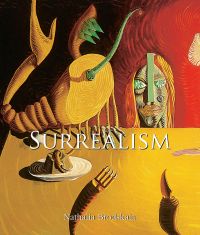
SurrealismNatalia Brodskaya4h 44m4.0 (149)$15 · $0.00

Pierre-Auguste Renoir und KunstwerkeNatalia Brodskaya1h 23m$15 · $0.00
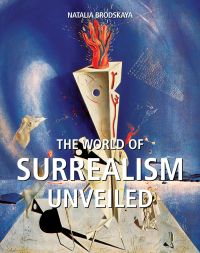
The world of Surrealism unveiledNatalia Brodskaya1h 29m$13 · $0.00

Paul Cézanne and artworksNatalia Brodskaya1h 17m4.3 (37)$15 · $0.00
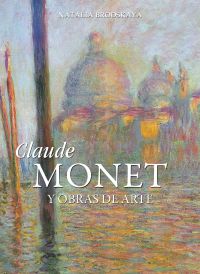
Claude Monet y obras de arteNatalia Brodskaya1h 22m4.3 (140)$15 · $0.00

Pierre-Auguste Renoir y obras de arteNatalia Brodskaya1h 22m4.0 (21)$15 · $0.00
Mere ChristianityC. S. Lewis7h 7m4.4 (519.7K)$24 · $0.00

Her Daily BreadKate Wood12h 57m4.6 (153)$33 · $0.00
The Holy Bible - 1 SamuelKing James2h 13m4.8 (1.6K)$3 · $0.00

The American Standard Bible — The Gospel of MatthewMatthew3h 56m4.7 (3K)$2 · $0.00

Bad Fat Black GirlSesali Bowen6h 32m4.7 (2.8K)$24 · $0.00
The King James Audio Bible New Testament CompleteChristopher Glyn20h 2m4.7 (2.6K)$12 · $0.00
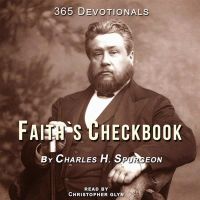
Faiths CheckbookCharles Spurgeon12h 44m4.7 (3.2K)$11 · $0.00

Ten Things I Wish You Knew About Your Child's Mental HealthDr. Billy Garvey4h 53m4.7 (2.4K)$20 · $0.00

Designing Terry Pratchett’s DiscworldPaul Kidby3h 52m4.7 (343)$20 · $0.00
The Chosen Book OneAmanda Jenkins, Kristen Hendricks, Dallas Jenkins3h 8m4.6 (4.9K)$10 · $0.00

The Lives of BrianBrian Johnson9h 45m4.6 (3.5K)$29 · $0.00
Expository Thoughts on the Gospel of LukeJ.C. Ryle27h 13m4.7 (536)$18 · $0.00

CrossroadsKaleb Dahlgren7h 56m4.6 (4.9K)$26 · $0.00

Across the RiverKent Babb11h 40m4.6 (927)$29 · $0.00

Brain Training for RidersAndrea Monsarrat Waldo5h 56m4.7 (550)$19 · $0.00

My Effin' LifeGeddy Lee17h 11m4.6 (13.1K)$40 · $0.00

Kings and PawnsHoward Bryant10h 9m4.6 (678)$29 · $0.00

The Elementia Chronicles #2: The New OrderSean Fay Wolfe11h 17m4.6 (841)$29 · $0.00

The ActsLuke2h 55m4.6 (19.7K)$12 · $0.00

New Testament - Easy NavigationWorld English Bible19h 35m4.6 (1.3K)$1.30 · $0.00
You may also like

The American Language (Annotated)H. L. Mencken18h 39m4.3 (889)$0.99 · $0.00

The American LanguageH. L. Mencken10h 52m4.1 (554)$2 · $0.00

Set the Boy FreeJohnny Marr9h 28m4.3 (9K)$29 · $0.00

SiddharthaHermann Hesse4h 12m4.2 (1M)$1.20 · $0.00

Pretty BoysDavid Yi9h 16m4.3 (310)$29 · $0.00

Ann Veronica (Unabridged)H. G. Wells11h 23m3.7 (1.7K)$2 · $0.00

The Autobiography of Benjamin FranklinBenjamin Franklin, Frank Woodworth Pine7h 5m4.0 (114.4K)$1 · $0.00
CassattNathalia Brodskaïa1h 46m4.1 (36)$15 · $0.00

HokusaiEdmond de Goncourt5h 33m4.1 (122)$18 · $0.00

Burning Down the HouseJonathan Gould17h 45m3.7 (749)$40 · $0.00

e-Pedia: The BeatlesWikipedia contributors371h 39m$1 · $0.00

HokusaiEdmond de Goncourt5h 37m4.1 (203)$18 · $0.00

Marian McPartland’s Jazz WorldMarian McPartland7h 47m3.6 (45)$12 · $0.00
Benjamin FranklinRobin McKown5h 26m4.6 (12)$2.30

ManetNathalia Brodskaya2h 26m$13.50 · $0.00
Cassatt and artworksNathalia Brodskaïa1h 51m4.1 (36)$15 · $0.00

Roger Fry: a biography by Virginia WoolfVirginia Woolf10h 5m3.7 (439)$1 · $0.00

The OutsiderUnknown Author9h 26m$24 · $0.00

Some Diversions of a Man of LettersEdmund Gosse5h 28m$2 · $0.00

Obiter Dicta: Second SeriesAugustine Birrell4h 2m3.5 (12)$2 · $0.00