


Length1h 16m
About this audiobook
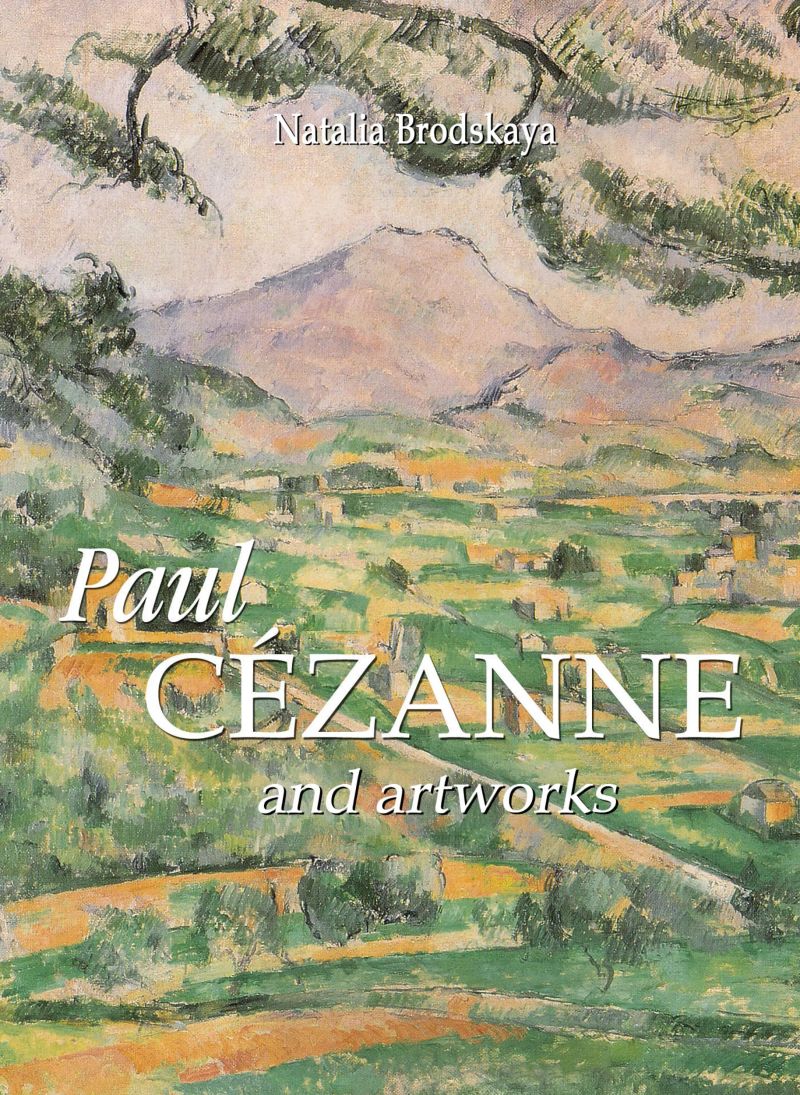
Since his death 100 years ago, Cézanne has become the most famous painter of the nineteenth century. He was born in Aix-en-Provence in 1839 and the happiest period of his life was his early youth in Provence, in company with Emile Zolá, another Italian. Following Zolá's example, Cézanne went to Paris in his twenty-first year.
During the Franco-Prussian war he deserted the military, dividing his time between open-air painting and the studio. He said to Vollard, an art dealer, "I'm only a painter. Parisian wit gives me a pain. Painting nudes on the banks of the Arc [a river near Aix] is all I could ask for." Encouraged by Renoir, one of the first to appreciate him, he exhibited with the impressionists in 1874 and in 1877. He was received with derision, which deeply hurt him.
Cézanne's ambition, in his own words, was "to make out of Impressionism something as solid and durable as the paintings of the museums." His aim was to achieve the monumental in a modern language of glowing, vibrating tones. Cézanne wanted to retain the natural colour of an object and to harmonise it with the various influences of light and shade trying to destroy it; to work out a scale of tones expressing the mass and character of the form.
Cézanne loved to paint fruit because it afforded him obedient models and he was a slow worker. He did not intend to simply copy an apple. He kept the dominant colour and the character of the fruit, but heightened the emotional appeal of the form by a scheme of rich and concordant tones. In his paintings of still-life he is a master. His fruit and vegetable compositions are truly dramatic; they have the weight, the nobility, the style of immortal forms. No other painter ever brought to a red apple a conviction so heated, sympathy so genuinely spiritual, or an observation so protracted. No other painter of equal ability ever reserved for still-life his strongest impulses. Cézanne restored to painting the pre-eminence of knowledge, the most essential quality to all creative effort.
The death of his father in 1886 made him a rich man, but he made no change in his abstemious mode of living. Soon afterwards, Cézanne retired permanently to his estate in Provence. He was probably the loneliest of painters of his day. At times a curious melancholy attacked him, a black hopelessness. He grew more savage and exacting, destroying canvases, throwing them out of his studio into the trees, abandoning them in the fields, and giving them to his son to cut into puzzles, or to the people of Aix.
At the beginning of the century, when Vollard arrived in Provence with intentions of buying on speculation all the Cézannes he could get hold of, the peasantry, hearing that a fool from Paris was actually handing out money for old linen, produced from barns a considerable number of still-lifes and landscapes. The old master of Aix was overcome with joy, but recognition came too late. In 1906 he died from a fever contracted while painting in a downpour of rain.
Audiobook details
Rating★★★★ 4.3 (37)
Includes Goodreads, Amazon
GenreOther
Length1 hr 16 mins
Narrated byListen with 1,000+ voices
FormateBook with Audio
Publish dateDec 5, 2022
LanguageEnglish
Table of contents
1Introduction
2Portrait of the Artist
3Chronology
4The Four Seasons
5Two Women and Child in an Interior
Show all chaptersShow less
6Uncle Dominic as a Monk
7Man in a Cotton Hat
8Bread and Eggs
9The Strove in the Studio
10Portrait of the Artist’s Father
11The Abduction
12The Black Scipion
13The Temptation of Saint Anthony
14Murder
15Girl at the Piano (Overture to “Tannhäuser”)
16The Madeleine or Sorrow
17Green Pot and Tin Kettle
18Luncheon on the Grass
19Portrait of Anthony Valabrègue
20Pastoral
21Melting Snow at l’Estaque
22Trench at the Foot of Mont Sainte-Victoire
23Self-Portrait with Cap
24The House of Dr. Gachet in Auvers
25The House of the Hanged Man at Auvers
26A Modern Olympia
27Flowers in a little Delft Vase
28Flowers in a Blue Vase
29Portrait of the Artist
30The Buffet
31Trees in a Park
32Auvers, Panoramic View
33Path in Jas de Bouffan
34Bathers
35Self-Portrait with a Pink Background
36Afternoon in Naples (Rum Punch)
37Five Bathers
38Three Bathers
39Road at Pontoise (Clos des Mathurins)
40Madame Cézanne in a Red Armchair (Madame Cézanne in a Striped Skirt)
41The Eternal Female
42Still Life with a Soup Tureen
43Self-Portrait
44Bay of Marseille from l’Estaque
45Fruit
46Bridge in Maincy near Melun
47Fruits
48Still Life with Dish, Glass and Apples
49Court of a Farm in Auvers
50Apples and Biscuits
More from Natalia Brodskaya
Das ultimative Buch über Claude MonetNatalia Brodskaya, Nina Kalitina6h 6m4.6 (11)$19 · $0.00
Pierre Bonnard and artworksNatalia Brodskaya1h 42m4.2 (26)$15 · $0.00
Naïve Art 120 illustrationsNatalia Brodskaya1h 11m4.1 (53)$15 · $0.00
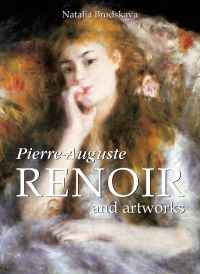
Pierre-Auguste Renoir and artworksNatalia Brodskaya1h 19m3.8 (45)$15 · $0.00

Édouard Manet y obras de arteNatalia Brodskaya2h 25m$15 · $0.00
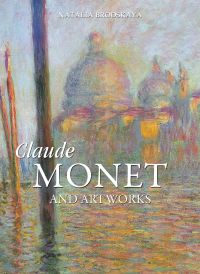
Claude Monet and artworksNatalia Brodskaya1h 18m4.0 (69)$15 · $0.00
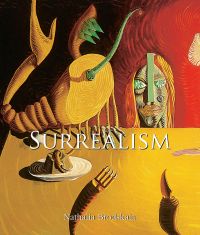
SurrealismNatalia Brodskaya4h 44m4.0 (149)$15 · $0.00

Édouard Manet and artworksNatalia Brodskaya2h 17m4.2 (59)$15 · $0.00

Pierre-Auguste Renoir und KunstwerkeNatalia Brodskaya1h 23m$15 · $0.00
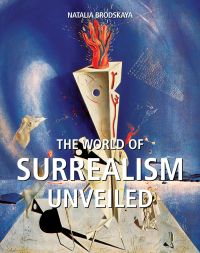
The world of Surrealism unveiledNatalia Brodskaya1h 29m$13 · $0.00
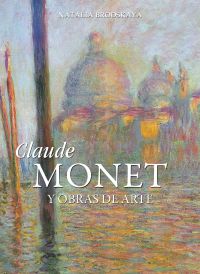
Claude Monet y obras de arteNatalia Brodskaya1h 22m4.3 (140)$15 · $0.00
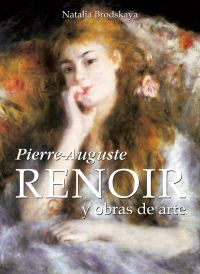
Pierre-Auguste Renoir y obras de arteNatalia Brodskaya1h 22m4.0 (21)$15 · $0.00
Mere ChristianityC. S. Lewis7h 7m4.4 (519.7K)$24 · $0.00

Her Daily BreadKate Wood12h 57m4.6 (153)$33 · $0.00
The Holy Bible - 1 SamuelKing James2h 13m4.8 (1.6K)$3 · $0.00

The American Standard Bible — The Gospel of MatthewMatthew3h 56m4.7 (3K)$2 · $0.00

Bad Fat Black GirlSesali Bowen6h 32m4.7 (2.8K)$24 · $0.00

The King James Audio Bible New Testament CompleteChristopher Glyn20h 2m4.7 (2.6K)$12 · $0.00

Faiths CheckbookCharles Spurgeon12h 44m4.7 (3.2K)$11 · $0.00

Ten Things I Wish You Knew About Your Child's Mental HealthDr. Billy Garvey4h 53m4.7 (2.4K)$20 · $0.00

Designing Terry Pratchett’s DiscworldPaul Kidby3h 52m4.7 (343)$20 · $0.00
The Chosen Book OneAmanda Jenkins, Kristen Hendricks, Dallas Jenkins3h 8m4.6 (4.9K)$10 · $0.00

The Lives of BrianBrian Johnson9h 45m4.6 (3.5K)$29 · $0.00
Expository Thoughts on the Gospel of LukeJ.C. Ryle27h 13m4.7 (536)$18 · $0.00

CrossroadsKaleb Dahlgren7h 56m4.6 (4.9K)$26 · $0.00

Across the RiverKent Babb11h 40m4.6 (927)$29 · $0.00

Brain Training for RidersAndrea Monsarrat Waldo5h 56m4.7 (550)$19 · $0.00

My Effin' LifeGeddy Lee17h 11m4.6 (13.1K)$40 · $0.00

Kings and PawnsHoward Bryant10h 9m4.6 (678)$29 · $0.00

The Elementia Chronicles #2: The New OrderSean Fay Wolfe11h 17m4.6 (841)$29 · $0.00

The ActsLuke2h 55m4.6 (19.7K)$12 · $0.00

New Testament - Easy NavigationWorld English Bible19h 35m4.6 (1.3K)$1.30 · $0.00
You may also like

Women in ClothesSheila Heti, Heidi Julavits, Leanne Shapton, others19h 14m3.9 (3.2K)$25 · $0.00

LettermanJason Zinoman9h 39m3.9 (3.2K)$29 · $0.00
Schopenhauer in 90 MinutesPaul Strathern1h 19m3.8 (1.2K)$7

WomanNatalie Angier18h 41m4.1 (5.4K)$30 · $0.00

SiddharthaHermann Hesse4h 12m4.2 (1M)$1.20 · $0.00
The Autobiography of Charles DarwinCharles Darwin2h 24m4.0 (6.5K)$3.50 · $0.00
Leonardo da Vinci: Thoughts on Art & LifeLeonardo da Vinci6h 48m4.1 (1.5K)$1.99 · $0.00
Lives of the ArtistsKathleen Krull2h 2m4.0 (662)$13
Sartre in 90 MinutesPaul Strathern1h 41m3.7 (1.1K)$7
Georgia O'KeeffeRoxana Robinson29h 13m4.2 (2K)$30
The Autobiography of Charles Darwin (Annotated)Charles Darwin3h 37m4.1 (14.1K)$0.99 · $0.00

CézanneNathalia Brodskaya1h4.3 (25)$8 · $0.00

CézanneNathalia Brodskaya53m$8 · $0.00

CézanneNathalia Brodskaya1h 11m4.3 (37)$15 · $0.00
RodinFrederic V. Grunfeld27h 2m4.2 (249)$32

CézanneNathalia Brodskaya1h 22m3.9 (19)$13.50 · $0.00
Claude MonetNina Kalitina3h 14m4.4 (52)$13 · $0.00
Gustave Caillebotte (1848-1894)Nathalia Brodskaïa, Victoria Charles1h 21m4.6 (18)$15 · $0.00
Claude Monet: Vol 1Nathalia Brodskaïa, Nina Kalitina4h$18 · $0.00
Claude MonetNina Kalitina, Nathalia Brodskaya3h 24m4.4 (131)$16 · $0.00