
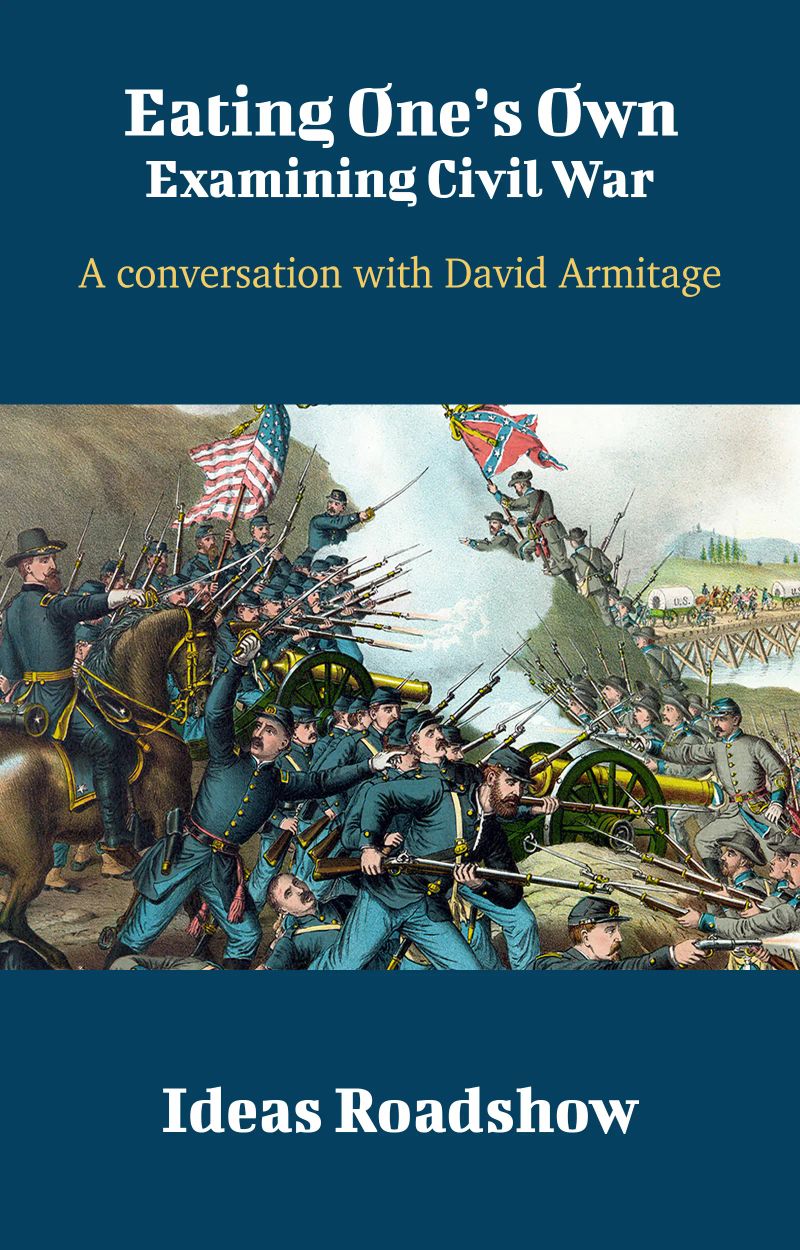
Eating One’s Own: Examining Civil War - A Conversation with David Armitage
By Howard Burton


Length1h 48m
About this audiobook
This book is based on an in-depth conversation between Howard Burton and intellectual historian David Armitage, the Lloyd C. Blanfein Professor of History at Harvard University. This conversation covers David Armitage’s research on the history of ideas of civil war from Ancient Rome to the present. A salient feature of Armitage’s work is a strong focus on etymology as it relates to our understanding of how people interpreted (or misinterpreted) and perceived events in history which results in a fascinating exploration of how our understanding of various concepts has been prejudiced by past societies and past beliefs that we might not even be aware of, and how they, in turn, go on to influence other societies; and how this cumulative process frames our understanding of these ideas.
This carefully-edited book includes an introduction, Imagining the Possibilities, and questions for discussion at the end of each chapter:
I. Historical Origins - In search of multiple perspectives
II. The Semantic Archaeologist - Analyzing sedimented meanings
III. In Search of a Definition - Francis Lieber’s “ticklish business”
IV. Bellum Civile - The Roman reference point
V. What Is To Be Done? - Applying historical understanding to the modern world
VI. Historical Relevance - More prevalent than often recognized
VII. Oceans of Possibilities - Future work
About Ideas Roadshow Conversations Series:
Presented in an accessible, conversational format, Ideas Roadshow books not only explore frontline academic research featuring world-leading researchers but also reveal the inspirations and personal journeys behind the research.
Audiobook details
GenreHistory
Length1 hr 48 mins
Narrated byListen with 1,000+ voices
FormateBook with Audio
LanguageEnglish
Table of contents
1Contents
11IV. Bellum Civile
2A Note on the Text
12Questions for Discussion:
3Introduction
13V. What Is To Be Done?
4The Conversation
14Questions for Discussion:
5I. Historical Origins
15VI. Historical Relevance
Show all chaptersShow less
6Questions for Discussion:
16Questions for Discussion:
7II. The Semantic Archaeologist
17VII. Oceans of Possibilities
8Questions for Discussion:
18Questions for Discussion:
9III. In Search of a Definition
19Continuing the Conversation
10Questions for Discussion:
Series


The Limits of Consciousness - A Conversation with Martin MontiHoward Burton1h 43m$3 · $0.00

The Mind-Body Problem - A Conversation with Janko TipsarevicHoward Burton1h 18m$3 · $0.00

The Problems of Physics, Reconsidered - A Conversation with Tony LeggettHoward Burton1h 43m$3 · $0.00

Inflated Expectations: A Cosmological Tale - A Conversation with Paul SteinhardtHoward Burton1h 57m$3 · $0.00
Conversations About Astrophysics & AstronomyHoward Burton9h 42m$10 · $0.00

Conversations About The EnvironmentHoward Burton9h 54m$10 · $0.00

Exploring the Sikh Tradition - A Conversation with Eleanor NesbittHoward Burton1h 59m$3 · $0.00

Criminal Justice: An Examination - A Conversation with Julian RobertsHoward Burton1h 32m$3 · $0.00

Knowing One's Place: Space and the Brain - A Conversation with Jennifer GrohHoward Burton1h 22m$3 · $0.00
Science and Pseudoscience - A Conversation with Michael GordinHoward Burton2h 17m$3 · $0.00

Rabbi with a Cause: Israel and Identity - A Conversation with David J. GoldbergHoward Burton1h 9m$3 · $0.00
Meaningfulness - A Conversation with Susan WolfHoward Burton1h 52m$3 · $0.00

Turning the Mirror: A View From the East - A Conversation with Pankaj MishraHoward Burton1h 26m$3 · $0.00
The Value of Voice - A Conversation with Nick CouldryHoward Burton1h 59m$3 · $0.00

Constructing Our World: The Brain's-Eye View - A Conversation with Lisa Feldman BarrettHoward Burton2h 16m$3 · $0.00

Understanding ADHD - A Conversation with Stephen HinshawHoward Burton1h 58m$3 · $0.00

Letters From LanguedocHoward Burton3h 50m$9 · $0.00
Kant, Applied - A Conversation with Onora O'NeillHoward Burton1h 28m$3 · $0.00

Minds and Machines - A Conversation with Miguel NicolelisHoward Burton1h 54m$3 · $0.00

The Cyclic Universe - A Conversation with Roger PenroseHoward Burton2h 20m4.3 (39)$3 · $0.00

A Brief History of IntelligenceMax S. Bennett12h 18m4.6 (6.6K)$29 · $0.00
RevolutionariesSanjeev Sanyal11h 23m4.6 (2.6K)$29 · $0.00

We Crossed a Bridge and It TrembledWendy Pearlman6h4.6 (5.2K)$24 · $0.00

Unbroken Bonds of BattleJohnny Joey Jones8h 31m4.6 (2.6K)$8 · $0.00

The Daughter of AuschwitzTova Friedman, Malcolm Brabant7h 54m4.6 (16.7K)$26 · $0.00

Lily's PromiseLily Ebert, Dov Forman8h 54m4.6 (16.1K)$29 · $0.00
On Democracies and Death CultsDouglas Murray10h 38m4.6 (6.5K)$29 · $0.00

Across the RiverKent Babb11h 40m4.6 (927)$29 · $0.00

Balcony Over Jerusalem: A Middle East Memoir - Israel, Palestine and BeyondJohn Lyons12h 37m4.6 (1.4K)$33 · $0.00

BeyondStephen Walker15h 39m4.6 (3.2K)$33 · $0.00
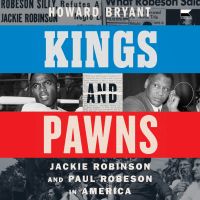
Kings and PawnsHoward Bryant10h 9m4.6 (678)$29 · $0.00

No EscapeNury Turkel9h 30m4.6 (809)$28 · $0.00

Jubal Stone: U.S. Marshal: Blood Trail To Hell: A Western Adventure NovelCasey Nash3h 42m4.6 (3.2K)$18 · $0.00

Fall and RiseMitchell Zuckoff17h 23m4.6 (9.8K)$40 · $0.00
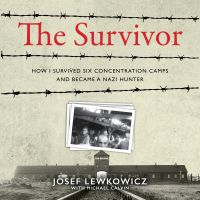
The SurvivorJosef Lewkowicz, Michael Calvin9h 22m4.6 (2.5K)$29 · $0.00

Always FaithfulThomas Schueman, Zainullah Zaki12h 12m4.6 (977)$29 · $0.00

The State of Society in France Before the Revolution of 1789 (Annotated)Alexis de Tocqueville17h 25m4.6 (1.2K)$2 · $0.00

All the Gallant MenDonald Stratton, Ken Gire5h 55m4.6 (11.8K)$24 · $0.00
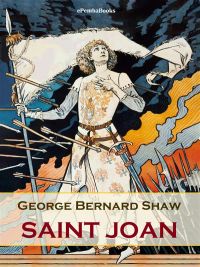
Saint Joan (Annotated)George Bernard Shaw6h 20m4.6 (1.2K)$1.20 · $0.00
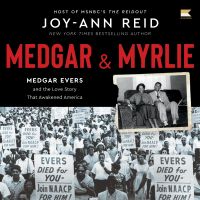
Medgar and MyrlieJoy-Ann Reid10h 52m4.5 (27.8K)$29 · $0.00
You may also like
Left-Wing Communism: an Infantile DisorderVladimir Lenin4h 18m4.3 (3.8K)$4 · $0.00

Founding FaithSteven Waldman9h 46m4.1 (1K)$26
Race and CultureThomas Sowell10h 56m4.5 (1.5K)$21
The American FutureSimon Schama15h 59m3.9 (1.4K)$33 · $0.00
A Treatise on Christian LibertyMartin Luther3h 43m4.3 (4.5K)$1 · $0.00
India: A Million Mutinies NowV. S. Naipaul24h 46m4.0 (2.6K)$30

The Mediaeval Mind (Vol. 1&2) (Annotated)Henry Osborn Taylor46h 46m4.3 (286)$0.99 · $0.00
RevolutionariesJack N. Rakove19h 28m4.0 (1.9K)$32

History of the United StatesCharles A. Beard, Mary R. Beard22h 56m3.9 (253)$2 · $0.00
The Universal Rights of Man and of CitizensGeorg Jellinek2h 27m4.0 (55)$1.99 · $0.00

Memoirs of Dr. Joseph PriestleyJoseph Priestley7h 54m$1 · $0.00

Dublin at the Turn of the MillenniumIngo Latotzki, Claudia Latotzki1h 19m$8 · $0.00
The Collected Works of John Stuart Mill (Annotated)John Stuart Mill139h 17m4.4 (12)$2 · $0.00
History of the United States: A 30-Volume AnthologyJames Ford Rhodes, D. H. Montgomery, Julius E. Olson, Edward Everett Hale, Elizabeth Hodges, Carl Lotus Becker, Azel Ames, William Bradford, Bureau of Military and Civic Achievement, Herbert Eugene Bolton, Thomas Maitland Marshall, Madison Grant, James Truslow Adams, John Fiske, Robert W. Coakley, Stetson Conn, U.S. Army Center of Military History, L. Carroll Judson, John Jay, Helen Campbell, Emory Speer, U.S. Government, James Madison, Alexander Hamilton, Samuel Bryan, Patrick Henry, Joel Tyler Headley, Theodore Roosevelt, Henry Schoolcraft, Norman B. Wood, Frederic L. Paxson, George Cary Eggleston, Wilbur Fisk Gordy, Adam Gurowski, Felix Gregory De Fontaine, Susan B. Anthony, Elizabeth Cady Stanton, Matilda Gage, Harriot Stanton Blatch, Ida H. Harper, Richard W. Stewart797h 35m$0.99

The History of Philosophy in IslamT. J. de Boer7h 1m3.7 (295)$2 · $0.00
LutherHartmann Grisar124h 10m4.3 (50)$1.99 · $0.00
Struggle and Mutual AidNicolas Delalande10h 37m3.6 (27)$20

My Diary – North and South (Vol. 1&2)William Howard Russell27h 30m4.3 (24)$2 · $0.00

The Early Beginnings of USACarl Lotus Becker21h 44m$2 · $0.00

Gay ArtJames Smalls7h 17m3.7 (46)$18 · $0.00