
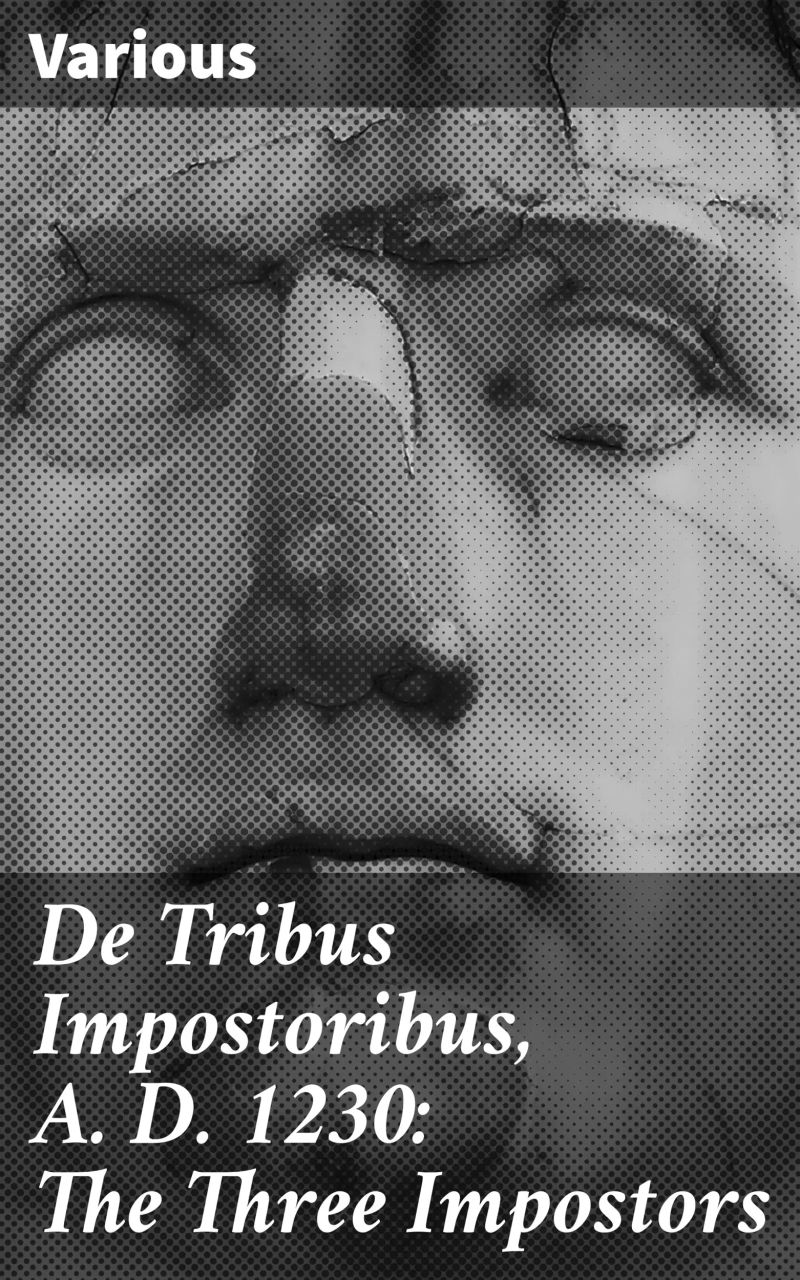
De Tribus Impostoribus, A. D. 1230: The Three Impostors
Unmasking Religious Deception: A Philosophical ExplorationBy Various


Length4h 31m
About this audiobook
De Tribus Impostoribus, composed in 1230, presents a provocative critique of the prevailing religious doctrines of its time, specifically targeting the figures of Moses, Jesus, and Muhammad. This anonymous work is articulated through a sharp, polemical literary style that intertwines historical narrative with philosophical inquiry, challenging the reader to reassess established beliefs and the nature of divine authority. Set within the theological upheaval of the Middle Ages, the text embodies the emerging rationalist thought, reflecting a burgeoning skepticism that would later influence Enlightenment philosophers. The authorship of De Tribus Impostoribus remains obscured, yet the intellectual climate of the 13th century, marked by scholasticism and the rediscovery of classical texts, undoubtedly informs its daring assertions. This milieu may have compelled the author to confront the dogma of organized religion and explore the boundaries of faith and reason. The work symbolizes a response to the fear of unchecked belief, revealing a quest for truth unswayed by dogmatic tradition. This compelling treatise invites readers to delve into the complexities of belief and skepticism, making it essential for those interested in religious studies, philosophy, and the historical development of critical thinking. It serves as an extraordinary testament to the power of intellectual inquiry and its enduring relevance in our contemporary discourse.
Audiobook details
Rating★★★★ 3.7 (42)
Includes Goodreads, Amazon, LibraryThing
GenrePhilosophy
Length4 hrs 31 mins
Narrated byListen with 1,000+ voices
FormateBook with Audio
Publish dateMay 19, 2021
LanguageEnglish
Table of contents
1INTRODUCTION.
26CHAPTER III.
2BIBLIOGRAPHY.
27What God Is.
3NOTE BY THE AMERICAN PUBLISHER.: NOTE BY THE BRITISH PUBLISHER.
28I.
4PREFACE BY THE TRANSLATOR.
29II.
5DISSERTATION ON THE BOOK OF THE THREE IMPOSTORS.
30CHAPTER IV.
Show all chaptersShow less
6TREATISE OF THE THREE IMPOSTORS.1
31What the word Religion signifies, and how and why such a great number have been introduced in the world.
7CHAPTER I.
32I.
8Of God.
33II.
9I.
34III.
10II.
35IV.
11III.
36V.
12IV.
37VI.
13V.
38VII.
14VI.
39VIII.
15CHAPTER II.
40CHAPTER V.
16Reasons which have caused mankind to Create for themselves an Invisible Being which has been commonly Called God.
41Of Moses.
17I.
42I.
18II.
43II.
19III.
44CHAPTER VI.
20IV.
45Of Numa Pompilius.
21V.
46CHAPTER VII.
22VI.
47Of Jesus Christ.
23VII.
48CHAPTER VIII.
24VIII.
49Of the Policy of Jesus Christ.
25IX.
50I.

With the World's Great TravelersVarious38h 45m$1.99 · $0.00

The Art of the Book (Annotated)Various3h 20m$1.99 · $0.00

Henley's Twentieth Century Formulas, Recipes and Processes (Annotated)Various60h 56m$1.99 · $0.00

Fairy Tales Every Child Should Know (Annotated)Various10h 33m4.0 (12.3K)$1.99 · $0.00

The Golden TreasuryVarious7h 42m4.3 (2.4K)$0.99 · $0.00

New, Old, and Forgotten Remedies: Papers by Many WritersVarious12h 14m4.6 (12)$0.99 · $0.00
The Most Ancient Lives of Saint PatrickVarious10h 48m4.4 (10)$0.99 · $0.00

Serbian Fairy Tales – Folklore & Mystique of the BalkansVarious5h 49m$0.99 · $0.00

Henley's Formulas, Recipes and ProcessesVarious55h 19m4.2 (122)$0.99 · $0.00

The Jargon File, Version 2.9.10, 01 Jul 1992 (Annotated)Various20h 45m$2 · $0.00

Nazi Conspiracy and Aggression (Vol. 1&2) (Annotated)Various95h 58m$3 · $0.00
Famous Composers and Their Works (Vol. 1&2) (Annotated)Various30h 19m$2 · $0.00
The Suppressed Gospels and Epistles of the Original New Testament of Jesus Christ (Annotated)Various15h 38m4.4 (12)$3 · $0.00
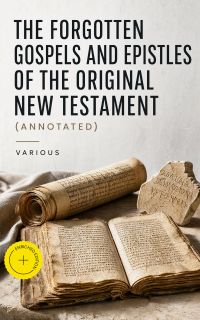
The Forgotten Gospels and Epistles of the Original New Testament (Annotated)Various15h 26m4.5 (12)$2 · $0.00

History of Woman Suffrage (Vol. 1-6) (Annotated)Various305h 31m4.6 (115)$2 · $0.00
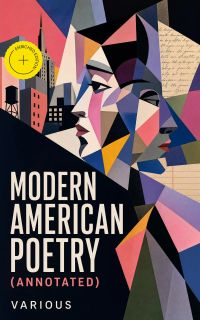
Modern American Poetry (Annotated)Various13h 28m$2 · $0.00

The Voices of Slaves (Annotated)Various265h 6m4.5 (12)$2 · $0.00

A Treasury of War Poetry: British and American Poems of the World War 1914-1917 (Annotated)Various5h 49m$2 · $0.00
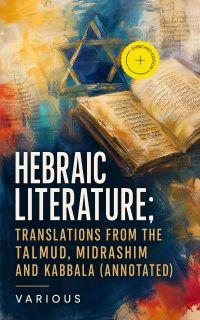
Hebraic Literature; Translations from the Talmud, Midrashim and Kabbala (Annotated)Various17h 14m4.0 (190)$2 · $0.00

Cotton is King, and Pro-Slavery Arguments (Annotated)Various32h 46m$2 · $0.00
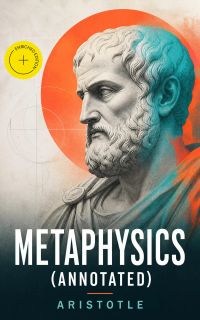
Metaphysics (Annotated)Aristotle13h 30m4.6 (1.2K)$2 · $0.00
Sceptical Essays (Annotated)Bertrand Russell9h 16m4.6 (1K)$2 · $0.00

WitnessAriel Burger8h 1m4.6 (1.3K)$20 · $0.00
The Magic PresenceGodfré Ray King10h 21m4.6 (307)$1.20 · $0.00

The Art of LivingThich Nhat Hanh5h 1m4.5 (14.2K)$24 · $0.00
Moral Letters to LuciliusLucius Annaeus Seneca24h 26m4.5 (71.7K)$0.99 · $0.00
Lessons in TruthH. Emilie Cady3h 50m4.5 (2.4K)$20 · $0.00
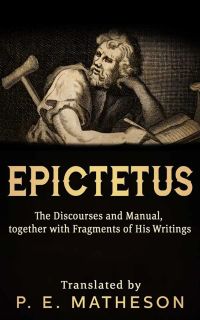
The Discourses of EpictetusP. E. MATHESOM12h 47m4.4 (17.7K)$1.20 · $0.00
IlluminationsWalter Benjamin10h 12m4.4 (16.2K)$20 · $0.00
That Bird Has My WingsJarvis Jay Masters9h 49m4.4 (13.7K)$29 · $0.00

Tâo Teh KingLaozi2h 34m4.4 (230.9K)$2 · $0.00
SymposiumPlato3h 26m4.4 (97.9K)$1.20 · $0.00

Buddhist Boot CampTimber Hawkeye2h 39m4.4 (8.4K)$18 · $0.00
Enchiridion & The Discourses of Epictetus (Annotated)Arrian Epictetus18h 9m4.4 (3.5K)$2 · $0.00

The Meditations of the Emperor Marcus Aurelius AntoninusEmperor of Rome Marcus Aurelius5h 41m4.4 (1.8M)$1 · $0.00
Crime and PunishmentFyodor Dostoevsky23h 11m4.4 (1.3M)$12 · $0.00

MeditationsMarcus Aurelius5h 52m4.4 (433.7K)$1 · $0.00

Everyday DharmaSuneel Gupta5h 2m4.5 (761)$20 · $0.00

The Joyful Wisdom ("La Gaya Scienza")Friedrich Wilhelm Nietzsche11h 37m4.4 (26.6K)$1 · $0.00
The Art of LivingEpictetus, Sharon Lebell3h 16m4.4 (50.1K)$18 · $0.00
You may also like

Is Shakespeare Dead?Mark Twain2h 21m3.9 (1.5K)$1 · $0.00

The History of the Standard Oil Company (Complete Illustrated Edition) (Annotated)Ida Minerva Tarbell33h 47m4.2 (3.6K)$0.99 · $0.00

In the CordillerasKarl May16h 49m4.1 (662)$2 · $0.00
Proofs of a Conspiracy against all the Religions and Governments of EuropeJohn Robison11h 26m4.1 (387)$1 · $0.00

The Blithedale RomanceNathaniel Hawthorne7h 32m3.6 (9.8K)$6 · $0.00
Proofs of a ConspiracyJohn Robison12h 54m3.8 (1.7K)$21 · $0.00

The Hidden HandEmma Southworth21h 23m4.2 (2.7K)$2 · $0.00
State of FearMichael Crichton18h 59m3.8 (132.6K)$40 · $0.00

BittenKris Newby5h 1m4.3 (3.7K)$24 · $0.00
Nine Black RobesJoan Biskupic13h 11m4.1 (2K)$33 · $0.00
An Admonition showing, the Advantages which Christendom might derive from an Inventory of RelicsJohn Calvin2h 5m4.2 (274)$2 · $0.00

The Astonishing Adventure of Jane SmithDora Amy Elles9h 6m4.0 (482)$2 · $0.00
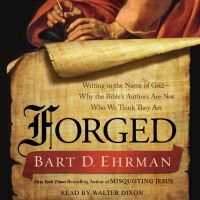
ForgedBart D. Ehrman9h 44m4.1 (5.5K)$29 · $0.00

The Gold BatP. G. Wodehouse4h 58m3.7 (1.1K)$2.30 · $0.00
Galileo Galilei and the Roman CuriaKarl von Gebler2h 56m4.2 (30)$2 · $0.00

The Ignatian Epistles Entirely Spurious: A Reply to the Right Rev. Dr. LightfootW. D. Killen2h 43m$2 · $0.00

Jefferson and the Ordeal of LibertyDumas Malone19h 42m4.0 (935)$32

The Cartographer of Hollow CoveEvelyn Hartwell6h 57m$5 · $0.00
William Shakespere, of Stratford-on-AvonScott F. Surtees1h 8m$2 · $0.00
Priory of Sion: The Hidden Story Behind the Holy Grail Legend (The Secret Society Behind History’s Greatest Mystery)Doyle Kowalsky2h 24m$3.50 · $0.00